wayground logo

Free Printable Worksheets

Font size

S
M
L
XL
Worksheets

8th Grade Semester 2 Exam Review 2018-2019

Total questions: 125

Worksheet time: 1hrs 20mins

Name
Class
Date
1.

The process by which material is broken down into sediment and moved from one place to another.

a)

deposition

b)

erosion

c)

load

d)

gradient

2.

The physical and chemical alteration of rock.

a)

deposition

b)

erosion

c)

weathering

d)

load

3.

the wearing away of a rock surface as the result of smaller rock particles being scraped against it through wind, water, or ice

a)

sediment

b)

abrasion

c)

badland

4.
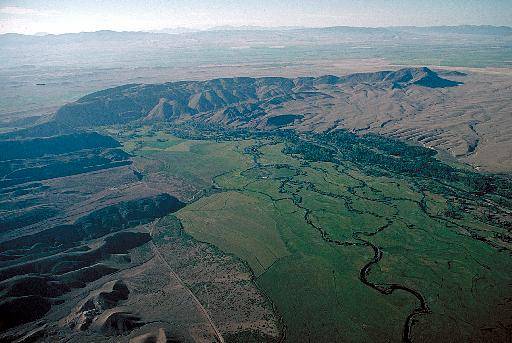
Wide valley through which a river flows.
a)
Bob
b)
Hidden Valley Ranch
c)
flood plain
d)
alluvial fan
5.
A loop like bend in the course of a river.
a)
meander
b)
oxbow lake
c)
alluvial fan
d)
delta
6.
A deposit of sediment whose materials vary in size, color, and composition and is most commonly found on a smooth, gently sloped shoreline is a...
a)
Cave
b)
Beach
c)
Meander
d)
geyser
7.

Moving _____________ is the main cause of weathering and erosion on Earth

a)

water

b)

land

c)

people

8.

Rain can cause weathering of rocks and soil

a)

True

b)

False

9.

The water in the middle of rivers flows

a)

slowly

b)

quickly

10.

Deposits at the end of a river form a ________________

a)

mouth

b)

source

c)

delta

11.

Waves can carry sand and soil into the middle of the ocean to form a ________________

a)

sandbar

b)

beach

c)

delta

12.

Ocean waves make beaches

a)

True

b)

False

13.

A(n) __________ is a meander that has been cut off from the river.

a)

flood plain

b)

gully

c)

oxbow lake

d)

waterfall

14.

The largest type of channel with continually flowing water that flows into a larger river is called a __________.

a)

gully

b)

flood plain

c)

rill

d)

tributary

15.
Sand gets deposited by the wind and causes __________to form.
a)
Deflation
b)
Abrasion
c)
Mounds
d)
Dunes
16.
Dunes are mounds of sand blown by the wind. 
a)
True
b)
False
17.
Which of the following landforms are caused by wave erosion?
a)
sandbar
b)
spit
c)
stacks
d)
longshore drift
18.
Examine the diagram. The feature shown at Location B is:
a)
A cave
b)
A sea arch
c)
A stack
d)
A wave-cut cliff
19.
How do roots stop erosion?
a)
They block the wind from the soil.
b)
They loosen soil.
c)
They lift up sediment.
d)
They hold sediment into place.
20.
When wind blows over the land, it picks up the smallest particles of sediment.
a)
True
b)
False
21.
What process creates new sand in a desert?
a)
wind erosion of rocks
b)
droughts
c)
fossils of animals and plants constantly decaying 
d)
erosion of the neighboring streams
22.
Waves dropping sand on the beach
a)
Weathering 
b)
Erosion
c)
Deposition
23.
What is wind erosion?
a)
Its when sediment gets carried by water and dirt
b)
Wind erosion is the transportation of sediment by wind
c)
When sediment moves by itself
24.

Steep land kept steep by wave erosion

a)

sea cave

b)

sea cliff

c)

sea stack

d)

headland

e)

sea arch

25.

Hollows at the base of a sea cliff

a)

sea cave

b)

sea cliff

c)

sea stack

d)

headland

e)

sea arch

26.
How does freezing water cause the weathering of rocks?  The freezing water—
a)
keeps the rocks in place
b)
makes the rocks last longer
c)
expands cracks and breaks rocks
d)
causes rocks to fall in landslides
27.

A(n) ___________ is the rapid downhill movement of soil, loose rocks, and boulders.

a)

Landslide

b)

Outwash

c)

Moraine

d)

Till

28.

A(n) ______________ is a large mass of ice that formed on land and moves slowly across Earth's surface.

a)

outwash

b)

moraine

c)

glacier

d)

talus

29.
An alpine/valley glacier generally forms in mountainous areas
a)
true
b)
false
30.
Continental glaciers...
a)
cover millions of square miles
b)
do not cover an entire land mass
c)
carve out cirques and arretes
d)
are responsible for U-shaped valleys
31.
This is a picture of a
a)
slump
b)
creep
c)
mudflow
d)
landslide
32.
Type of landslides that involve rocks, are very to extremely rapid and can travel great distances.
a)
creeps
b)
mudslides
c)
rock fall
d)
slumps
33.
The bold lines that appear on the map every 5th contour line with the exact elevation written on it is the ______________________
a)
Index Contour line
b)
Contour interval
c)
Relief
d)
Slope
34.
This the study and description of the shape of the land and surface features.
a)
Biology
b)
Topography
c)
Geology
d)
Oceanography
35.
The shape of the land is shown by connecting points of the same elevation to form a ____________.
a)
relief line
b)
slope
c)
valley
d)
contour line
36.
The difference in elevation between highest & lowest points is known as
a)
Gradual
b)
Steep
c)
Relief
d)
Index contour
37.
Contour lines that are very close together indicate the land is _______________
a)
gentle/gradual
b)
a forest
c)
steep
d)
a swamp
38.
Contour lines that are very far apart indicate the landscape is _____________
a)
gentle/gradual
b)
steep
c)
a forest
d)
a swamp
39.
Determine the contour interval:
a)
5 m
b)
10 m
c)
15 m
d)
20 m
40.
Determine the contour interval:
a)
5 m
b)
10 m
c)
15 m
d)
20 m
41.
What do close contour lines represent on a map?
a)
waterfall
b)
steep area
c)
gradual area
d)
river
42.
An area's height above sea level
a)
topography 
b)
relief
c)
elevation
d)
GIS
43.
What is the elevation of point B?
a)
800 ft
b)
850 ft
c)
900 ft
d)
1000 ft
44.
Determine the contour interval
a)
10 m
b)
20 m
c)
50 m
d)
100 m
45.
What do contour lines that are farther apart represent?
a)
waterfall
b)
steep area
c)
gentle slope
d)
river
46.
How many mountain tops does this map have?
a)
one
b)
two
c)
three
d)
four
47.
The diagram shows a cross section of rocks beside a highway. Which rock type is the oldest?
a)
1
b)
2
c)
3
d)
4
48.
Which Rock layer or intrusion is the youngest?
a)
A
b)
B
c)
C
d)
D
49.
What is the study of past life as rocks or fossils?
a)
Paleontology
b)
Archeology
c)
Fossilology
50.
What is the idea that geologic processes are occurring now are the same as those that occurred in the past?
a)
Unconformities
b)
Uniformitarianism
c)
Epicism
51.
What is it called when a fossilized mark is found in soft sediment that was formed by the movement of an animal?
a)
Index fossil
b)
Trace fossil
c)
Sludge
d)
Geologic Time
52.
What type of dating indicates an approximate age of a fossil in relationship to other layers of rock in an area?
a)
Relative dating
b)
Absolute Dating
53.
What states that younger rocks are found above older rocks?
a)
Theory of Plate Tectonics
b)
Law of Superposition
54.

Which activity is an example of the superposition principle?

a)

hanging clothes in a closet

b)

tossing clothes into a laundry hamper

c)

choosing a book from the library

d)

all of these

55.

Insects can be preserved in ____, or hardened tree sap.

a)

amber

b)

tar

c)

ice

d)

coprolite

56.
Scientists assign relative ages of rocks by using
a)
the ratio of isotopes
b)
the principle of superposition
c)
potassium-Argon dating
d)
absolute dating
57.
Rock layers can be disturbed by
a)
folding, petrification, faulting, and intrusions
b)
folding, tilting, faulting, and climbing
c)
folding, mummification, faulting, and intrusions
d)
folding, faulting, tilting, and intrusions
58.
The _____ is an ideal sequence of rock layers that contains all of the known fossils and rock formations on Earth arranged from oldest to youngest.
a)
nondeposition column
b)
geologic column
c)
angular unconformity
d)
disturbed rock column
59.

Rock that forms when magma or lava hardens

a)

Metamorphic

b)

igneous

c)

Sedimentary

60.

Scientific law that states in horizontal sedimentary rock, the oldest layers are at the bottom

a)

intrusion

b)

fault

c)

index fossil

d)

superposition

61.

magma that pushes into bodies of rock

a)

Extrusion

b)

intrusion

62.

An intrusion is always ___________ than the rock layers around it and beneath it

a)

younger

b)

older

63.

A ________________ is a break in Earth's crust

a)

intrusion

b)

fault

c)

extrusion

d)

igneous rock

64.

its age compared with the ages of other rocks

a)

absolute age

b)

relative age

65.

Fossils are

a)

only found in museums.

b)

only found in Antarctica.

c)

best left undisturbed.

d)

the preserved remains or traces of living things.

66.

Which layer of the rock strata is the oldest?

a)

C

b)

E

c)

D

d)

B

67.
Letter "F" is a....
a)
inclusion
b)
intrusion
c)
fault
d)
unconformity 
68.
Analyze the seashell found in the white layer.  Which statement is true of the rock layer that contains this fossil?
a)
It could also contain a fossil from the bottom layer.
b)
It is older than the layers below it.
c)
It is younger than the layers above it.
d)
It is older than the layers above it.
69.

What is the correct order of the rock layers from oldest to youngest?

a)

B, C, D, E, A

b)

A, B, C, D, E

c)

E, D, C, B, A

d)

B, C, A, D, E

70.
The fossil record help scientists
a)
better understand the kind of organism that lived in the past
b)
better understand how the environment has changed over time
c)
better understand how organisms have evolved over time 
d)
all of the above
71.
A geologist discovers a fossil in different layers of rock. Which layer is the oldest? 
a)
the fossils in the upper rock layers
b)
the fossils in the lower rock layers
72.
A trace fossil is 
a)
a fossil that is used to establish the age of a rock layer
b)
the trace or remains of an organism that lived long ago, most commonly preserved in sedimentary rcok
c)
a mark that formed in rock by the movement of an animal on or within soft sediment (rock)
73.
Used to determine whether an object is older or younger than other objects
a)
Superposition
b)
Relative Dating
c)
Fossil
d)
Unconformity
74.
States that younger rocks lie above older rocks if the layers have not been disturbed
a)
Law of crosscutting
b)
Law of superposition
c)
Relative Dating
d)
Unconformity
75.
Traces or remains of organisms that lived long ago
a)
Fossil
b)
Unconformity
c)
Superposition
d)
Column
76.
An ordered arrangement of rock layers that is based on the relative ages of the rocks
a)
Superposition
b)
Unconformity
c)
Layered
d)
Geologic Column
77.
How does the law of crosscutting explain the age of a fault?
a)
The fault is younger than the rocks above it.
b)
The fault is younger than the rocks it cuts through.
c)
The fault is older than the rocks above it.
d)
The fault is older than the rocks it cuts through.
78.
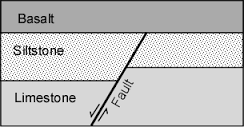
What are the relative ages of the features in order from oldest to youngest?
a)
Limestone, Basalt, Fault, Siltstone
b)
Siltstone, Fault, Basalt, Limestone
c)
Limestone, Fault, Basalt, Siltstone
d)
Limestone, Siltstone, Fault, Basalt
79.
According to the law of superposition, the oldest fossils are found 
a)
At the top of the rock layers
b)
Near the bottom of the rock layers
c)
In the middle of the rock layers
d)
Somewhat near the surface
80.
Which rock layer in the diagram seems to be the oldest?
a)
F
b)
E
c)
B
d)
A
81.
According to the law of superposition, which layer is the youngest?
a)
A
b)
B
c)
C
82.
Which of the following correctly lists the layers in order from oldest to youngest?
a)
A, B, C, D, E
b)
E, B, C, D, A
c)
E, D, C, B, A
d)
C, B, A, D, E
83.
How does sedimentary rock usually form?
a)
Vertically
b)
Diagonally
c)
Folding
d)
Horizontally
84.
What states that a fault or a body of rocks must be younger than any feature or layer of rock that the fault or rock body cuts through?
a)
Unconformity
b)
Intrusion
c)
Law of superposition
d)
Law of crosscutting
85.
Scientists who study fossils are called
a)
Geologists
b)
Paleontologists
c)
Fossil Scientists
d)
Meteorologists
86.
Which statement is TRUE about the fossil record?
a)
It is a record of all living things
b)
It shows how our climate has remained the same over time
c)
It provides evidence for history of life on Earth
d)
It does not support the theory of evolution
87.

The allele/letter combinations

a)

genetics

b)

mitosis

c)

genotype

d)

phenotype

88.
The physical appearance of an organism based on traits
a)
Genotype
b)
Phenotype
c)
Meiosis
d)
Genetics
89.
This trait will always be expressed if present because it will mask the expression of others
a)
stem cells
b)
heterozygous
c)
dominant
d)
recessive
90.
The genotype of:  AA  will have the PHENOTYPE of...
a)
albinism
b)
normal pigment
c)
albino carrier
91.
The genotype of:  Heterozygous Course Hair  will have the alleles of...
a)
Hh
b)
HH
c)
hh
92.
The genotype of:  albino carrier  will have the alleles of...
a)
Aa
b)
AA
c)
aa
93.
Which of the following is heterozygous
a)
FF
b)
tt
c)
Gg
d)
RR
94.
Which of the following is homozygous recessive?
a)
rr
b)
AA
c)
TT
d)
Ff
95.
What does the prefix homo- in homozygous mean?
a)
same
b)
different
c)
dating
d)
humans
96.
What does the prefix hetero- in heterozygous mean?
a)
same
b)
different
c)
dating
d)
human
97.
Which of the following is homozygous dominant?
a)
Jj
b)
Rr
c)
MM
d)
ee
98.

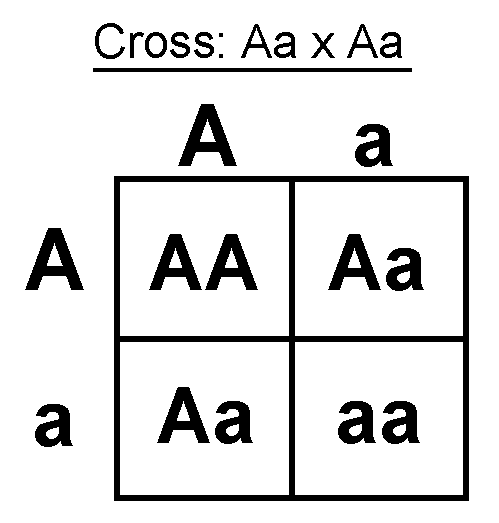
What are the possible phenotype(s) of the offspring? (A-Brown hair; a-blond hair)

a)

50 % Brown Hair and 50% Blond Hair

b)

25 % Brown Hair and 75% Blond Hair

c)

75 % Brown Hair and 25% Blond Hair

d)

0% Brown Hair and 100% Blond Hair

99.
What is the yellow seed genotype?
a)
aa
b)
Aa
c)
AA
d)
AA or Aa
100.
What genotype would go in box 2?
a)
BB
b)
Bb
c)
bb
101.

What is the probability of heterozygous offspring?

a)

0%

b)

100%

c)

50%

d)

25%

102.
What allele combination should go in the missing box?
a)
AA
b)
Aa
c)
aa
d)
none of these
103.

What genotype would go in box 4?

a)

BB

b)

Bb

c)

bb

104.

What is the term for a feature that allows an organism to survive better in its environment?

a)

variation

b)

adaptation

c)

homologous structure

d)

vestigial structure

105.
What is the process in which humans breed organisms for certain traits?
a)
natural selection
b)
inheritance
c)
artificial selection
d)
descent withOUT modification
106.
To adjust to a changing environment
a)
Mutation
b)
Adapt
107.
The gradual change in species over time is...
a)
Evolution
b)
Nucleotide 
c)
Adaptation
d)
Natural Selection
108.
Another word for adapt is ____________.
a)
change
b)
create
109.
In mitosis, the two resulting cells are
a)
different from the starting cell and identical to each other.
b)
different from the starting cell and different from each other.
c)
identical to the starting cell and different from each other.
d)
identical to the starting cell and identical to each other.
110.
In which type of cells will mitosis occur?
a)
egg cells
b)
sperm cells
c)
jail cells
d)
Body cells except the sperm and egg cells
111.
After meiosis is complete, the new cells:
a)
are all identical
b)
are all different
c)
are half identical and half different
d)
are all stretched out
112.
How many daughter cells are produced from meiosis ?
a)
10
b)
6
c)
4
d)
2
113.
The female sex cell is called
a)
zygote
b)
sperm
c)
fertilization
d)
egg
114.
The male sex cell is called
a)
egg
b)
zygote
c)
sperm
d)
mitosis
115.

Humans have how many chromosomes ?

a)

112

b)

46

c)

8

d)

67

116.
During which phase of the meiotic cell cycle does DNA Replication occur?
a)
Interphase 
b)
Prophase 
c)
Metaphase 
d)
Telophase
117.
In Meiosis if the parent cells has 40 chromosomes, then how many will the daughter cells have 
a)
40
b)
10
c)
20
d)
18
118.
The stages of mitosis in order
a)
Metaphase, Anaphase, Prophase, Telophase
b)
Prophase, Anaphase, Metaphase, Telophase
c)
Prophase, Metaphase, Anaphase, Telophase
d)
Anaphase, Prophase, Telophase, Metaphase
119.
When a cell is not actively dividing, it is in what phase?
a)
interphase
b)
anaphase
c)
prophase
d)
telophase
120.
When a cell divides, what do we call the 2 new cells?
a)
mother cells
b)
father cells
c)
daughter cells
d)
son cells
121.
What is the name of the process in which DNA (genetic information) is exchanged during meiosis?
a)
crossing under
b)
crossing over
c)
melding
d)
blending
122.
When you start with 1 cell, at the end of mitosis, how many identical cells will you have?
a)
1
b)
2
c)
3
d)
4
123.
After meiosis is complete how many cells will there be?
a)
1
b)
2
c)
3
d)
4
124.
Chromosomes that have corresponding traits from the opposite sex parent are called:
a)
Heterogeneous chromosomes
b)
homologous chromosomes
c)
Mother and Father chromosomes
d)
Grandmother and grandfather chromosomes
125.
Another name for a sex cell is a:
a)
gamete
b)
embryo
c)
bone cell
d)
muscle cell