wayground logo

Free Printable Worksheets

Font size

S
M
L
XL
Worksheets

Review for Test Monday

Total questions: 99

Worksheet time: 2hrs 42mins
Name
Class
Date
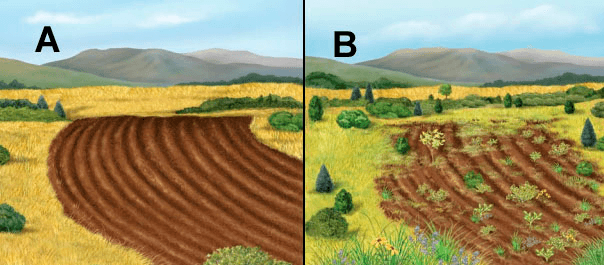
1.

What type of succession is shown going from figure A to figure B?

a)

primary succession

b)

ecological succession

c)

secondary succession

d)

intermediate species

2.

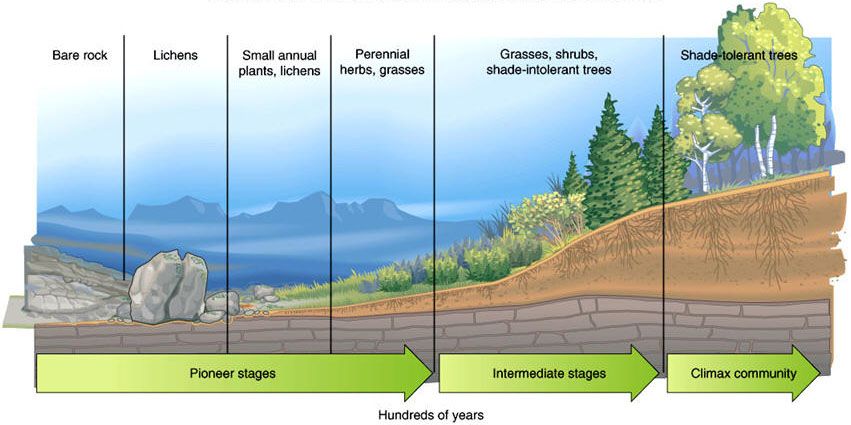
What is the role of the pioneer species in Primary Succession?

a)

To kill any remaining organisms from before the disturbance

b)

To break down rock and rebuild soil

c)

To provide food for large animals

d)

To put fresh oxygen into the air

3.

The picture shows what type of succession?

a)

primary

b)

secondary

c)

tertiary

d)

quadanary

4.
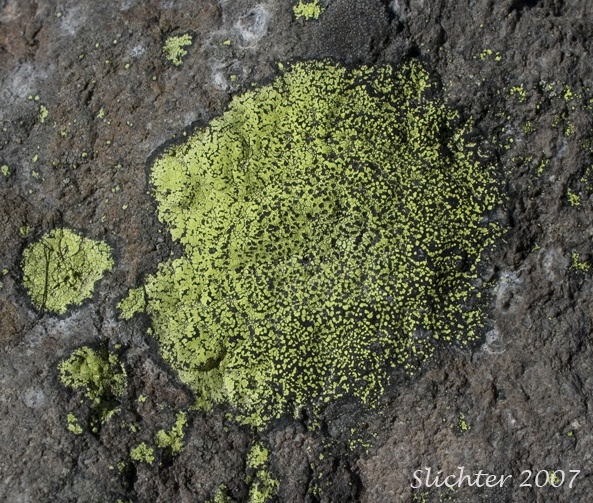
What is the name given to lichen or algae after a primary succession?
a)
pioneer species
b)
volunteer species
c)
founder species
d)
conqueror species
5.

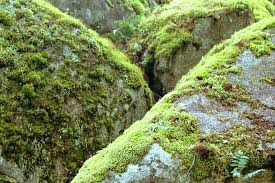
What are examples of pioneer species in a primary succession?

a)

Bushes and Shrubs

b)

Oak trees

c)

Mossess and Lichens

d)

A rose Bush

6.

After a volcanic eruption, lava covers the land. What is the order that plants grow to repopulate the area?

a)

Lichens → Shrubs → Grasses → Trees

b)

Lichens → tree → shrubs→Grasses

c)

Grasses → Lichens → Shrubs → Trees

d)

Lichens → Grasses → Shrubs → Trees

7.

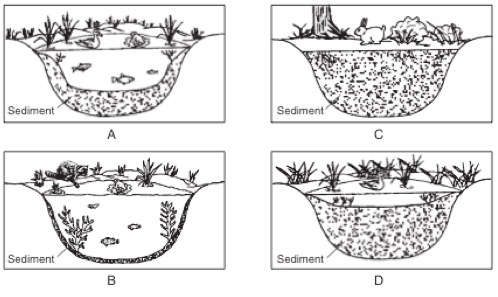
What is the correct order in this pond succession? (YOUNGEST to OLDEST)

a)

A, B, C, D

b)

D, C, B, A

c)

B, A, D, C

d)

C, D, A, B

8.

The forest in panel #8 is a...

a)

pioneer species

b)

climax community

c)

tertiary community

d)

intermediate species

9.

Succession type?

a)

primary succession

b)

secondary succession

c)

tertiary succession

d)

variable succession

10.

Succession type?

a)

primary succession

b)

secondary succession

c)

tertiary succession

d)

variable succession

11.

Starts with BARE ROCK followed by lichen

a)

primary succession

b)

secondary succession

c)

both types of succession

12.

What type of species/community is a redwood forest?

a)

Climax Community

b)

Pioneer Species

c)

Intermediate Species

d)

Tertiary Community

13.

Which is an example of a climax community in this image?

a)

The empty pond

b)

The shallow pond/marsh

c)

The meadow/field

d)

The forest with the deer

14.

What does "organic matter" refer to in biology?

a)

Living and/or dead organisms

b)

Crops that don't use pesticides

c)

Carbon based chemicals

d)

Food that isn't genetically modified

15.

Which of these is an example of a climax community?

a)
b)
c)
d)
16.
How do lichens contribute to primary succession?
a)
Lichens decompose organic matter from animals and plants
b)
Lichens begin to break down rock to form soil
c)
Lichens are nitrogen fixing bacteria
d)
Lichens convert carbohydrates into fossil fuels.
17.
What is formed during primary succession that doesn't need to be formed during secondary succession?
a)
pioneer species
b)
soil
c)
climax community
d)
lichens
18.
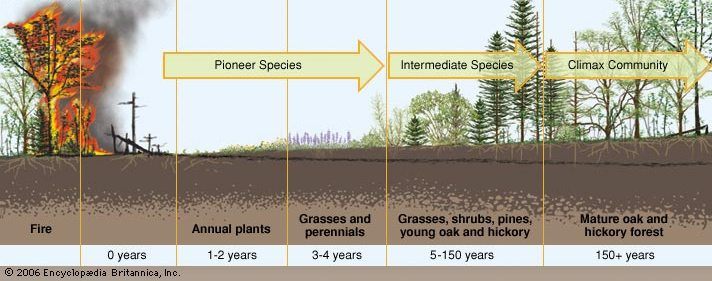
After a forest fire, an ecosystem would start regrowth through -
a)
primary succession
b)
secondary succession
c)
climax community
d)
limiting factors
19.
Which catastrophic event will most likely have the effect of returning an ecosystem to primary succession?
a)
A tornado
b)
A volcanic eruption
c)
A flood
d)
A drought
20.
succession that occurs in an area with no soil
a)
ecological succession 
b)
primary succession 
c)
secondary succession
d)
pioneer speciles
21.
starts with bare rock followed by lichen
a)
primary succession 
b)
secondary succession
c)
both types of succession
22.
Natural disasters such as flooding and tornadoes are linked to ________________.
a)
primary
b)
secondary
c)
old field
d)
ecosystem
23.
What is the order of succession shown in this figure?
a)
A, B, C, D
b)
B, A, D, C
c)
C, D, A, B
d)
D, A, B, C
24.
The picture shows what type of succession?
a)
primary
b)
secondary
c)
tertiary
d)
quadanary
25.
The picture shows what type of succession?
a)
primary
b)
secondary
c)
tertiary
d)
quadanary
26.
Final illustration (#8) shows
a)
pioneer species
b)
climax community
c)
only biotic factors
d)
only abiotic factors
27.
What is the most important function of pioneer species?
a)
To create rocks
b)
To create soil and add nutrients to the environment 
c)
To look nice
d)
Food for animals 
28.
Succession that occurs in an area with NO SOIL
a)
ecological succession 
b)
primary succession 
c)
secondary succession
d)
pioneer speciles
29.
After a volcanic eruption, lava covers the land. What is the order that plants grow to repopulate the area?
a)
Lichens → Shrubs → Grasses → Trees
b)
Lichens → tree → shrubs→Grasses
c)
Grasses → Lichens → Shrubs → Trees
d)
Lichens → Grasses → Shrubs → Trees
30.
This is the process that forms a new ecosystem where no organisms lived before.
a)
resource
b)
invasive (non- native) species
c)
primary succession
d)
competition
31.
What is the correct order from oldest (happened first) to youngest (happened last) in this pond succession?
a)
A, B, C, D
b)
D, C, B, A
c)
B, A, D, C
d)
C, D, A, B
32.
In which type of succession is soil is already present?
a)
primary succession 
b)
secondary succession
c)
both types of succession
33.

Why do grasses appear before shrubs in ecological succession?

a)

loosen the dirt for new trees to take roots?

b)

provide food for animals returning to the area

c)

require plenty of sunlight to make their own food

d)

can grow even in areas with shallow soil

34.

What best describes the term succession?

a)

rapid changes that create an ecosystem overnight

b)

gradual changes over time to fully create or restore and ecosystem

c)

forest with the tallest trees

d)

the rate species produce offspring

35.

An example of typical pioneer species, that is one that appears in the earliest stages of ecological succession is:

a)

Oak Trees

b)

Spiders

c)

Weeds

d)

Small Conifer Trees

36.

How do pioneer species compare in primary and secondary succession?

a)

primary starts with grass and weeds, secondary starts with mosses

b)

primary starts with forest fire, secondary starts with volcano

c)

primary starts with a volcano, secondary starts with a forest fire

d)

Lichens and moss in primary, and grasses/ ferns in secondary

37.
Bobby observed that a metal trash can was covered with rust.  What type of weathering caused the rust on the trash can?
a)
Mechanical weathering 
b)
Wind weathering
c)
Chemical weathering
d)
Erosion weathering
38.
What is likely to cause cracks on the sidewalk?
a)
Repeated freezing and thawing of water
b)
Tree roots or plant roots growing bigger
c)
Both and A and B
d)
Neither A or B 
39.
Which diagram represents mechanical weathering?
a)
G
b)
F
c)
H
d)
J
40.
What human activities can increase the rate of weathering?
a)
Increasing the amount of acid rain
b)
Paving over large portions of land
c)
All of the other answers. 
d)
Strip mining and agriculture
41.
Which type of climate would cause the greatest rate of weathering?
a)
Cold and dry
b)
Cold and humid (wet)
c)
Warm and humid (wet)
d)
Warm and dry
42.
A student hiking in a rock area on a mountain notices that wide, deep cracks have formed in some of the large rocks. Some of the cracks are so large that the rocks have broken apart. Which process most likely caused these rocks to crack and creak? 
a)
Erosion by wind
b)
Water freezing and thawing
c)
Erosion by fast-moving
d)
Sediments being deposited.
43.
The surfaces of old concrete statues are often covered with small holes or pits. Which of these MOST LIKELY causes these holes or pits?
a)
The concrete becomes pitted as water freezes in small cracks in the statue.
b)
The concrete is chipped away by sand particles blown by strong winds
c)
The concrete is chemically weathered by acid rain.
d)
Long exposure to sunlight causes the pits to form.
44.
When Joe saw the Rocky Mountains for the first time, he exclaimed, "These mountains are much younger than ours back East!" Which feature supports his conclusion that the Rockies were relatively young mountains?
a)
Their sedimentary layers are still exposed
b)
They have rounded tops
c)
They have sharp peaks
d)
Weathering has not yet hardened the rock
45.
What is the weathering process in which rocks are broken down into smaller pieces (sediments) and do not change the rock composition?
a)
Acid weathering 
b)
Gravity weathering
c)
Chemical weathering
d)
Mechanical weathering
46.
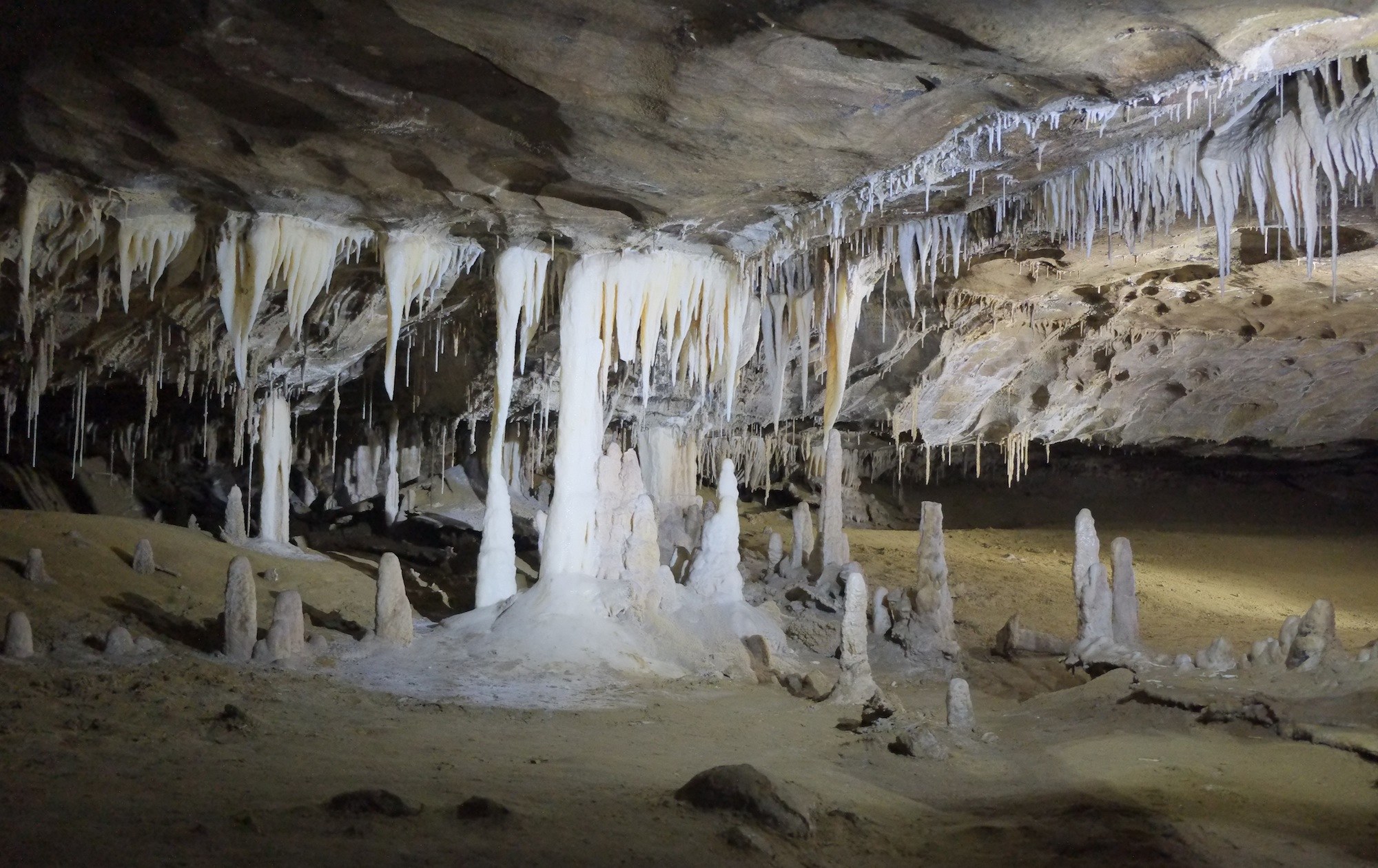
Which of the following is the most important agent of chemical weathering to form this cave?
a)
Water - It can carry acid and dissolve rock
b)
Erosion - Moves the rocks from one place to another
c)
Wind - It displaces rocks
d)
Exfoliation - New cracks give chemical reactions the chance to operate
47.
These rocks were made smooth by wind blowing smaller rock particles across their surface.  This is an example of:
a)
ice wedging
b)
chemical weathering
c)
acid rain
d)
abrasion
48.
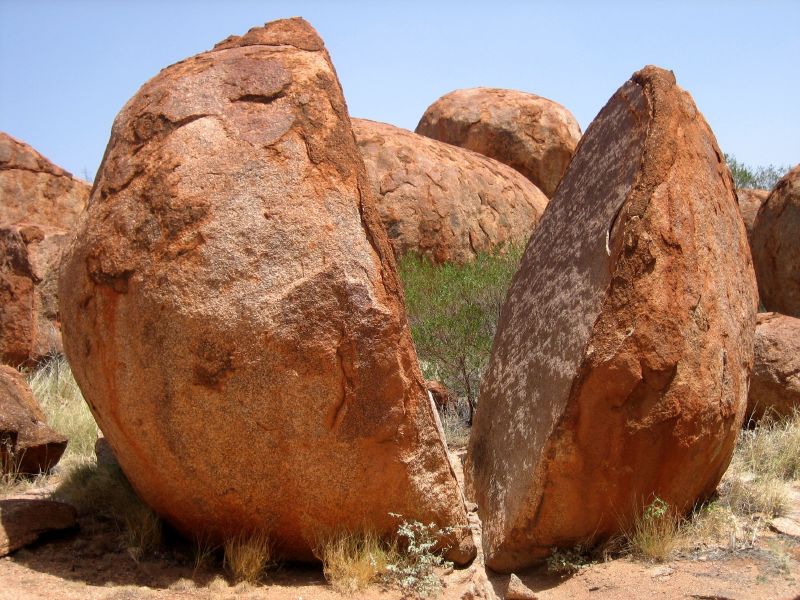
These rocks were broken apart from the continuous freeze/thaw of water in the cracks of the rocks. This is an example of:
a)
ice wedging
b)
acid rain
c)
permeability
d)
abrasion
49.
How is mechanical weathering different from chemical weathering?
a)
Chemical weathering happens over much shorter time frame than mechanical weathering.
b)
Chemical weathering changes the chemical composition of rocks; mechanical weathering does not.
c)
Chemical weathering occurs only in tropical climates; mechanical weathering occurs only in cool climates.
d)
Chemical weathering occurs only in the mountains; mechanical weathering occurs only on flat land.
50.
A metal statue slowly turning green after years of being outside is an example of:
a)
mechanical weathering
b)
chemical weathering
51.
Weeds growing into the cracks in a sidewalk and the sidewalk begins to crumble is an example of:
a)
mechanical weathering
b)
chemical weathering
52.

Ice wedging is an example of -

a)

Physical weathering

b)

Chemical weathering

c)

Both physical AND chemical weathering

53.

An example of chemical weathering is -

a)

Ice wedging

b)

Oxidation

c)

Animals burrowing

d)

Crashing waves

54.

Weathering is the process of -

a)

Moving sediment from one place to another

b)

Dropping or leaving sediment in a location

c)

Breaking down rocks into sediment

55.

Over millions of years, weak carbonic acid can dissolve limestone to form -

a)

Cracks in rocks

b)

Caves and caverns

c)

Mountains and cliffs

56.
What type of weathering is it when acid rain breaks down and changes the rock.
a)
chemical weathering 
b)
physical or mechanical weathering
c)
erosion
d)
Deposition
57.
How do plants weather rocks?
a)
during photosynthesis
b)
when roots grow into cracks of rocks and expand the rock
c)
when the plant moves water from the roots to the leaves
58.

Weathering of rock can best be described as

a)

transportation of rock fragments

b)

breakdown of rock into fragments

c)

combining of rock fragments

d)

cementing of rock fragments

59.

The diagram below represents the size and shape of a pebble. This pebble and 20 other pebbles having a similar size and shape were placed in a rock tumbler with water and allowed to abrade for five days.

a)
b)
c)
d)
60.

The diagram below shows granite bedrock with cracks. Water has seeped into the cracks and frozen. The arrows represent the directions in which the cracks have widened due to weathering.

a)

Enlargement of the cracks occurs because water expands when it freezes.

b)

This type of weathering is common in regions of primarily warm and humid climates.

c)

The cracks become wider because of chemical reactions between water and the rock

d)

This type of weathering occurs only in bedrock composed of granite

61.

The diagram below shows the stump of a tree whose root grew into a small crack in bedrock and split the rock apart.

a)

chemical weathering

b)

physical weathering

c)

erosion

d)

deposition

62.

Which types of weathering is primarily responsible for the formation of caves?

a)

chemical weathering of calcite in limestone

b)

chemical weathering of quartz in sandstone

c)

physical weathering pf calcite in limestone

d)

physical weathering of quartz in sandstone

63.

The cross section below represents an outcrop of sedimentary rock layers exposed on Earth's surface. Rock layers A, B, C, and D are labeled. Which rock layer shows the greatest resistance to weathering and erosion?

a)

a

b)

b

c)

c

d)

d

64.

The sedimentary rock layers are being weathered and eroded at different rates primarily because the rock layers

a)

formed during different time periods

b)

are horizontal

c)

have different compositions

d)

contain different fossils

65.

This natural arch is formed by

a)

chemical weathering

b)

frost action

c)

root wedging

d)

abrasion from wind driven sand

66.

Which particle most likely underwent the most amount of abrasion?

a)
b)
c)
d)
67.

This is showing an example of______________________.

a)

physical weathering

b)

chemical weathering

c)

acid precipitation

d)

erosion

68.

Oxidation is_____________________________.

a)

an example of chemical weathering

b)

when oxygen reacts with compounds in rocks, causing a reaction

c)

when the oxygen in the air mixes with precipitation

69.
The earth's surface is always
a)
the same
b)
changing
c)
smooth
d)
wet
70.
_____________ is the process that earth undergoes all the time.
a)
weathering
b)
deltatizing
c)
metamorphosis
d)
camouflage 
71.
Deposition changes the earth's surface by
a)
making holes in the earth's surface
b)
creating new landforms
c)
gushing lava
d)
cleaning the earth's surface
72.

A flash flood and earthquakes are the same because

a)

both are fun to ride

b)

both create canyons

c)

they are caused by thunderstorms

d)

both are caused by rapid erosion

73.
Erosion is the
a)
 laying down of earth’s weathered rocks 
b)
movement of weathered rock 
c)
breaking down of rocks  
d)
Katy Perry's new hit
74.
Deposition is the
a)
breaking down of rocks  
b)
movement of weathered rock 
c)
laying down of earth’s weathered rocks 
d)
putting money in your bank
75.
Erosion creates
a)
trees
b)
sand dunes
c)
glaciers
d)
canyons
76.
Glaciers are 
a)
the frosting on a cake
b)
formed by deltas
c)
large sheets of ice on land
d)
chunks of ice floating in the ocean
77.
Landslides and avalanches are caused by
a)
gravity
b)
loud parties
c)
glaciers
d)
trees
78.
You can reduce erosion by
a)
making sandcastles
b)
stopping global warming
c)
cleaning up after yourself
d)
adding plants and trees
79.
An example of deposition is
a)
a canyon
b)
a delta
c)
Florida
d)
glacier
80.
Acid rain is created from
a)
Carbon dioxide and water
b)
Thor's lightning and rain
c)
Hydrogen peroxide and carbonic acid
d)
baking soda and vinegar
81.
Wind, rain, ice, plant roots, and animal activities cause
a)
earthquakes
b)
acid rain
c)
chemical weathering
d)
physical weathering
82.
acid rain, rust, and chemicals from plants and animals cause
a)
chemical weathering
b)
physical weathering
c)
tsunamis
d)
deltas and sand dunes
83.
Chemical and physical weathering are the same because they both
a)
build up landforms
b)
change the rock
c)
cause hurricanes and tornados
d)
break down rock
84.
Chemical residue from plants and animal is  an example of 
a)
physical weathering
b)
mechanical weathering
c)
deposition
d)
chemical weathering
85.
Wind causes
a)
messy hair
b)
geothermic weathering
c)
physical weathering
d)
chemical weathering
86.

Some examples of slow changes are

a)

earthquakes, volcanoes, and landslides

b)

weathering, erosion and deposition

c)

sloths in the rain forest

d)

turtle vs snail racing

87.
An avalanche is an example of which process?
a)
Weathering
b)
Erosion
c)
Deposition
d)
Volcanic Eruption
88.
Over long periods of time, deposition may change the Earth’s surface by _____.
a)
forming new land features.
b)
breaking down large rocks into smaller ones.
c)
washing away beaches.
d)
moving topsoil.
89.
What is the process that picks up and moves weathered rocks?
a)
Deposition
b)
Landslide
c)
Weathering
d)
Erosion
90.
Deposition changes the Earth’s surface because bits of broken rock and soil _____.
a)
stop rivers from flowing.
b)
make rich farmlands.
c)
are dropped in new places.
d)
move very slowly.
91.
What causes the greatest erosion effect on our beaches?
a)
Waves
b)
Gravity
c)
Glaciers
d)
Wind
92.
The process by which water, ice, wind, or gravity moves weathered rock and soil from one place to another.
a)
Weathering
b)
Erosion
c)
Deposition
d)
Crop Rotation
93.
Which of these is an example of erosion?
a)
Light shining onto a mountain.
b)
Rain breaking down rocks on a mountain into smaller pieces. 
c)
Wind blowing away sediment to a new place on the mountain.
d)
All of the above.
94.
Layers of sediment forming at the bottom of the ocean floor is an example of
a)
Weathering
b)
Erosion
c)
Deposition
d)
Awesome Science
95.
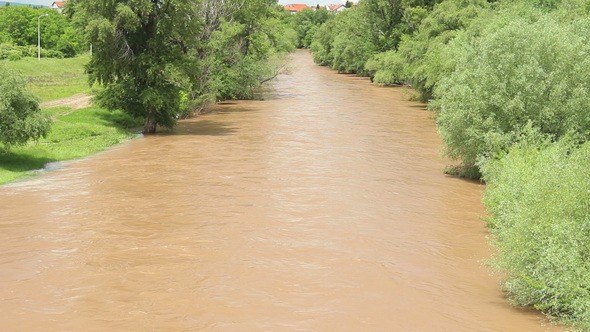
Muddy water being carried away by a fast-moving river is an example of
a)
Weathering
b)
Erosion
c)
Deposition 
d)
A nice place to swim
96.
What is the wearing away or breaking down of rocks called?
a)
Deposition
b)
Erosion
c)
Glaciers
d)
Weathering
97.
Flood water pounding against a canyon wall and wearing it down is an example of
a)
Weathering
b)
Erosion
c)
Deposition
d)
An avalanche
98.
Which of the following is NOT a slow change to Earth's surface?
a)
Weathering
b)
Erosion
c)
Deposition
d)
Landslides
99.
Which of the following is NOT a fast change in Earth's surface?
a)
Landslides
b)
Erosion
c)
Volcanoes Erupting
d)
Earthquakes