
 Worksheets
Biology Reporting Category 3 (in-class)
Total questions: 62
Worksheet time: 1hrs 28mins

In the European roe deer (Capreolus capreolus), implantation of embryos after breeding is delayed. The deer breed in July or August but do not give birth until the following May or June. From summer to late December, the embryo rests in a state of dormancy as a 30-cell blastocyst. In late December or early January, the embryo sends a signal that causes the female to release hormones, allowing the embryo to continue to develop normally. Why is delayed implantation an advantageous adaptation for the European roe deer?
Delayed implantation allows the mother to continue to breed with other males.
Without delayed implantation, the females would not be able to carry a pregnancy to full term.
Delayed implantation enables the female to give birth to more fawns each year.
Without delayed implantation, the fawns would be born in the winter when food is scarce and the weather is harsh.

A student wants to use the Venn diagram below to show the characteristics of two kingdoms of organisms. The characteristics that the two kingdoms share will be listed in the shaded area where the circles intersect. Which of these is a characteristic that the student should list in the shaded part of the diagram?
heterotrophic
prokaryote
mobile
multicellular

Two populations of mice living in the same forest are separated by a large water-filled ditch. After a rainstorm, flooding brings several mice from one population to the other population. When the mice from the first population reproduce with members of the second population, which of the following will likely occur?
All the offspring will die as a result of reproductive mutations.
The offspring will be forced to leave the second population.
The offspring will be genetically identical to their parent from the first population.
The offspring in the second population will have greater genetic variety.

An analysis of DNA and RNA sequences can be used to classify organisms. A dendrogram, such as the one shown below, is based on molecular data. It can be used to represent evolutionary relationships within a group of organisms that are hypothesized to have descended from a common ancestor. Which statement is best supported by the information in this dendrogram?
Lesser pandas are more genetically similar to giant pandas than they are to raccoons.
Brown bears are more genetically similar to giant pandas than they are to sun bears.
Lesser pandas are more genetically similar to raccoons than they are to giant pandas.
The bear species are all more genetically similar to dogs than they are to giant pandas.

A cladogram is shown below. All the animals to the right of the hagfish would have the common characteristic of —
fur
claws or nails
lungs
jaws

Three species of lizards of the genus Gallotia are found on the Canary Islands, a chain of seven volcanic islands off the west coast of Africa. The easternmost island, Lanzarote, is the oldest, while the westernmost island, El Hierro, is the youngest. The distribution of lizard species is shown on the map below. Which statement about the ancestry of the lizards from the genus Gallotia is best supported by this information?
The common ancestor of the lizards first colonized the island of El Hierro.
The ancestors of each species came from different continents at different times.
The common ancestor of the lizards probably came from Africa.
The ancestors of each species evolved in Spain and were brought to the islands at the same time.

The survival of a species depends on its ability to adapt to changes in the environment. A species must be capable of surviving and reproducing despite changes to food sources, climate, or threats from predators. Which statement correctly describes a way that mutations increase the likelihood that a species will survive in a changing environment?
Mutations are a source of variation in the species.
Mutations are the cause of disease in the species.
Mutations are not harmful when they occur in somatic cells of the species.
Mutations are always passed on to subsequent generations of the species.

The green frog (Lithobates clamitans clamitans) is found in many parts of the United States. The table contains some information about this frog. Why does the ability to lay 1,000 to 5,000 eggs increase the fitness of the species L. clamitans clamitans?
It increases opportunities for offspring to compete for limited resources.
It increases the probability that some offspring will survive long enough to reproduce.
It increases the probability that moving water will promote gene flow from one population to another.
It increases the chance of the recombination of alleles, leading to genetic drift in the population.

Bactrian camels, dromedaries, llamas, and alpacas are all members of the same taxonomic family, Camelidae. Members of this family all have two toes, no hooves, true canine teeth, and a split upper lip. The family Camelidae originated in North America. The physical features of animals in this family and the family’s geographical origin provide evidence that all these animals —
live in the same type of ecosystem
have slowly evolved to become herbivores
have a common ancestor
exchanged DNA at some point in the past

Five general characteristics of organisms in kingdoms Plantae or Fungi are listed in the box. Which table correctly lists the characteristics of the organisms in the two kingdoms?


Scientists around the world use a standardized taxonomic system. Why would scientists want to use a taxonomic system that is standardized?
In order to avoid confusion with the identification of organisms
Because Linnaeus established the system
So that Latin names can be applied for a practical purpose
In order to place organisms in different groups
What is the correct order of classification?
Domain, kingdom, phylum, class, family, order, genus, species
Domain, kingdom, phylum, class, order, family species, genus
Domain, kingdom, class, phylum, order, family genus, speciess
Domain, kingdom, phylum, class, order, family, genus, species
Which organisms would be most related?
2 that share the same family
2 that share the same kingdom
2 that share the same domain
2 that share the same genus
What are the 4 kingdoms of Eukarya?
Protista, fungi, plantae, animalia
Plant, animal, mineral, bacteria
Archaea, fungi, plantae, animalia
Protist, bacteria, archaea, fungi
Which kingdom includes only multicellular heterotrophs?
Archaea
Animal
Plant
Protists
What is a characteristic of archaea?
They live just about everywhere.
They use sun to produce food and energy
Most are disease-causing
They thrive in extreme environments
Before organisms with nuclei evolve, life on earth consisted only of unicellular
prokaryotes
eukaryotes
fungi
protists


One of the accepted scientific theories describing the origin of life on Earth is known as chemical evolution. According to this theory, which of the following events would need to occur first for life to evolve?
onset of photosynthesis
origin of genetic material
Synthesis of organic molecules
formation of the plasma membrane
Which types of organisms developed first due to the early environmental conditions on Earth?
prokaryotic and aerobic
prokaryotic and anaerobic
eukaryotic and aerobic
eukaryotic and anaerobic

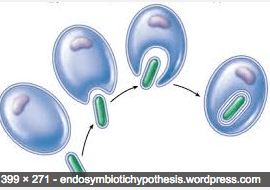
The diagram below shows a proposed theory of the origin of eukaryotic cells, called endosymbiosis.
Which of the following explains why cells that contained mitochondria-like organelles had an evolutionary advantage?
They were able to photosynthesize
They had more DNA
They were able to make more use of available energy
They were immune to bacterial invasion.



If this Punnett Square is completed, what is the GENOTYPIC ratio of the offspring?
1:3
3:1
1:2:1
2:2

What type of inheritance is determined by multiple genes located on different chromosomes and there can be a range of traits?
Codominance
Incomplete dominance
Polygenic traits
Multiple Alleles

What you see, or the physical appearance.
Genotype
Phenotype
Homozygous

What is the genotype ratio for a cross between a grey fowl and a white fowl?
Which genotype represents a female who is a carrier for hemophilia?
Which genotype represents a male with normal vision?
Genetic mutations are the direct cause of which of the following?
Aliens
Super heroes
Variations
8th grade behaviors

If Easter eggs were living species of organisms, their different colors would be considered:
Adaptations
Variations
Different species
Extinct species
Why might it be helpful for a species to have a lot of variations?
They can't be seen by predators
If the environment changes, they might be better able to adapt
It is helpful in asexual reproduction
They don't recognize each other

One female salmon can lay hundreds of eggs. Why doesn't the salmon population increase dramatically?
Salmon reproduce asexually
Most offspring do not grow up to reproduce
Salmon eggs don't hatch
Salmon are extinct
Natural selection is best described as the survival of:
The largest and strongest organisms
Organisms that best outcompete others for territory
The fastest organisms in a habitat
Organisms that possess traits that are best suited to their environment

