wayground logo

Free Printable Worksheets

Font size

S
M
L
XL
Worksheets

Finals Review Environmental Science-1

Total questions: 116

Worksheet time: 4hrs 56mins
Name
Class
Date
1.
The main human activity that releases greenhouse gases is
a)
using bottled water
b)
burning fossil fuels
c)
texting on cellphones
d)
eating meat
2.
It was hot all week last week.  Is this a sign of climate change?
a)
Yes
b)
No
3.
Worldwide, temperatures have been increasing for more than 100 years.  Is this evidence of global warming?
a)
yes
b)
no
4.
The greenhouse gas having the greatest role in human-caused global warming is
a)
methane
b)
carbon dioxide
c)
CFCs (chlorofluorocarbons)
d)
ozone
5.
Human activity is adding additional greenhouse gases to the amount that are in the atmosphere naturally
a)
True
b)
False
6.
Carbon is used by plants during which process?
a)
Respiration
b)
Transpiration
c)
Photosynthesis
d)
Transportation
7.
What is the greenhouse effect?
a)
warming of the earth due to gases in our atmosphere.
b)
cooling of the earth due to gases in our atmosphere
8.
What is recycling?
a)
is to use materials again and again to make something new.
b)
is produce new brand products and sell them.
c)
is living in the developed world but taking care of the nature.
d)
is classify garbage in different colors.
9.
Do we need greenhouse gases on Earth?
a)
Yes - they keep the Earth warm
b)
Yes - they keep all the gases on our planet
c)
No - they only cause terrible climate change
d)
No - they only block some of the Sun's rays
10.
Which of the following are greenhouse gases?
a)
Carbon dioxide
b)
Methane
c)
Nitrous Oxide
d)
All answers are correct
11.
Why is the increase of Greenhouse gasses a big issue?
a)
It causes climate change and increase in the global temerature 
b)
It can lead to a major increase in Greenhouses 
c)
It leads to more factories
d)
It causes a major decrease in people
12.
Which one of the choices below is NOT a  cause for global warming?
a)
Having too many cows
b)
Burning Fossil Fuels
c)
Planting new trees
13.
The gradual increase in the temperature of the atmosphere is known as ________________.
a)
Greenhouse Effect
b)
Global Warming
c)
Carbon Dioxide Gases
d)
Methane
14.
Which of the following is the most troubling greenhouse gas being produced by humans?
a)
Water Vapor
b)
Carbon Dioxide
c)
Methane
d)
Nitrous Oxide
15.
How can global warming cause sea levels to rise? Choose the best answer.
a)
by causing it to rain more often
b)
by melting glaciers and ice caps
c)
by increasing the number of undersea volcanic eruptions
d)
by creating bigger and more powerful hurricanes
16.
Why does cutting down trees increase global warming?
a)
trees soak up carbon dioxide
b)
trees provide shade which counteracts global warming
c)
trees absorbs the sun's energy without radiating back into the atmosphere
d)
trees drain greenhouse gases like methane from soil
17.
What happens to the temperature if more greenhouse gases are released into the atmosphere?
a)
Temperature goes up
b)
Temperature goes down
18.
Without the Greenhouse Effect the Earth would be too
a)
warm 
b)
cold
c)
dead
d)
funny
19.
What is this difference between global warming and the greenhouse effect?
a)
Global warming refers to a change in the Earth's climate that is causing it to heat up; the greenhouse effect is a natural process that happens constantly, due to sunlight and the atmosphere.
b)
Global warming and the greenhouse effect are the same thing.
c)
The greenhouse effect comes within global warming.
d)
Global warming comes within the greenhouse effect
20.
Burning fossil fuels is one of the main causes for global warming.
a)
True
b)
False
21.
As global warming continues, the intensity of what type of storm that hits coastlines is predicted to increase?
a)
Tornadoes
b)
Hurricanes 
c)
Tsunamis
d)
Earthquakes
22.
By what amount did carbon dioxide in Earth's atmosphere increase between 1960 and 2000?
a)
40 -50 ppm
b)
60 -70 ppm
c)
110 -120 ppm
d)
360 -370 ppm
23.
Which of the following is NOT an effect of Global Warming?
a)
Polar ice caps will melt.
b)
Coastal regions will be covered with rising sea levels.
c)
Some areas will experience serious droughts
d)
The Earth's rotation will slow down and eventually stop
24.
Things you can do to help decrease global warming include:
a)
Eat more ice cream.
b)
Keep your freezer door open.
c)
Keep your air conditioner on high.
d)
Turn off your lights when you’re not using them.
25.

what is solar energy?

a)

it is the energy from the sun

b)

it comes from fossil fuels

c)

the energy from inside of the earth.

26.

what is greenhouse effect

a)

the process of reflecting the heat from the back to the outer space.

b)

it is the process of trapping of heat from the sun by the greenhouse gases.

27.

what happens when air is heated?

a)

it rises

b)

it decreases

c)

no effect

28.
True or False: All of the radiation from the Sun is absorbed by the Earth
a)
True
b)
False
29.
What happens to the temperature if more greenhouse gases are released into the atmosphere?
a)
Temperature goes up
b)
Temperature goes down
30.
Without the Greenhouse Effect the Earth would be
a)
warm 
b)
cold
c)
dead
31.
About 30% of the sun's incoming energy never reaches Earth because it is....
a)
absorbed by the ocean
b)
trapped by the gravitational pull between the moon and the Earth 
c)
reflected back into space
d)
destroyed by the ozone layer
32.
Greenhouse gases, in moderate amounts, keep the Earth's temperature stable
a)
True
b)
False
33.

How much of the Sun's Energy is absorbed by land and oceans?

a)

20%

b)

7%

c)

51%

d)

64%

34.
They are low in the sky and look soft and fluffy. 
a)
Cirrus
b)
Cumulonimbus
c)
Cumulus 
d)
Stratus
35.
Low clouds (like fog), that are thick, cover the sky, and block the sun.  Usually bring continuous precipitation (rain or snow).
a)
stratus
b)
cumulus
c)
cirrus
d)
nimbo
36.
These clouds are made of ice crystals.
a)
cumulus
b)
cumulonimbus
c)
cirrus
d)
stratus
37.
Fog is this type of cloud when it is close to the ground
a)
cumulus
b)
cumulonimbus
c)
cirrus
d)
stratus
38.

Air pollution causes all of the following, except

a)

holes in the ozone layer

b)

increased particles in the air

c)

acid rain

d)

healthy air to breath

e)

smog

39.

Natural causes of air pollution include all of the following

a)

forest fires

b)

dust

c)

volcanic ash

d)

wind

e)

pollen

40.

A radioactive gas that can build up in homes.

a)

uranium

b)

helium

c)

oxygen

d)

radon

41.

Natural causes of air pollution include all of the following

a)

forest fires

b)

dust

c)

volcanic ash

d)

wind

e)

pollen

42.

A radioactive gas that can build up in homes.

a)

uranium

b)

helium

c)

oxygen

d)

radon

43.

Exposure to too much radon gas can cause

a)

lung cancer

b)

sun burn

c)

blindness

d)

acne

44.

Radon is usually found in this location in your home.

a)

attic

b)

basement

c)

bathroom

d)

kitchen

45.

Radon is usually found in this location in your home.

a)

attic

b)

basement

c)

bathroom

d)

kitchen

46.

How do humans cause air pollution?

a)

plowing of fields

b)

burning fossil fuels (coal, oil)

c)

using solar power

d)

driving electric cars

47.

What is the main cause of air pollution?

a)

plowing fields and releasing dust

b)

using solar power

c)

burning fossil fuels

d)

using water power

48.

Climate change caused by extra carbon dioxide in the air that causes heat to get trapped in the atmosphere is called

a)

global warming

b)

photosynthesis

c)

smog

49.

Gases released from power plants mix with water vapor in the sky to make ________________.

a)

smog

b)

acid rain

c)

global warming

d)

particulate matter

50.

A mixture of smoke, fog and chemicals in the air is known as ________.

a)

oxygen

b)

radiation

c)

smog

51.

What are ways that we can decrease air pollution?

a)

carpool

b)

conserving electricity

c)

follow laws made by the EPA

d)

burning extra fossil fuels

52.

How much of water on Earth is FRESH SURFACE water?

a)

0.3%

b)

3%

c)

97%

d)

30%

53.

Canada's lakes have _____ % of the world's surface freshwater

a)

20

b)

60

c)

100

d)

0.03

54.

Where is the majority (>60%) of the world's surface freshwater?

a)

Canada

b)

Near unpopulated areas

c)

In large cities

d)

On islands

55.

How many gallons of water are used from Lake Michigan EACH DAY?

a)

100

b)

1 billion

c)

3 million

d)

1 million

56.

Which of the following is NOT a major use of freshwater?

a)

Residential

b)

Agricultural

c)

Industrial

d)

Clouds

57.

Which of the following affects how freshwater is used?

a)

Age

b)

Population size

c)

Education

d)

GPA

58.

Which of the following is an unsafe material that can be found in drinking water?

a)

Fish

b)

Pathogens

c)

Minerals

d)

None of these

59.

In a residence, how is most (26%) of the water used?

a)

Toilet

b)

Bath/shower

c)

Faucet

d)

Dishwasher

60.

In industrial water use, what is most of it used for?

a)

Toilets

b)

Cooling power plants

c)

Making goods

d)

Waste disposal

61.

Can be traced back to the point of origin.

a)

Point Source Pollution

b)

Non-point source pollution

62.

Cannot easily be traced to the source of the pollution.

a)

Point Source Pollution

b)

Non-point source pollution

63.

Coliform bacteria in runoff from a nearby farm.

a)

Point Source Pollution

b)

Non-point source pollution

64.

Sewage leaking from a pipe.

a)

Point Source Pollution

b)

Non-point source pollution

65.

Chemicals dumped into a river from an unknown source.

a)

Point Source Pollution

b)

Non-point source pollution

66.

toxic waste leaking from a barrel buried underground.

a)

Point Source Pollution

b)

Non-point source pollution

67.

Fertilizer farm runoff

a)

Point Source Pollution

b)

Non-point source pollution

68.

salt sprinkled on the roads during an icestorm.

a)

Point Source Pollution

b)

Non-point source pollution

69.

oil leaking from cars in a parking lot is found in runoff

a)

Point Source Pollution

b)

Non-point source pollution

70.

fumes from a smokestack at a factory

a)

Point Source Pollution

b)

Non-point source pollution

71.

trash in runoff from an urban area

a)

Point Source Pollution

b)

Non-point source pollution

72.
Soil is made of
a)
weathered rocks and minerals
b)
dead plants and animals
c)
air and water
d)
all of the above
73.
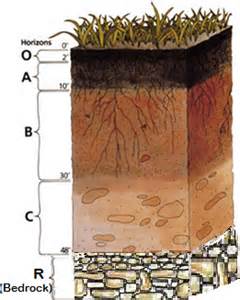
What do we call the layers of soil?
a)
Deposits
b)
Horizons
c)
Minerals
d)
Rocks
74.
The very top layer of soil is mostly made of
a)
Solid rock 
b)
Clay and mineral deposits
c)
A mixture of minerals and organic material
d)
Mostly organic material (humus)
75.
Which layer of soil is on the bottom?
a)
topsoil
b)
subsoil
c)
bedrock
d)
bottomsoil
76.
Which of the following is NOT one of the three layers of soil?
a)
topsoil
b)
undersoil
c)
subsoil
d)
bedrock
77.
What is the layer of soil just below the topsoil?
a)
soil
b)
subsoil
c)
topsoil
d)
terrace farming
78.
Decayed organic material in soil is called______.
a)
Litter
b)
Silt
c)
Humus
d)
Clay
79.
What is soil?
a)
A mixture of minerals
b)
A mixture of water, minerals, gases and organic matter
c)
A type of rock
d)
A type of bacteria
80.
What does weathering mean?
a)
To form or create new
b)
To build up
c)
To break down
d)
To completely destroy
81.
What effect did over plowing and cutting down trees in the Great Plains during the 1930’s?
a)
It had little effect
b)
It increased soil fertility
c)
It was a primary cause of the Dust Bowl
d)
Farmers had a great harvest
82.
The MAIN  thing Decomposers do for the soil is the following:
a)
Store moisture
b)
Burrow deep in the soil
c)
Make space for air and water
d)
Break down and digest dead organisms
83.
Which horizon is made up of partially weathered rocks?
a)
Horizon A
b)
Horizon B
c)
Horizon C
d)
Horizon D or R
84.
There is an unlimited supply of fertile soil.
a)
True
b)
False
85.
Which of the following is the largest particle in soil?
a)
sand
b)
silt
c)
humus
d)
clay
86.
Look at the following data table and label each soil horizon using the descriptions. 
a)
Beaker 1 = Bedrock   Beaker 2 = Horizon B (subsoil)   Beaker 3 = Horizon A (topsoil)   Beaker 4 = Horizon C (parent material)
b)
Beaker 1 = Bedrock   Beaker 2 = Horizon C (parent material)   Beaker 3 = Horizon B (subsoil)   Beaker 4 = Horizon A (topsoil)
c)
Beaker 1 = Horizon C (parent material) Beaker 2 = Horizon B (subsoil)   Beaker 3 = Horizon A (topsoil)   Beaker 4 = Bedrock
d)
Beaker 1 = Bedrock Beaker 2 = Horizon A (topsoil)   Beaker 3 = Horizon B (subsoil)   Beaker 4 = Horizon C (parent material)
87.
Which layer of the soil profile contains a solid layer of rock?
a)
1
b)
2
c)
3
d)
4
88.
A student in Earth science class wants to create a model to demonstrate the soil horizons.  Which materials would he use to represent LAYER 4?
a)
Solid Hershey candy bar 
b)
Crumbled Oreo cookies and gummy worms
c)
Chocolate Pudding  
d)
Pieces of Hershey candy bar
89.
A student in Earth science class wants to create a model to demonstrate the soil horizons.  Which materials would he use to represent LAYER 1?
a)
Solid Hershey candy bar 
b)
Crumbled Oreo cookies and gummy worms
c)
Chocolate Pudding  
d)
Pieces of Hershey candy bar
90.
_______ is the type of soil used most often with plants and on farms. It is a mixture of clay, sand, and silt.
a)
loam
b)
humus
c)
soil
d)
dirt
91.
Place the following layers in order from top to bottom: bedrock, topsoil, subsoil, organic, parent material.
a)
Organic, Topsoil, Subsoil, Parent Material, Bedrock
b)
Organic, Topsoil, Parent Material, Subsoil, Bedrock
c)
Topsoil, Organic, Subsoil, Parent Material, Bedrock
d)
Topsoil, Organic, Parent Material, Subsoil, Bedrock
92.

What is a tool to determine soil texture using 3 percentages?

a)

Ribbon Test

b)

Texture Triangle

c)

pH Test

d)

Jar Test

93.

What is a mixture of sand, silt and clay called?

a)

Loam

b)

Humus

c)

Sandy Clay

d)

Silty Sand

94.

Which soil particle is the smallest, feels smooth, and gets heavy when wet (like a sponge)?

a)

Sand

b)

Silt

c)

Clay

95.

Which structure does water take the longest to percolate through?

a)

Single grain

b)

Blocky

c)

Platy

d)

Crumb

96.

Soil shape or structure effects:

a)

Tilthe

b)

Permeability

c)

Water holding capacity

d)

all of the above

97.

40 % Sand

50% Silt

10% Clay

a)

Clay

b)

Clay Loam

c)

Silt Loam

d)

Sandy Loam

98.

70 % Sand

15% Silt

15% Clay

a)

Sandy Loam

b)

Clay

c)

Silt Loam

d)

Clay Loam

99.

35 % Sand

15% Silt

50% Clay

a)

Clay Loam

b)

Sandy Loam

c)

Silt Loam

d)

Clay

100.

20 % Sand

60% Silt

20% Clay

a)

Sandy Loam

b)

Silt Loam

c)

Clay Loam

d)

Clay

101.

30 % Sand

40% Silt

30% Clay

a)

Clay

b)

Sandy Loam

c)

Clay Loam

d)

Silt Loam

102.

What is the Texture for Silt Based on the Texture: SILTY CLAY:


5% SAND

50% CLAY

a)

45%

b)

38%

c)

36%

d)

55%

103.

What is the Texture for CLAY Based on the Texture: Clay Loam


27% SAND

35% SILT

a)

33%

b)

45%

c)

38%

d)

55%

104.

What is the Texture for CLAY Based on the Texture: Clay


22% SAND

23% SILT

a)

7%

b)

38%

c)

83%

d)

55%

105.

What is the Texture for Silt Based on the Texture: SILT


10% SAND

7% CLAY

a)

45%

b)

83%

c)

55%

d)

5%

106.

What is the Texture for SAND Based on the Texture: Sandy Clay Loam:


21% SILT

27% CLAY

a)

7%

b)

40%

c)

21%

d)

52%

107.
Conservation is the act of conserving, or protecting the environment, plants, and animals. Why is this so important? What are some things you can do to help conserve our environment? 
a)
leave water on, leave TV on, run dishwasher with 1 plate
b)
run the washing machine with 1 shirt
c)
leave the refrigerator door open
d)
turn off water, turn off lights, turn off TV
108.
Which one is an example of recycling


a)
Reusing a paper bag for lunch. 
b)
 Using less water to take a bath. 
c)
Making new glass bottles from old ones.
d)
Using plastic cups instead of paper cups. 
109.
To help our environment, you should


a)
recycle, remember, and reduce.
b)
reduce, reuse, and recycle.
c)
reduce, repair, and recycle. 
d)
  reuse, replace, and recycle. 
110.
What is a renewable resource?


a)
 one that can be replaced quickly 
b)
one that is man-made
c)
one that comes from the sun 
d)
one that will never run out 
111.
What do you do when you recycle a resource?


a)
divide it into many parts 
b)
use much less of it 
c)
make it into a different material 
d)
make new products out of an old one 
112.
Why is it important that people conserve, or  save, resources?


a)
They will become renewable.
b)
They will be used up quickly. 
c)
Their supplies will increase. 
d)
They will last longer.
113.
Which one BEST describes a nonrenewable resource?

   
a)
It is one that will run out one day and can’t be replaced.
b)
It will last for about 100 years.
c)
  It can be replaced again and again.
d)
It will never run out.
114.
What is one way a person can help to conserve or save energy?


a)
Drive a big car with no passengers.
b)
Cut off lights when they exit a room.
c)
Brush teeth with hot water.
d)
Ride a bicycle to school.
115.
Trash in the environment is a problem because

   
a)
birds can eat it and die.
b)
animals can get their heads stuck in containers.
c)
it can kill ocean plants and animals.
d)
all of the above
116.
What is one way you and your family can help to conserve water at home?


a)
watering the garden at the hottest time of the day
b)
using the longest cycle to wash clothes
c)
turning off the faucet while brushing your teeth