
 Worksheets
E-2 - Earth Structure and Surface Processes Unit Test Review
Total questions: 100
Worksheet time: 1hrs 16mins

Fine, tiny pieces of rock that are weathered away from larger rocks.
gravel
boulders
soil
sediment
The chemical, physical, or biological process which breaks down rock into sediment is called.
weathering
erosion
deposition
When sediment is dropped and settles in a new location.
weathering
erosion
deposition
What is the correct order of processes changing the Earth's surface?
weathering-deposition-erosion
deposition-weathering-erosion
erosion-weathering-deposition
weathering-erosion-deposition
What are the four main layers of Earth?
crust-mantle-outer core-inner core
crust-sauce-cheese-pepperoni
mantle-sediment-igneous-metamorphic
weathering-erosion-deposition-abrasion
A giant, slow moving sheet of ice and snow.
avalanche
glacier
mudslide
earthquake

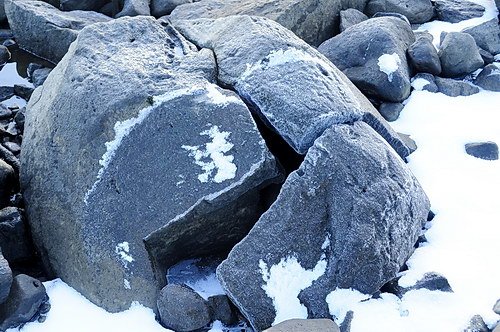
What does this picture show an example of?
weathering
erosion
deposition

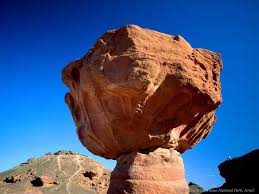
What does this picture show an example of?
weathering
erosion
deposition

What does this picture show and example of?
weathering
erosion
deposition
About how long has Earth existed?
4.6 billion years
1 billion years
2,018 years
2 million years
The Earth's surface is composed of multiple large _________
Volcanoes
Earthquakes
Plates
What is the name of the super continent that once existed?
Mesopotamia
Pangaea
Greece
Jurassic
What is NOT one piece of evidence for plate tectonics?
The same species found on multiple continents
The same types of rock found on multiple continents
The outline of the continents fit together
Different species found on different contients
Plates move because of ___________ in the mantle.
Earthquakes
Volcanoes
Convection Currents
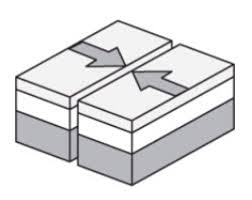
At convergent boundaries, plates move....
Towards each other
Away from each other
Past each other
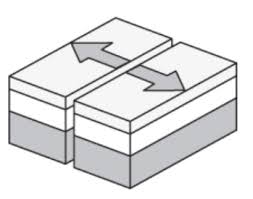
At divergent boundaries, plates move....
Towards each other
Away from each other
Past each other
At transform boundaries, plates move....
Towards each other
Away from each other
Past each other
What type of landform/event occurs along convergent land to land boundaries?
Volcanoes
Mountains
Earthquake
New sea floor (crust)
What type of landform/event occurs along divergent boundaries?
Volcanoes
Mountains
Earthquakes
New seafloor (Crust)
The location where an oceanic plate is forced under the continental plate because of density is called...
Divergent Boundary
Subduction Zone
Earthquake
What two layers of the earth are involved in plate tectonics?
Crust and mantle
Crust and inner core
Crust and outer core
Outer core and mantle

Which is the layer of the Earth that experiences convection and drives the movement of Earth’s tectonic plates?
A
B
C
D
Idea states that broken pieces of lithosphere are in slow, constant motion due to convection currents in mantle.
Continental Drift Theory
asthenosphere
Theory of Plate Tectonics
Pangaea
Sections of the Earth that causes plate tectonics to occur.
continent
magma
conduction
mantle
Idea that the continents were once joined together in one giant land mass before they broke apart and moved.
Theory of Plate Tectonics
Pangaea
Continent
Continental Drift Theory
Process that "powers' plate tectonics.
conduction
convection
continent
mantle
When two continental plates collide, they create this physical feature.
Mountains
Divergent
Volcano
Transformation
The physical feature formed where subduction occurs is
Mountains
Divergent
Volcano
Transform
What happens in convection currents?
Cold matter rises and hot matter sinks
Rocky matter sinks and gas matter rises
Hot matter rises and cold matter sinks
Rivers of water flow along the oceans surface

Where is the major source of energy from the Earth system?
E
F
G
L




Which of Earth's layers is best described as liquid metal?
crust
mantle
outer core
inner core
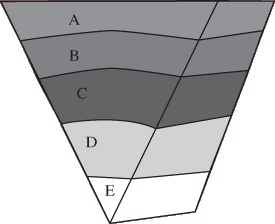
What does layer D show?
upper mantle
lower mantle
outer core
inner core

Which crust is thicker
oceanic
continental
bread
pizza

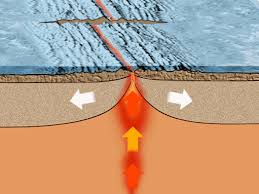
Heat transfer by convection is caused by differences in what two things:
Thickness and material
Weight and electricity
Temperature and density
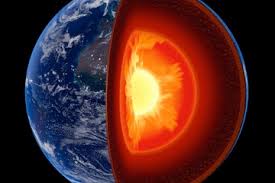

Rivers erode the land to make what shaped valleys?
U shaped
C shaped
T shaped
V shaped
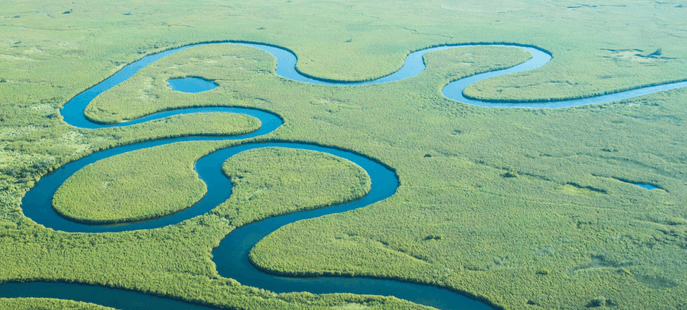
Meanders are what type of feature?
A steep bank
Turbulent water
Winding curve shapes
A U shaped lake



