Wayground logo

Free Printable Worksheets

Font size

S
M
L
XL
Worksheets

Phylum Mollusca

Total questions: 64

Worksheet time: 46mins

Name
Class
Date
1.
Which of these is NOT one of the three main body parts of a mollusk? 
a)
Head
b)
Valve
c)
Foot
d)
Visceral Mass
2.
What is the radula used for?
a)
Locomotion
b)
Feeding
c)
Swimming
d)
Digging
3.
The protective membrane that surrounds the visceral mass on all mollusks is called...
a)
Radula
b)
Mantle
c)
Nephridia
d)
Visceral Shield 
4.
The protective shell of a mollusk...
a)
is secreted by the mantle.
b)
Grows from the end of the mollusk foot. 
c)
Is constantly replaced by bigger shells as the mollusk grows. 
d)
forms when the mollusk reaches adulthood. 
5.
All mollusks have an external shell.
a)
True
b)
False
6.
What is the function of the chromatophores on the mantle of squid, octopus, and cuttlefish? 
a)
Secreting the shell
b)
Stinging prey
c)
Camouflage 
d)
Move water over gills 
7.
Land snails tend to be hermaphrodites, but many aquatic snails are _____________.
a)
Monoecious
b)
Asexual
c)
Dioecious 
d)
Self-fertilizing
8.
Which has the largest brain of all invertebrates?
a)
bivalves
b)
gastropods
c)
cephalopods
d)
oligochaeta
9.
What type of symmetry do Molluscs have?
a)
Asymmetrical
b)
Bilateral
c)
Radial
10.
What type of circulatory system do most Molluscs have?
a)
Open
b)
Closed
11.
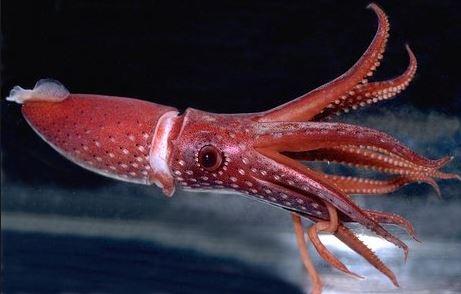
Which group of Molluscs does the picture belong to?
a)
Gastropod
b)
Bivalve
c)
Cephalopod
12.
What Mollusc group does the snail belong to?
a)
Gastropod
b)
Bivalve
c)
Cephalopod
13.
What Mollusc group does the nautilus belong to?
a)
 Bivalves
b)
Gastropods
c)
Cephalopods
d)
Cnidarians
14.
How do Bivalves eat?
a)
Filter feeders
b)
Radula
c)
Tentacles
15.
Which of these bivalves have eyes along the edge of their mantle?
a)
scallop
b)
oyster
c)
mussel
d)
clam
16.

Bivalvia class includes what type of animals?

a)

Clams

b)

Squid

c)

Chiton

d)

Octopi

17.

Most Mollusks use what structure to eat?

a)

Radula

b)

Mantle

c)

Tongue

d)

Suckers

18.

Which class of mollusks is the only one that can be found on land?

a)

Bivalves

b)

Polyphacophora

c)

Cephalopods

d)

Gastropods

19.

What specific feature is only found on cephalopods?

a)

Gills

b)

Tentacles

c)

Siphon

d)

Head

20.

In which environment are most mollusks found?

a)

Marine water

b)

Fresh water

c)

Land

d)

Rainforest

21.
All gastropods have shells
a)
true
b)
false
22.
Most mollusks breathe via...
a)
Gills
b)
Lungs
c)
Their moist skin
d)
Their nervous system
23.
Which part of the Mollusk body is specialized for burrowing, feeding, and movement?
a)
trochophores
b)
visceral mass
c)
mantle
d)
foot
24.

Which class of Mollusks include organisms that have eyes similar to humans?

a)

Gastropods

b)

Bivalves

c)

Cephalopods

25.
How are all mollusks similar to annelids?
a)
They have shells
b)
The have trochophore larvae
c)
They are segmented
d)
They live in marine environments
26.
Which class of Mollusks have a closed circulatory system?
a)
Gastropods
b)
Bivalves
c)
Cephalopods
d)
All of the classes
27.

Which class of Mollusks have many species that are sessile?

a)

Gastropods

b)

Bivalves

c)

Cephalopods

28.
Which class of Mollusks include squid, cuttlefish and octopus?
a)
Gastropods
b)
Bivalves
c)
Caphalopods
29.
What Mollusk group does the picture belong to?
a)
Gastropod
b)
Bivalve
c)
Cephalopod
30.

Which part of the mollusk contains the heart, digestive and reproductive organs?

a)

radula

b)

head-foot

c)

visceral mass

d)

trochopore

31.
Mollusk's tongue-like strip covered with teeth that point backward is called the ____
a)
trochopore
b)
radula
c)
gills
d)
visceral mass
32.
The muscles that hold the mollusk shell closed are the _____.
a)
opercula
b)
ganglia
c)
adductors
d)
chromatophores
33.
Bivalves don't have radula because they_____. 
a)
have two shells
b)
use gills instead
c)
are filter feeders
d)
don't eat meat
34.
What Mollusk group does this picture belong to?
a)
 Bivalves
b)
Gastropods
c)
Cephalopods
d)
Cnidarians
35.

Octopuses use their suckers on their tentacles to

a)

Smell, taste, grab things, and crawl.

b)

see under water

c)

change directions

d)

grow back

36.

What is one thing octopuses do to protect themselves from predators?

a)

Octopuses pretend like they are sleep.

b)

Octopuses use their heads to fight.

c)

Octopuses do not protect themselves.

d)

Octopuses squirt ink into the water.

37.

What does an octopus use to help it eat food like clams, crabs, and lobsters?

a)

a rock

b)

it eats them whole

c)

its tentacles

d)

its beak-like jaw

38.
In squid, the water jet is responsible for
a)
Locomotion
b)
Reproduction
c)
Feeding
d)
Paralyzing prey
39.
# 2 is pointing to the squid's
a)
Mantle
b)
Water Jet 
c)
Eye 
d)
Fins 
40.
The cells in skin of cephalopods that allow them to change colors are called
a)
pigmentocytes
b)
chromatophores
c)
dermatophores
d)
branchiocytes
41.
Mollusks can be aquatic or terrestrial. 
a)
True
b)
False
42.
Which of the following is the correct description of respiration in Mollusks?
a)
They use diffusion through their moist skin and gills in marine environments
b)
They use primitive lungs in marine environments and gills on land.
c)
They use nephridia to exchange oxygen and carbon dioxide
d)
They use gills in marine environments and primitive lungs on land.
43.

Why do octopi change their color?

a)

Because they like to change colors

b)

They want to be hidden from their predators

c)

To blend in with their surrounding

44.
a)
Class Gastropoda
b)
Class Bivalvia
c)
Class Cephalopoda
d)
Class Polyplacophora
45.
a)
Class Gastropoda
b)
Class Bivalvia
c)
Class Cephalopoda
d)
Class Polyplacophora
46.
a)
Class Gastropoda
b)
Class Bivalvia
c)
Class Cephalopoda
d)
Class Polyplacophora
47.

Which structure of a male octopus fertilizes the eggs inside of the oviduct of the female?

a)

sperm

b)

spermatophore

c)

tentacle

d)

foot

48.

Which molluscan class goes through torsion in its early development?

a)

Gastropoda

b)

Cephalopoda

c)

Bivalvia

49.

Which type of organ allows the skin of octopuses and cuttlefish to change textures?

a)

epithelium

b)

muscle

c)

tendons

d)

ligaments

50.

Which cephalopod has an internal shell?

a)

cuttlefish

b)

squid

c)

octopus

d)

nautilus

51.

A bivalve has two separate shells

a)

true

b)

false

52.

What does protandric mean?

a)

male in early life female later in life

b)

female in early life male later in life

c)

both genders at the same time

d)

does not have a gender

53.

Which of these creatures is nonvenomous?

a)

nudibranch

b)

cone snail

c)

octopus

d)

squid

54.

shipworms are mollusks that burrow into...

a)

sand

b)

coral

c)

limestone

d)

wood

55.

The siphon of a squid and octopus is used for...

a)

crawling

b)

breathing

c)

locomotion

d)

feeding

56.

mollusks can be...

a)

carnivores

b)

herbivores

c)

parasites

d)

scavengers

e)

all of these

57.
Which number represents the siphon/funnel?
a)
1
b)
2
c)
4
d)
5
58.

Which of the following is something an octopus would not eat?

a)
b)
c)
d)
59.

Located at umbo; provides a pivot point for clam to open and close

a)

Anterior

b)

Shell/Valve

c)

Posterior

d)

Hinge joint

60.

Oldest part of shell; large bump; hinge joint located here

a)

Umbo

b)

Foot

c)

Mouth

d)

Anus

61.

Part of mantle; brings water into organism

a)

Pallial sinus

b)

Incurrent siphon

c)

Visceral Mass

d)

Excurrent siphon

62.

Which number points to the squid's siphon?

a)

1

b)

3

c)

10

d)

6

63.

Which letter points to the eyeball?

a)

a

b)

c

c)

d

d)

p

64.

Which letter points to the head?

a)

h

b)

g

c)

f

d)

j