Wayground logo

Free Printable Worksheets

Font size

S
M
L
XL
Worksheets

Final Exam Spr 2019

Total questions: 45

Worksheet time: 32mins

Name
Class
Date
1.
What is a invertabrate?
a)
An animal lacking a backbone
b)
An animal that has a spinal cord
c)
A person that has a jaw
d)
An animal or person that has lungs
2.
?
a)
Crustacea
b)
Arachnida
c)
Insecta
d)
Myriapoda
3.
All arthropods have segmented bodies, jointed appendages, and ________________. 
a)
tails
b)
lungs
c)
wings
d)
an exoskelton
4.
The two body forms of Cnidarians are called
a)
Pupae and Larvae
b)
Polyp and Medusa
c)
Nymph and Adult
5.
Heartworm
a)
Phylum Platyhelminthes
b)
Phylum Nematoda
c)
Phylum Annelida
6.
Symmetry around an axis (many lines through a single point) creating many mirror images is considered
a)
asymmetry
b)
circular symmetry
c)
bilateral symmetry
d)
radial symmetry 
7.

Which of the following defines homeostasis?

a)

The ability of the body or a cell to seek and maintain stability within its internal environment

b)

A chemical reaction within a living organism that makes energy available for its use

c)

A system that sends immediate and specific information as electrical impulses

8.

The kidneys, ureters, urethra and urinary bladder make up the:

a)

Kidney System in invertebrates.

b)

Nervous System in aquatic sponges

c)

Excretory System which regulates body fluids

9.
What is responsible for delivering oxygen and removing carbon dioxide from the body?
a)
cell nucleus
b)
excretory system
c)
nervous tissue
d)
respiratory system
10.
The __________ is the main organ of the nervous system.
a)
heart
b)
lungs
c)
brain
d)
skin
11.
The circulatory system uses _________ to deliver oxygen to the rest of the body.
a)
blood cells
b)
lungs and nose
c)
blood vessels
d)
brain and spinal cord
12.
A nerve cell that is the basic working unit of the brain and nervous system which processes and transmits information
a)
axon
b)
neuron
c)
dendrite
d)
neurotransmitter
13.
Using the picture, what is the structure of A?
a)
ureter
b)
kidney
c)
urinary bladder
d)
urethra
14.

Which of the following is a direct interaction of the skeletal, muscular and nervous systems?

a)

Feeling tired after eating a meal

b)

Movement of a person's arm

c)

Healing of a cut on the arm

d)

Increased production of hormones.

15.

The Immune system keeps the body stable by _____.

a)

Keeping the body's temperature normal

b)

excreting wastes

c)

Killing disease causing organisms

d)

breaking down food into usable molecules

16.
What type of Connective Tissue are TENDONS and LIGAMENTS
a)
Dense Connective Tissue
b)
Osseous Tissue
c)
Loose connective Tissue
d)
Cartilage
17.
What type of Connective tissue is found at the ends of bones to reduce friction?
a)
Cartilage
b)
Dense connective tissue
c)
Adipose Tissue
d)
Loose connective tissue
18.
What type of tissue SIGNALS the intestines to move food along?
a)
Nervous Tissue
b)
Blood Tissue
c)
Smooth muscle tissue
d)
Skeletal Muscle Tissue
19.
What type of muscle tissue is VOLUNTARILY controlled
a)
Skeletal Only
b)
Skeletal and Cardiac
c)
Smooth and Cardiac
d)
Cardiac Only
20.
Which of the following is not one of the four tissue types? 
a)
Blood
b)
Connective
c)
Epithelial
d)
Nervous 
21.

Define tissue with regards to anatomy

a)

Multiple sheets of thin paper used to clean your nose

b)

The smallest structural and functional unit of an organism

c)

A series of different cells in the same area

d)

A group of structurally and functionally related cells that come together to perform common functions
22.
What is the function of epithelial cells?
a)
Act as barriers between the external environment, or between organs and fluidfilled cavities
b)
Provide movement by pulling on bones
c)
Provide secretions which help to digest food
d)
Act as the messaging pathway between different areas of the body
23.
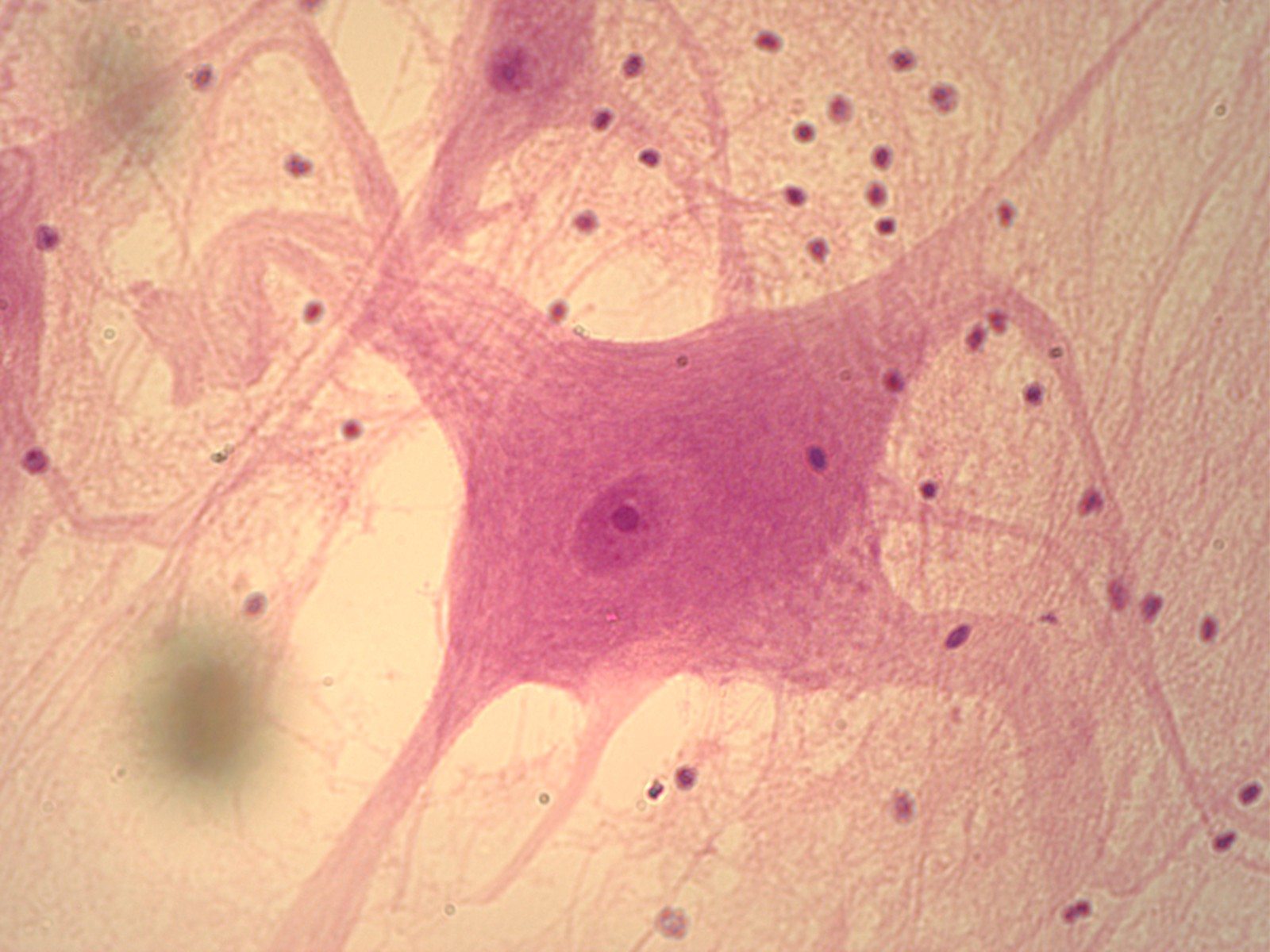
What tissue type is this?
a)
Nervous tissue
b)
Cardiac muscle
c)
Smooth muscle
d)
Connective tissue proper
24.
The common term for adipose tissue is
a)
Fat
b)
Blood
c)
Bone
d)
Cartilage
25.
What are the four main tissues found in the body?
a)
Epithelial, Connective, Bone, Blood
b)
Muscle, Connective, Blood, Epithelial
c)
Nervous, Muscle, Connective, Epithelial
d)
Nervous, Muscle, Connective, Bone
26.

Collagen is a protein that is particularly abundant in

a)

covering and lining epithelium

b)

dense regular connective tissue

c)

smooth muscle

d)

adipose tissue

27.

Animals that are warm blooded, have body hair, and produce milk for their young are grouped into which of the following classes?

a)

amphibians

b)

mammal

c)

birds

d)

reptiles

28.

A snake has an internal skeleton, cannot breathe under water, and relies on outside sources of heat to keep its body temperature constant. A snake is which type of animal?

a)

bird

b)

fish

c)

reptile

d)

amphibian

29.

The picture shows a unique animal called a pangolin. The pangolin has scales, is warm-blooded, gives live birth and nurses its young. What group of animals is the pangolin mostlike?

a)

reptiles, except it has scales

b)

mammals, except it has scales

c)

birds, because it nurses its young

d)

amphibians, because they are warm-blooded

30.
Blood has how many parts?
a)
1
b)
2
c)
3
d)
4
31.
This part of blood helps it clot, when you get cut.
a)
Red blood cells
b)
Plasma
c)
Platelets
d)
White blood cells
32.
Inhale!!!!
Your lungs are ___________  air
a)
taking in
b)
letting out
33.
EXHALE!!!
My lungs are __________________ air. 
a)
taking in
b)
letting out
34.
What are the main organs of gas exchange in the respiratory system?
a)
diapragm
b)
lungs
c)
trachea
d)
bronchi
35.
The two main branches from the trachea (one to each lung)
a)
bronchi
b)
alveoli
c)
capillaries
d)
bronchioles
36.
Which of the following is/are true of animals?
a)
They are multicellular.
b)
They are eukaryotic.
c)
They are heterotrophs.
d)
All choices are correct.
37.
Which one of the following statements is FALSE?
a)
Sponges lack true tissues.
b)
Cnidarians have true tissue and radial symmetry.
c)
Annelids have a true body cavity (coelom) and bilateral symmetry.
d)
The phylum most closely related to chordates is arthropods. 
38.
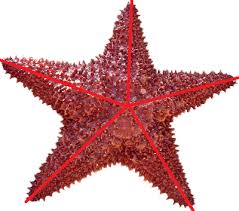
What type of symmetry is displayed in the picture?
a)
asymmetry
b)
bilateral symmetry
c)
radial symmetry
d)
photosynthesis
39.
What type of symmetry is pictured?
a)
bilateral symmetry
b)
radial symmetry
c)
asymmetry
d)
cellular respiration
40.
Identify this animal.
a)
sponge
b)
cnidarian
c)
roundworm
d)
flatworm
41.
Mollusks include which of the following?
a)
Octopus, Squid, Slugs, Snails
b)
Fish, Squid, Jellyfish, Sea cucumbers
c)
Sea stars, Sea cucumbers, sea urchins
d)
Oysters, Fish, Whales, Sponges
42.

What is your biology teacher's first name?

a)

Natalie

b)

Necole

c)

Naomi

d)

Nicole

43.

What course are you currently enrolled in?

a)

BIOL 1409

b)

BIOL 1408

c)

BIOL 1407

d)

BIOL 1406

44.

What is the date of your graduation from Cedar Valley College?

a)

May 14, 2019

b)

May 15, 2019

c)

May 16, 2019

d)

May 17, 2019

45.

What is the date of your DHS graduation?

a)

May 28, 2019

b)

May 29, 2019

c)

May 30, 2019

d)

May 31, 2019