wayground logo

Free Printable Worksheets

Font size

S
M
L
XL
Worksheets

Semester Review

Total questions: 117

Worksheet time: 2hrs 8mins

Name
Class
Date
1.

What part of the moon do we see from Earth?

a)

all of it

b)

the same side

c)

the good side

d)

only one quarter

2.
The moon seems to change shape from day to day in a cycle that lasts about a month as it goes through _.
a)
revolutions
b)
phases
c)
rotations
d)
eclipses
3.
As the moon's shape appears to get smaller, we say that the moon is _.
a)
swelling
b)
waxing
c)
waning
d)
disappearing
4.
Which moon phase is when you can't see the moon at all?
a)
Waning crescent
b)
Full moon
c)
Waxing gibbous
d)
New moon
5.
What causes the phase of the Moon to change each night?
a)
The Moon changes its acutal shape throughout the course of the month.
b)
The alignment between the Earth, Moon, and Sun determines the amount of light reflected by the Moon.
c)
The season of the year determines the phase of the Moon.
d)
The closer the Moon is to Earth, the more light the Moon reflects.
6.
Phases of the moon in which the moon appears to be getting larger are referred to as _.
a)
waxing
b)
waning
c)
new
d)
eclipse
7.
The cycle of the moon lasts about a _.
a)
day
b)
year
c)
week
d)
month
8.
Which of the following words describe the phases of the moon?
a)
none, quarter, half, three quarters, full
b)
new, crescent, quarter, gibbous, full
c)
dark, light, half, quarter, blue
d)
first quarter, second quarter, third quarter, fourth quarter
9.
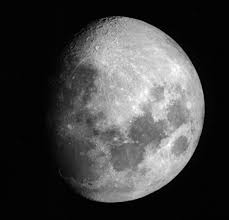
Name the moon phase
a)
waning crescent
b)
waxing crescent
c)
waning gibbous
d)
waxing gibbous
10.
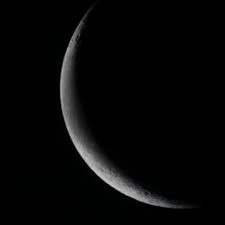
Name the moon phase
a)
waning crescent
b)
waxing crescent
c)
waning gibbous
d)
waxing gibbous
11.
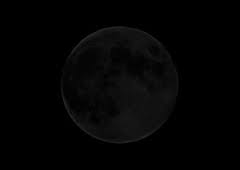
Name the moon phase
a)
waning crescent
b)
waxing crescent
c)
waning gibbous
d)
waxing gibbous
12.
Name the moon phase
a)
waning crescent
b)
waxing crescent
c)
waning gibbous
d)
waxing gibbous
13.
Name the moon phase
a)
waning crescent
b)
waxing crescent
c)
waning gibbous
d)
waxing gibbous
14.
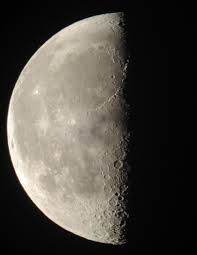
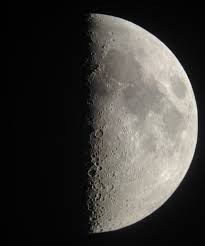
Name the moon phase
a)
First Quarter
b)
Last Quarter
c)
New Moon
d)
Full Moon
15.
Name the moon phase
a)
First Quarter
b)
Last Quarter
c)
New Moon
d)
Full Moon
16.
Name the moon phase
a)
First Quarter
b)
Last Quarter or (third quarter)
c)
New Moon
d)
Full Moon
17.
Name the moon phase
a)
First Quarter
b)
Last Quarter
c)
New Moon
d)
Full Moon
18.

How much of the moon is always lit?

a)

can't tell

b)

all of it

c)

half

d)

3/4

19.
Name the moon phase that would come AFTER this moon.
a)
waning crescent
b)
waxing crescent
c)
waning gibbous
d)
waxing gibbous
20.
What is the difference between a gibbous moon and a crescent moon?
a)
The gibbous shows more than half of the bright side of the moon.
b)
The crescent shows more than half of the bright side of the moon.
c)
The gibbous shows less than half of the bright side of the moon. 
21.
About how long does it take the moon to make one complete cycle around the earth?
a)
65 days
b)
8 days
c)
365 days
d)
28 days
22.
Which type of eclipse occurs when the Earth casts a shadow on the moon?
a)
Tilt
b)
Lunar Eclipse
c)
Solar Eclipse
d)
Partial Eclipse
23.
Which type of eclipse is shown in the diagram?
a)
Solar Eclipse
b)
Lunar Eclipse
c)
Total Eclipse
d)
Partial Eclipse
24.
During a solar eclipse...
a)
The sun is blocked
b)
The Earth is blocked
c)
The moon is blocked
d)
You are blocked
25.
The order of a lunar eclipse is..
a)
Sun-Earth-Moon
b)
Earth-Sun-Moon
c)
Moon-Sun- Earth
d)
Earth-Moon-Sun
26.
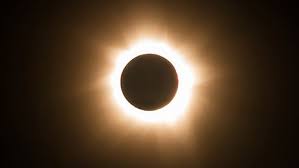
Which type of eclipse is shown in this picture?
a)
Solar Eclipse
b)
Orbit
c)
Lunar Eclipse
d)
Total Eclipse
27.
What do we call the sun's outer atmosphere that you see during a solar eclipse?
a)
an umbra
b)
a corona
c)
an orbit
d)
a shadow
28.
This image is an example of
a)
Lunar Eclipse
b)
Full Moon
c)
New Moon
d)
Solar Eclipse
29.
True or False: You must wear your eclipse goggles at all times except during totality due to safety reasons.
a)
True
b)
False
30.
In order to have an eclipse, the Moon, Sun and Earth have to be?
a)
In Alignment
b)
Above each other
31.
For a solar eclipse to occur, what has to happen?
a)
The sun must be directly between Earth and the moon.
b)
The moon must be directly between Earth and the Sun.
32.
This type of eclipse occurs when the moon blocks the sunlight from reaching Earth?
a)
Solar eclipse
b)
Lunar eclipse
33.
During a solar eclipse...
a)
The sun is blocked
b)
The Earth is blocked
34.

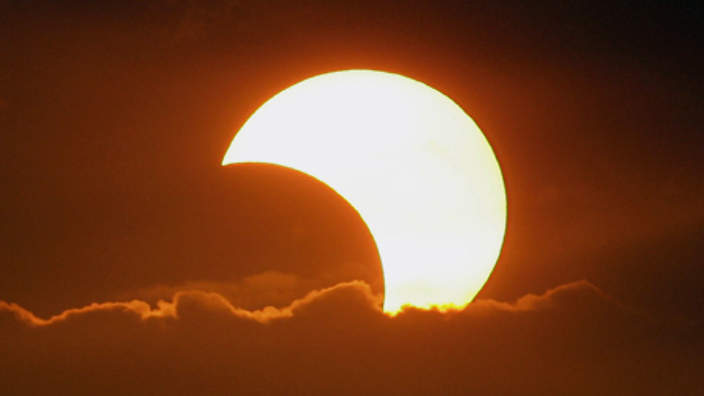
What type of eclipse is this an example of?

a)

Lunar Eclipse

b)

Solar Eclipse

35.

An ____________ is the inner, darker part of a shadow.

a)

penumbra

b)

umbra

36.

A __________ is the lighter, outer part of a shadow cone.

a)

penumbra

b)

umbra

37.
A lunar eclipse is caused by the shadow of the Earth.
a)
True
b)
False
38.
What keeps a planet moving on its path around the sun
a)
gravity & inertia
b)
heat & pressure
c)
inertia & pressure
d)
gravity & heat
39.
What is an astronomical unit?
a)
distance between the moon and earth
b)
distance between the earth and pluto
c)
distance between the earth and sun
d)
distance between NJ and Cali
40.
What pulled the matter towards the center of the nebula as the solar system was forming?
a)
inertia
b)
heat
c)
pressure
d)
gravity
41.
The closer a planet is to the sun...
a)
the faster it travels
b)
the slower it travels
42.
Which statement best describes a galaxy?
a)
a cluster of millions of stars held together by gravity
b)
a star, with planets, moons and other small space bodies revolving around it
c)
all known objects
d)
all of the above
43.
Which movement creates day/night?
a)
rotation
b)
revolution
44.
What is a common characteristic of the inner  planets?
a)
Gaseous
b)
Distance between them is longer
c)
Rings
d)
Distance between them is shorter
45.
Which movement creates years?
a)
rotation
b)
revolution
46.
All of the outer planets--
a)
have many moons
b)
are small
c)
have a short orbit around the Sun
d)
are rocky
47.
What is located between the inner and outer planets.
a)
Sun
b)
Asteroid belt
c)
Uranus
d)
Moons
48.
Which planets are terrestrial planets
a)
Inner planets
b)
Outer planets
c)
Both
d)
Asteroid belt
49.
A force of attraction between any two objects is called _____________.
a)
static electricity 
b)
rotation
c)
gravity
d)
orbit
50.
How does the distance between two objects affect the force of gravity?
a)
The closer the two objects are the more gravitational force they have.
b)
The farther apart the two objects are the more gravitational force they have.
c)
The closer the two objects are the less gravitational force they have.
51.
The Sun is at the center of our solar system.  All the planets in the solar system orbit around the Sun. Which of the following planets has the longest orbit? 
a)
Mercury
b)
Earth
c)
Saturn
d)
Neptune
52.
Which of the following is a common characteristic of outer planets?
a)
have rings
b)
shorter years
c)
terrestrial
d)
less than 5 satellites
53.
All planets have the following characteristics EXCEPT
a)
They rotate
b)
They revolve
c)
They have an atmosphere
d)
They have elliptical orbits
54.
If a planet had 2 moons and 1 moon was twice as far from the planet as the other moon, which moon would complete a revolution around the planet 1st?
a)
Moon A - closer to the planet
b)
Moon B - further from the planet
55.
The idea that an object in motion will stay in motion unless acted upon is known as
a)
gravity
b)
inertia
c)
pressure
d)
heat
56.
The four inner planets are...
a)
Rocky and small
b)
Very large and made of ice
c)
Small and made of ice
d)
Very large and made of gases
57.
The outer planets are...
a)
Rocky and small
b)
Very large and made of ice
c)
Small and made of ice
d)
Very large and made of gases
58.
Which two planets are out of order in this list of our solar system?
Mercury-Earth-Venus-Mars-Jupiter-Saturn-Uranus-Neptune-Pluto.
a)
Mercury and Earth
b)
Earth and Venus
c)
Saturn and Jupiter
d)
Uranus and Neptune
59.
How does a telescope help us understand the moon?
a)
It tells us how it was formed
b)
It tells us how hot it is there
c)
It helps us see surface features
d)
It can tell us what the moon is made of
60.
Why is space travel difficult for people?
a)
We cannot take the air or food we need into space
b)
the distance are very great; it is dangerous and expensive.
c)
It is impossible to escape the sun's or Earth's gravity.
d)
We do not have a destination to visit that we know will support life.
61.
What holds the planets in their orbits around the sun?
a)
gravity
b)
speed
c)
string
d)
air currents
62.
Which object has the most gravity?
a)
Earth
b)
moon
c)
Jupiter
d)
sun
63.
Which is the largest object in our solar system?
a)
Sun
b)
Jupiter
c)
Earth
d)
Pluto
64.
Which planet is closest to the sun?
a)
Uranus
b)
Mercury
c)
Neptune
d)
Earth
65.
Which is the second closest planet to the sun?
a)
Earth
b)
Saturn
c)
Venus
d)
Mercury
66.
Which is the sixth planet from the sun?
a)
Earth
b)
Uranus
c)
Saturn
d)
Neptune
67.
Which is the fourth planet from the sun?
a)
Mars
b)
Saturn
c)
Earth
d)
Jupiter
68.
A natural satellite of a planet.
a)
Asteroid
b)
Comet
c)
Moon
d)
Meteor
69.
Earth and the other planets closest to the Sun are made mostly of _______
a)
gas
b)
metal
c)
water
d)
rock
70.
The __________ has planets, moons, comets, and asteroids.
a)
solar system
b)
earth
c)
rotation
d)
United States
71.
Earth's ________ on its axis causes day and night.
a)
rotation
b)
revolution
c)
phase
d)
comet
72.
There is one star in our solar system.
a)
True
b)
False
73.
Which planet has a giant red spot?
a)
Jupiter
b)
Saturn
c)
Uranus
d)
Neptune
74.
Which planet has very prominent rings?
a)
Jupiter
b)
Saturn
c)
Uranus
d)
Neptune
75.
Which planet is the largest?
a)
Mercury
b)
Venus
c)
Earth
d)
Mars
76.
What theory tries to explain the origin of the universe?
a)
Big Bang Theory
b)
Copernican Theory
c)
Ptolemain Theory
d)
Galilean Theory
77.
Put the planets in order from the sun.
a)
Mercury, Venus, Mars Earth, Jupiter, Saturn, Uranus, Neptune, Pluto
b)
Mercury, Venus, Earth, Mars, Jupiter, Sarturn, Neptune, Uranus, Pluto
c)
Mercury, Venus, Earth, Mars, Jupiter, Sarturn,  Uranus, Neptune,Pluto
d)
Mercury, Venus, Earth, Mars, Sarturn, Jupiter, Neptune, Uranus, Pluto
78.
How do we characterize an air mass that forms over the ocean?
a)
Dry
b)
Wet
c)
Cold
d)
Warm
79.
How do we characterize an air mass that forms over land?
a)
Dry
b)
Wet
c)
Cold
d)
Warm
80.
How do we characterize an air mass that forms over near the equator?
a)
Dry
b)
Wet
c)
Cold
d)
Warm
81.
How do we characterize an air mass that forms near the poles?
a)
Dry
b)
Wet
c)
Warm
d)
Cold
82.
What types of air masses form over oceans?
a)
Maritime
b)
Continental
c)
Polar
d)
Tropical
83.
What's the humidity and temperature of a continental tropical air mass?
a)
Wet and cold
b)
Dry and warm
c)
Wet and warm
d)
Dry and cold
84.
What's the humidity and temperature of a maritime tropical air mass?
a)
Wet and cold
b)
Dry and warm
c)
Wet and warm
d)
Dry and cold
85.
A dry and cold air mass would be...
a)
Maritime polar
b)
Continental polar
c)
Maritime tropical
d)
Continental tropical
86.
A wet and cold air mass would be a...
a)
Maritime polar
b)
Continental polar
c)
Maritime tropical
d)
Continental tropical
87.
A dry and hot air mass would be...
a)
Maritime arctic
b)
Maritime tropical
c)
Continental tropical
d)
Continental polar
88.
What type of storm front is this?
a)
Warm Front
b)
Cold Front
c)
Occluded Front
d)
Stationary Front
89.
What does symbol # 1 mean?
a)
Occluded Front
b)
Stationary Front
c)
Warm Front
d)
Cold Front
90.
8. Which of the following would be an area where a cold air mass would most likely develop?
a)
Over Mexico
b)
Over Canada
c)
Over the Equator area
91.
What type of front may be rainy or foggy for several days?
a)
Cold
b)
Stationary
c)
Occluded
d)
Warm
92.
What type of front is this?
a)
Warm Front
b)
Cold Front
c)
Stationary Front
93.
What color is the symbol for a cold front ?
a)
red
b)
blue
94.
what is an air mass?
a)
a large body of air that is made of the same temperature and moisuture
b)
when two air masses meet 
95.

Which is the correct symbol for a warm front?

a)
b)
c)
d)
96.

What type of air mass is associated with warm and humid air?

a)

Continental tropic

b)

Maritime tropic

c)

Continental polar

d)

Maritime polar

97.
This type of cloud is thin, wispy, and made of ice crystals
a)
cumulus cloud
b)
stratus cloud
c)
cirrus cloud
d)
cumulonimbus cloud
98.

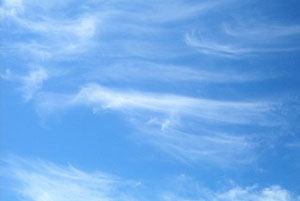
What type of cloud is shown?

a)

cumulus

b)

cirrus

c)

stratus

99.
what type of cloud is shown?
a)
cumulus
b)
cirrus
c)
stratus
100.
what type of cloud is shown?
a)
cumulus
b)
cirrus
c)
stratus
101.
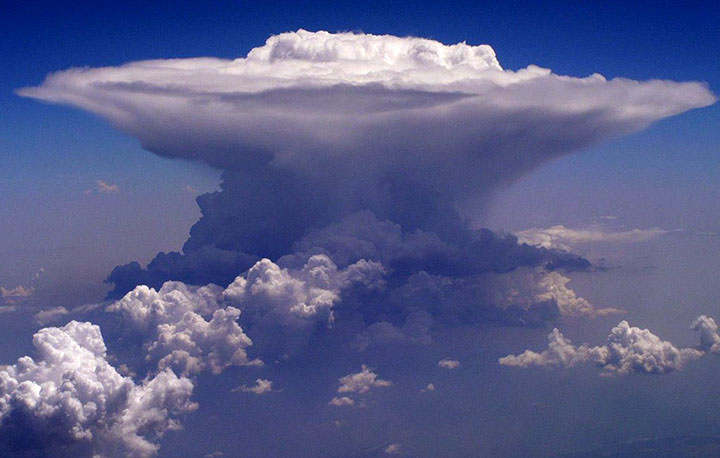
Which cloud is this?
a)
cumulus
b)
cumulonimbus
c)
cirrus
d)
stratus
102.
Which cloud is this?
a)
cumulus
b)
cumulonimbus
c)
cirrus
d)
stratus
103.

Clouds are made up of tiny drops of ____________ or ice. The moisture in the cloud affects the weather.

a)

dust

b)

water

c)

oxygen

d)

cotton

104.

These are the highest clouds in the sky. They look white, thin and wispy. They usually mean good weather.

a)

Cumulus

b)

Cirrus

c)

Stratus

105.

These clouds are low in the sky and look soft and fluffy. They mean fair weather.

a)

Cirrus

b)

Cumulus

c)

Stratus

106.

What type of clouds are called "fair weather clouds" and look like floating cotton?

a)

Cumulus

b)

Stratus

c)

Cirrus

107.
Are stratus clouds or cirrus clouds found closer to the ground?
a)
Cirrus
b)
Stratus
108.

What are cirrus clouds made of?

a)

Water vapor

b)

Water droplets

c)

Ozone

d)

Ice crystals

109.
These clouds are the closest to the ground. Their name means layer- or sheet like. They bring light & continuous rain or snow and cover most of the sky. 
a)
Cirrus
b)
Stratus
c)
Cumulonimbus
d)
Cumulus
110.
During which part of the water cycle do clouds form?
a)
condensation
b)
transpiration
c)
precipitation
d)
evaporation
111.
This is sometimes called a thunderhead cloud. It looks very tall like mountains and heavy rain/thunderstorms comes from it. 
a)
Cumulus
b)
Cirrus
c)
Stratus
d)
Cumulonimbus
112.
These clouds are responsible for thunderstorms, tornadoes, and hurricanes.
a)
cirrus
b)
stratus
c)
cumulus
d)
cumulonimbus
113.
What is moving air?
a)
rain
b)
wind
c)
water
d)
speed
speed
114.
What does nimbus mean?
a)
storm
b)
nimble
c)
rain
d)
rainbow
115.
Barometric pressure has been dropping all day. What weather conditions will most likely occur?
a)
Clear and Calm
b)
Stormy and Rainy
c)
Fog
d)
Dust storm
116.
Name two types of clouds that are between 20,000 and 6,500 feet in the air
a)
Altocumulus and Altostratus
b)
Stratus and Nimbostratus
c)
Cirrus and Cirrostratus
d)
Cirrocumulus and Stratus
117.
Name the two types of low level clouds
a)
Altostratus and Altocumulus
b)
Cirrus and Cumulus
c)
Cirrocumulus and Cumulonimbus
d)
Stratus and Nimbostratus