wayground logo

Free Printable Worksheets

Font size

S
M
L
XL
Worksheets

Final 2019 Physical Science

Total questions: 105

Worksheet time: 2hrs 32mins

Name
Class
Date
1.
Ionic Bonding involves...
a)
The transfer of protons
b)
The transfer of nuetrons 
c)
The transfer of electrons
d)
None Of the above
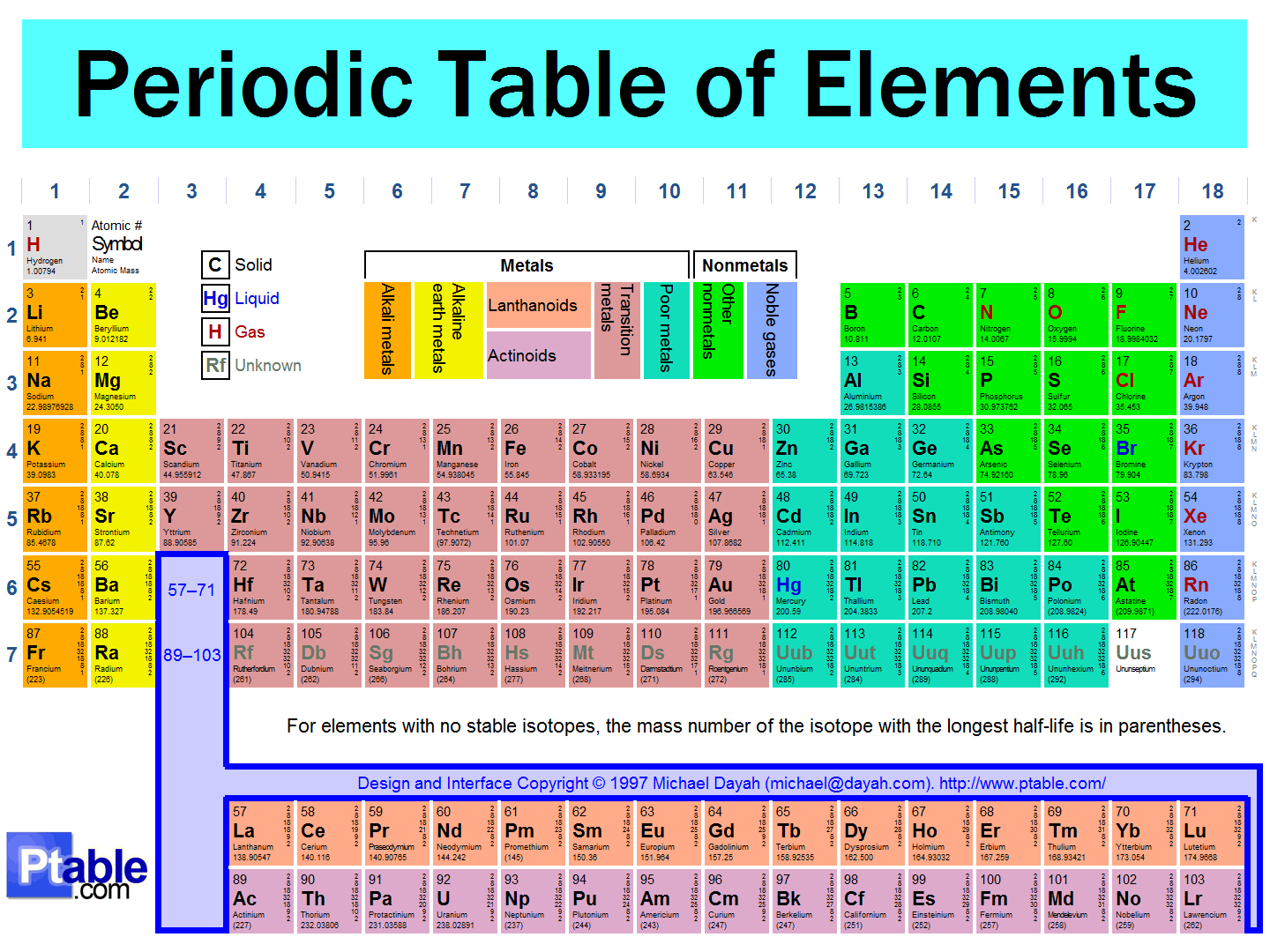
2.
Covalent compounds
a)
Share electrons
b)
transfer electrons
c)
contain a sea of electrons
d)
conduct electricity
3.
What two types of atoms make a covalent bond?
a)
2 Nonmetals
b)
1 Nonmetal and 1 Metal
c)
2 Metals
d)
2 Noble Gases
4.
What elements generally make an ionic bond?
a)
metal and nonmetal
b)
2 or more nonmetals
c)
metal
d)
none of the above
5.
Predict the bond that will form between Be and F.
a)
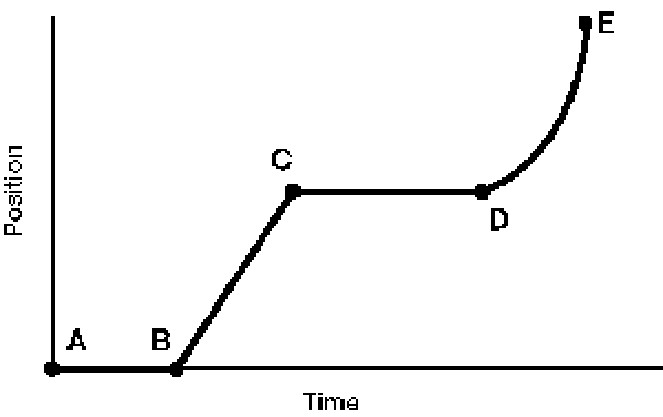
Ionic
b)
Covalent
6.
Predict the bond that will form between Se and Cl.
a)
Ionic
b)
Covalent
7.
What is the number of valence electrons for Oxygen?
a)
8
b)
6
c)
2
d)
1
8.
What is the number of valence electrons for Beryillum?
a)
1
b)
4
c)
2
d)
7
9.
How many valence electrons in this structure?
a)
6
b)
5
c)
4
d)
7
10.
According to the octet rule most elements need _______ valence electrons.
a)
2
b)
8
c)
6
d)
18
11.
The reactants are on the left side of the chemical equation.
a)
True
b)
False
12.

How many IRON (Fe) atoms are in this chemical formula?

a)

4 iron atoms

b)

2 iron atoms

c)

8 iron atoms

d)

3 iron atoms

13.

In an exothermic reaction, heat is....

a)

Absorbed

b)

Released

14.

In an endothermic reaction, heat is...

a)

Absorbed

b)

Released

15.
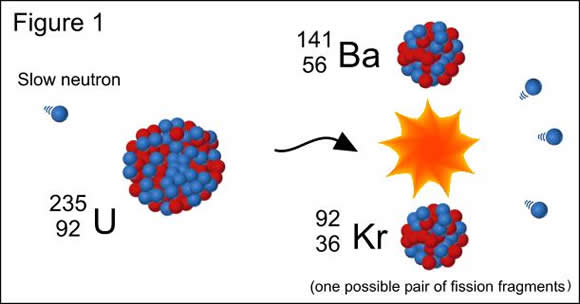
Which nuclear process is shown in the picture?
a)
fission
b)
fusion
c)
alpha decay
d)
beta decay
16.
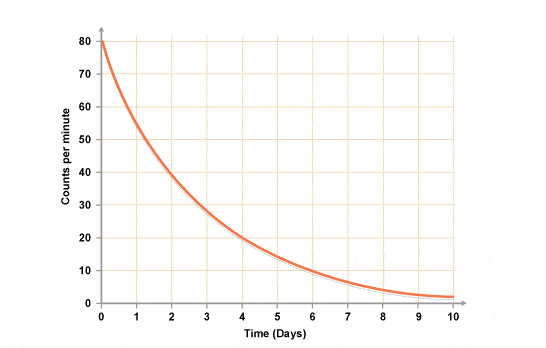
what's the half life of this substance?
a)
1 day
b)
2 days
c)
3 days
d)
4 days
17.
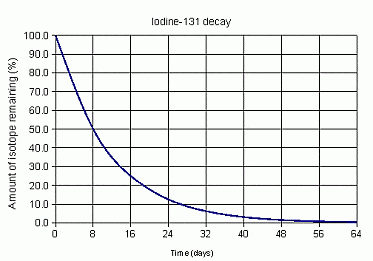
What is the half-life of iodine-131?
a)
32 days
b)
8 days
c)
16 days
d)
24 days
18.
The force that holds 2 atoms together is called a ________________.
a)
Chemical Reaction
b)
Chemical Bond
c)
Diatomic Chemical
d)
Glue
19.
What are the products of the chemical reaction pictured?
a)
CH4 and CO2
b)
CH4 and O2
c)
CO2 and H2O
d)
O2 and H2O
20.
This type of reaction occurs when light nuclei combine to form a larger, single nucleus.
a)
Fission
b)
Fusion
c)
single displacement
d)
double displacement
21.
This type of  reaction occurs when a heavy nucleus, such as U-235, splits into two or more parts.
a)
Fission
b)
Fusion
c)
Chain reaction
d)
synthesis
22.
The short-range force that is 100 times stronger than the electrical force .
a)
Weak force
b)
Strong Force
c)
Gravitational
d)
magnetic
23.
The following chemical equation occurs:
CH+ 2O-> CO+ 2H2O
Does this equation follow the law of conservation of mass?  In other words, are there the same number of carbon, hydrogen, and oxygen atoms in the reactants and the products?
a)
Yes
b)
No
c)
You can't tell with the given information 
24.
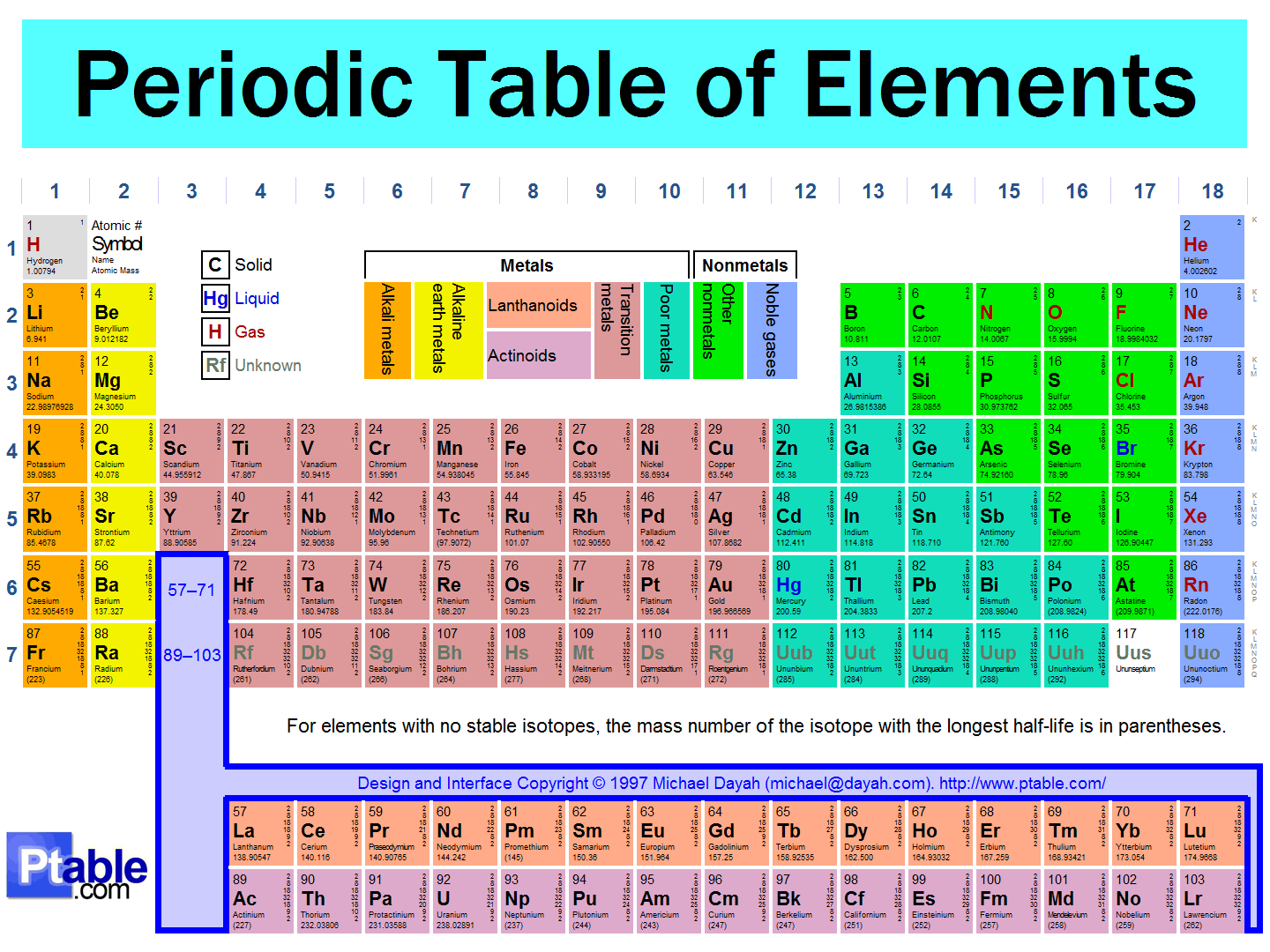
The horizontal row on the periodic table is called a
a)
group
b)
family
c)
period
d)
atomic number
25.

A vertical column is called...

a)

group/family

b)

tower

c)

period

d)

crew

26.
The number at the bottom of each square on the periodic table is the ...
a)
atomic number
b)
atomic mass
c)
chemical symbol
d)
element name
27.
The number at the top of each square on the periodic table is the ...
a)
atomic number
b)
atomic mass
c)
Chemical Symbol
d)
Element Name
28.

Iron, copper, silver, and gold are in which family of elements?

a)

Alkaline-earth Metals

b)

Transition Metals

c)

Alkali Metals

d)

Halogens

29.

This class of elements have properties of both metals and nonmetals are sometimes called "semiconductors."

a)

Metals

b)

Nonmetals

c)

Metalloids

d)

Groups

30.
The atomic number tells you what?
a)
number of electrons
b)
number of protons
c)
number of neutrons
d)
both electrons and protons in an atom.
31.

Which group/family of the periodic table is composed of inert (not reactive) gases?

a)

alkali metals

b)

alkaline earth metals

c)

halogens

d)

noble gases

32.

Which element is not a metal?

a)

Na

b)

Fe

c)

Al

d)

B

33.
The atomic number tells you what?
a)
number of electrons
b)
number of protons
c)
number of neutrons
d)
both electrons and protons in an atom.
34.
Which is a halogen?
a)
Helium
b)
Chlorine
c)
Oxygen
d)
Neptune
35.
Which is an alkali metal?
a)
Magnesium
b)
Iron
c)
Sodium
d)
Europium
36.
The period for Bromine is ___________.
a)
3
b)
2
c)
4
37.
How many electrons can the 1st electron shell hold?
a)
2
b)
3
c)
8
d)
18
38.
What is an ion?
a)
A Charged Atom
b)
A Large Atom
c)
A Small Atom
d)
A Cute Atom
39.
Cations are...
a)
Positive
b)
Negative
c)
Neutral
d)
Purring
40.
Anions are...
a)
Positive
b)
Negative
c)
Neutral
d)
Crying
41.

Why are ions formed?

a)

To make our lives difficult

b)

Because atoms want to be stable (8 valence electrons)

c)

Because atoms have the same number of protons and electrons

d)

Because atoms gained neutrons

42.
What is the charge on an Aluminium ion?
a)
3
b)
+3
c)
+2
d)
+1
43.

What is the charge on a Magnesium ion?

a)

3

b)

+3

c)

+2

d)

+1

44.

If you are undergoing an acceleration in a car you could experience which of the following?

a)

speed up

b)

slow down

c)

change in direction

d)

Any of the above

45.

Changes in speed, direction or both are called _________.

a)

gravity

b)

changes

c)

acceleration

d)

displacement

46.

The SI unit of acceleration is:

a)

m/s2

b)

m/s

c)

m.s2

d)

m/s3

47.
A bicyclist begins moving with a velocity of 10 m/s and then decreases his velocity to 6 m/s in 2 seconds. What is the acceleration of the bicyclist?
a)
4 m/s2
b)
-4 m/s2
c)
2 m/s2
d)
-2 m/s2
48.
Which graph represents zero acceleration (constant velocity)?
a)
A
b)
B
c)
C
d)
D
49.
Which graph represents the greatest acceleration?
a)
A
b)
B
c)
C
d)
D
50.

In A the car is ____________________________________

a)

speeding up

b)

slowing down

c)

constant speed

d)

not moving

51.

In B the car is ____________________________________

a)

speeding up

b)

slowing down

c)

constant speed

d)

not moving

52.
What is the formula to calculate speed?
a)
S = t/d
b)
S = d/t
c)
S = d x t
d)
S = t x d
53.
What is speed?
a)
how far you go
b)
how much distance is covered over a period of time
c)
how fast you accelerate
d)
the change in the location of a object
54.
What is velocity?
a)
the quickness of an object
b)
the location of an object
c)
acceleration
d)
speed in a specific direction
55.
A runner races in the 100 meter dash.  It takes her 10 seconds to finish.  What is her average speed?
a)
10 m/s
b)
1000 m/s
c)
100 seconds
d)
10 seconds
56.
Total distance divided by total time is
a)
average speed
b)
constant speed
c)
instantaneous speed
d)
acceleration
57.
The object is traveling at a constant speed during interval 
a)
A-B
b)
B-C
c)
C-D
d)
D-E
58.
On a distance vs. time graph, the steeper the slope _____
a)
the slower the speed
b)
the faster the speed
c)
less acceleration
d)
greater acceleration
59.
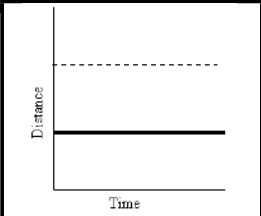
What does this graph represent?
a)
Constant speed
b)
Acceleration
c)
Not moving
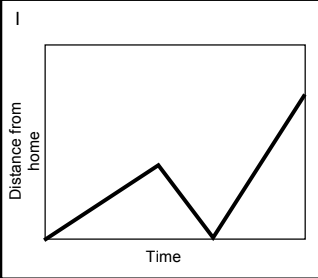
60.

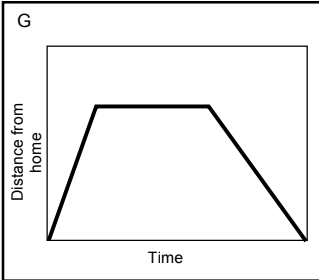
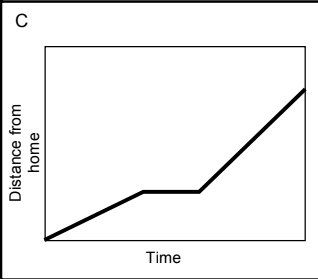
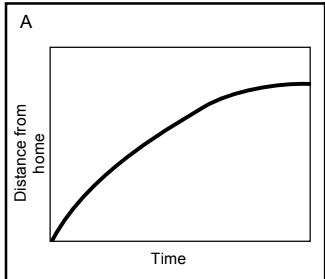
Which graph matches the story?
a)
b)
c)
d)
61.
What is this graph showing?
a)
Constant Speed
b)
Acceleration (speeding up)
c)
Deceleration (slowing down)
d)
No motion
62.
What is this graph showing?
a)
Constant Speed
b)
Acceleration (speeding up)
c)
Deceleration (slowing down)
d)
No motion
63.
 Jermaine runs exactly 2 laps around a 400 meter track. What is the displacement?
a)
800
b)
400
c)
0
d)
200
64.

Scott travels north 5 miles before coming straight back south 2 miles. What is his distance?

a)

10

b)

7

c)

5

d)

3

65.

How far an object is from its starting position is________________________?

a)

displacement

b)

distance

c)

motion

d)

reference point

66.

Scott travels north 5 miles before coming straight back south 2 miles. What is his displacement?

a)

10

b)

7

c)

5

d)

3

67.
What is the net force?
a)
40 N left
b)
0 N Balalnced
c)
400 N right
d)
40 N right
68.
What is the net force?
a)
30 N left
b)
25 N right
c)
5 N left
d)
55 N right
69.
The sum of all forces acting on an object and direction
a)
Contact Force
b)
Balanced Force
c)
Unbalanced Force
d)
Net Force
70.
Balanced or Unbalanced?
a)
Balanced 
b)
Unbalanced
71.
What force holds the planets in motion around the sun?
a)
Magnetic
b)
Electrical
c)
Gravitational
d)
Air Resistance
72.
What force ultimately slows the roller coaster to a stop?
a)
Applied
b)
Normal
c)
Friction
d)
Magnetic
73.
An _______ force must act on an object for it to CHANGE it's motion
a)
balanced
b)
unbalanced
c)
gravitational
d)
electrical
74.
This type of force is when one object pushes or pulls on another object by touching it
a)
contact
b)
gravity
c)
friciton
75.
This type of force resist motion between two surfaces that are pressed together
a)
contact
b)
gravity
c)
friction
76.

If the net force is equal to zero, the forces acting on the object are

a)

balanced

b)

unbalanced

77.
The unit of force is
a)
m/s
b)
m/s^2
c)
newton
d)
kg
78.
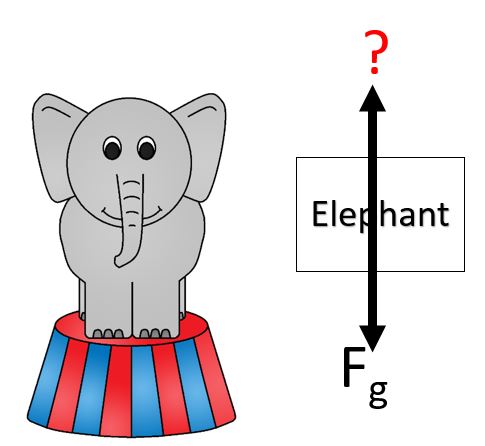
Name the missing force...
a)
weight force
b)
normal force
c)
applied force
d)
frictional force
79.
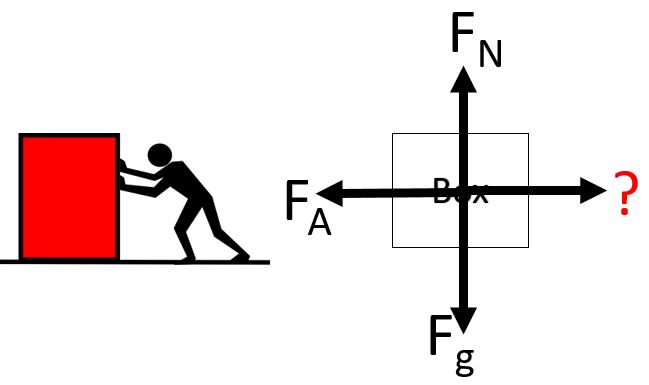
Name the missing force...
a)
frictional force
b)
weight force
c)
thrust
d)
buoyant force
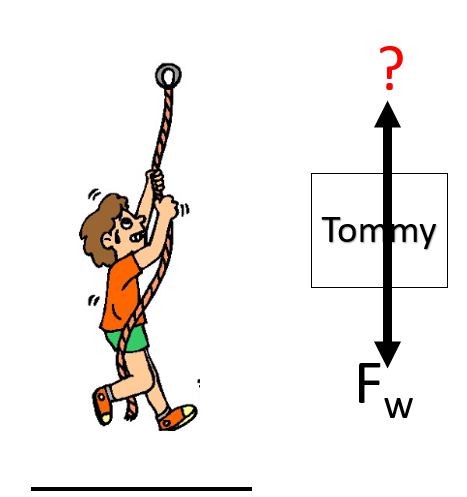
80.

Name the missing force...

a)

applied

b)

weight force

c)

tension force

d)

drag

81.
Name the missing force...
a)
tension force
b)
gravitational force
c)
normal force
d)
applied force
82.

A leftward force is applied to a crate to push it across the floor at a constant speed. Which is the correct force diagram?

a)
b)
c)
d)
83.

A rightward force is applied to a dresser to accelerate it to the right across the bedroom floor.

a)
b)
c)
d)
84.

A downward-moving skydiver who has just opened the parachute is slowing down.

a)
b)
c)
d)
85.

What is the acceleration of a 50 kg object pushed with a force of 500 newtons?

a)

10 N

b)

10 m/s2

c)

10 kg

86.

A 50 kg skater pushed by a friend accelerates 5 m/s2. How much force did the friend apply? F = M x A

a)

250 N

b)

250 m/s2

c)

250 kg

87.

The mass of a car is 1000 kg. How much force would be required to accelerate the car at a rate of 3 m/s2? F = M x A

a)

1000 ÷ 3

b)

3 ÷ 1000

c)

1000 x 3

88.
Gravitational potential energy depends on the ________ and ________ of the object. 
a)
Height and mass
b)
Friction and movement
c)
Mass and Movement
d)
Height and Friction 
89.
When you stretch a rubber band, you are storing __________ energy. 
a)
kinetic 
b)
potential
c)
none of the above
d)
all of the above 
90.
which point has the most potential energy
a)
G
b)
f
c)
b
d)
a
91.
Which 2 letters have the most kinetic energy
a)
W & Y
b)
X & Z
92.
How much pontential energy is at the top of a hill on a rollar coaster ride
a)
100%
b)
50%
c)
0%
d)
20%
93.
At which point is potential energy greatest?
a)
W
b)
X
c)
Y
d)
Z
94.
Energy due to motion is ____________ energy. 
a)
Potential 
b)
Energy
c)
Kinetic
d)
Friction
95.
The faster an object moves, the ________ kinetic energy it has. 
a)
more
b)
less
c)
none of the above
d)
all of the above 
96.
__________ is stored energy. 
a)
Potential
b)
Kinetic
c)
None of the above 
d)
All of the above 
97.
What kind of energy is in a rock at the edge of a cliff?
a)
Potential
b)
Kinetic
c)
Both potential and kinetic energy
d)
none of the above
98.

A baby carriage is sitting at the top of a hill that is 20 m high. The mass of the carriage is 2kg. What is the potential energy due to gravity?

a)

22 J

b)

40 J

c)

400 J

d)

10 J

99.

A car is traveling with a velocity of 50 m/s and has a mass of 1000 kg. Calculate the cars kinetic energy.

a)

50000J

b)

20J

c)

1250000J

d)

25000J

100.

Two factors that determine work are

a)

force

b)

acceleration

c)

mass

d)

distance

e)

velocity

101.

The SI units of force are

a)

newtons

b)

grams

c)

joules

d)

meters

102.

The SI units for work are

a)

newtons

b)

joules

c)

meters

d)

seconds

103.

If you push a cart with a force of 60 N for 2 m... how much work have you done

a)

120 J

b)

30 J

c)

120 N

d)

30 N

104.
What is the formula for work?
a)
Force = work x distance
b)
Distance = force x work
c)
Work = force x distance
d)
Work = force x mass
105.

The SI units for ENERGY are

a)

newtons

b)

joules

c)

meters

d)

seconds