
 Worksheets
Honors Evolution
Total questions: 50
Worksheet time: 38mins

What type of structures are shown?
Homologous
Analogous
Vestigial
Heterologous

What type of structures are shown?
Homologous
Analogous
Vestigial
Heterologous

What type of structures are shown?
Homologous
Analogous
Vestigial
Heterologous

The "Best" form of evidence for evolutionary relationships is-
Molecular- DNA
Fossils
Homologous Structures
Analogous Structures

All dogs have the common ancestor the wolf. This is an example of -
divergent evolution
convergent evolution


What does it mean when organisms share a common ancestor?
They evolved from 1 species that lived in the past
They are the same species
The organisms have exactly the same traits
The organisms are very different from one another


Cichlid fishes in lakes of the East African Rift. The lakes in this area are believed to support and sustain about 2,000 different species of these fish, each with different ecological and morphological characteristics such as body size. These lakes form a fragmented landscape that bio-geographically isolates the different species of cichlid fish from one another, allowing them, and many of the organisms they live with, to evolve separately.
Phyletic Speciation
Adaptive Radiation
Convergent Evoltion
Divergent Evoltuion
Co-evolution
In the frigid waters of the ocean surrounding Antarctica, fish have a special trait which allows them to survive the big chill. As scientists discovered in the 1960s, the fish have adapted by evolving a kind of antifreeze. It's composed of molecules called glycoproteins that circulate in the blood of the fishes, slightly lowering the temperature at which their body fluids would otherwise freeze and kill them. The glycoproteins surround tiny ice crystals and keep them from growing. The fish at the other pole of the globe also have a similar protein. It was, however, seen as a mutation after they had diverged from the southern species.
Phyletic Speciation
Adaptive Radiation
Convergent Evoltion
Divergent Evoltuion
Co-evolution
The Rough-skinned newt produces a potent neurotoxin that concentrates in their skin. Garter snakes, have evolved resistance to this toxin through a series of genetic mutations, and prey upon the newts. The relationship between these animals has resulted in an evolutionary arms race that has driven toxin levels in the newt to extreme levels.
Phyletic Speciation
Adaptive Radiation
Convergent Evoltion
Divergent Evoltuion
Co-evolution
The Apple Maggot Fly infests the fruit of a native North American Hawthorn Apple tree. In the 1860s some maggot flies began to infest apples. Now there are two populations of the fly feeding on the two food sources. The populations rarely interbreed and are showing genetic differences and therefore are becoming two separate species.
Phyletic Speciation
Adaptive Radiation
Convergent Evoltion
Divergent Evoltuion
Co-evolution
Ostriches (birds) and giraffes (mammals) are both native to the savannahs of Africa. They share the same characteristic of a very long neck.
Ants are the correct size and weight needed to open the flowers of the peony plant. The peony plant provides food for the ant and the ant fertilizes the peony's flowers.
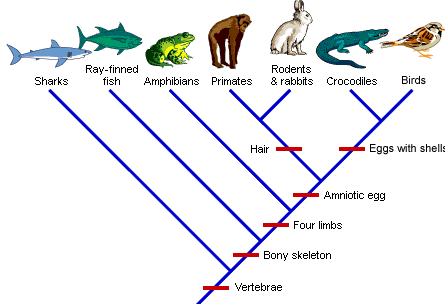

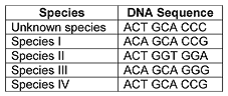
_________________ show clear changes in an organism over time, the environment organisms lived in, the time period the organism lived in, and where the organism lived.
DNA
Vestigial structures
Fossils
Homologous structures
Tiktaalik is an important ____________________because it shows how fish evolved into tetrapods.
theory
funny name
transition fossil
omnivore

The coelacanth is considered a __________________because it existed for a long time, then there was a gap in the fossil record, and it has been discovered living in modern times.
scary sea creature
monster
fish
living fossil
Which of the following statements supports the idea that fossils can be used as evidence of evolution?
ancient organisms were all very different than today's organisms
all organisms alive today have left fossil evidence
fossils are often similar, but not identical to, modern organisms
fossils show no differences to modern organisms
What did scientists in the Caribbean Islands learn about the specieation of the anole lizards?
Each body type evolved repeatedly and independently on each island
Different body types evolved only once, & then populations of individuals with those body types ended up on different islands
All islands had unique anole species.
Speciation of anole lizards was hampered by strong hurricanes
All of the following are prezygotic isolating mechanisms EXCEPT
species reproduce at different seasons or different times of the day
a hybrid is made from tow different species but it is sterile
individuals respond to different songs, calls or other signals
species at the same location occupy different habitats
Horses and donkeys are separate species, but they can mate and produce a mule. Which of the following is the best description of mules?
they are the result of prezygotic speciation and they will die early
they are the result of prezygotic speciation and will inherit the best features of both parents
they are the result of postzygotic speciation and they will be given a new scientific name
they are the result of postzygotic speciation and they will unable to produce fertile offspring
Which of the following is true of evolution?
individuals evolve, populations do not
individuals evolve; individuals do not
traits like scars and long hair are passed on to offspring
individuals evolve more slowly than populations

Evolution occurring gradually and slowly over long periods of time
Homeostasis
Stasis
Punctuated Equilibrium
Gradualism
The main difference between a cladogram and a phylogenic tree is that...
a cladogram does not produce a new branch for every unique trait being observed
a phylogenic tree represents distance of relatedness in time and trait similarities
a cladogram represents distance of relatedness in time and trait similarities
a phylogenic tree produces a new branch for every unique trait being observed
How do we know when speciation has occurred?
two organisms of different species can produce offspring
two organisms of the same species no longer live in the same area
when two organisms in the same species can no longer produce fertile offspring
mutations occur and we see it in their DNA

