Worksheets
AH 2nd Sem. Exam
Total questions: 150
Worksheet time: 38hrs 30mins
Which of the following are considered rights of the accused? (Select two.)
Due process of the law
Freedom of the press
Protection from excessive bail
Social contract
What is the fancy term meaning trying to help the environment and limit the use of natural resources?
Conservation
Progressivism
Capitalism
Muckraking
Which factor most contributed to the start of the Spanish-American War?
public outrage over conditions in Cuba
the need to acquire colonies in the Pacific
the repeal of the Gentlemen's Agreement
portraying McKinley as a pro-war president
Which of the following terms refers to the belief the immigration should be limited and citizens born in America should have priority for jobs and resources.
Fundamentalism
Communism
Nativism
Imperialism
Which movement divided the nation along secularist and fundamentalist lines?
Great Migration
Prohibition
Women's Suffrage
Civil Rights Movement
Which of the following is a RESULT (NOT a cause) of the Great Depression?
Excessive lending and consumer debt
Speculation and the stock market crash
increased government spending to create jobs
Federal Reserve constricts money supply
What did the Atlantic Charter do?
Provided unlimited funding to the Axis war effort
Declared that the Japanese provided a greater threat than the Germans
Stated that the Allies would free France before fighting Italy
Described the Allied goals for WWII
Who was in charge of investigating suspected communists during McCarthyism?
House Un-American Activities Committee
Department of Homeland Security
President Truman
Supreme Court
Which of the following is true of strikes in the late 1800s?
They usually gained public support.
The government often opposed labor union activity.
Union demands were frequently granted.
Arbitration (negotiation) was often used successfully.
Anti-Federalist objections to the ratification of the U.S. Constitution led to the:
addition of a Bill of Rights
rewriting of major parts of the U.S. Constitution
elimination of states' rights
seven-year delay in ratification of the Constitution
Which of the following groups worked to get more women elected into government offices?
AIM
NAACP
NOW
SCLC




During the 1950's, increased incomes and easy credit led many Americans to embrace which phenomenon?
socialism
feminism
consumerism
The 1965 Immigration Act allowed more individuals from Asia, Africa and Latin America to enter the United States. Which 3 were effects of this act?
funding for bilingual education programs increased
led to an increase in Spanish language media
their voting practices offset the balance of power between the major political parties
a quota system was put in place favoring northern Europeans
The American Indian Movement (AIM) was created because young Native Americans ....
Wanted to make money off from media attention.
Felt anger over poverty, unemployment, and neglect for Native rights.
Wanted more revenue from reservation casinos.
Wanted to violently take back their tribal lands.
Cesar Chavez organized (UFW) ____ to help migrant workers get better pay & working conditions.
labor unions
schools
churches
stores

The Chavez family and other migrant workers faced many obstacles. Which of the following was a problem they faced?
living with no electricity
earning very low pay or no pay at all
living in camps with no running water
all of the other answers

Under the Patriot Act was the government able to detain people simply on the suspicion of terrorism?
Yes
No

What organization was created after the 9/11 attacks to protect America from future attacks?
Federal Bureau of Investigation
Central Intelligence Agency
Office of Homeland Security
Oil and Petroleum Exporting Countries
FOREIGN POLICY: 1928- This outlawed war as a tool of foreign policy. it denounced war, called for a limitation of arms, and prohibited the use of war as an "instrument of national policy".
Neutrality acts
Kellogg- Briand Pact
Dawes Plan
FOREIGN POLICY: Laws passed by Congress to ban the sale of arms or loans to nations at war
Kellogg- Briand Pact
Neutrality Acts
Dawes Plan
FOREIGN POLICY: An efforts to avoid future wars. Delegates were worried about naval arms race and the threat of an expansionist Japan. The Five- Power Treaty, Nine-Power Treaty and the Four-Power Treaty all resulted from this.
Washington Naval Conference
Kellog Brian Pact
Disarmament Conference
RED SCARE: Arrest and deportation of radical leftists, especially anarchists. The arrests mostly only happened to immigrants. This happened during the Red Scare.
Demobilization
Sacco and Vanzetti
Palmer Raids
RED SCARE: against immigrants.
Palmer Raids
Nativism
immigratianism
RED SCARE: A fear of communism in the US after the Russian Bolshevik revolution of 1917. This resulted in a nationwide crusade against eastern europeans, and anarchists.
speculation
Palmer Raids
Red scare
U.S. ECONOMY: paying a small percentage of a stock's price as a down payment and borrowing the rest
buying on margin
buying on credit
Installment Buying
U.S. ECONOMY: Buy something and pay in installments overtime. like credit without the credit card.
Installment Buying
buying on margin
accreditation
U.S. ECONOMY: (taking a chance and hoping that things will go your way) the practice of making high-risk investments in hopes of getting a big profit
speculation
Demobilization
buying on margin
A goal set at the Seneca Falls Convention (1848) was achieved during the Progressive Era by the
formation of the federal Food and Drug Administration
creation of the League of Nations
adoption of a national income tax
ratification of the woman’s suffrage amendment
The Seneca Falls Convention (1848), the activities of Elizabeth Cady Stanton and ratification of the 19th Amendment would most likely be included in a report on
environmental conservation
the banking industry
women's rights
immigration policy

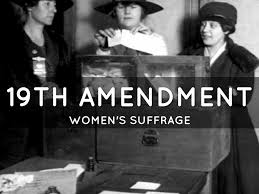
Which activity is illustrated in this photograph?
picketing against United States involvement in World War I
making a statement of support for the League of Nations
protesting the nation’s denial of woman’s suffrage
supporting punishment of Germany for causing World War I

This incident led to demise of Knights of Labor
Pullman Strike
Homestead Strike
Haymarket Square

This is a VIOLENT strike between workers and owners at Carnegie's mill. (20% wage cut).
Pullman Strike
Homestead Strike
Haymarket Square
Negotiations between representatives of labor and management to reach an agreement.
black lists
collective bargaining
lockouts
strikes


13th Amendment
Abolished Slavery
Abolished Alcohol
Abolished womens suffrage
Abolished Income Tax
14th Amendment
Grants Suffrage to African American Women
Grants Suffrage to All Women
Grants Citizenship
Grants Citizenship to Native Americans

Which describes the Clayton Anti-Trust Act?
It requires food and drugs to be labeled
It outlawed unfair practices railroads used on farmers
It required mandatory meat inspections
It gave the government more power to dissolve trusts and monopolies
-Reunification of East and West Germany
-Restructuring of the economy of the former Soviet Union
-Eastern Europe's extensive political changes
Which is a valid conclusion that can be drawn from a study of these events of the late 1980s and early 1990s?
The former Soviet Union succeeded in isolating its satellites from Western influences.
The United Nations forced Communist leaders to accept changes.
Communist leaders used new strategies to win the cold war.
Communism did not succeed as a workable political and economic system in Europe.
The anti-terrorism law passed after 9/11 was...
The Patriot Act
The Civili Rights Act
The Prohibition Act
The Terrorism and Security Act


The ________ Branch of government that makes the laws.
Judicial
Executive
Legislative
Bicameral
The ________ Branch of government is led by the president and enforces the laws.
Judicial
Executive
Legislative
Bicameral
This group of people feared a strong central government
Federalists
Anti-Federalists
This group of people were in favor of a strong central government
Federalists
Anti-Federalists
Jim Crow laws and the decision of the U.S. Supreme Court in Plessy v. Ferguson were similar in that both were designed to
Increase African American participation in Southern state government
Force Southern leaders to provide high-paying jobs to African Americans
Limit African American rights and liberties in the South
Encourage African Americans to obtain a college education
During the late 1800s and early 1900s, large numbers of immigrants were admitted to the US primarily because of the economy’s need for more
Skilled craftsmen
Unskilled factory workers
Educated professionals
Scientists and technicians
In the late 1800s, why were union leaders mainly opposed to immigration?
It took jobs away from Americans
It weakened American education
It threatened American culture
It was a fiscal drain on unions
What was a primary reason for the ratification of the Fourteenth Amendment (1868)?
To punish the South for their secession from the Union
To uphold the legality of the Black Codes
To guarantee citizenship rights to the newly freed slaves
To allow former Confederate officials to hold public office
What was a primary reason for the ratification of the Fourteenth Amendment (1868)?
To punish the South for their secession from the Union
To uphold the legality of the Black Codes
To guarantee citizenship rights to the newly freed slaves
To allow former Confederate officials to hold public office
In the first half of the twentieth century, most immigrants came to the United States from European countries. How did the pattern of immigration change between 1950 and 2000?
Most immigrants came to the United States from Oceania.
Most immigrants came to the United States from Australia.
Most immigrants came to the United States from Latin America
Most immigrants came to the United States from the Middle East
In the late 1800s and early 1900s, many changes occurred in U.S. agriculture as a result of industrialization. What is one way industrialization affected agriculture?
It delayed the transport of crops to market
It decreased opportunities to grow a variety of crops
It reduced the amount of labor needed to grow crops
It decreased the amount of land available for cultivation
In the late 1800s and early 1900s, many changes occurred in U.S. agriculture as a result of industrialization. What is one way industrialization affected agriculture?
It delayed the transport of crops to market
It decreased opportunities to grow a variety of crops
It reduced the amount of labor needed to grow crops
It decreased the amount of land available for cultivation
One effect of industrialization in the united States in the late 1800s was the organization of labor unions as a way for workers to gain bargaining power in the workplace. Why did this development often lead to violence?
Union leaders would not negotiate with factory owners
Union leaders required U.S. workers to join worldwide strikes
Government officials used force to bring about better working conditions
Business owners used force to protect their workplaces from unionization
Before the American Revolutionary War, the British government passed laws to increase its control over its American colonies. An excerpt from the Massachusetts Government Act is shown:
“From and after August 1, 1774, no meeting shall be called by the select men [officials], or at the request of any number of freeholders [land owners] of any township, district, or precinct, without the leave [consent] of the [royally appointed] governor …”
1. Why did colonists view this section of the Massachusetts Government Act as an
infringement on their rights?
Because it outlawed jury trials
Because it limited their ability to assemble
Because it prevented them from owning property
Because it restricted their exercise of religious freedom
How did the removal of federal troops after Reconstruction change the South?
It permitted Radical Republicans to gain increased influence in state governments
It allowed racial discrimination to be institutionalized with the passage of Jim Crow Laws.
It had little effect on southern states because Reconstruction had been generally successful
It ensured that African Americans would continue to vote and have a spy in local and state governments
Which right protected by the First Amendment of the U.S. Constitutions was derived from the
1689 English Bill of Rights?
Right to property
Right of women to vote
Right to petition the government
Right of the government to collect taxes
ID Rights incorporated into the US Bill of Rights based on the English documents such as the Magna Carta and the English the Bill of Rights
Trial by jury
Freedom of Speech
Protection from excessive bail
Right to petition the government
In 1928 the US signed the Kellog-Briand Pact
outlawed war as a national policy
set the federal reserve system
to conserve forests
brought about the New Deal
Which statement about the U.S. economy during World War II is accurate?
many essential goods were rationed
the manufacturing of automobiles increased
worker productivity declined
prices on most goods fell rapidly
World War II brought many changes to the nation. Mark each letter or set of letters that represent the changes to American society that resulted from the mobilization of resources by the United States during World War II.
planting Victory Gardens
use of internment camps for Japanese Americans
increase of women in the workforce
rationing of goods needed for the war effort
Which statement is most accurate about race relations during WWII?
there was a lack of support for the war by minority ethnic groups
most units contained a high-ranking African-American commander
federal courts refused to allow the integration of the armed forces
despite support for the war effort, racial minorities often faced discrimination
Which statement best explains why the U.S. mainland suffered little physical damage in WWII?
the policy of isolationism discouraged foreign attacks
Latin America provided a buffer zone from acts of aggression by others
geographic isolation kept America protected from most of the fighting
U.S. military fortifications prevented attacks on U.S. soil
What was the primary reason that President Franklin D. Roosevelt announced the “Good Neighbor Policy” in 1933?
to grant diplomatic recognition to the Soviet Union
to increase immigration to nations in Latin America
to promote trade with nations throughout Europe
to improve relations with Latin American nations
Which statement about Japanese Americans interned during the war is most accurate?
most were released after signing a loyalty oath
many were forced to return to Japan after the war ended
Japanese Americans could not serve in the U.S. military
Many Japanese Americans lost their homes and businesses and were forced into internment camps
What effect did the end of World War II have on American women who worked in defense industries during the war?
They were invited to join labor unions
Their efforts were rewarded by the government
Their jobs were taken by men returning from military service
Their wages were increased to match those of male workers
Which change in the U.S. foreign policy is demonstrated by the passage of these acts prior to WWII?
-Cash and Carry
-1937 Destroyer for Bases deal
-1940 Lend-Lease Act: 1941
an effort to become more neutral
a shift from neutrality to more direct involvement
a movement from isolationism to going to war
a desire to provide aid to both Allied and Axis powers
The attack on Pearl Harbor caused changes in American domestic policies.
Which event was a consequence of the attack on Pearl Harbor?
The US bombed Berlin in retaliation, causing Germany to declare war.
Congress passed the Neutrality Act of 1939, which permitted Britain to buy US weapons.
The US government forced Japanese Americans to relocate to internment camps.
The Roosevelt administration created New Deal agencies to help prepare for the war.
During World War II, the US government created a system to ration the distribution of certain resources such as petroleum.
How did this new system of regulation affect the distribution of resources in the US?
it granted more privileges to wealthy business owners
it provided more goods and services to the working class
it limited the number of goods individuals could purchase
it supplied members of the upper class better quality goods
Beginning with the Red Scare of the 1920’s, which historical development contributed to a recurring pattern of anti-communism in the United States?
growing prosperity following World War II
migration from the Great Plains during the Dust Bowl
increased unemployment during the Great Depression
accusations made by Senator Joseph McCarthy in Congress
The United States was concerned about the spread of communism throughout most of the 20th century. Following World War I, suspected communists were persecuted in what was known as the Red Scare. A similar pattern of persecution was resurfaced after World War II. What was this development known as?
McCarthyism
Progressivism
the Marshall Plan
the counterculture movement
World War II ended shortly after the United States dropped two atomic bombs in Japan. Four years later, the Soviet Union responded by successfully detonating an atomic bomb. How did these developments affect the policy of the United States?
The U.S. mobilized all of its armed forces
The U.S. drafted all young men into military service
The U.S. increased its efforts to construct nuclear weapons
The U.S. suspended diplomatic relations with the Soviet Union
How did the Marshall Plan aim to contain the spread of communism?
It built up the western European armed forces
It helped to rebuild and strengthen European economies
It forced Americans to take loyalty oaths to avoid losing their jobs
It created a military alliance among western European and North American nations
The following question has two parts. Answer part A first, then answer part B.
Part A:
On August 6 and 9, 1945, the United States dropped atomic bombs on the Japanese cities of Hiroshima and Nagasaki. How did the Soviet Union respond to this military action?
It accelerated the pace of its military invasion of Germany
It formed an alliance with the United States to share nuclear technology
It intensified development on and successfully tested its own nuclear weapons
It withdrew from international organizations in which the United States was also a member
Part B:
Why did the Soviet Union respond in the way that you identified in Part A?
It wanted to quickly end the war to avoid further military casualties
It wanted to retain political and military influence in the post-war world
It wanted nuclear technology to be available as a cheap source of energy after the war
It wanted to pursue a policy of isolationism following the devastation caused by World War II
Who was in charge of investigating claims of communist activity in the government, armed forced, universities, and other areas of American life during the Second Red Scare in the late 1940s and early 1950s?
Ethel and Julius Rosenberg
Whittaker Chambers and Alger Hiss
House Un-American Activities Committee
Senate Committee on Homeland Security and Governmental Affairs
The Korean Peninsula was taken from Japan at the end of World War II. The Soviet Union and the United States clashed over how this territory should be governed. How did the ideological conflict between the Soviet Union and the United States affect the division of the Korean Peninsula?
It increased religious tensions, leading to a Buddhist north and a Christian south
It created political conflict, leading to a communist-controlled north and an anti-communist south
It intensified ethnic conflict, leading to a north controlled by China and a south controlled by Korea
It created tensions over natural resources, leading to a mineral-rich north and an agriculturally rich south.
During the Cold War, The US engaged in military actions in both Korea and Vietnam. Its actions were successful in South Korea, but not in Vietnam. In both instances, however, the aim of the US was the same. Mark all of the answers that describe what the US was pursuing by engaging in these wars.
The US pursued a policy of containment
The domino theory led the US to want to prevent countries to falling to communism
The US wanted to support those countries resisting communism
The US wanted to support/promote democracy
The refusal of the United States to join the League of Nations reflected a desire of the nation to:
return to a policy of isolation
abandon neutrality in favor of collective security
take an active role in solving the world’s economic problems
actively involve itself in preventing world tensions from leading to war
Which most accurately characterizes the policy followed by the United States in the years between World War I and World War II?
isolationism from European military conflicts
containment of Communism
active membership in the League of Nations
military alliances with France and Great Britain
Which trend in U.S. foreign policy is shown by the passage of the Neutrality Act of 1939, the destroyers for bases deal, and the Lend-Lease Act of 1941?
withdrawal from overseas colonies
expansion of trade with the Axis powers
increase in support for the Allied powers
reduction in war preparedness
1.) Banning loans to nations at war.
2.) Prohibiting the sale of arms to nations at war.
These governmental actions were similar in that each was intended to:
keep the United States out of war
protect American colonies from foreign aggression
limit the influence of Japan in the Pacific
support efforts for the U.S. to join the League of Nations
1.) Banning loans to nations at war.
2.) Prohibiting the sale of arms to nations at war.
These governmental actions were similar in that each was intended to:
keep the United States out of war
protect American colonies from foreign aggression
limit the influence of Japan in the Pacific
support efforts for the U.S. to join the League of Nations
Identify two reasons the U.S. followed a policy of isolationism. Fill-in those reasons in the blank boxes under the “Reasons for Isolationism” heading.
Europe after WWI saw the rise of dictatorships.
Americans were disenchanted with the problems in the world.
Americans were cut off by two oceans from Europe and Asia.
Benito Mussolini formed the Fascist Party in Italy.
Identify two policy changes that showed the U.S. was moving away from its policy of isolationism.
Passage of the Neutrality Acts
Entered into a destroyer for bases agreement
Growth of radio and magazine advertising
Congress passed the Lend-Lease Act
What was the major goal of U.S. foreign policy in the 1930’s?
provide defensive weapons to our European friends
increase European immigration
fund the construction of a wall separating France and Germany
bring Hitler and Mussolini to trial as war criminals

The Lend-lease aid shown on the map was provided to do what?
help the allied powers fight the Axis powers
persuade other nations to join the League of Nations
provide some technical assistance to developing nations
persuade other nations to pay their debts to the U.S.
The neutrality laws passed in the 1930s were based on the assumption that the surest way to avoid war was for the United States to
maintain a superior army and navy
enter alliances with other democratic nations
restrict loans to warring nations and limit trade with them
discourage aggressors by threatening military reprisals
Which best describes how the United States responded in the 1930’s to the rise of fascism in Germany and Italy?
the U.S. invaded Germany and Italy
the U.S. formed military alliances
the U.S. passed a series of neutrality laws
the U.S. joined the League of Nations
The Neutrality Acts of 1935 and 1937 ...
banned export and transportation of arms to nations at war
attempts to isolate the country from problems in Asia and Europe
were a new policy to create war
wanted to expand America through imperialism
The Atlantic Charter (1941) was...
promoted free trade on the seas
established goals for Post WW II
written by the U.S.A. and Britain
pushed hard for communism to spread to America
The Monroe Doctrine was an effort to stop European nations from interfering in which of the following?
the Asian continent
each other's business.
the American continents.
The Monroe Doctrine would be an example of
U.S. Foreign Policy
U.S. Domestic Policy
What is one reason why the United States got involved in the Spanish-American War?
United States had business interests with Cuba
Cuba attacked the United States
United States had business interests with Spain
The United States sunk one of Spain's ships
What is one reason why the United States got involved in the Spanish-American War?
United States had business interests with Cuba
Cuba attacked the United States
United States had business interests with Spain
The United States sunk one of Spain's ships
What happened as a result of the Spanish-American war?
Spain gained control of Guam, Puerto Rico and the Philippines
Cuba became part of the United States
The United States gained control of Guam, Puerto Rico and the Philippines
The US became a world power
Roosevelt Corollary is also known as
Big Stick Policy
Rough Riders
Dollar Diplomacy
Monroe Doctrine
How did the Roosevelt Corollary alter or change the Monroe Doctrine?
the corollary completely destroyed the Monroe Doctrine
The corollary strengthened the Monroe Doctrine by allowing the U.S. to act as an international police force
The corollary had no effect on the Monroe Doctrine
In the Northwest Territory, slavery was ___________.
legal
accepted
allowed
illegal
What was the name of the original government for the new United States?
Constitution
Bill of Rights
Articles of Confederation
None of these

Anti-Federalists were in favor of:
States Rights and the protection of individual rights.
A strong Central Government.
A Monarchy (King & Queen) to rule over the country.
a powerful National Government

What two amendments deal with prohibition?
21st and 22nd
19th and 21st
17th and 18th
18th and 21st
18th Amendment
Prohibits Women's Suffrage
Prohibits Alcohol
Prohibits Child Labor
Prohibits immigrants from entering the country