
 Worksheets
Final Semester Review Questions
Total questions: 75
Worksheet time: 1hrs 1mins
Which of these two layers is a solid?
inner core
Outer core
What is the top layer of the Earth's surface called?
Mantle
Inner core
Outer core
Crust
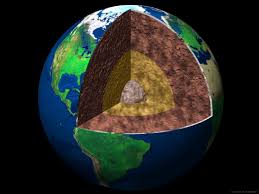
What is the rigid solid layer of the Earth's surface made up of the crust called?
asthenosphere
lithosphere
mesosphere
continental crust
Based on the physical layers, how many layers of the Earth's CORE are there?
one
two
three
four
Which layer of Earth is characterized by rock that is solid but soft enough to flow?
asthenosphere
crust
lithosphere
inner core
Which physical layer has tectonic plates?
Crust
Lithosphere
Asthenosphere
Mantle
Which layer has the lowest density?
Asthenosphere
Lithosphere
Inner Core
Mesosphere
Which layer has the highest density?
Lithosphere
Asthenosphere
Inner Core
Outer Core
The lithosphere moves because...
the core of the earth moves the lithosphere through radiation.
the outer core and mesosphere move by convection currents.
the asthenosphere and mesosphere move by conduction.
the asthenosphere and mesosphere move by convection currents.
Compositional Layers include... (mark all that apply)
Mantle
Outer Core
Core
Crust
Mesosphere
Why is the oceanic plate under the continental plate?
The oceanic plate and the continental plate have equal densities.
The continental plate is more dense than the oceanic plate so the oceanic plate sinks.
The oceanic plate is more dense than the continental plate so the oceanic plate sinks.
The oceanic plate is less dense than the continental plate so the oceanic plate floats.
The sun is an example of what kind of heat transfer?
Convection
Conduction
Radiation

The picture shows what kind of heat transfer?
Radiation
Convection
Conduction

This rock is on a mountain that snows regularly. What type of weathering mainly caused this rock to break?
Ice wedging
River erosion
Wind
Plants

How did the Grand Canyon form?
Wind weathered all the rocks which created a valley.
Wind eroded all the rocks which created a valley.
In the winter the Grand Canyon falls below freezing and ice wedging occurred over millions of years.
The Colorado River eroded the rocks and created a deep valley
How do plants prevent erosion?
Their leaves keep the soil dry from the sun
There leaves are shields against precipitation
Roots hold the soil so it doesn't wash away in the runoff
It prevents the wind from eroding the soil

Which object has the highest density?
A
B
C
Which object has the lowest density?
A
B
C

Which layer would be the planet's crust?
A
B
C
Which layer would be the planet's mantle?
A
B
C

What is the relationship of this graph?
The deeper into the earth, the slower the mantle flows
The deeper into the earth, the faster the mantle flows
The speed the mantle flows does not change with depth
The pressure of the earth causes the mantle's flow rate to decrease, increase, then decease again.


A phase change from liquid to gas occurs in what part of the water cycle?
Evaporation
Condensation
Precipitation
Runoff
What phase change is happening when clouds form?
liquid to solid because it makes snow
liquid to gas because it makes water vapor
gas to liquid because it makes small water droplets
solid to liquid because it makes rain
Which step in the water cycle do you need to ADD energy?
evaporation
precipitation
condensation
runoff
Which step in the water cycle do you need to LOSE energy?
evaporation
condensation
precipitation
condensation and precipitation
Which step in the water cycle replenishes flowing freshwater on earth?
evaporation
precipitation
condensation
runoff
Which statement is false?
A) The amount of water on earth is decreasing because global warming is causing all the water to evaporate and disappear.
B) The amount of water on earth is increasing because global warming is causing icecaps to melt adding more water to oceans and rivers.
C) The amount of water on earth stays the same because it is in a water cycle
A & B

Based on the trend seen on the graph, at what water level do you predict Lake Mead will be by November 2016?
1070
1080
1085
1090

Based on the map, where is the source of the Colorado River?
In the Rocky Mountains in Colorado
In Wyoming
In Utah
In the Gulf of California
Based on the map, where is the mouth (the end) of the Colorado River?
In the Rocky Mountains in Colorado
In Wyoming
In Utah
In the Gulf of California
What is the MAIN reason why Lake Mead is slowly drying up?
A drought is causing less snow to form in the mountains, so there is less water at the river's source.
Too many cities are draining the water
Las Vegas is expanding and using more water
Which type of water source can humans easily use for drinking?
A) Oceans
B) Groundwater
C) Surface water
D) ice caps
B & C

Based on the graph, predict the water level in 2014
It will decrease to 1050
It will increase to 1150
It will stay the same 1100
The amount of resources on earth are distributed _______________.
equally around the world.
unequally because it is all at the equator.
unequally because it depends on the geography and climate.
unequally depending on how rich a country is.
If you find a lithium mine, what can you use it for?
You can sell lithium to a jewelry company
You can sell lithium to a construction company
You can sell lithium to a plumbing company
You can sell lithium to an electronic company to be used as batteries.
Fossil fuels are what type of resource?
Renewable resource
Nonrenewable resource
Unnatural resource
Metallic resource
Lumber is what type of resource?
Renewable resource
Nonrenewable resource
Unnatural resource
Metallic resource
Groundwater is what type of resource?
Renewable resource
Nonrenewable resource
Unnatural resource
Metallic resource
After mining, it is important to return the land to its original state. This is called...
Recycling
Replenishing
Reclamation
Renewing
Fossil fuels are starting run out. To ensure we still have a source of energy, we need to start using more renewable resources. Mark all the renewable resources we can use for energy in place of fossil fuels.
Solar Energy
Water Energy
Wind Energy
Groundwater
Why is it necessary to apply energy for liquid water to change into water vapor (gas)?
Adding energy causes molecules to move slower. The slower they move, the more they bump into each other causing the molecules to spread out into a gas.
Adding energy causes molecules to move faster. The faster they move, the less they bump into each other causing the molecules to spread out into a gas.
Adding energy causes molecules to move faster. The faster they move, the more they bump into each other causing the molecules to spread out into a gas.
Adding energy causes molecules to move slower. The slower they move, the less they bump into each other causing the molecules to spread out into a gas.
Why is it necessary to lose energy for water vapor to condense into a cloud?
When molecules lose energy they move faster and get closer together forming water droplets that make a cloud.
When molecules lose energy they move slower and get closer together forming water droplets that make a cloud.
When molecules lose energy they move faster and space out forming water droplets that make a cloud.
When molecules lose energy they move slower causing them to bump into each other causing steam to form a cloud.
What is the MAIN CAUSE the water levels in Colorado River is low?
Greenhouse gases cause less snowpack in the Rocky Mountains
Cities draining the water for their own use
Agriculture draining the water for crops
Dams built to stop water flow
Which of the following uses the most water from the Colorado River?
Urban cities because population is growing
Agriculture because farmers use the water for acres of crops, and also waste water the most.
Dams are reservoirs that hold the most water and does not let it flow down the lower basin of the river.
Tourists who the drink water and use it for recreational fun.

What type of fault is shown?
Reverse Fault
Compression Fault
Normal Fault
Convergent Boundary

What type of fault is shown?
Reverse Fault
Strike-Slip Fault
Normal Fault
Divergent Boundary

What is the geological feature that makes up most of southwest united states as seen in the picture?
Mountains and Valleys
Basin and Ranges
Canyons and Rivers
Divergent Boundaries
How did geological features in this picture form?
Tension stretches the land causing basins to drop
By transform boundaries moving
Tension pushes the land uplifting mountain ranges
Compression pushes the land uplifting mountain ranges

