
 Worksheets
CV System Vocab & Structure Review
Total questions: 78
Worksheet time: 40mins
Name
Class
Date
1.
Blood circulation from the heart to the rest of the body is called
a)
Full body
b)
Systemic
c)
pulmonary
d)
heart to lung
2.
Blood pressure is measuring pressure on
a)
a vein.
b)
an artery.
c)
an artery or a vein.
d)
the heart.
3.
This chamber of the heart RECEIVES blood returning from the body
a)
Right Atrium
b)
Right Ventricle
c)
Left Atrium
d)
Left Ventricle
4.
The _________ PUMPS blood to the lungs.
a)
Right Atrium
b)
Right Ventricle
c)
Left Atrium
d)
Left Ventricle
5.
The _______ RECEIVES blood returning from the lungs.
a)
Right Atrium
b)
Right Ventricle
c)
Left Atrium
d)
Left Ventricle
6.
This chamber of the heart PUMPS blood to the body.
a)
Right Atrium
b)
Right Ventricle
c)
Left Atrium
d)
Left Ventricle
7.

Identify the circled valve
a)
Tricuspid
b)
Mitral
c)
Pulmonary
d)
Aortic
8.

Identify the circled valve
a)
Tricuspid
b)
Mitral
c)
Pulmonary
d)
Aortic
9.

Identify the circled valve
a)
Tricuspid
b)
Mitral
c)
Pulmonary
d)
Aortic
10.
Causes the heart to pump the same blood over and over.
a)
Angina pectoris
b)
Valvular stenosis
c)
Incompetent valve
d)
Pericarditis
11.
Myocardium is deprived of oxygen causing chest pain.
a)
Angina pectoris
b)
Valvular stenosis
c)
Incompetent valve
d)
Pericarditis
12.
"Heart attack" due to heart cells receiving no oxygen.
a)
Fibrillation
b)
Ischemia
c)
Heart block
d)
Myocardial infarction
13.
Damage to AV node causing ventricles to beat on own.
a)
Fibrillation
b)
Ischemia
c)
Heart block
d)
Myocardial infarction
14.
Rapid, uncoordinated shuddering of heart muscle.
a)
Fibrillation
b)
Ischemia
c)
Heart block
d)
Myocardial infarction
15.
Heart rate less than 60 beats per min.
a)
Congestive heart failure (CHF)
b)
Heart murmurs
c)
Bradycardia
d)
Tachycardia
16.
Abnormal or unusual heart sounds.
a)
Congestive heart failure (CHF)
b)
Heart murmurs
c)
Bradycardia
d)
Tachycardia
17.
Heart rate greater than 100 beats per min.
a)
Congestive heart failure (CHF)
b)
Heart murmurs
c)
Bradycardia
d)
Tachycardia
18.
Gradual weakening of the heart causing depressed circulation.
a)
Congestive heart failure (CHF)
b)
Heart murmurs
c)
Bradycardia
d)
Tachycardia
19.
plasma protein important for blood clotting
a)
fibrinogen
b)
albumin
c)
globulin
d)
heoglobin
20.
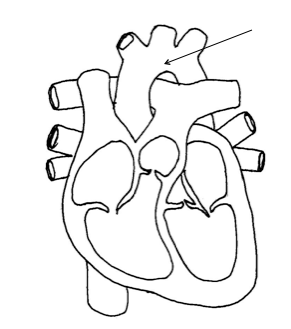
Name the part.
a)
Pulmonary vein
b)
Right atrium
c)
Aorta
d)
Pulmonary artery
21.
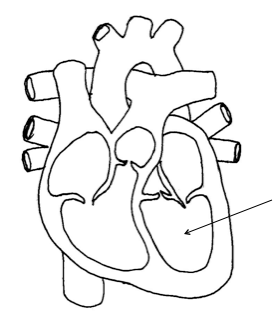
Name the part.
a)
Left ventricle
b)
Vena cava
c)
Right atrium
d)
Right ventricle
22.
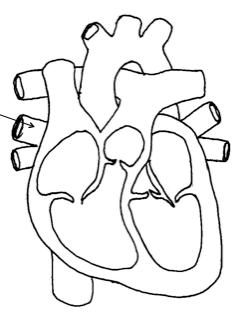
Name this part.
a)
Pulmonary veins
b)
Left atrium
c)
Aorta
d)
Pulmonary artery
23.
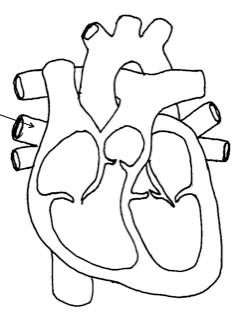
Name this part.
a)
Pulmonary veins
b)
Left atrium
c)
Aorta
d)
Pulmonary artery
24.
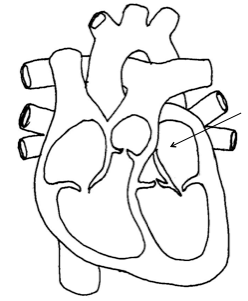
Name this part.
a)
Right atrium
b)
Left ventricle
c)
Right ventricle
d)
Left atrium
25.

Name this part.
a)
Left ventricle
b)
Pulmonary artery
c)
Right atrium
d)
Pulmonary veins
26.
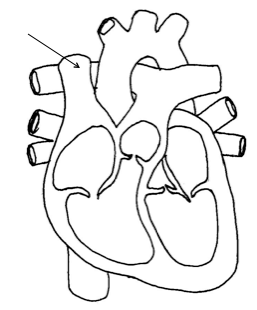
Name this part.
a)
Superior vena cava
b)
Right ventricle
c)
Right atrium
d)
Inferior vena cava
27.
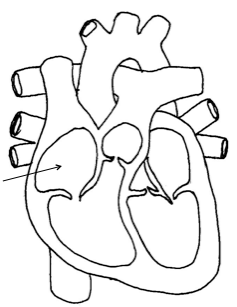
Name this part.
a)
Right ventricle
b)
Aorta
c)
Right atrium
d)
Atrium
28.

Name this part.
a)
Right ventricle
b)
Pulmonary artery
c)
Left ventricle
d)
Right atrium
29.
muscular wall that separates the heart into right and left sides
a)
valves
b)
ventricles
c)
atria
d)
septum
30.
The middle layer of the wall of the heart
a)
epicardium
b)
myocardium
c)
endocardium
d)
septum
31.
The____ is a double-walled sac around the heart.
a)
Pericardium
b)
Myocardium
c)
Endocardium
d)
Epicardium
32.
period of ventricular rest
a)
systole
b)
diastole
33.
smallest blood vessels that allow for o2 and co2 exchange to take place
a)
arteries
b)
veins
c)
capillaries
34.
Compared to arteries, veins
a)
have a pleated endothelium.
b)
have thinner walls.
c)
have more smooth muscle in their tunica media.
d)
hold their shape better when cut.
35.
Carry blood away from heart; mostly oxygen-rich
a)
Arteries
b)
Veins
c)
Capillaries
36.
Valve between the right atrium and right ventricle
a)
mitral
b)
tricuspid
c)
aortic
d)
pulmonary
37.
valve between the left atrium and left ventricle
a)
mitral
b)
tricuspid
c)
aortic
d)
pumonary
38.
valve between the right ventricle and the pulmonary artery
a)
mitral
b)
tricuspid
c)
aortic
d)
pulmonary
39.
diastole
a)
contraction of the heart
b)
pulse
c)
relaxation of the heart
d)
small artery
40.
mitral valve
a)
valve between left atrium and left ventricle
b)
valve between right atrium and right ventricle
c)
valve between right ventricle and pulmonary artery
d)
apex of the heart
41.
pulmonary artery
a)
artery carrying oxygen poor blood from the heart to the lungs
b)
artery carrying oxygen rich blood from the lungs to the heart
42.
pulmonary valve
a)
valve between right ventricle and pulmonary artery
b)
valve between right ventricle and right atrium
43.
pulmonary vein
a)
vein carrying oxygenated blood from the lungs to the left atrium of the heart
b)
vein carrying oxygen poor blood from the heart to the lungs
44.
systole
a)
contraction of the heart
b)
relaxation of the heart
45.
tricuspid valve
a)
between left atrium and left ventricle
b)
between right atrium and right ventricle
46.
vena cava
a)
smallest vein in the body
b)
largest artery in the body
c)
largest vein in the body
d)
smallest artery in the body
47.
This is the thickest layer of the heart
a)
Pericardium
b)
Endocardium
c)
Myocardium
d)
Epicardium
48.
A condition in which a person's blood pressure stays at a level that is higher than normal is called
a)
heart attack
b)
arteriosclerosis
c)
hypertension
d)
artherosclerosis
49.
Which blood type is the universal donor?
a)
Type O
b)
Type A
c)
Type B
d)
Type AB
50.
Which blood type is the universal recipient?
a)
Type A
b)
Type AB
c)
Type O
d)
Type B
51.
If you have a VERY high white blood cell count, low red count, and either high or low platelets , which of these would you have?
a)
leukemia
b)
leukocytosis
c)
polycythemia
d)
anemia
52.
A persistent clot in an unbroken blood vessel is known as _______
a)
a thrombus
b)
an embolus
c)
hemophilia
d)
leukopenia
53.
The three step process that stops blood flowing from a cut is called _________
a)
hemostasis
b)
homeostasis
c)
coagulation
d)
agglutination
54.
Low levels of oxygen in the blood stimulate the kidneys to release the hormone ______
a)
erythropoietin
b)
adrenalin
c)
insulin
d)
epinephrine
55.
Where does hematopoiesis take place, producing new RBCs?
a)
red bone marrow
b)
yellow bone marrow
c)
synovial membrane
d)
articular cartilage
56.
Antibodies binding to antigens on RBCs causes a clumping known as __________
a)
agglutination
b)
coagulation
c)
clotting cascade
d)
hemolysis
57.
What blood type can receive blood from both Type B and Type AB donors?
a)
Type AB
b)
Type B
c)
Type A
d)
Type O
58.
The three steps of hemostasis are:
1. vascular spasm
2. ___________
3. coagulation
1. vascular spasm
2. ___________
3. coagulation
a)
platelet plug formation
b)
agglutination
c)
dilation
d)
erythropoieten formation
59.

Identify
a)
Left atrium
b)
Right atrium
c)
Left ventricle
d)
Right ventricle
60.

Name the part.
a)
Left ventricle
b)
Vena cava
c)
Right atrium
d)
Right ventricle
61.

Name this part.
a)
Right ventricle
b)
Pulmonary artery
c)
Left ventricle
d)
Right atrium
62.
Causes the heart to pump the same blood over and over.
a)
Angina pectoris
b)
Valvular stenosis
c)
Incompetent valve
d)
Pericarditis
63.
The Pace maker is more properly called the
a)
Auricle
b)
pericardial node
c)
Atrioventricular node
d)
Sinoatrial node
64.
The bicuspid valve is also called
a)
the heart string
b)
pulmonary valve
c)
aortic valve
d)
mitral valve
65.
If a blood type is said to be positive it means?
a)
It has a sunny disposition
b)
it contains the Rh factor
c)
its lacking the Rh factor
d)
nothing
66.
blood leaves the left ventricle through an artery known as the_______.
a)
aorta
b)
superior vena cava
c)
pulmonary artery
d)
pulmonary trunk
67.
What are the only arteries that carry deoxygenated blood
a)
coronary arteries
b)
vena cava
c)
aortic arteries
d)
pulmonary arteries
68.
The circulation loop that includes the lungs is the ____ loop
a)
cardiac
b)
systemic
c)
coronary
d)
pulmonary
69.
the term that means heart contraction is ______.
a)
tachycardia
b)
fibrillation
c)
diastole
d)
systole
70.
The valves located between the atria and ventricles are known as the _______ valves.
a)
aortic
b)
atrioventricular
c)
semilunar
d)
pulmonary
71.

Identify
a)
Pulmonary veins
b)
Pulmonary artery
c)
Aorta
d)
Vena cava
72.

Identify
a)
Pulmonary veins
b)
Pulmonary artery
c)
Aorta
d)
Superior Vena Cava
73.
Which is NOT a function of the circulatory system?
a)
deliver O2 and nutrients to cells
b)
remove CO2 and wastes from cells
c)
break down carbohydrates into glucose
d)
transport other materials through body
74.

Where are red blood cells produced in the body?
a)
Spleen
b)
Bone marrow
c)
Brain
d)
Liver
75.
What component of blood is involved in clotting?
a)
erythrocytes
b)
leukocytes
c)
thrombocytes (platelets)
d)
phagocytes
76.
Review: What is the least common leukocyte?
a)
neutrophils
b)
lymphocytes
c)
monocytes
d)
basophils
77.
Review: hemoglobin must have ___ to carry oxygen
a)
calcium
b)
sodium
c)
iron
d)
potassium
78.
A clot in the blood stream (commonly found in legs) that breaks free and starts to travel can lodge in brain or lungs. This is called __
a)
a thrombus
b)
an embolus
c)
heparin
d)
hematoma
100 %

