
NEW
Font size
S
M
L
XL
 Worksheets
Semester 1 Review
Total questions: 50
Worksheet time: 2hrs 37mins
Name
Class
Date
1.
Isotopes are elements with a different amount of
a)
protons
b)
neutrons
c)
electrons
d)
atoms
2.
An element with five valence electrons is
a)
phosphorus
b)
oxygen
c)
beryllium
d)
rubidium
3.
What is the name of the group that never reacts--ever ever they are stable with a full outermost ring!!!
a)
noble gases
b)
transition
c)
halogens
d)
borons
4.

?
a)
Helium
b)
Hydrogen
c)
Argon
d)
Silver
5.
What is this element?
1s22s22p63s23p6
4s23d104p6
1s22s22p63s23p6
4s23d104p6
a)
Argon
b)
Krypton
c)
Selenium
d)
Bromide
6.
Which of the following will have a higher electronegativity than arsenic (As)?
a)
Carbon (C)
b)
Neon (Ne)
c)
Antimony (Sb)
d)
Germanium (Ge)
7.
Which atom has the largest atomic radius?
a)
potassium
b)
rubidium
c)
francium
d)
cesium
8.
As you move down the periodic table atoms get bigger. This is because ____________.
a)
The atoms have more mass.
b)
The atoms have more protons.
c)
The atoms have more energy levels
d)
The atoms have more nuetrons
9.
As you move across the periodic table atoms tend to get smaller because, ______________.
a)
the atoms have more mass.
b)
the atoms have less mass
c)
the atoms have more protons.
d)
the atoms have less electrons.
10.
Electronegativity is...
a)
how good an atom is at attracting electrons
b)
the ability of an atom to lose electrons
c)
the energy required to remove an electron from a specific atom
d)
how easy it is to make friends.
11.
Ionization energy is...
a)
the energy required to add an electron to a specific atom
b)
how much energy it takes to remove an electron from an atom
c)
the energy required to shield the outer electrons from the nucleus
d)
a measure of the ability of an atom to attract electrons
12.
The atom with the largest atomic radius in Group 18 is -
a)
Ar
b)
He
c)
Kr
d)
Rn
13.
Which statement correctly and completely identifies a trend?
a)
Atomic radius decreases across a period and increases down a group.
b)
Electronegativity decreases across a period and decreases down a group.
c)
Ionization energy increases across a period and increases down a group.
d)
Ionic radius increases across a period and increases down a group.
14.
Electronegativity __________ from left to right within a period and __________ from top to bottom within a group.
a)
decreases, increases
b)
increases, increases
c)
increases, decreases
d)
stays the same, increases
15.
What is the molarity of 4 g of NaCl (MM=58.45) in 3,800 mL of solution?
a)
0.018 M
b)
0.0011 M
c)
1.052 M
d)
0.062 M
16.
How many grams of solute are dissolved in 125.0 mL of 5.00 M NaCl (MM = 58.45)?
a)
0.625 g NaCl
b)
625 g NaCl
c)
36.5 g NaCl
d)
0.04 mol NaCl
17.
How many mL of 1.0M KBr solution would you need to prepare 250 mL of a 0.2M dilution?
a)
175 mL
b)
250 mL
c)
50 mL
d)
5 mL
18.
How many mL of stock solution of 2M NaCl do you need to prepare 100 mL of 0.150M NaCl?
a)
7.5 mL
b)
15 mL
c)
1333 mL
d)
200 mL
19.
Adding or subtracting neutrons (charge = 0, mass = 1) makes the element change into an...
a)
ion
b)
mixture
c)
isotope
d)
neutral atom
20.
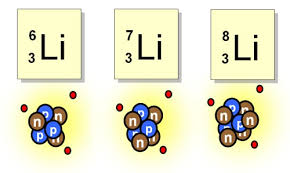
Which atom has 4 neutrons?
a)
Li-6
b)
Li-7
c)
Li-8
d)
they have the same # of neutrons
21.
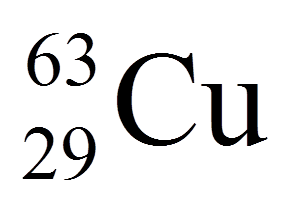
The top number in this isotope notation is
a)
the mass number
b)
the atomic number
c)
the atomic mass
d)
the neutron number
22.

An isotope that has an atomic number of 17 and a mass number of 37 would belong to which element?
a)
Rubidium
b)
Neon
c)
Calcium
d)
Chlorine
23.
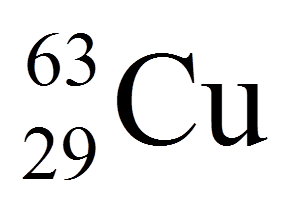
According to the isotopic notation for copper-63, how many neutrons are present in this type of atom?
a)
29
b)
34
c)
63
d)
92
24.

High frequency waves have _________ wavelengths.
a)
varying
b)
long
c)
the same
d)
short
25.

Which wave has a greater frequency?
a)
A
b)
B
26.

Which wave has a longer wavelength?
a)
wave C
b)
wave D
27.
What atom matches this electron configuration?
1s2 2s2 2p6 3s2
1s2 2s2 2p6 3s2
a)
Neon
b)
Magnesium
c)
Aluminum
d)
Potassium
28.
What is the shorthand electron configuration for Sulfur atom?
a)
[Ar] 3p4
b)
[He] 3s23p4
c)
[Ne] 3s23p4
d)
[Na] 3s23p3
29.

Which element is pictured?
a)
neon
b)
fluorine
c)
magnesium
d)
argon
30.

This orbital diagram represents:
a)
C
b)
B
c)
N
d)
O
31.
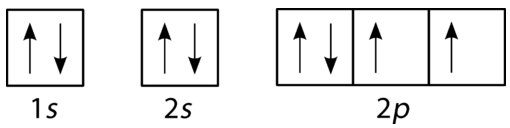
This orbital diagram represents:
a)
C
b)
B
c)
N
d)
O
32.
Name Al2S3
a)
Aluminum sulfide
b)
Dialuminum trisulfide
c)
ammonium sulfide
d)
aluminum (II) sulfice
33.
What is the name for the NO3- ion?
a)
nitrate ion
b)
nitrite ion
c)
nitrogan ion
d)
nitride ion
34.
Name the compound NH4OH
a)
ammonium hydroxide
b)
ammonia oxyhydride
c)
mononitrogen tetraoxihydride
d)
hydrogen nitrate
35.
What is the formula for lead (II) carbonate?
a)
PbCO3
b)
Pb2CO3
c)
Pb(CO3)2
d)
Pb(CO)4
36.
Name the compound SiCl4
a)
silicon tetrachloride
b)
sulfur tetrachloride
c)
silicon (IV) chloride
d)
silicon chloride
37.
Name the compound HCl
a)
hydrogen chlorite
b)
hypochlorous acid
c)
hydrogen chlorate
d)
hydrochloric acid
38.
What is the name of the compound SO2
a)
Monosulfate oxide
b)
Sulfur Dioxide
c)
Monosulfur dioxide
39.
What is the name of HI?
a)
iodic acid
b)
hydroiodic acid
c)
iodous acid
d)
hypoiodous acid
40.
What is the formula for phosphorous acid?
a)
H3PO4
b)
H2PO4
c)
H3P
d)
H3PO3
41.
What is the formula for nitric acid?
a)
HNO2
b)
HNO3
c)
HNO4
d)
H2NO3
42.
Covalent Compounds HAVE a positive (+) or negative (-) charge
a)
True
b)
False
c)
Que onda, Hagerman?
d)
What was that now?
43.
Why does NaCl have different charges?
a)
The metal gives away an electron to the nonmetal
b)
The metal takes the electron from the nonmetal
c)
The metal and the nonmetal equally share electrons
d)
The nonmetal gives away its electrons to the metal
44.
Why does CO2 not have a charge?
a)
The metal gives away an electron to the non-metal
b)
The metal takes the electron from the non-metal
c)
The non-metals equally share electrons
d)
The metal and the non-metal equally share electrons
45.

The image represents what molecule?
a)
CH3
b)
NH3
c)
BF3
d)
CCl3
46.

Which geometric molecular shape is shown?
a)
trigonal planar
b)
linear
c)
bent
d)
trigonal pyramidal
47.
How many lone pairs does XeCl4 have?
a)
1
b)
2
c)
3
d)
4
48.

How much KNO3 solute is saturated at 40 degrees?
a)
75
b)
55
c)
65
d)
85
49.

At what temperature can you fully dissolve 120g of NaBr?
a)
70
b)
20
c)
100
d)
You cannot determine this
50.
What type of a solution is 100g KNO3 at 40ºC in 100g H2O?
a)
Saturated
b)
Unsaturated
c)
Supersaturated
Reset

