

wayground logo

Free Printable Worksheets

Font size

S
M
L
XL
Worksheets

UR End of Year Revision

Total questions: 48

Worksheet time: 41mins
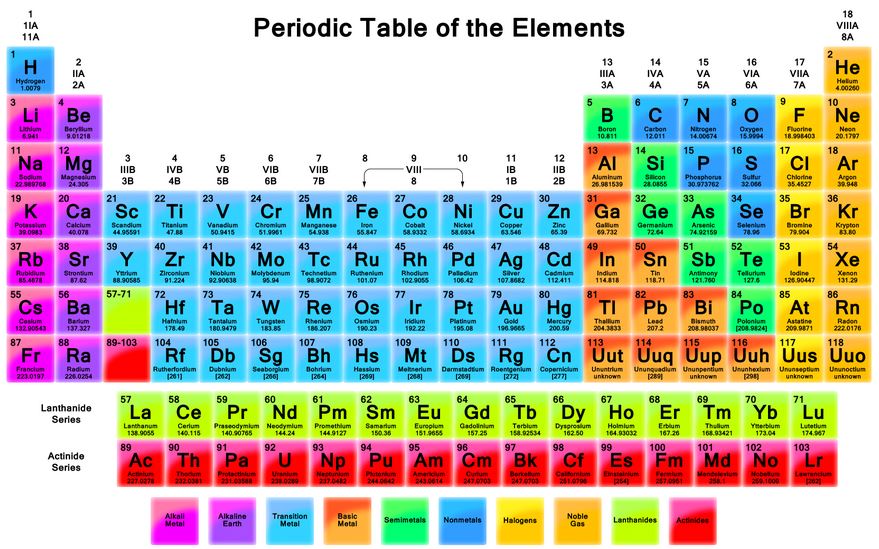
Name
Class
Date
1.
Elements on the LEFT side of the periodic table will most likely form:
a)
Positive ions
b)
Negative ions
c)
Neutral Ions
d)
None of these
2.
If an atom loses two electrons what charge will it have?
a)
+ 2
b)
 - 2
c)
+1
d)
-1
3.
Covalent compounds
a)
Share electrons
b)
transfer electrons
c)
contain a sea of electrons
d)
conduct electricity
4.

Ionic bonding is between a

a)

nonmetal and nonmetal

b)

metal and nonmetal

c)

metal and metal

d)

Depends on the situation

5.

What is the chemical formula for Lithium Nitride?

a)

Li3N

b)

LiN3

c)

NLi3

d)

N3Li

6.
Low melting and boiling points which increase with increasing molecule size due to increased intermolecular forces.
a)
simple covalent molecules
b)
metallic
c)
ionic
d)
giant covalent 
7.
Elements such as  Silicon, diamond and graphite.  Compounds include  SiO2
a)
simple covalent molecules
b)
metallic
c)
ionic
d)
giant covalent 
8.
Melting points are very high – a large amount of energy is needed to break all the covalent bonds
a)
simple covalent molecules
b)
metallic
c)
ionic
d)
giant covalent 
9.
Formulae of these might include H2O
each molecule contains 1 O and 2H atoms 
a)
simple covalent molecules
b)
metallic
c)
ionic
d)
giant covalent 
10.
Which of these is covalent?
a)
NaCl
b)
Pb(NO3)2
c)
CO2
d)
AlCl3
11.
Magnesium bromide is an ionic compound with the chemical formula MgBr₂.  What does the "2" tell you?
a)
There are 2 bromide ions for every magnesium ion
b)
Bromide has a 2- charge
c)
Bromide has a 2+ charge
d)
There are 2 magnesium ions to every bromide ion
12.

Complete the following word equation:

Metal + Acid -->

a)

Salt + water

b)

Salt + hydrogen

c)

Salt + Water + Carbon dioxide

13.

Complete the following word equation:

Metalcarbonate + acid -->

a)

Salt + Hydrogen

b)

Salt + Water + Carbon Dioxide

c)

Salt + Water

14.

How do you remove the water to leave solid copper sulfate crystals?

a)

Filter

b)

Evaporate

c)

Distill

15.

What type of reaction produced an insoluble salt?

a)

Neutralisation reaction

b)

Precipitation reaction

c)

Titration reaction

d)

Insoluble reaction

16.
Salts that are made with hydrochloric acid are called ______________.
a)
chlorides
b)
sulfates
c)
nitrates
d)
carbonates
17.
A salt is formed when nitric acid combines with sodium hydroxide. What is the name of the salt?
a)
Sodium chloride
b)
Sodium nitrate
c)
Hydrogen Nitrate
d)
Nirate
18.

When a soluble salt is formed from an acid and an insoluble base, how do you know when an excess of a base has been added?

a)

When bubbles of gas appear

b)

When the reactant all dissolves

c)

When some of the reactant is left unreacted/undissolved

d)

When a colour change happens

19.

Why do you add excess of the insoluble reactant when making a soluble salt?

a)

To make sure all the acid is used up

b)

To separate the solid from the solution

c)

To make sure a reaction occurs

d)

To have the reaction happen faster

20.

How do you separate an excess insoluble reactant from a solution?

a)

Filtration

b)

Precipitation

c)

Crystalisation

d)

Evaporation

21.

Which of the following equations is correct for neutralisation

a)

H+ + OH - → H2O

b)

H+ + O- → H2O

c)

H+ + OH - → H2 + O2

22.
Formula mass of H2O
a)
18g
b)
18
c)
17g
d)
16
23.
You expect to get 20g of product but only get 14g. What is your % yield?
a)
280%
b)
70%
c)
0.7%
d)
143%
24.

Mass of 0.4 moles of LiH

a)

32g

b)

8g

c)

20g

d)

3.2g

25.

How much H2O could you make from 2g of H2?

H2 + 0.5 O2 --> H2O

a)

26g

b)

4g

c)

16g

d)

18g

26.
4NH+ 5O--> 4NO + 6H2O
How many grams of NO are formed if 6.30g of ammonia react with 1.80g of oxygen? 
a)
0.37g
b)
0.045g
c)
1.35g
d)
11.1g
27.

Which of the following shows the structure of ethene?

a)
b)
c)
d)
28.
General formula of Alkene is 
a)
CnH2n+2
b)
CnH2n
c)
CnH2n+1OH
d)
CnH2n+1COOH
29.

Methane reacts with chlorine in substitution reaction. Which of these is an essential condition?

a)

An acid catalyst

b)

A low temperature

c)

UV light

d)

A low pressure

30.

Alkanes react with excess oxygen to form

a)

carbon dioxide and water

b)

salt and water

c)

carbon monoxide and soot

d)

metal hydroxide and hydrogen

31.
Which of the following would have the highest melting point?
a)
C3H8
b)
C4H8
c)
C5H12
d)
C22H44
32.
Name this alkane
a)
Methane
b)
Ethane
c)
Propane
d)
Butane
33.
Hydrocarbons are compounds that contain
a)
Carbon, only
b)
Carbon and Hydrogen, only
c)
Carbon, Oxygen, and Hydrogen, only
d)
Carbon, Oxygen, Hydrogen, and Nitrogen, only
34.
The boiling points and viscosity of alkane molecules increase as their molecular sizes increase.
a)
True
b)
False
35.
Cracking.....
a)
Breaks larger hydrocarbons into smaller hydrocarbons
b)
Separates hydrocarbons based on their length
c)
Detects alkenes
36.
What liquid detects the presence of an alkene?
a)
Alkene water
b)
Bromine water
c)
Water
d)
Limewater
37.

Complete the equation C16H34 ---> __________ + C2H4

a)

C16H34

b)

C2H30

c)

C10H20

d)

C14H30

38.

When testing for alkenes (unsaturation) bromine water turns from...

a)

orange --> blue/black

b)

colourless --> pink

c)

orange --> colourless

d)

orange --> clear

39.

A chain of repeating units (called monomers)

a)

monomer

b)

dimer

c)

replicate

d)

polymer

40.

What is the name of the addition polymer?

a)

poly(fluoroethene)

b)

poly(difluoroethene)

c)

poly(tetrafluoroethene)

41.
A colorless, odorless gas that decreases the blood's ability to carry oxygen.  Can cause faintness, death.
a)
Nitrogen oxides
b)
Ground-level ozone
c)
Carbon monoxide
d)
Sulfur dioxide
42.

______________ ______________ is produced when fuels containing sulfur are burned in the presence of oxygen.

a)

Carbon dioxide

b)

Sulfur dioxide

c)

Carbon monoxide

d)

Greenhouse gas

43.
Which pair has the same empirical formula?
a)
NaCrO4 and Na2Cr2O7
b)
C2H4O2 and C6H12O6
c)
C3H6Oand C2H6O2
d)
CH4 and C2H6
44.
A compound consists of 72.2% magnesium(Mg) and 27.8% nitrogen(N) by mass. What is the empirical formula?
a)
Mg4N3
b)
MgN2
c)
Mg3N
d)
MgN
45.

Fractional distillation separates crude oil based on the different __________ of the molecules in the mixture

a)

melting point

b)

boiling point

c)

freezing point

d)

chemical reactivity

46.

Where do short chain hydrocarbons collect?

a)

At the top

b)

In the middle

c)

At the bottom

47.

A fraction is

a)

a group of alkanes with similar boiling points

b)

a group of alkanes with similar chemical properties

c)

a group of alkanes with the same general formula

d)

a group of different homologous series

48.

Which of these is untrue about a fractional distillation column

a)

The column is hottest at the top and coolest at the bottom

b)

As the size of the molecules increases their boiling point increases

c)

As the size of the molecules increases the viscosity increases

d)

The column is hottest at the bottom and coolest at the top
