
 Worksheets
2022 Semester 2 Final Review
Total questions: 107
Worksheet time: 2hrs 11mins
Which would NOT increase the rate at which a sugar cube dissolves?
Reducing the amount of solvent
Crushing the sugar cube
Stirring the solution
Heating the solvent
You can make a solute dissolve more quickly in a solvent by
adding more solute.
adding ice.
heating the solvent.
removing some solvent.
A solution that contains all of the solute it can hold at a given temperature is
diluted.
saturated.
supersaturated.
unsaturated.
The amount of solute that can be dissolved in a specific amount of solvent at a given temperature is its
concentration.
density.
dilution.
solubility.

Three 10 g samples of sugar are represented below.
Sample A dissolves in water more slowly than sample B.
Sample B dissolves more slowly than sample C.
Which of the following best explains why sample A dissolves more slowly than the other two?
It has the most volume.
It has the smallest surface area.
It has the largest number of sugar molecules.
It has the fewest bonds between sugar modules.

The solubility graph below shows the amounts of four substances that will dissolve in 100 grams of water at various water temperatures.
Which substance has 80 grams of solute dissolved in 100 grams of water at 50 C?
Potassium Bromide
Ammonium Chloride
Potassium Chloride
Lithium Hydroxide
A solution that is able to dissolve additional solute is best described as
supersaturated.
concentrated.
saturated
unsaturated.
Which of these pH values represent an acid?
4
8
10
12

If I add more chicken soup to this setup, what will happen to the pH?
It will increase and get closer to 7
It will decrease and get closer to 0
It will stay the same and not change

If I add more water to this setup, what will happen to the pH?
It will increase and get closer to 7
It will decrease and get closert to 0
It will stay the same and not change

Milk is a very weak acid. What might its pH value be?
6.5
7.8
4.2
12.2
When an acid is dissolved in water, it turns red litmus paper blue.
True
False
Which of the following are properties of acids?
They conduct electricity when dissolved in water
They taste sour
They react with metals to produce hydrogen gas
All of the answer choices are correct
Which of the following is an acid?
vinegar
bleach
sugar in water
starch in water
toothpaste in water
Which of the following is a property of a base?
bitter taste
reacts with metals
salty
sour taste
The pH value of an acid represents its __________ of positive ions in the solution
amount
concentration
color
charge
Bases have many uses. They are mainly used to make
cleaning products
soaps
concrete
all of the answer choices
The higher the concentration of negative (hydroxide) ions in the solution, the stronger the base is.
True
False
The strongest bases have pH values close to
0
14
7
5
Ocean water is only slightly basic. What might its pH value be?
5
8
12
2
If the substance is neutral, what would the pH be?11
3
5
7
9
11

Wind turbines and windmills convert what energy to another?
Wind to Mechanical to electric
Wind to Gravitational potential to electric
Gravity to Mechanical to potential
Solar to Thermal to sound
In an endothermic reaction, heat is ...
taken in
given out
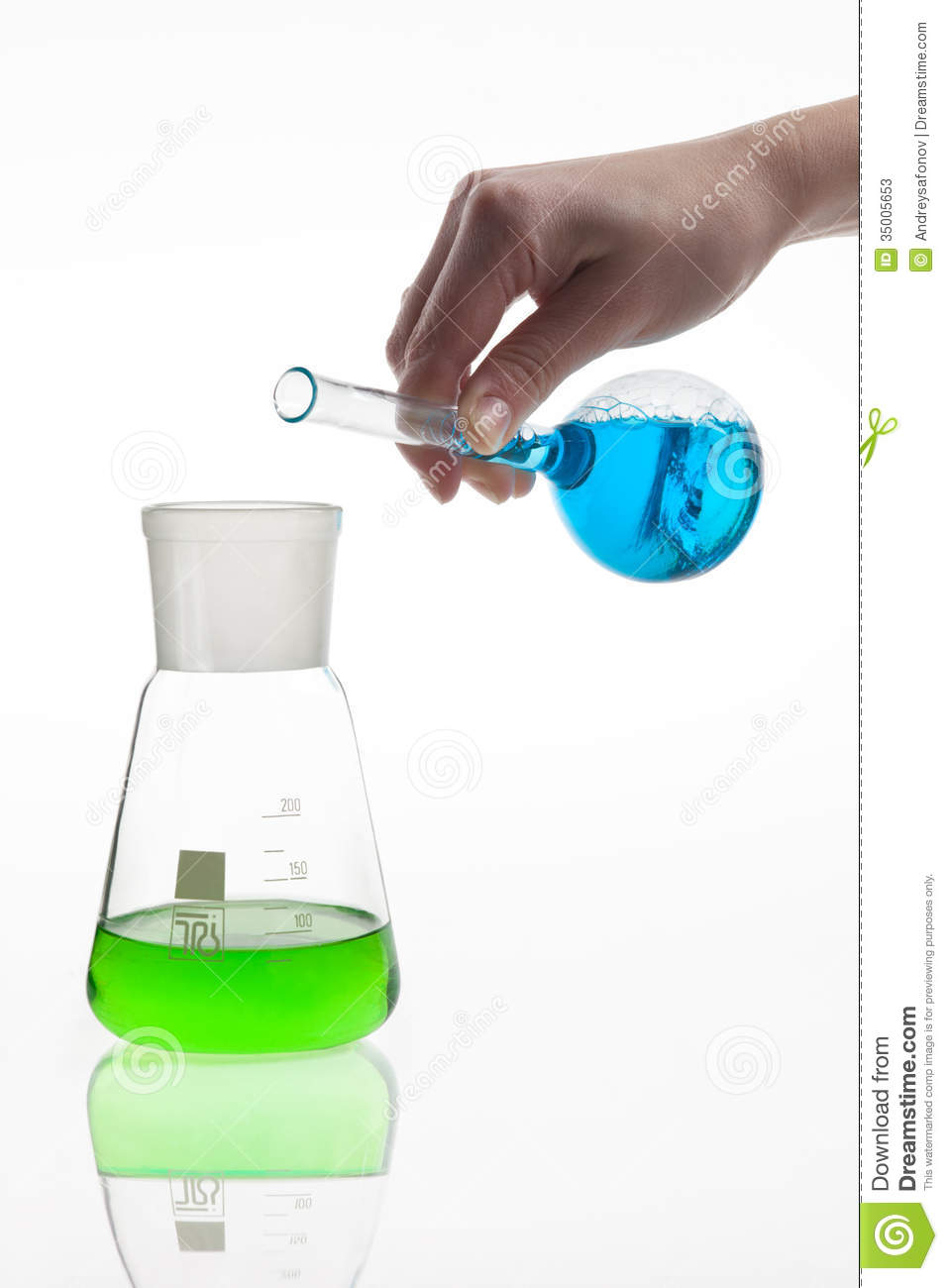
What is an example of exothermic?
firework
ice pack
coal
wood
Temperature is...
A measure of the potential energy stored in a substance
The same as heat
A measure of the random motions of the molecules of a substance
What tool do we use to measure kinetic energy of molecules?
Thermometer
Ruler
Balance
Magnifying Glass
Q= m c ∆T
The units for specific heat are:

If two objects have different temperatures when they come in contact, heat will flow from the warmer object to the cooler one UNTIL ____________
one reaches a temperature of zero
they both have an equal temperature
one runs out of energy

What is the temperature of the metal cube when thermal equilibrium is achieved between the cube and the liquid?
What does "ΔT" mean?
A change in health
A change in heat
A change in height
A change in temperature
If the specific heat of water is 4.18 J/g∙°C, how much heat is required to increase the temperature of 1200 g of water from 23 °C to 39 °C?
-80,256 J
80.256 J
80,256 J
-80.256 J
Is this reaction endothermic or exothermic?
Is this reaction endothermic or exothermic?


What relationship can be interpreted from the diagram?
As volume decreases, pressure decreases
As pressure increases, volume increases
As moles increase, temperature increases
As pressure increases, volume decreases
what is greenhouse effect
the process of reflecting the heat from the back to the outer space.
it is the process of trapping of heat from the sun by the greenhouse gases.
An example of green house gas is:
Oxigen
Sulfure
Chlorophyll
Ozone
Green House gases
absorb the sun's radiation and trap heat
are good for our health
absorb gravity and keep us attached to Earth
expulse radiation to the sun and prevent us from getting to warm

Which of the following is not a green house gas?
Ozone
Carbon Dioxide
Methane
Helium


A temperature increase causes the particles ......
to slow down
move faster
collide higher
in the right order
How does a catalyst work in speeding up a reaction?
By lowering the activation energy or reaction
by giving them more energy
by making them more available

The ______________is required to break the bonds of the reactants.
Carbonic energy
Activation energy
Plutonic energy
Energi Gaib
The forward reaction points towards the __________.
The forward reaction forms the substance __________.
The reverse reaction points towards the __________.
The reverse reaction forms the substance __________.
SO2 + O2 <−> SO3
If the concentration of SO2 is increased, the equilibrium of the reaction will shift ___________.
SO2 + O2 <−> SO3
If the equilibrium shifts to the right, the concentration of O2 will ___________.
SO2 + O2 <−> SO3
If the equilibrium shifts to the right, the concentration of SO3 will ___________.
heat + N2 + O2 <−> 2NO
If O2 is removed, the concentration of N2 will _______.
heat + N2 + O2 <−> 2NO
If the heat is added to the chemical system, the equilibrium will shift _______.
heat + N2 + O2 <−> 2NO
If the heat is removed to the chemical system, the equilibrium will shift _______.
heat + N2 + O2 <−> 2NO
If the heat is removed from the chemical system, the concentration of N2 will _______.
H2 (g) + Cl2 (g) <−> 2HCl (g) + heat
If the temperature is cooled, the _________ reaction will be favored.
H2 (g) + Cl2 (g) <−> 2HCl (g) + heat
If the pressure in the system is increased, the equilibrium will _______.
N2 (g) + 3 H2 (g) <−> 2 NH3 (g)
If the pressure in the system is increased, _______ reaction will be favored.
N2 (g) + 3 H2 (g) <−> 2 NH3 (g)
If the pressure in the system is increased, which substance will increase in concentration?
N2 (g) + 3 H2 (g) <−> 2 NH3 (g)
If the pressure in the system is decreased, which substance will increase in concentration?



