Wayground logo

Free Printable Worksheets

Font size

S
M
L
XL
Worksheets

2nd Semester Final Review

Total questions: 75

Worksheet time: 2hrs 8mins

Name
Class
Date
1.
What is genetics?
a)
The study of DNA nucleotides
b)
The study of heredity
c)
The study of a cell dividing into 2
d)
The study of eye color
2.
The passing of DNA from parents to offspring
a)
Generation
b)
Heredity
c)
Inheritance
d)
Traits
3.
Chromosomes are found in the ____________ of the cell
a)
Chloroplast
b)
Nucleus
c)
Cytoplasm
d)
Mitochondria
4.
A mode of reproduction in which an organism arises from two organisms and inherits half of its DNA from each parent
a)
Sexual Reproduction
b)
Asexual Reproduction
c)
Cloning
d)
Fragmentation
5.
What is a characteristic of sexual reproduction?
a)
diverse offspring
b)
identical offspring
c)
faster than asexual reproduction
d)
requires no energy
6.
All of the offspring of an organism have the same genetic material, which is identical to the parent organism?
a)
makes its own food
b)
goes away
c)
live in a marine habitat
d)
reproduces asexually
7.

What type of stimulus?

The smell of pizza

a)

Internal

b)

External

8.
What type of stimulus?
Loud fire alarm
a)
Internal
b)
External
9.
What type of stimulus?
Increasing pH levels in blood
a)
Internal
b)
External
10.
What type of stimulus?
Decreasing body temperature
a)
Internal
b)
External
11.
What type of stimulus?
Lights suddenly turn off
a)
Internal
b)
External
12.
What type of stimulus?
Touch a hot skillet
a)
Internal
b)
External
13.
What type of stimulus?
An infection in the body
a)
Internal
b)
External
14.
This organelle takes food and turns it into ENERGY for plant and animal cells.
a)
Chloroplast
b)
Mitochondria
c)
Lysosome
d)
Ribosome
15.
I am the outer most layer of an animal cell. What am I?
a)
cell wall
b)
nucleus
c)
cell membrane 
d)
cell skin
16.
A rigid layer that lies outside the cell's  membrane is...
a)
Cytoskeleton
b)
Cilia
c)
Cell Wall
d)
Flagella
17.
What organelle is called the "powerhouse" of a cell?

a)
Endoplasmic Reticulum
b)
Nucleus
c)
Mitochondria
d)
Nucleolus
18.
I am only found in a plant cell. What am I?
a)
cell wall
b)
mitochondria
c)
cytoplasm
d)
chloroplast
19.
Which organelle uses energy from sunlight to make sugar?
a)
mitochondria
b)
nucleus
c)
chloroplasts
d)
vacuoles
20.
Where does mechanical digestion begin?
a)
stomach
b)
esophagus
c)
pancreas
d)
mouth
21.
Which body system gets oxygen from the environment and removes carbon dioxide and other wastes from the body?
a)
Circulatory
b)
Respiratory
c)
Digestive
d)
Skeletal
22.
Which system transports materials from the digestive system and respiratory system to the cells?
a)
circulatory
b)
respiratory
c)
digestive
d)
skeletal
23.
The movement of blood through the heart and body is called ______.
a)
circulation
b)
ventriculation
c)
locomotion
d)
pumping heart
24.
With circulation, the heart provides your body with which of the following? Choose the best answer. 
a)
oxygen
b)
nutrients
c)
a way to get rid of waste
d)
all of the above
25.
What is the main function of the excretory system?
a)
to collect and remove wastes from the body
b)
to strengthen skeletal muscles
c)
to protect the nervous system
d)
to bring oxygen to body cells
26.
Is water melting a physical or chemical change?
a)
Physical
b)
Chemical
27.
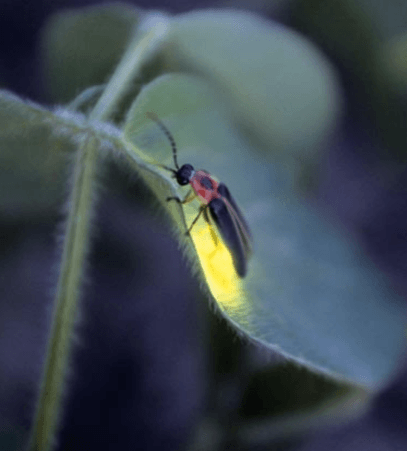
Is a firefly lighting up a physical or chemical change?
a)
Physical
b)
Chemical
28.
Is salt dissolving in water a physical or chemical change?
a)
Physical
b)
Chemical
29.
Is digesting your food a physical or chemical change?
a)
Physical
b)
Chemical
30.
Is melting iron a physical or chemical change?
a)
Physical
b)
Chemical
31.
Is sour milk a physical or chemical change?
a)
Physical
b)
Chemical
32.
What process occurs when light energy is captured in autotrophs and converted into sugar?
a)
Photosynthesis
b)
Cellular Respiration
33.
What are the products of photosynthesis?
a)
water and carbon dioxide
b)
oxygen and glucose
c)
oxygen and carbon dioxide
d)
oxygen and water
34.
What major energy transformation occurs during photosynthesis?
a)
Thermal --> Chemical
b)
Kinetic --> Radiant
c)
Chemical --> Radiant
d)
Radiant --> Chemical
35.

What is the force done by water inside of a vacuole that applies a force necessary for the plant to stand upright?

a)

The Force

b)

Turgor Pressure

c)

Water Pressure

d)

Plant Bones

36.

What do these plant cell vacuoles exhibit?

a)

Low Turgor Pressure

b)

Medium Turgor Pressure

c)

High Turgor Pressure

d)

All of these are correct

37.

What do the vacuoles in this picture convey?

a)

Low Turgor Pressure

b)

Medium Turgor Pressure

c)

High Turgor Pressure

d)

All of these are correct

38.

What cell is flaccid?

a)

Left

b)

Right

c)

None

d)

Both

39.

A plant that is wilted is said to have . . .

a)

No Water

b)

Plenty of Water

c)

Low Water

d)

All of these are correct

40.

This plant will most likely be _______________.

a)

Limp or wilted

b)

stiff and rigid

41.

This plant would most likely be __________________.

a)

Limp or wilted

b)

Stiff and rigid

42.

Plants following the sun exhibit (show)

a)

Phototropism

b)

Geotropism

c)

Hydrotropism

d)

Thigmotropism

43.
The shoot of a plant growing up. 
a)
Positive Geotropism 
b)
Negative Geotropism 
c)
Thigmotropism
d)
Hydrotropism
44.
The root of a plant growing down. 
a)
Positive Geotropism 
b)
Negative Geotropism 
c)
Thigmotropism
d)
Hydrotropism
45.
When a plant responds to gravity it is called:
a)
Phototropism
b)
Thigmotropism
c)
Geotropism
d)
Hydrotropism
46.
The only planet that can support life is _____________________________.
a)
Mercury
b)
Neptune
c)
Pluto
d)
Earth
47.
What is the habitable zone?
a)
A zone with the correct distance away from a star
b)
A zone in space where water turns into vapor
c)
A zone where life can not be sustained
d)
A zone in space where water is frozen
48.
In order for life as we know it to exist, a planet must have ______________________
a)
heat
b)
animals
c)
liquid water
d)
solar energy
49.
Earth’s atmosphere contains water vapor and carbon dioxide. These greenhouse gases are important because they -
a)
are substances animals need to breathe.
b)
trap thermal energy in the atmosphere.
c)

protect against magnetic particles.
d)
create Earth’s gravitational field.
50.
Which helps protect the earth from radiation?
a)
Water
b)
Atmosphere
c)
Mantle
d)
Gravity
51.

what kingdom?- eukaryotic, multi-celled-photosynthetic.

a)

animal

b)

plant

c)

protist

d)

fungi

52.

What kingdom-Prokaryotic-lives in hot,salts environments

a)

plants

b)

animals

c)

archaebacteria

d)

eubacteria

53.

What kingdom- eukaryotic-multi-celled-heterotrophic

a)

plant

b)

animal

c)

protista

d)

fungi

54.

HOW MANY KINGDOMS ARE THERE?

a)

4

b)

5

c)

6

d)

7

55.

MUSHROOMS ARE IN WHAT KINGDOM

a)

PLANT

b)

ANIMAL

c)

FUNGI

d)

PROTIST

56.

APES BELONG TO WHAT KINGDOM

a)

PLANT

b)

ANIMAL

c)

FUNGI

d)

PROTIST

57.
Unicellular means...
a)
An organism is made of many cells
b)
An organism is made of one cell
c)
An organism is made of no cells
58.
Multicellular means...
a)
an organism is made of many cells
b)
An organism is made of only one cell
c)
An organism is made of no cells
59.
Heterotroph is when an organism...
a)
Has to eat other things
b)
has to make it's own food
60.
Autotroph is when..
a)
An organism makes it's own food
b)
An organism has to eat other things
61.
Eukaryotic cells always have a _______________.
a)
Nucleus 
b)
Plant
c)
no nucleus 
d)
heart 
62.
Bacteria are all prokaryotic. What does it mean to be prokaryotic?
a)
Has a nucleus 
b)
Sometimes has a nucleus 
c)
Does not have a nucleus 
d)
Has a cell membrane 
63.
The circulation of the earth's water, in which water evaporates from the sea into the atmosphere, where it condenses and falls as rain or snow, returning to the sea by rivers or returning to the atmosphere by evapo-transpiration is called the...
a)
carbon cycle
b)
nitrogen cycle
c)
water cycle
d)
rock cycle
64.
An area of land in which all of the water falling or flowing over it drains to the same location is a/an…
a)
watershed
b)
watertable
c)
river
d)
aquifer
65.
Water that is located in the ground in the pores within rock is called…
a)
watershed
b)
surface water
c)
groundwater
d)
water cycle
66.
An underground layer of permeable rock that holds groundwater which can be extracted by drilling a well.
a)
water table
b)
aquifer
c)
watershed
d)
river
67.
How do people extract groundwater?
a)
groundwater cannot be extracted
b)
by drilling wells and pumping water out of the ground
c)
mining water from the Earth
d)
answer not shown
68.
What do all the sources of groundwater contamination shown have in common?
a)
caused by humans so it is preventable
b)
naturally occurring so it cannot be prevented
69.
Natural disasters such as flooding and tornadoes are linked to ________________.
a)
primary
b)
secondary
c)
old field
d)
ecosystem
70.
How do lichens contribute to primary succession?
a)
Lichens decompose organic matter from animals and plants
b)
Lichens begin to break down rock to form soil
c)
Lichens are nitrogen fixing bacteria
d)
Lichens convert carbohydrates into fossil fuels.
71.
What is formed during primary succession that doesn't need to be formed during secondary succession?
a)
pioneer species
b)
soil
c)
climax community
d)
lichens
72.
What type of succession is shown going from figure A to figure B?
a)
primary succession
b)
eutrophication
c)
secondary succession
d)
intermediate
73.
After a forest fire, an ecosystem would start regrowth through -
a)
primary succession
b)
secondary succession
c)
climax community
d)
limiting factors
74.
succession that occurs in an area with no soil
a)
ecological succession 
b)
primary succession 
c)
secondary succession
d)
pioneer speciles
75.
The process in which broken rock is transported (moved).
a)
deposition
b)
erosion
c)
weathering
d)
abrasion