wayground logo

Free Printable Worksheets

Font size

S
M
L
XL
Worksheets

Super Mega Final Review

Total questions: 150

Worksheet time: 2hrs 35mins

Name
Class
Date
1.
Something is ___________ ____________
when some molecules can cross the membrane while others cannot. 
a)
Selectively (or Semi) Permeable 
b)
Totally Transparent
c)
Liquid Licorice 
d)
Heavily Patrolled 
2.
Controls the passage of materials inside and outside of the cell. 
a)
Cell Membrane
b)
Lipid Cleric Layer
c)
Membrane Gate
d)
Protein Receptors 
3.
This experiment illustrates which property of the cell membrane?
a)
impermeability
b)
selective permeability
c)
insolubility
d)
complete permeability
4.
How does a cell maintain homeostasis?
a)
Regulates what enters and leaves the cell
b)
Flexibility
c)
Protective barrier
d)
Structure and support
5.
What is another term for "selectively permeable"?
a)
Porous
b)
Acts like a switch
c)
Permanent
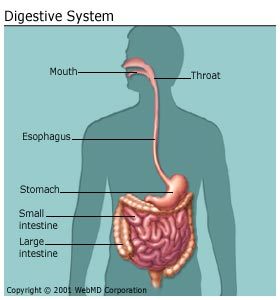
d)
Semipermeable
6.
The cell membrane is selectively permeable, which means...
a)
All materials can enter and leave the cell
b)
Certain things can enter while others cannot
c)
The cell manually sorts through all materials
d)
Only certain cells can interact with the cell.
7.
The cell membrane of the red blood cell will allow water, oxygen, and carbon dioxide to pass through. Because other substances are blocked from entering, this membrane is called
a)
perforated
b)
semi-permeable
c)
non-conducive
d)
permeable
8.
Look at the cross section of a cell membrane of a eukaryotic cell. H+ ions are being pumped from a low concentration to a high concentration. How do you describe this type of transport across the cell membrane?
a)
active transport
b)
passive transport
c)
facilitated diffusion
d)
co-transport
9.
The diagram below represents a cell and some molecules in its environment. Which molecule would require the use of energy in order to be brought into the cell?
a)
1
b)
2
c)
3
d)
4
10.
The diffusion of water across a selectively permeable membrane is called 
a)
active transport
b)
facilitated diffusion
c)
osmosis
d)
phagocytosis
11.
The Smooth and Rough Endoplasmic Reticulum's are most like...
a)
Highway
b)
City Hall
c)
Post Office
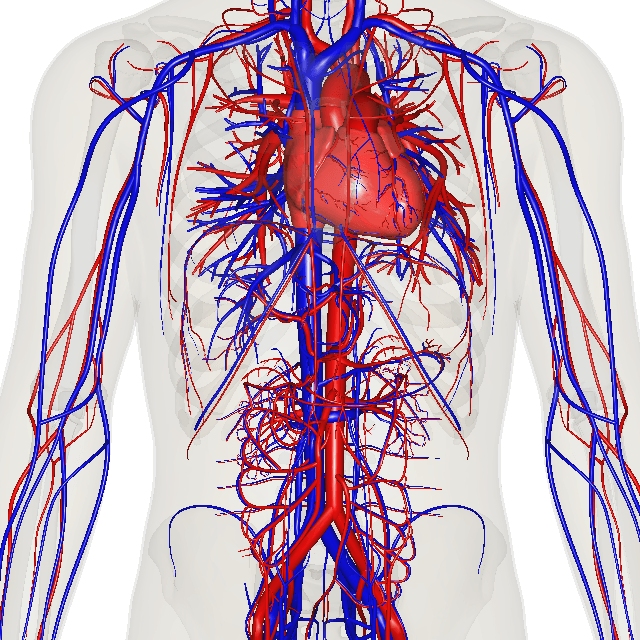
d)
Powerplant
12.
Which organelle is like the battery for the cell?
a)
Chloroplast
b)
mitochondria
c)
Nucleus
d)
Endoplasmic Reticulum
13.
Directs all cell activities "Brain or Control Center of cell"
a)
Lysosomes
b)
Nucleus
c)
ribosomes
d)
Mitochondria
14.
Controls what passes in and out of the nucleus
a)
Nuclear Membrane
b)
Vacuole
c)
Ribosome
d)
Lysosome
15.
Jelly-like substance found inside cell that acts as a medium for chemical reactions within the cell
a)
Nuclear Membrane
b)
Golgi Body
c)
Cytoplasm
d)
Ribosome
16.
"Storage tanks" Can hold food, water or waste for the cell
a)
Ribosomes
b)
Vacuole
c)
Chloroplast
d)
Nucleolus
17.
Makes proteins for the cell, can be found attached to the endoplasmic reticulum or free in the cytoplasm
a)
Cell Wall
b)
Golgi Body
c)
Ribosome
d)
Cytoplasm
18.
Transportation network for the cell, moves materials around in the cell
a)
Lysosome
b)
Nuclear Membrane
c)
Endoplasmic Reticulum
d)
Centriole
19.
Another term for equilibrium is...
a)
Not enough
b)
Too little
c)
Homeostasis
d)
Too much
20.
The cell membrane is selectively permeable, which means...
a)
All materials can enter and leave the cell
b)
Certain things can enter while others cannot
c)
The cell manually sorts through all materials
d)
Only certain cells can interact with the cell.
21.
The cell membrane
a)
regulates what enters/leaves cell
b)
helps maintain homeostasis
c)
keeps contents of cell in place
d)
all of the above
22.
The picture is an example of _________________.
a)
osmosis
b)
isotonic
c)
diffusion
d)
active transport
23.
Which of these is the basic unit of life in all living things?
a)
tissue
b)
organ
c)
cell
d)
atom
24.
A group of tissues that perform a similar function is called_____. (Examples include the heart, lungs or stomach)
a)
cells
b)
tissues
c)
organs
d)
organ system
25.
The basic unit of life is called a (n)
a)
atom
b)
compound
c)
cell
d)
energy
26.
Which of the following is an example of an organism?
a)
Human
b)
Apple tree
c)
Yeast
d)
All of these
27.
Which of the following is NOT an organism?
a)
Kangaroo
b)
Mushroom
c)
Computer
d)
Oak tree
28.
The heart is an example of a(n) _________.
a)
Organ system
b)
Organ
c)
Organism
d)
Tissue
29.
The circulatory (cardiovascular) system is an example of a(n) _______.
a)
Organism
b)
Organ system
c)
Organ
d)
Cell
30.
A peach tree is an example of a(n) __________.
a)
Organ
b)
Organ system
c)
Tissue
d)
Organism
31.
Organs are made up of ________.
a)
tissues
b)
organ systems
c)
organisms
d)
species
32.
Which of the following is the correct equation for PHOTOSYNTHESIS?
a)
CO+ light + H2O --> O+ Sugar
b)
CO+ sugar + H2O --> O+ light
c)
O2 + light + H2O --> CO+ Sugar
d)
CO+ O2 + H2O --> Light+ Sugar
33.
What process occurs when light energy is captured in autotrophs and converted into sugar?
a)
Photosynthesis
b)
Cellular Respiration
34.
What are the products of photosynthesis?
a)
water and carbon dioxide
b)
oxygen and glucose
c)
oxygen and carbon dioxide
d)
oxygen and water
35.
What are the reactants for Cell Respiration?
a)
CO2 + H20
b)
Sugar + CO2
c)
Sugar + O2
d)
CO2 + H20 + 38 ATP
36.
What are the products for Cell Respiration?
a)
CO2 + H20
b)
Sugar + CO2
c)
Sugar + O2
d)
CO2 + H20 + 38 ATP
37.
True or False: Plants do Cell Respiration and Photosynthesis?
a)
TRUE
b)
FASLE
38.
In what organelle does cell respiration take place?
a)
Mitochondria
b)
Chloroplast
c)
Golgi Apparatus
d)
Nucleus
39.

Plants need ________ to conduct photosynthesis

a)

Oxygen

b)

Soil

c)

Carbon dioxide

d)

Sugar

40.
Which organelle in the plant cell performs photosynthesis?
a)
Chloroplast
b)
Mitochondria
c)
Nucleus
d)
Cytoplasm
41.
What is the function of ATP in living things?
a)
provides energy for cells
b)
stores genetic information
c)
provides structure in the nucleus
42.
Each cell has a specific job. Whatever job a cell does is called its ______________.
a)
Structure
b)
Function
c)
Career
d)
Jobanelle
43.
What type of cells have a cell wall and chloroplasts?
a)
Plant cells
b)
Animal cells
c)
Plant and animal cells
d)
Neither plant NOR animal cells
44.
Controls all cell activities and contains DNA
a)
Ribosome
b)
Chloroplast
c)
Endoplasmic reticulum
d)
Nucleus
45.
Uses energy from the sun to make sugars/food for the cell
a)
Mitochondria
b)
Chloroplast
c)
Vacuole
d)
Lysosome
46.

Which organelle labeled above is responsible for the transport of nutrients and wastes into and out of the cell?

a)

1

b)

2

c)

3

d)

4

47.

Identify the structure that is labeled "H" in the image.

a)

cell wall

b)

chloroplast

c)

mitochondria

d)

nucleus

e)

cell membrane

48.
Where does cellular respiration take place in the cell?
a)
Cell Membrane
b)
Nucleus
c)
Mitochondria
d)
Vacuole
49.
What is the chemical formula for cellular respiration
a)
C6H12O6 + 6O2 --> 6CO2 + 6H2O
b)
 6CO2 + 6H2O --> C6H12O6 + 6O2
50.
Which kinds of cells carry out cellular respiration?
a)
plant cells
b)
animal cells
c)
bacterial cells
d)
all cells
51.

Which one is a good hypothesis?

a)

If we add more soap to the mixture, then the mixture will bubble over.

b)

We'll add more soap to the mixture, then it will bubble over.

c)

If we add more soap to the mixture, the mixture will bubble over.

52.

Which one is a good hypothesis?

a)

If we drink more water, we'll be able to run faster.

b)

We will drink more water, then we'll run faster.

c)

If we drink more water, then we can run faster.

53.
The measurable factor in an experiment is known as the: 
a)
Control
b)
Independent Variable
c)
Constant
d)
Dependent Variable
54.
A new company wants to test out a pill that will unlock all of your brain to make you 50% smarter and much more efficient. 
Which answer choice shows what the control group would be?
a)
The group that receives the pill
b)
The group that receives the fake pill
c)
The new company
d)
The brain that gets smarter
55.
Gerald wants to find out how quickly he can melt a stick of butter. He plans to use a hair dryer with 4 different heat settings. What would be the control group in his experiment?
a)
Hottest Setting
b)
Lowest Setting
c)
No Heat
d)
Middle Setting
56.
When experimenting with the growth of a plant, a scientist uses three (of the same type of) plants, two different fertilizers, equal light, and equal water. What type of variable is the fertilizer?
a)
Dependent
b)
Independent
c)
Control
d)
Compound
57.
Research question: does the distance a person kicks a soccer ball effect how well they will do on their math test.  What is the dependent variable?
a)
How far they kick the soccer ball
b)
who the person is
c)
how well they do on the math test
d)
Type of soccer ball.
58.
Ms. S set up an experiment to see how the mass of a ball affects the distance it rolls off a ramp. What is the dependent variable?
a)
Distance traveled by the ball
b)
Height of the ramp
c)
Mass of the ball
d)
Where the experiment took place.
59.
The process by which the body breaks down food so that it can be used for energy.
a)
composition
b)
digestion
c)
deposition
d)
absorption
60.
A long folded tube inside the body attached to the stomach where nutrients in the food are absorbed.
a)
large intestine
b)
small intestine
c)
esophagus
d)
rectum
61.
The opening at the end of the digestive track where feces exits the body.
a)
large intestine
b)
small intestine
c)
rectum
d)
anus
62.
A muscular tube that helps move food from the mouth to the stomach.
a)
esophagus
b)
trachaea
c)
small intestine
d)
gall bladder
63.
a)
esophagus
b)
liver
c)
stomach
d)
pancreas
64.
a)
stomach
b)
pancreas
c)
large intestine
d)
small intestine
65.
a)
pancreas
b)
trachea
c)
liver
d)
esophagus
66.
a)
large intestine
b)
small intestine
c)
rectum
d)
esophagus
67.
A type of protein that speeds up a chemical diagestion
a)
enzyme
b)
villi
c)
alveoli
d)
capillary
68.
Fingerlike extensions of the small intestine that increase the surface area for absorption
a)
bronchi
b)
alvioli
c)
villi
d)
chyme
69.

Alveoli have a...

a)

...large surface area to allow diffusion to take place over a greater space.

b)

...small surface area to allow diffusion to take place over a greater space.

c)

...large surface area to allow osmosis to take place over a greater space.

d)

...small surface area to allow osmosis to take place over a greater space.

70.
What are the main organs of gas exchange in the respiratory system?
a)
diapragm
b)
lungs
c)
trachea
d)
bronchi
71.
When you breathe, your lungs take in ___ and remove ___. 
a)
air/oxygen
b)
oxygen/carbon dioxide 
c)
carbon dioxide/waste 
d)
waste/air 
72.
The two main branches from the trachea (one to each lung)
a)
bronchi
b)
alveoli
c)
capillaries
d)
bronchioles
73.
The air sacs that are covered with capillaries where gas exchange takes place
a)
bronchi
b)
lungs
c)
oxygen
d)
alveoli
74.
What is tube that is also known as your wind pipe?
a)
esophogus
b)
bronchi
c)
trachea
d)
alveoli
75.
Name the organ label # 2 . 
a)
alveoli 
b)
bronchi 
c)
trachea 
d)
lungs 
76.
Name the structure labeled 8 
a)
lungs 
b)
trachea 
c)
diaphragm 
d)
alveoli 
77.
What is the main function of the respiratory system?
a)
to provide oxygen and remove carbon dioxide from the body
b)
to bring oxygen to the body
c)
to break down food and absorb nutrients
d)
to remove oxygen from the body and deliver carbon dioxide
78.
Which is a function of the cardiovascular system?
a)
to move water throughout the body
b)
to transport gases throughout the body 
c)
to eliminate waste from the body
d)
to provide structural support for the body 
79.
Which of the following is a synonym for the circulatory system?
a)
respiratory system
b)
digestive system
c)
nervous system
d)
cardiovascular system
80.
Which is responsible for providing oxygen to cells?
a)
respiratory system
b)
circulatory system
c)
muscular system
d)
nervous system
81.
In which system of the human body does the heart belong?
a)
Nervous
b)
Skeletal
c)
Cardiovascular
d)
Digestive
82.
Which system permits blood to circulate and transports nutrients around the body?
a)
Nervous
b)
Respiratory
c)
Circulatory
d)
Digestive
83.
This type of vessel carries blood TO the heart:
a)
vein
b)
nerve
c)
muscle
d)
artery
84.
When oxygen-rich blood is carried AWAY from the heart, it travels through an...
a)
artery
b)
neuron
c)
vein
d)
straw
85.
What is the main purpose of the immune system?
a)
support the body through bones and muscles
b)
get rid of waste from the body
c)
protect the body from pathogens
d)
move blood through the body
86.

Which blood cells carry oxygen throughout the body?

a)

Red

b)

White

c)

Plasma

d)

Platelets

87.

Which blood cells fight infection?

a)

Red

b)

White

c)

Plasma

d)

Platelets

88.

Which blood cells that help you stop bleeding if you get a cut?

a)

Red

b)

White

c)

Plasma

d)

Platelets

89.

Which is not a function of the skeletal system?

a)

shape and support

b)

movement

c)

protection

d)

gas exchange

90.

Which system is responsible for creating red blood cells?

a)

skeletal

b)

muscular

c)

respiratory

d)

nervous

91.

Which system of the human body provides protection to most of the major organs?

a)

skeletal system

b)

circulatory system

c)

respiratory system

d)

muscular system

92.

Which of the following best describes the job of the skeletal system?

a)

Gives shape and support to the body.

b)

Sends messages from the stomach to the brain.

c)

Brings in and breaks down all nutrients for the body

93.
What does the stem of the plant do?
a)
It makes food for the plant
b)
It soaks up the water from the ground
c)
It delivers water to the other parts of the plant
d)
It makes seed
94.
What do the leaves of a plant do?
a)
They make the food for the plant.
b)
They soak up the water from the ground.
c)
They deliver water to the other parts of the plants
d)
They make seeds
95.
Why do plants make and spread seeds?
a)
to create food for animals
b)
to drink up the nutrients
c)
to make more plants
d)
to make food
96.
Which part of the plant soaks in the sun to help feed the plant?
a)
stem
b)
root
c)
seed
d)
leaf
97.
How many parents are required for sexual reproduction? 
a)
one
b)
two
c)
four
d)
six
98.
The female sex cell
a)
sperm cell
b)
egg cell
c)
sex cell
d)
female cell
99.
A sperm cell unites with an egg cell to form a zygote. Which process is taking place? 
a)
Pollination
b)
Asexual reproduction
c)
Fertilization
d)
Vegetative propagation
100.
The scientific name for an organism is made from the:
a)
class and family name
b)
genus and species name
c)
domain and kingdom name
d)
kingdom and phylum name
101.
The 8 levels of classification, most broad to most specific.
a)
Domain, Genus, Family, Order, Class, Phylum, Kingdom, Species
b)
Domain, Species, Kingdom, Genus, Phylum, Family, Class, Order
c)
Domain, Kingdom, Phylum, Class, Order, Family, Genus, Species
d)
Order, Kingdom, Species, Domain, Phylum, Family, Class, Genus
102.
 An autotroph feeds on other organisms?
a)
True 
b)
False
103.
A heterotroph means?
a)
feeds itself
b)
feeds on other organisms
c)
2 word name
d)
8 legged
104.
A tool used by a taxonomist to identify an unknown organism is known as a __________.
a)
dichotomous key
b)
binomial nomenclature
c)
scientific name
d)
binomial key
105.
The taxon with the largest amount of organisms grouped together...
a)
Species
b)
Phylum
c)
Kingdom
d)
Domain
106.
Smallest taxonomic group with many similar characteristics...
a)
domain
b)
kingdom
c)
species
d)
class
107.
If each division is 100 µm, what is the size of this organism?
a)
4 µm
b)
400 µm
c)
4,000 µm
d)
400 mm
108.
The ________ of the microscope would show you the SMALLEST field of view.
a)
low power objective
b)
medium power objective
c)
high power objective
d)
ocular
109.
When looking through your microscope, you move your slide to the right- It appears
a)
to move to the right
b)
to stay the same
c)
to move to the left
d)
vanish
110.
The ________ of the microscope would show you the SMALLEST field of view.
a)
low power objective
b)
medium power objective
c)
high power objective
d)
stage
111.
The higher the magnification, the ________ you see of the specimen.
a)
more
b)
less
c)
higher
d)
lower
112.

The greater the ___________________, the smaller the field you are actually viewing.

a)

detail

b)

objective

c)

magnification

d)

body

113.

What would "R" look like under a microscope?

a)

a)

b)

b)

c)

c)

d)

d)

114.
Which type of reproduction creates genetically identical offspring? 
a)
Asexual Reproduction
b)
Sexual Reproduction
115.
Breaks down food into smaller molecules. Absorbs these nutrients into the bloodstream. Eliminates solid waste.
a)
mechanical digestion
b)
chemical digestion
c)
digestive system
d)
peristalsis 
116.
a structure made up of different tissues working together
a)
organ
b)
cell
c)
tissue
d)
organelle
117.
an individual living thing capable of growing and reproducing
a)
tissue
b)
cell
c)
organism
d)
plant
118.
a group of cells organized to do a job
a)
cell
b)
tissue
c)
prokaryotic
d)
animal
119.
smallest unit able to perform basic functions of life
a)
organ
b)
tissue
c)
organism
d)
cell
120.
a structure in a cell
a)
tissue
b)
plant
c)
organelle
d)
system
121.
a group of organs that work together
a)
organ system
b)
tissue
c)
cells
d)
organelle
122.
What is the correct order of organization
a)
tissues-cells-organs-organ systems-organism
b)
cell-tissue-organs-organ systems-organism
c)
organism-cells-tissues-organ systems-organism
d)
tissues-cells-organs-organ sytems-organism
123.
This is a example of........ 
a)
organ system
b)
cells
c)
organ
d)
tissue
124.
This is a example of ........
a)
organ
b)
organ system
c)
tissue
d)
cell
125.
What is function?
a)
Function refers to the parts of an organism like cells, tissues, organs.
b)
Function refers to the location of the cells, tissues, and organs in the body.
c)
Function refers to the jobs of the structures in an organism.
d)
Function refers to the levels of organization in an organism.
126.
What is the structure of an organism.
a)
Structure refers to the part of organism like cells, tissues, organs.
b)
Structure refers to the different cells in the body and the job they can do.
c)
Structure refers to the job the tissues do in the body.
d)
Structure refers to the job each part of an organism does.
127.
Which of the following systems would break down food and deliver nutrients through the body?
a)
digestive and excretory
b)
excretory and muscular
c)
digestive and circulatory
d)
excretory and circulatory
128.
Which of the following levels of organization is pictured?
a)
cell
b)
tissue
c)
organ
d)
organ system
129.

Which system is responsible for creating red blood cells?

a)

skeletal

b)

muscular

c)

respiratory

d)

nervous

130.
Which side of the heart carries highly oxygenated blood?
a)
Right
b)
Left
131.
Which side of the heart carries poorly oxygenated blood?
a)
Right
b)
Left
132.
Arteries taking low oxygenated blood from the lower right heart chamber to the lungs
a)
Pulmonary arteries
b)
Radial artery
c)
Aorta
d)
Femoral artery
133.
Type of blood vessels taking blood away from the heart
a)
Venules
b)
Veins
c)
Capillaries
d)
Arteries
134.
Type of blood vessels taking blood to the heart
a)
Venules
b)
Veins
c)
Capillaries
d)
Arteries
135.
Which chamber receives highly oxygenated blood from the lungs?
a)
Right atrium
b)
Right ventricle
c)
Left atrium
d)
Left ventricle
136.
What is the name of the upper chambers of the heart?
a)
Artery
b)
Ventricle
c)
Atrium
d)
Vessel
137.
What is the name of the lower chambers of the heart?
a)
Artery
b)
Ventricle
c)
Atrium
d)
Vessel
138.
Nutrients from digested food are absorbed in which digestive organ?
a)
Small Intestine
b)
Stomach
c)
Large Intestine
d)
Gallbladder
139.
Unlike mitosis, meiosis in male mammals results in the formation of
a)
one haploid gamete
b)
three diploid gametes
c)
four diploid gametes
d)
four haploid gametes
140.
Human eggs and sperm are _____, and each has ____ chromosomes.
a)
diploid, 23
b)
diploid, 46
c)
haploid, 23
d)
haploid, 46
141.

What organ is responsible for the majority of the absoption that occurs in the digestive system?

a)

large intestine

b)

small intestine

c)

stomach

d)

oral cavity

142.

Which of the following is not under the Cell Theory?

a)

Cells are the basic unit of life

b)

All organisms are made up of cells

c)

Cells came from other cells

d)

A cell is an indestructible particle

143.
TT,tt,PP,pp,SS,ss are examples of alleles that are?
a)
homozygous
b)
heterozygous
c)
different
d)
homologous 
144.
What is the basic unit of structure and function in a living thing? 
a)
a cell 
b)
a tissue 
c)
an organ 
d)
an organ system 
145.
Which organelle is the control center of a cell?
a)
mitochondrion 
b)
ribosome 
c)
nucleus 
d)
chloroplast 
146.
Functional units of food absorption are-
a)
VILLI
b)
STOMACH
c)
LIVER
d)
FOOD PIPE
147.

What process is shown?

a)

Active Transport

b)

Diffusion

c)

Osmosis

d)

Exchange of molecules

148.

Osmosis takes place when __________.

a)

Glucose is broken down to release energy

b)

The cell gets rid of waste products

c)

Only when equilibrium is possible

d)

Water moves in or out through the cell membrane

149.
What types of blood can a person with AB RECEIVE?
a)
B only
b)
AB, A, B, O
c)
AB and O only
d)
A only
150.
What type of blood is the universal donor?
a)
O
b)
AB