
 Worksheets
Food and Energy
Total questions: 148
Worksheet time: 2hrs 49mins
Why the body needs food?
Provide energy for everything we do
Provide materials to grow
Provide materials to repair tissue
To be full and get fat
How nutrients are used by the body?
Both second and Fourth
Provided raw materials to carry out essential processes
Provide energy to carry out essential processes
Provide chemicals to get energy from sun
identify three reasons why your body needs food
to understand nutrition
to develope
To store fat
to grow, repair tissues and have energy

what is a calorie?
is the measure of energy in food .
is the amount of energy needed to raise the temperature .
is the measure of your temperature.
is the measure of the amount of nutrients.

the more active you are the more calories you need
true
false

nutrients are
are major sources of energy and is made of carbon ,oxgen ,and hydrogen .
a kind of sugars .
the substances in food that provide the raw material and energy the body needs for its essential processes.
the 2 types of carbohydrates
simple and complex
complete and incomplete

starch and fiber are an example of
complex carbohydrates
simple carbohydrates
unsaturated fat
trans fat

proteins are made up of small ,linked units called
enzymes
amino acids
cholestrol
fats

vitamines are
act as helper molecules in your body's chemical reaction
source of protein
major source for trans fat
all of the above
2 types of vitamins
fat soulable and water soulable
complex and simple
incomplete and complete

fruits,vegetables,eggs,dairy products are to maintain skin ,bones,teeth,and hair, so they are
fat soulable vitamines
water soulable vitamines

nutrients that are not made by living things
carbohydrates
minerals
vitameins

which is the most important nuetrients of all
carbohydrate
vitamines
water
proteins
A number that shows how the nutrient in one serving fit into a diet of 2,000 calories a day.
Percent (%) daily value.
Dietary reference intake. (DRIs)
MyPlate icon
Chart that provides guidelines based on the type of nutrient and the age and sex of a particular person.
Percent (%) Daily Value
Dietary Reference Intakes (DRIs)
MyPlate icon.
I have no idea.
The food group that is highest in protein is...
Milk and alternatives
Fruit and vegetables
Meat and soy beans
Grain and cereals
Water
Gives us energy
Helps the body to absorb fat
Carries nutrients around body
Is not a nutrient
Which nutrient group does dietary fibre belong to?
Vitamins
Minerals
Protein
Carbohydrate
Sugar is .....?
a good source of protein
A simple carbohydrate that provides fibre
A simple carbohydrate that provides energy
a complex carbohydrate
Vitamins are needed by the body in large doses?
True
False
A food high in fibre ?
eggs
oats
water
sugar
A good source of Vitamin A
Milk
Chocolate
Bread
Carrots
Which mineral helps maintain healthy bones and teeth
Calcium
Iron
Sodium
Magnesium
It is recommended we drink how much water per day?
100ml
1 glass
3 glasses
6-8 glasses

How many kinds of vitamins are there?
4
3
2
5

Which of these are water soluble vitamins?
B,A
A,D
B,C
A,K

Which of these are fat soluble vitamins?
A,B,C
A,D,E
B,K,C
A,C,D

What are the two most important minerals?
Iron and magnesium
calcium and potassium
calcium and iron
phosphorus and zinc

Where do you get your minerals from?
meat and fish
eggs and milk
fruit and vegetables
bread and pasta

What do vegetarians eat?
eggs,cheese,meat
fish,fruit,meat
beans,fish,meat
eggs,cheese ,beans
All fat is bad.
True
False
Calorie is a measure of
Energy
Weight
Distance
Volume
Humans use calories when
a. Running
b. Studying
c. Sleeping
d. All of the above
A calorie is officially defined as the
amount of energy it __________ to raise the temperature of 1 gram of water by 1 degree
Celsius,
takes
take
have
has
What happens to the unused calories that you take in?
they are stored as fat
they leave your body
nothing
they give you immediate bonus energy


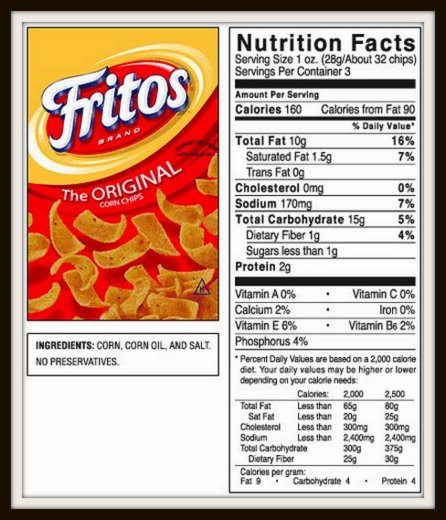
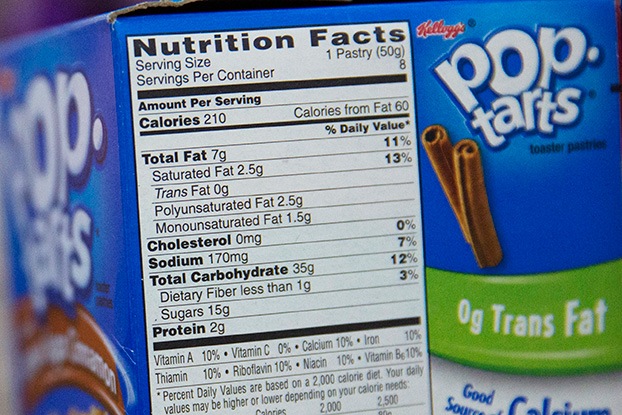
How many servings are in this container of poptarts?
1
4
8
Unable to tell based on the information

Food lables give you ingredient lists.
True
False
The more sugar in the food better the food.
False
True
Most common serving size desciption
Grams
ounces
cups
pieces
What is a unit of heat energy
micronutrient
calorie
sweat
What is the WORST FAT
saturated fat
unsaturated fat
Trans Fat
Belly Fat
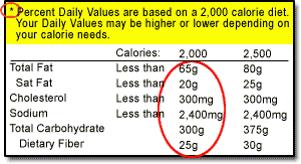

How many servings are in this box?
1
2
3
4

True or False: Athletes need more calories than non-athletes do
True
False


Buccal cavity is...
Where chyme is released in to the stomach and broken down.
Start of digestive process in which food is crushed and mixed with saliva.
Where bacteria is killed via enzymes and hydrochloric acid.
Epiglottis is responsible for digesting food?
False
True
The duodenum, jejunum and Ileum are all part of which intestine?
Large Intestine
Small Intestine
Food bolus travels down the ... through a process called...
Epiglottis
Oesophagus
Peristalsis
Chyme
Your diaphragm is responsible for...
Ensuring an efficient digestion of bolus through peristalsis.
Creating an efficient breathing process through relaxation and contraction.
Ensuring the extraction process of stool is correct.
Pancreatic juice contains bile which is stored in the ... but created in the ... .
Gall bladder
Stomach
Liver
Large Intestine
Name the green part- located in the liver...
Pancreas
Gall Bladder
Duodenum
Transverse Colon
The transverse, ascending and descending colon are all part of the...
Large intestine
Appendix
Lungs
Small Intestine
Food normally remains in your stomach for...
1 day
1-4 hours
4-5 hours
30 minutes
The small intestine is about 6 meters long...
True
False
Villi is...
Finger- like projections to increase the surface area for nutritional absorption.
Finger- like projections to increase the process of stool.
Finger- like projections to decrease the surface area for nutritional absorption.
Finger- like projections to decrease the process of stool.
Postprandial hyperemia is...
When gastrointestinal blood flow increases after meals.
When gastrointestinal blood flow decreases after meals.
When gastrointestinal acids are released in order to break down food.
The role of insulin is to make the liver release stored glucose in to the circulating blood stream.
True
False
The role of insulin is to release glucose in to cells from the blood stream where it can be used for energy.
True
False
ADH stands for... and regulates...
Anti- diuretic hormone
Anti- digestive hormone
Water Balance
Acidic Balance
What are the three functions of the digestive System?
digestion of Food
Absorption of nutrients
Elimination of nutrients
Elimination of waste
Where does food enter the body?
Esophagus
Teeth
Mouth
Rectum
What organ does food move through on its way to the stomach?
Mouth
Esophagus
Large intestine
Rectum
Where is the body's mechanical digestion completed?
Stomach
Esophagus
mouth
Large Intestine
The difference between mechanical digestion and chemical digestion.
Mechanical digestion involves cutting, tearing, crushing, grinding, and churning of food by teeth and muscles. Chemical Digestion involves breaking down foods by chemicals and digestive juice.
Chemical digestion involves cutting, tearing, crushing, grinding, and churning of food by teeth and muscles.Chemical Digestion involves breaking down foods by chemicals and digestive juice.
Chemical digestion involves cutting, tearing, crushing, grinding, and churning of food by teeth and muscles. mechanical Digestion involves breaking down foods by chemicals and digestive juice.
Mechanical digestion involves cutting, tearing, crushing, grinding, and churning of food by teeth and muscles. Mechanical Digestion involves breaking down foods by chemicals and digestive juice.
When you swallow food, a flap tissue called the_______ seals off your windpipe.
epiglottis
Mucus
absorption
peristalsis
_____________ is a thick, slippery substance that lines the esophagus.
epiglottis
Mucus
absorption
peristalsis
The process of _______ involves the movement of nutrients through the wall of tour digestive system into your blood.
epiglottis
Mucus
absorption
peristalsis
involuntary waves of muscle contractions that keep food moving in one direction through the digestive system are called
epiglottis
Mucus
absorption
peristalsis
Mechanical and Chemical digestion begin in the _______
mouth
esophagus
saliva
digestion
The _________ connects the mouth and the stomach
mouth
esophagus
saliva
digestion
In your mouth, ________ mixes with food to moisten it.
esophagus
saliva
digestion
enzyme
The process of breaking down food into small nutrient molecules is called
esophagus
saliva
digestion
enzyme
A protein thet speeds up chemical reactions in the body is called
absorption
saliva
digestion
enzyme
Contains bacteria that feed on material passing through
large intestine
small intestine
Is where most of the absorption of nutrients occurs
large intestine
small intestine
Is lined with villi
large intestine
small intestine
Is directly attached to the stomach
large intestine
small intestine
Prepares wastes for elimination from the body
large intestine
small intestine
Most chemical digestion occurs here.
large intestine
small intestine
Recieves bile and enzymes from other organs
large intestine
small intestine
Is the last section of the digestive system
large intestine
small intestine
Stores bile
liver
gallbladder
pancreas
rectum
Tiny finger-shaped structures in the small intestine in which absorption occurs
rectum
anus
bile
villi
Opening through which solid wastes exit the body
rectum
anus
bile
villi
Produces bile
liver
gallbladder
pancreas
rectum
Structure in which waste material is compressed into solid form
rectum
anus
bile
villi
Produces enzymes that flow into the small intestine
liver
gallbladder
pancreas
rectum
Breaks up fat molecules
liver
anus
bile
villi
At about 6 meters, ________ makes up two thirds of the lenght of the digestive system.
large intestine
small intestine
pancreas
liver
Most chemical digestion and the absorption of nutrients take place in _________
pancreas
liver
large intestine
small intestine
The ________ produces bile for the digestive system
pancreas
liver
stomach
saliva
Bile is stored in an organ called the _________
Gallbladder
Pancreas
Rectum
Villi

Which is the esophagus?
A
B
C
D
E

Which parts of the diagram is the small and large intestine?
A~ small intestine
E~ large intestine
D~ small intestine
E~ large intestine
C~ large intestine
B~ small intestine
A~ large intestine
C~ small intestine
E~ small intestine
D~ large intestine


What part of the digestive system is highlighted? (the end)
Anus
Rectum
Colon
Appendix

What part of the digestive system is highlighted?
Anus
Appendix
Gall Bladder
Pancreas

What part of the digestive system is highlighted?
Esophagus
Appendix
Small Intestine
Stomach

What part of the digestive system is highlighted?
Gall Bladder
Small intestine
Pancreas
Liver

What part of the digestive system is highlighted?
Small intestine
Large intestine
Stomach
Liver

What part of the digestive system is highlighted?
Stomach
Pancreas
Liver
Gall bladder

What part of the digestive system is highlighted?
Esophagus
Stomach
Salivary glands
Mouth

What part of the digestive system is highlighted?
Pancreas
Gall Bladder
Stomach
Liver

What part of the digestive system is highlighted?
Anus
Rectum
Large Intestine
Small intestine

What part of the digestive system is highlighted?
Mouth
Esophagus
Salivary Glands
Stomach

What part of the digestive system is highlighted?
Small Intestine
Large intestine
Stomach
Liver

