
 Worksheets
Mega Review for Quiz #9
Total questions: 148
Worksheet time: 3hrs 28mins
Fully grown parent cells split into two halves resulting in two daughter cells with the exact DNA as the parent.
Binary Fission
Budding
Fragmentation
Vegetative Reproductions
Fully grown parent cells split into two halves resulting in two daughter cells with the exact DNA as the parent.
Binary Fission
Budding
Fragmentation
Vegetative Reproductions
A parent cell breaks into pieces and each piece becomes a new offspring.
Binary Fission
Budding
Fragmentation
Vegetative Reproductions
Which is not an advantage for asexual reproduction?
Less genetic variation
No need for a mate
Quick
Produces more offspring

What type of asexual reproduction is taking place?
Binary Fission
Budding
Fragmentation
Regeneration
Vegetative Reproduction

What type of asexual reproduction is taking place?
Binary Fission
Budding
Fragmentation
Regeneration
Vegetative Reproduction

What type of asexual reproduction is taking place?
Binary Fission
Budding
Fragmentation
Regeneration
Vegetative Reproduction

What type of asexual reproduction is taking place?
Binary Fission
Budding
Fragmentation
Regeneration
Vegetative Reproduction

What type of asexual reproduction is taking place?
Binary Fission
Budding
Fragmentation
Regeneration
Vegetative Reproduction

___________________ is a type of asexual reproduction in which a piece of a parent organism breaks off to form an new organism (ex. starfish).
fission
budding
fragmentation
fertiliztion
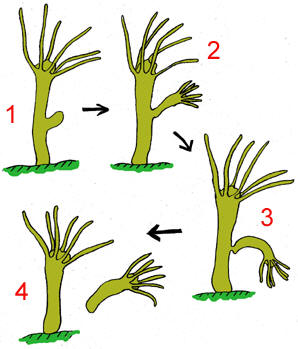
When an offspring grows off from the body of a parent organism it is called __________________.
budding
fission
fragmentation
sporulation
How many parents are required for sexual reproduction?
0
1
2
3

Asexual reproduction is associated with what type of cell division?
Mitosis
Meiosis

What is the type of cell division associated with sexual reproduction?
Mitosis
Meiosis




___________ reproduction has the advantage of increasing genetic variation.
Sexual
Asexual
Fission
Budding
A sperm and an egg join together in a process called
mitosis
meiosis
fertilization
fission
When a female produces young without fertilization, it is called _______________.
interphase
fission
mitosis
parthenogenesis
Organisms produced by asexual reproduction are genetically different from the parent organism.
False
True
In asexual reproduction, two parents each contribute a sex cell to the new organism.
True
False
An advantage of asexual reproduction is that favorable traits from the parent is passed on to the offspring.
True
False
When a new organism grows by mitosis and cell division on the body of its parent:
fission
budding
cloning
regeneration
When one parent organism produces offspring without meiosis and fertilization:
asexual reproduction
sexual reproduction
What organism reproduces using vegetative regeneration?
coral
strawberries
bacteria
sea star
What organism reproduces using regeneration?
coral
strawberries
bacteria
sea star
What organism reproduces using budding?
coral
strawberries
bacteria
sea star
What organism reproduces using fission?
coral
strawberries
bacteria
sea star
What is an disadvantage of asexual reproduction?
An organism can reproduce without a mate
Some organisms can quickly produce a large number of offspring
There is little genetic variation within a population
What is a disadvantage of sexual reproduction?
Genetic variation
Organisms must grow and develop until they are mature enough to reproduce
Selective breeding

Which of the following is not a benefit of asexual reproduction?
Offspring will be successful in an unchanged environment.
Good at adapting to changing environments.
Only requires one parent to produce offspring.
Can reproduce rapidly.
An organism that has been reproduced by asexual means receives ______________ of its chromosomes from its one parent.
3
25%
50%
100%
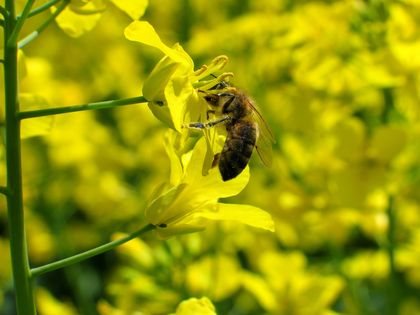
What is the big advantage of sexual reproduction?
Can quickly grow the population
Offspring are guaranteed to be successful in an unchanged environment.
Only one parent is required to reproduce.
Can adapt to changing environments
An organism that has been reproduced by sexual reproduction received ____________ of its chromosomes from the male parent.
4
25%
50%
100%
What is an advantage of sexual reproduction?
it is a faster process
negative traits of parents may not always be passed to offspring
it takes more energy and time
finding a mate is necessary
____________________ occurs when a male gamete (sperm) combines with a female gamete (egg).
sporulation
fertilization
fission
regeneration
Reproduction is when a(n) _____________________.
new organism is made
organism dies
organism eats food
organism fights another organism
Offspring means ___________________.
babies or young
parents
grandparents
cousins
The offspring of sexual reproduction are genetically _____________.
identical
the same
different
clones
Select the true statement.
Sexual reproduction is always better than asexual reproduction.
Asexual reproduction is always better than sexual reproduction.
Both methods have positives and negatives.
What types of living organisms have no genetic material at all?
Insects
Bacteria
Plants
All living organisms have genetic material
Which of the following is an example of a beneficial mutation?
When an organism's lifespan becomes shorter.
When an organism becomes unable to reproduce.
When an organism's body becomes deformed.
When an organism develops immunity to a disease.
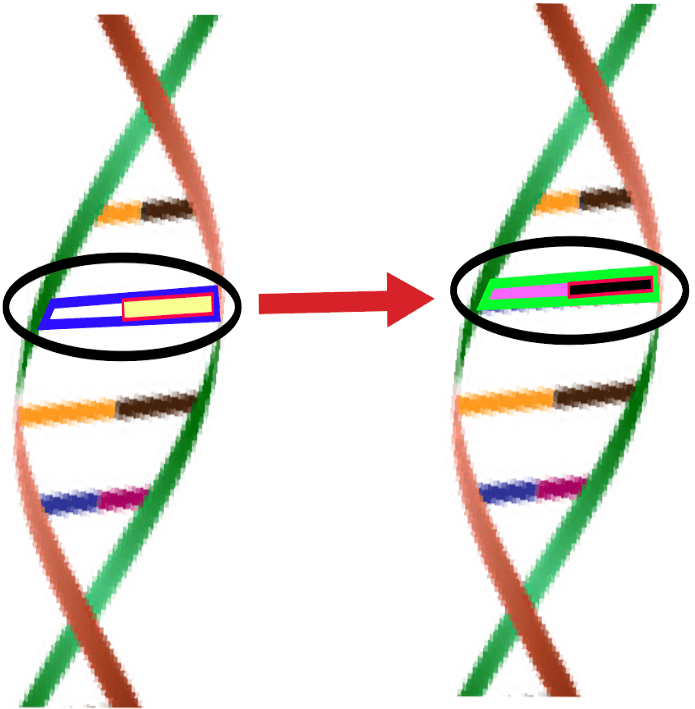
A permanent change in the DNA sequence
which can affect a single gene or group of genes
Homeostasis
Somatic Cell
Chromosomal Mutation
Gene Mutation
Mutations can be...
Harmful
Beneficial
Neutral
All of the Above
Mutations are...
Changes in the sequence of DNA
Broken chromosomes
Bad genes
True or false, mutations create genetic diversity?
True
False
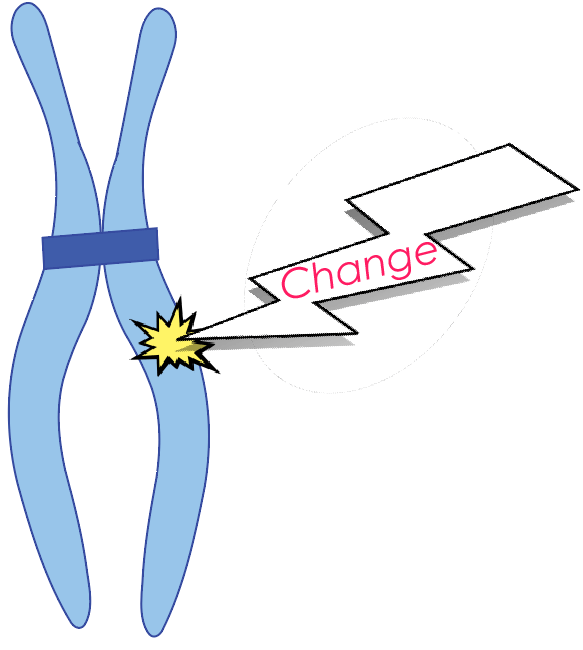
A change in a gene, group of genes or chromosome that results in a change in the proteins
Replication
Mutations
Translation
Transcription
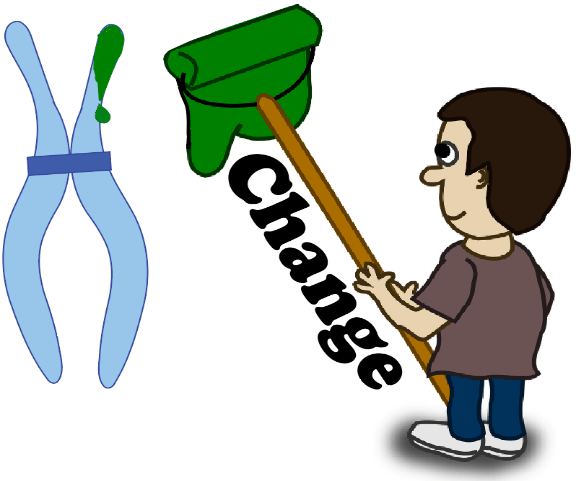
Mutations that involve parts of or all of
a chromosome
Replication
Deletion Mutation
Chromosomal Mutation
Transcription
A mutation is defined as:
A change in the cell's structure
Anything that changes in an embryo
Any change in the physical features of a human
A change in the DNA sequence
Identify which of the following is a genetic mutation disease..
Common head cold
Cystic fibrosis
Heart attack
Chicken pox

Which of the following is an example of a harmful mutation?
What do harmful mutations do?
Increase chances of survival
Decrease likelihood of developing cancer
Increase likelihood of developing cancer
What do beneficial mutations do?
Increase chances of survival
Decreases chance of survival
Increase chances of developing cancer
Decrease skills

This is any variation that makes an organism better suited to its environment.
Evolution
Graduation
Species
Adaptation


How do adaptations help animals?
To escape animals
to hunt for food
to survive in their habitats
All of these are correct
Which of the following is a structural adaptation for the underlined animal?
Polar bears have compact ears, a small tail, and thick fur to keep themselves warm. Are these examples of structural or behavioral adaptations?
Structural
Behavioral

Adaptation that refers to how an organism behaves and how interacts with other.
adaptations
mimicry
behavioral
camouflage
Structural adaptation
are physical features of an organism like the bill on a bird or the fur on a bear
Mental adaptation, of the thinking of the animal

A structural adaptation

Birds have different beaks to help them survive in their habitat, which is a type of ___________ adaptation.
behavioral
structural
learned
migration

A slight difference in inherited traits among individual members of a species is...
camouflage
adaptation
selective breeding
variation
Who are mutations in a DNA sequence passed on to?
others
parents
neighbors
offspring

Which of the following is a Homozygous Dominant Genotype?
Yy
XX
zz
Which of the following is a homozygous recessive genotype?
HH
dd
Aa
Which of the following is a heterozygous genotype?
Gg
UU
pp
In a Punnett Square, 1 box is equal to 25%. How much are 3 boxes equal to?
25%
50%
75%
100%
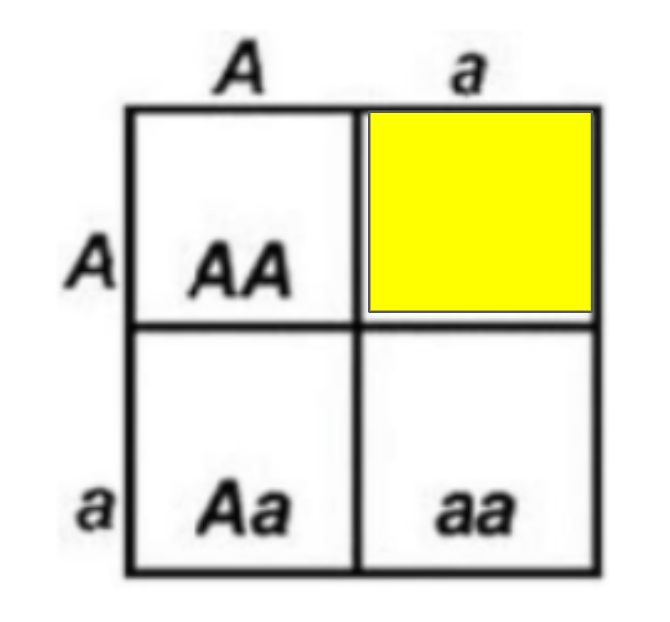
Fill in the Yellow Box
AA
Aa
aa
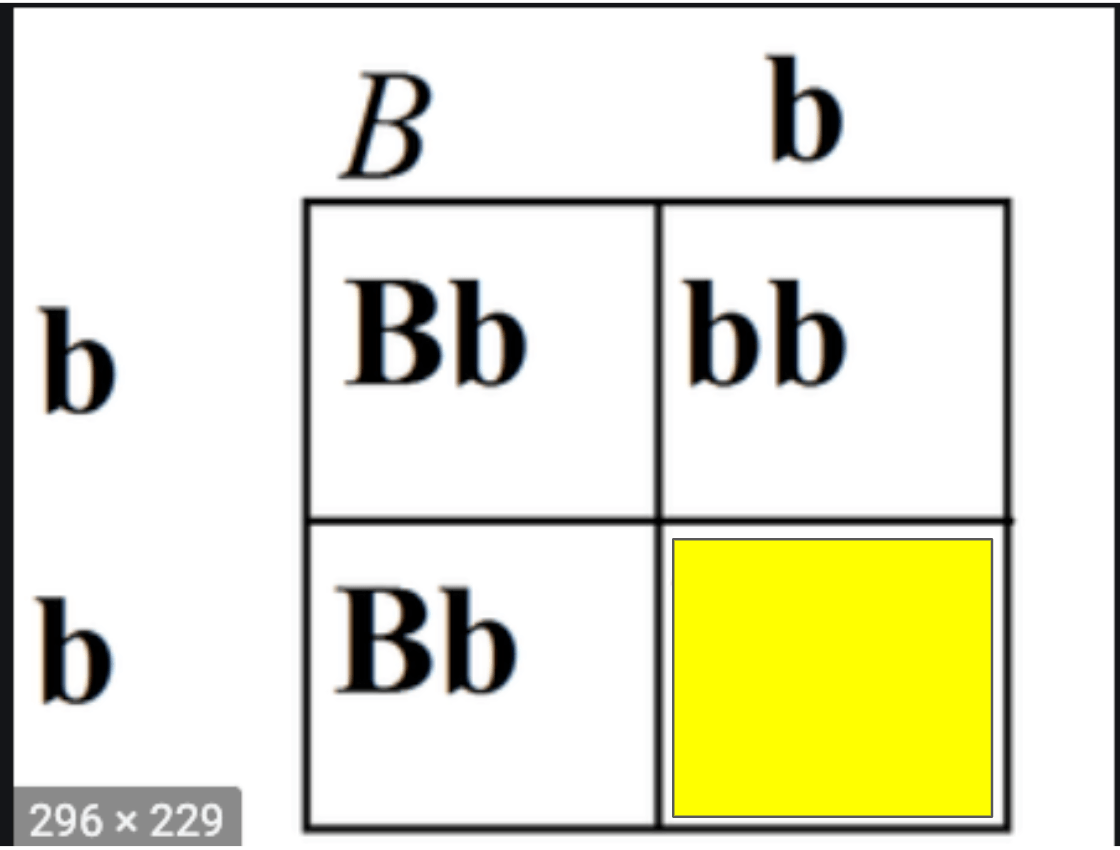
Fill in the Yellow Box
Bb
BB
bb
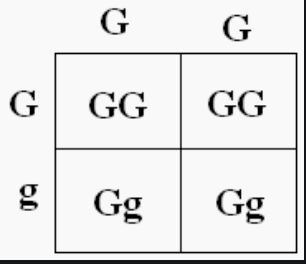
The punnett square is used to tell the color of a frogs skin. "G" means green skin and "g" means brown skin. What is the chance the baby frogs will have brown skin?
0%
25%
50%
100%

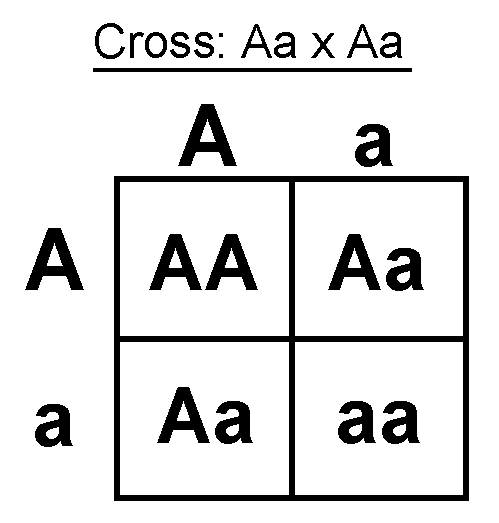
What are the possible phenotype(s) of the offspring? (A-Brown hair; a-blond hair)
50 % Brown Hair and 50% Blond Hair
25 % Brown Hair and 75% Blond Hair
75 % Brown Hair and 25% Blond Hair
0% Brown Hair and 100% Blond Hair

In a certain species of plant, the color purple (P) is dominant to the color white (p).
According to the Punnett Square, what is the probability of an offspring being purple?
25%
0%
100%
50%


What is the probability of heterozygous offspring?
0%
100%
50%
25%

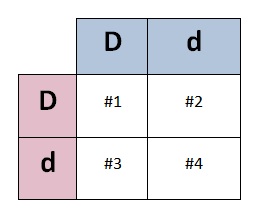
What is the possibility of this offspring having the dominant trait?
50%
75%
25%
0%


b = blue eyes
What is true about these two brothers that have brown eyes?
One has genotype BB the other Bb.

Short = S
Short = t
Short = T
Short = tt


Which of the following would be a phenotype?
Aa
red hair
heterozygous
DNA
Which of the following genotypes is Purebred? Select 2 answers.
aA
Aa
AA
aa
Which of the following genotypes is homozygous dominant?
Yy
yY
yy
YY
Which of the following genotypes is homozygous recessive?
Tt
tt
TT
tT
In a flowering plant species, red flower color (R) is dominant over white flower color (r). What is the genotype of any white-flowering plant resulting from this species?
rr
rR
RR
Rr

The combination of genes a person has, represented by letters, is their...
Genotype
Phenotype
Chromosome
Punnett Square
The physical (observable) traits a person has is their...
Genotype
Phenotype
Chromosome
Punnett Square
How many alleles (versions of a gene) do we get from each parent?
1
2
3
4
If A = red fur and a = white fur, what color fur would Aa be?
red
white
purple
blue

If A = red fur and a = white fur, what is the probability of red fur?
25%
50%
75%
100%

What is the probability & phenotype of the offspring? (A-Brown hair; a-blond hair)
50% Brown Hair and 50% Blond Hair
25 % Brown Hair and 75% Blond Hair
75 % Brown Hair and 25% Blond Hair
0% Brown Hair and 100% Blond Hair
Which of these Punnett squares represents a cross between a homozygous dominant parent and a heterozygous parent?


Describes a genetic trait that covers over, or dominates, another form of that trait
Gamete
Dominant
Solvent
Chromosome
Diffusion of water across a selectively permeable membrane
Osmosis
Meiosis
Dominant
Chromosome
The substance that is dissolved in a solvent to make a solution
(example: SALT + water = saltwater)
Solute
Mutation
Gamete
Osmosis
Cell division that produces reproductive cells in sexually reproducing organisms
Mutation
Meiosis
Osmosis
Chromosome
A random change (like a typo) in a DNA sequence that affects genetic information; can be beneficial, neutral, or harmful to the organism
Mutation
Meiosis
Daughter cell
Solvent
A part of the cell cycle in which chromosomes are duplicated and divided into two new nuclei; necessary for growth and repair of living organisms
Gamete
Osmosis
Mutation
Mitosis
The substance in which the solute dissolves to make a solution
(example: salt + WATER = saltwater)
Mitosis
Daughter cells
Solvent
Chromosome
Threadlike structures made of DNA molecules that contain an organism's genes
Meiosis
Chromosomes
Daughter cells
Solute
Reproductive cell produced during meiosis that has half the number of chromosomes (known as haploid)
Solvent
Gamete
Mutation
Chromosomes
The two new cells that are produced as a result of mitosis. These cells are identical to each other, and also to the original parent cell.
Chromosomes
Solute
Daughter cells
Mutation

