Wayground logo

Free Printable Worksheets

Font size

S
M
L
XL
Worksheets

Unit 5 Review

Total questions: 69

Worksheet time: 48mins
Name
Class
Date
1.
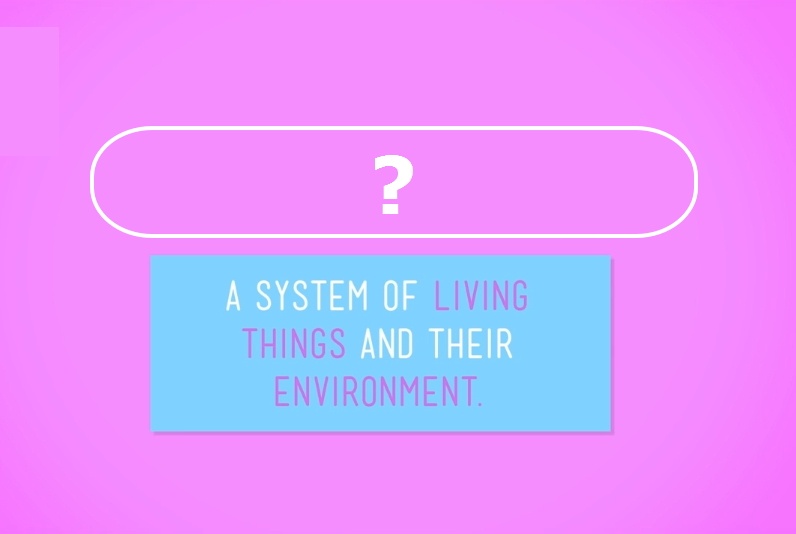
The interaction of living and non-living things in a habitat is called ___
a)
an environment
b)
an ecosystem
c)
a food web
d)
a food chain
2.
The things in an ecosystem are all ___
a)
separate
b)
connected
c)
scattered
d)
unrelated
3.
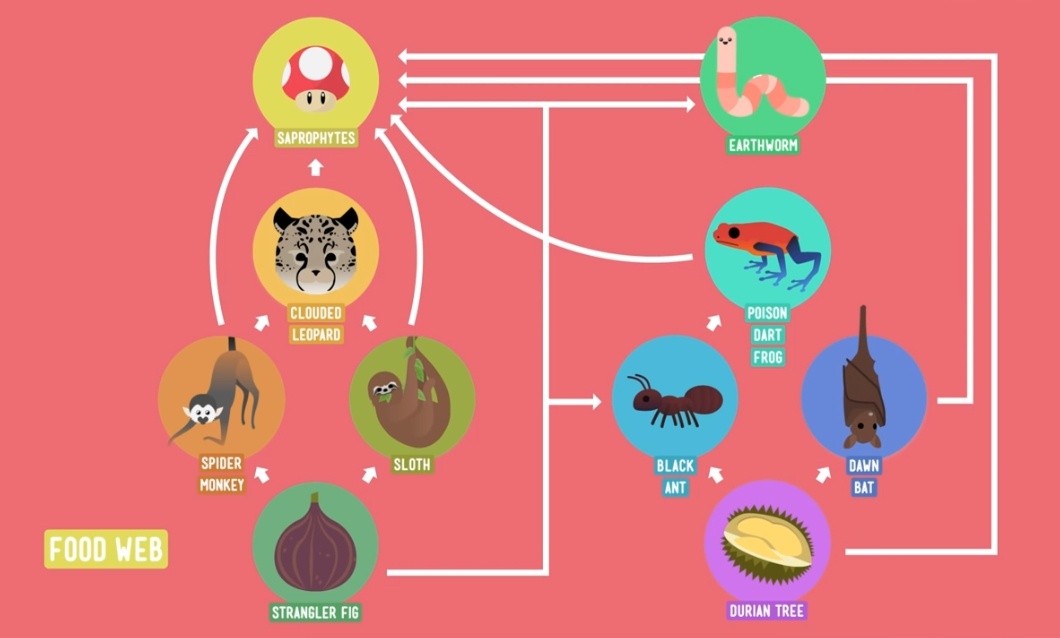
Leopards dine on ___
a)
figs and spider monkeys
b)
sloths and strangler figs
c)
sloths and spider monkeys
d)
ants and bats
4.
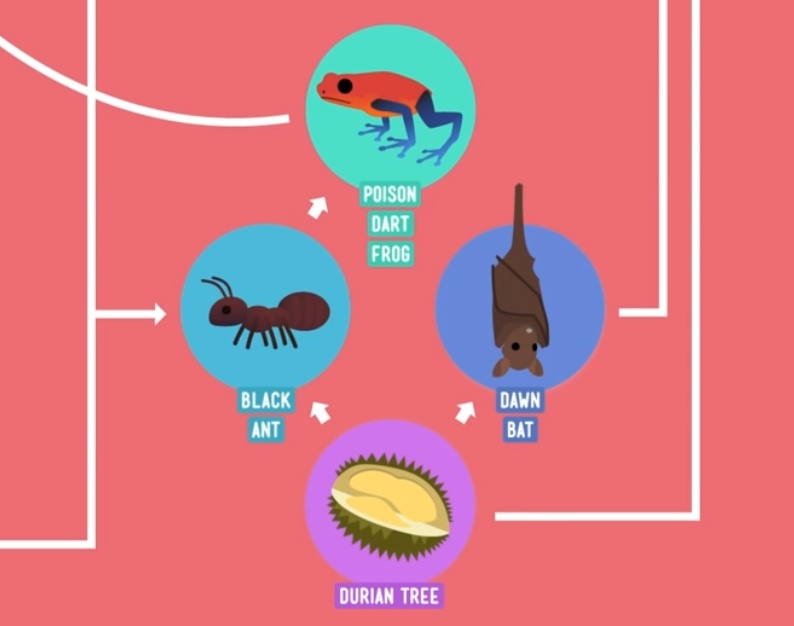
Frogs eat ___
a)
bats
b)
insects
c)
spider monkeys
d)
strangler figs
5.
In every ___, the plants and animals are connected.
a)
ecosystem
b)
organization
c)
entanglement
d)
spider web
6.
The good news is that ecosystems tend to be ___
a)
in decline
b)
out of balance
c)
delicate
d)
in balance
7.
Example of a decomposer
a)
fungus
b)
mouse
c)
plants
d)
frogs
8.
Example of a consumer
a)
worm
b)
bacteria
c)
mushroom
d)
hawk
9.
A tree is a ....
a)
composer
b)
decomposer
c)
producer
10.
Humans are considered...
a)
consumers
b)
decomposers
c)
producers
11.
What is a producer?
a)
an organism that gets energy from eating other organisms
b)
an organisms that uses sunlight to make its own food
c)
an organism that gets energy from eating dead organisms, non-living material or waste
d)
an organism that uses chemical energy to make its own food
12.
A connection of food chains with many food energy paths in an ecosystem is a ____________
a)
ecosystem
b)
food web
c)
environment
d)
population
13.
An organism that gets energy from breaking down dead organisms, non-living material or waste
a)
producer
b)
consumer
c)
decomposer
d)
autotroph
14.
Which of the following is NOT a consumer
a)
grass
b)
dog
c)
shark
d)
fish
15.
Where do all life forms get their energy?
a)
Earth's Core
b)
Water
c)
Plants
d)
The Sun
16.
The arrows in a food chain or web represents what?
a)
They point to the organism that is being eaten.
b)
It shows how sunlight flows within an ecosystem.
c)
They show what direction the energy is flowing between organisms. 
d)
They represent how water is transferred within a habitat.
17.
If a frog is the prey, what could be the predator?
a)
Grass
b)
Insect
c)
Snake
d)
Snail
18.
What does a food chain represent?
a)
How all living organisms within a habitat are connected.
b)
All of the things that a particular animal eats.
c)
How plants create their own food.
d)
A single path of energy transfer within a habitat.
19.
In this food chain, what will happen if the frogs become extinct?
a)
The snakes will increase.
b)
The grasshoppers will decrease.
c)
The eagles will remain the same.
d)
The grasshoppers will increase.
20.
What organism consumes both rabbits and birds?
a)
The Hawk
b)
The Wolf
c)
The Plant
d)
The Mushroom
21.
What level consumer could you consider the deer?  
a)
Primary
b)
Secondary
c)
Tertiary
d)
Quarternary
22.
An organism that eats both plants and other animals is also known as.....
a)
Weird
b)
Autotroph
c)
Omnivore
d)
Carnivore
23.
In a food web and a food chain, you show arrows to demonstrate how the ___________ transfers from one organism to the other.  
a)
Food
b)
Animals
c)
Energy
d)
Producers
24.
A mouse eats the grass, a snake eats the mouse and the hawk eats the snake.  Who has the least amount of the original energy from this food chain?
a)
Mouse
b)
Grass
c)
Snake
d)
Hawk
25.
A food web, is a series of interconnected food chains put together to represent an environment.  The arrows which represent energy transfer, show energy leaving an organism, to be consumed by another.  Who or what does the rabbit, get its energy?  
a)
grasshopper
b)
fox
c)
rabbit
d)
green plants
26.
Which of these organisms would most likely be found at the top of an energy pyramid? 
a)
clams - a primary consumer
b)
sardines - a primary consumer
c)
sharks - a secondary consumer
d)
 kelp - a primary producer
27.
Complete burning of plant material returns carbon primarily to the
a)
herbivores
b)
water
c)
vegetation
d)
atmosphere
28.
A diagram of a food web is shown below.Which organism receives the least amount of energy from the producers?
a)
Hawk
b)
Rabbit
c)
Grasshopper
d)
Mouse
29.
A place where an organism gets everything it needs to survive.
a)
habitat
b)
community
c)
ecosystem
d)
population
30.
A species living together in one area is called a:
a)
species
b)
community
c)
ecosystem
d)
population
31.
Different organisms living together in the same area:
a)
community
b)
population
c)
species
d)
ecosystem
32.
All of the living AND non-living things in an particular area is called a(n):
a)
ecosystem
b)
house
c)
community
d)
mountain
33.
An animal that is hunted and eaten for food is a __________.
a)
predator
b)
prey
c)
population
34.

Air Pollution:

a)

Smoke and harmful gases

b)

Littering and dumping illegally on the ground

c)

Water, soil, minerals, wildlife, forests, etc.

d)

Where something exists or lives

35.

Water Pollution:

a)

Chemicals being released into oceans, lakes, rivers, etc.

b)

Protecting things in nature

c)

Sprays that kill bugs

d)

Prevent leakage in landfills

36.

Land pollution:

a)

Littering and dumping illegally on the ground

b)

Making something new out of something old

c)

Protecting things in nature

d)

Where something exists or lives

37.

Resources:

a)

Water, soil, minerals, wildlife, forests

b)

Prevent leakage in landfills

c)

Chemicals being released into oceans, lakes, rivers, etc.

d)

Smoke and harmful gases

38.

Recycling:

a)

Making something new out of something old

b)

Sprays that kill bugs

c)

Where something exists or lives

d)

Smoke and harmful gases

39.

Environment:

a)

Where something exists or lives

b)

Making something new out of something old

c)

Protecting things in nature

d)

Prevent leakage in landfills

40.

3 things that air pollution causes:

a)

Difficulty breathing

b)

Lung damage

c)

Eyes burning

d)

Oil Spills

41.

3 things water pollution causes:

a)

Death of animals

b)

Habitat destroyed

c)

Humans sick

d)

Lung damage

42.

3 ways to help the environment:

a)

Energy efficient cars

b)

Recycling

c)

Limit use of pesticides

d)

Factory waste water

43.

3 things that contaminate water:

a)

Oil spills

b)

Chemical leaks

c)

Factory waste water

d)

Recycling

44.

This causes the MOST pollution:

a)

Humans

b)

Cars

c)

Trains

d)

Airplanes

45.
Humans cause long and short term harm to their environment.
a)
true
b)
false
46.
These are two ways people can reduce air pollution.
a)
Drive vehicles that get low gas mileage / Burn trash at home
b)
Burn less fossil fuels / walk and ride bikes
c)
Create major forest fires / Use CFC's
d)
Burn styrofoam at landfills / Use more chlorine
47.
The car is creating ____________________.
a)
air pollution
b)
land pollution
c)
water pollution
d)
an oil spill
48.
What is deforestation?
a)
Clearing Earth's forests on a massive scale
b)
Eating too much vegetables
c)
Going to a forest and pulling weeds
d)
Clearing the five trees in my backyard
49.
What does deforestation effect?
a)
Plants and animals
b)
Our biosphere
c)
Humans
d)
All of the above
50.
What are the effects of deforestation ?
a)
loss of habitat
b)
increased green house gasses 
c)
soil erosion and flooding
d)
all of the above
51.

What might happen if the earth exceeds its carrying capacity?

a)

There might not be room for people to move around.

b)

There might not be enough food and water for everyone.

c)

The continents might sink into the oceans.

d)

Most of the people on the planet would starve.

52.

Which of the following describes a population?

a)

The total number of people, animals, and plants in New York City

b)

The total number of houses in Atlanta

c)

The total number of people living in the state of Texas

d)

The total number of fish in all the world's oceans

53.

Which of the following is a true statement about deforestation?

a)

Once trees are cut down, they can never grow back again

b)

Trees provide humans with the carbon dioxide we need to breathe

c)

Animals lose their habitats when too many trees are cut down

d)

Wood and paper products cannot be recycled

54.

If the world population keeps growing at its current rate, how many people might be alive in 10 years?

a)

14 million

b)

22 billion

c)

Between 7 and 8 billion

d)

1.5 trillion

55.

Which of the following would be a good step to take to reduce the waste you produce?

a)

Ask your parents to buy you your own car

b)

Try to reduce your consumption of electricity and fuel

c)

Use only electric appliances in your home

d)

Only buy products with vacuum-sealed plastic packaging

56.

Why are solar and wind power considered alternative energy sources?

a)

They are an alternative to non-renewable energy sources like fossil fuels

b)

They are used by people in alternative communities

c)

They use alternating current instead of direct current

d)

You can alternate between using solar power during the day and wind power at night

57.

Why would advances in medicine lead to population growth?

a)

Curing deadly diseases allows people to live longer

b)

People are unable to have babies without medical help

c)

Babies do not grow if they don't take their medicine

d)

New drugs allow mothers to have multiple births, like octuplets

58.

How can population growth lead to more pollution?

a)

Too many people breathing causes too much carbon dioxide to enter the atmosphere

b)

The body heat generated by billions of people leads to an increase in global warming

c)

More people being born means more paper is needed to print birth certificates

d)

All people produce waste, so more people equals more waste

59.

Before 1800, the infant mortality rate was much higher than it is now. What does that mean?

a)

People didn't have a lot of babies before 1800

b)

Children did not grow very tall before 1800

c)

Most women were unable to have babies before 1800

d)

A lot more babies died during childhood before 1800

60.

Which of the following terms best describes the current rate of world population growth?

a)

Slack

b)

Leisurely

c)

Gradual

d)

Rapid

61.
Replacement of one type of community by another at a single place over time
a)
symbiosis
b)
succession
c)
competition
d)
cooperation
62.
When we discuss greenhouse gases what is the main one we discuss?
a)
Methane (CH4)
b)
Carbon Dioxide (CO2)
c)
Nitrous oxide (N2O)
d)
Flourinated gases
63.
The main human activity that releases greenhouse gases is...
a)
using bottled water
b)
burning fossil fuels
c)
texting on cellphones
d)
eating meat
64.
The warming of the atmosphere by the trapping of heat being radiated to space is called
a)
evaporation
b)
condensation
c)
the greenhouse effect
d)
radiation
65.
Without any greenhouse effect the Earth would be...
a)
Fine
b)
Too Cold to Support Life
c)
Very Hot
66.
Over the past 200 years, the level of carbon dioxide in the atmosphere has
a)
decreased slightly.   
b)
increased until recently, and then decreased.
c)
increased steadily.   
d)
stayed about the same.
67.
T/F: Earth Naturally goes through periods of warm and cold
a)
True
b)
False
68.
Which layer in the atmosphere protects us form harmful UV radiation?
a)
Ozone
b)
Troposphere
c)
Ionosphere
d)
Exosphere
69.
Consequences of climate change include:
a)
Stronger hurricanes
b)
Increased flooding
c)
Frequent droughts
d)
All of the above