
 Worksheets
Health Science Final Exam Review
Total questions: 95
Worksheet time: 1hrs 12mins

Which of the following best describes structures in the human body from the LARGEST to the smallest? (select all that apply)
Organ, tissue, cell, organelle
organs, tissue, organelle, cell
organelle, organ, tissue, cell
organelle, cell, tissue, organ

Which of the following statements is TRUE?
All cells look the same
All cells perform the same function
The shape and structure of a cell is related to its function
All of the above

Substances pass in and out of a cell through the ________
nuclear membrane
mitochondria
cell membrane
nucleus
The organelle that normally contains most of its genetic material is the
cell membrane
Chloroplast
organelle
nucleus
What organelle is the power plant of the cell?
cell membrane
Chloroplast
mitochondria
nucleus
The cell wall is only found in what 2 cells? (check all that apply)
animal
plant
bacteria
none of the above
What is the only cell that DOES NOT have a nucleus?
animal cells
bacteria
cheek cells
Plant
Which one of these is an example of an organelle? (Select all that apply)
mitochondria
organelle
organ
cell membrane
What is the basic unit of life?
nucleus
cell
tissue
organelle
Put a check next to the organelles that are found in plant and animal cells.
mitochondria
nucleus
cell wall
cytoplasm
cell membrane
Which organelles are found only in plant cells?
mitochondria
cell wall
nucleus
cytoplasm
chloroplast

Which structure represents the mitochondria?
A
B
C
D
E
This is a smaller molecule that combines to form proteins.
Amino Acid
Carbohydrate
Lipid
Nucleic Acid

This molecule contains chemical energy that was converted from light energy; it is used by the cell as food.
Amino Acid
Glucose
Lipid
Protein




The fluid in which other parts of the blood are suspended
Platelets
Blood
Plasma
Hemoglobin
White Blood Cells
Blood cell that protect the body against infection
Platelets
Plasma
Hemoglobin
White Blood Cells
Blood
Types of cells in the blood that causes blood clots to form
Platelets
Blood
Plasma
Hemoglobin
White blood cells
The oxygen-carrying protein in blood
Platelets
Blood
Plasma
Hemoglobin
White Blood Cells
The process by which blood moves between the heart and the lungs
Pulmonary Circulation
Valves
Atria
Ventricles
Septum
The top two chambers of the heart
Pulmonary Cirvulation
Valves
Atria
Ventricles
Septum


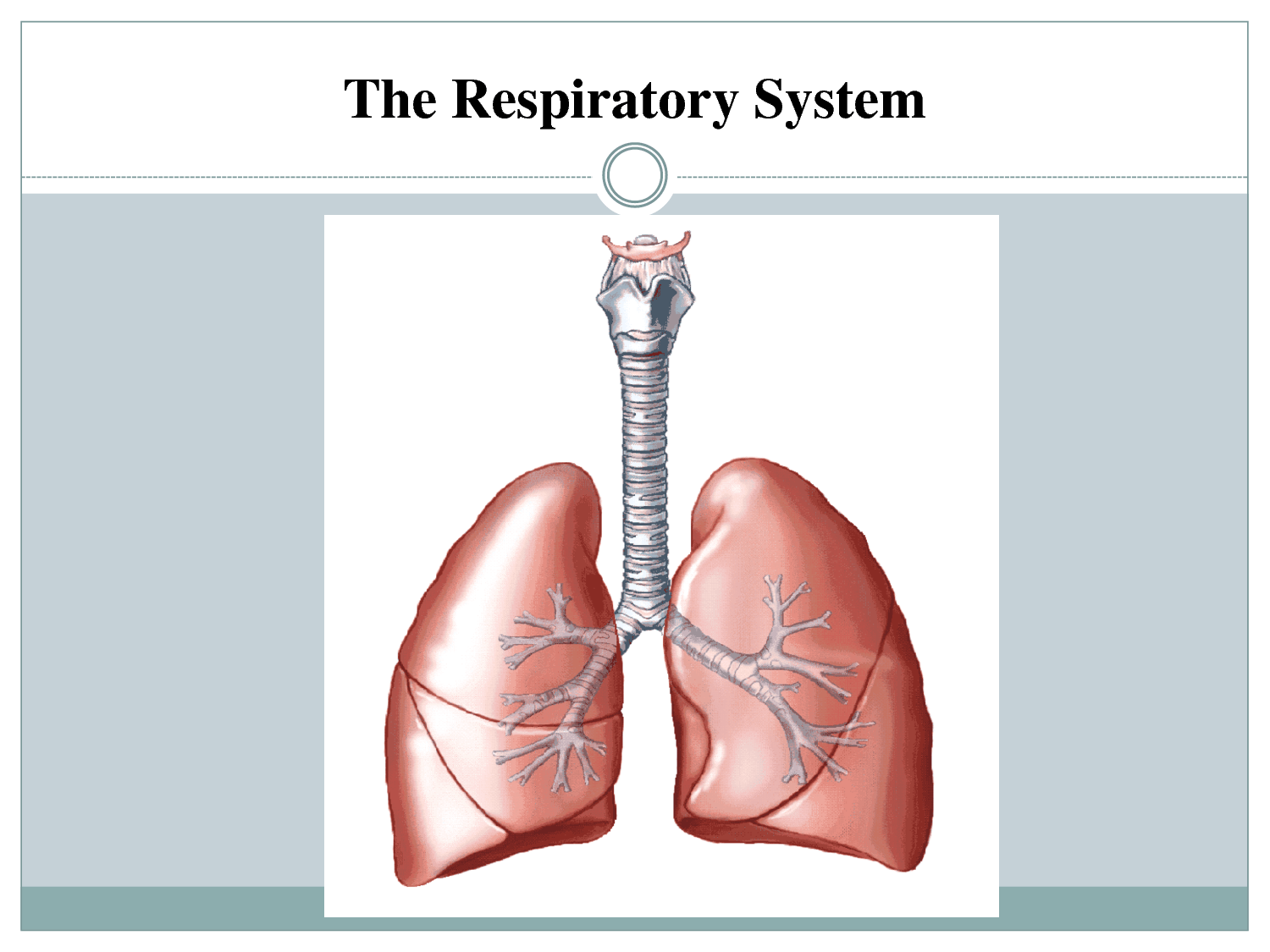
What is the main function of the respiratory system?
to provide oxygen and remove carbon dioxide from the body
o break down food and absorb nutrients
to remove oxygen from the body and deliver carbon dioxide

If you are having trouble with your BALANCE and COORDINATION, which part of your brain should be checked?
cerebrum
cerebellum
brain stem
spinal cord

The CENTRAL nervous system is made up of which two organs?
Brain and Spinal Cord
Spinal Cord and Peripheral Nerves
Peripheral Nerves and Heart
Heart and Lungs
Select the VOLUNTARY action.


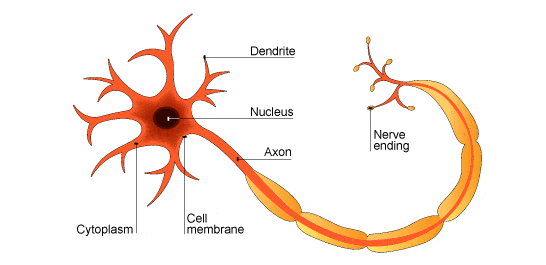
What level of structure is represented by the diagram?
organ
organ system
cell
tissue


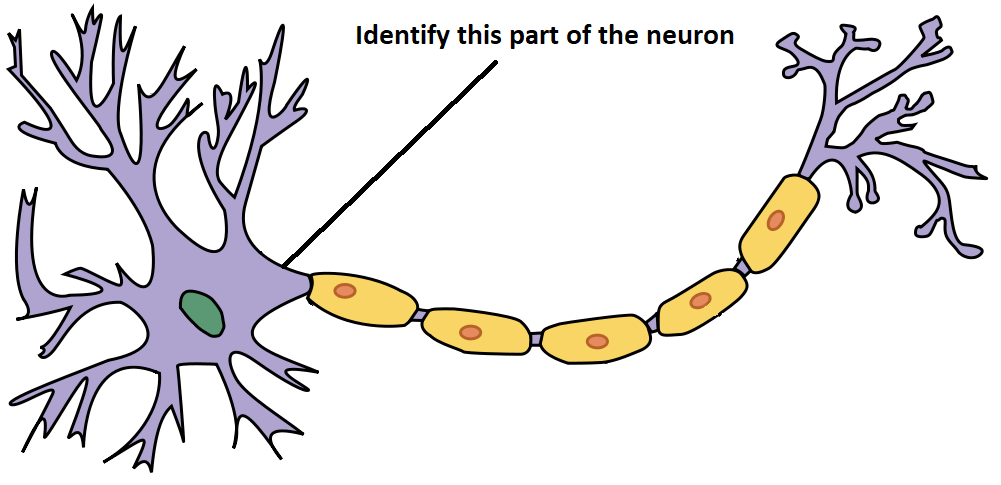
Nucleus
Cell Body
Axon
Node of Ranvier
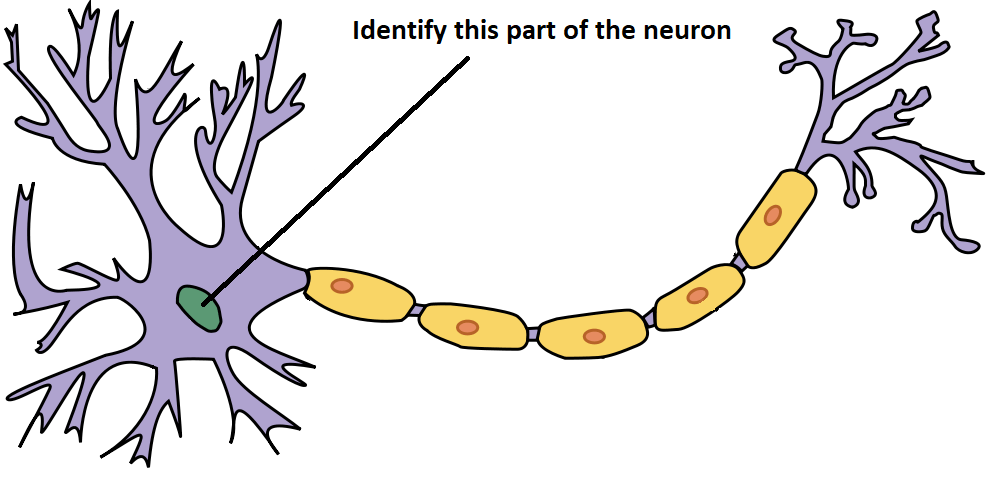
Nucleus
Cell Body
Axon
Node of Ranvier
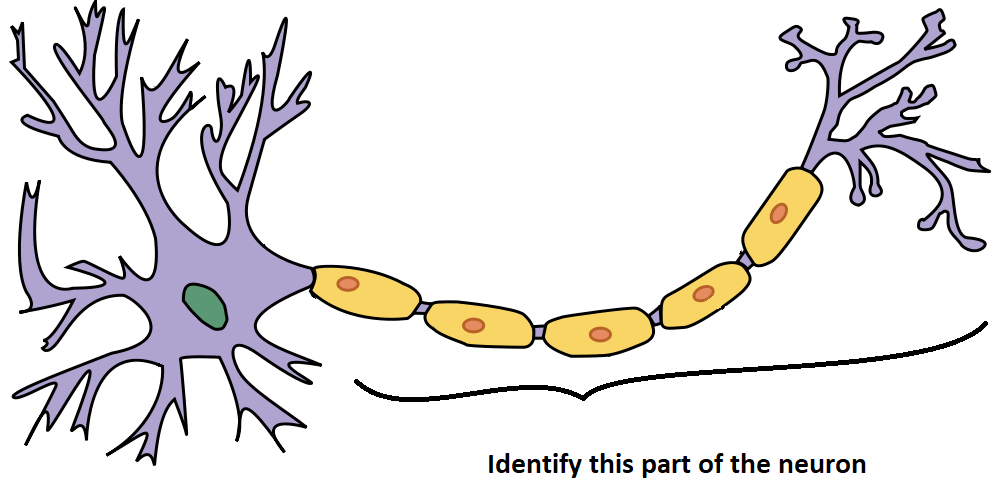
Nucleus
Cell Body
Axon
Node of Ranvier
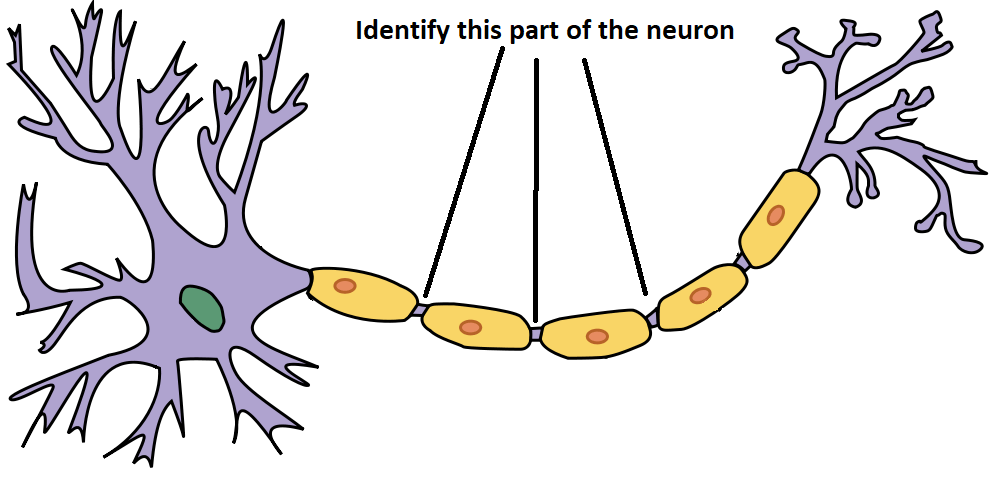
Nucleus
Cell Body
Axon
Node of Ranvier
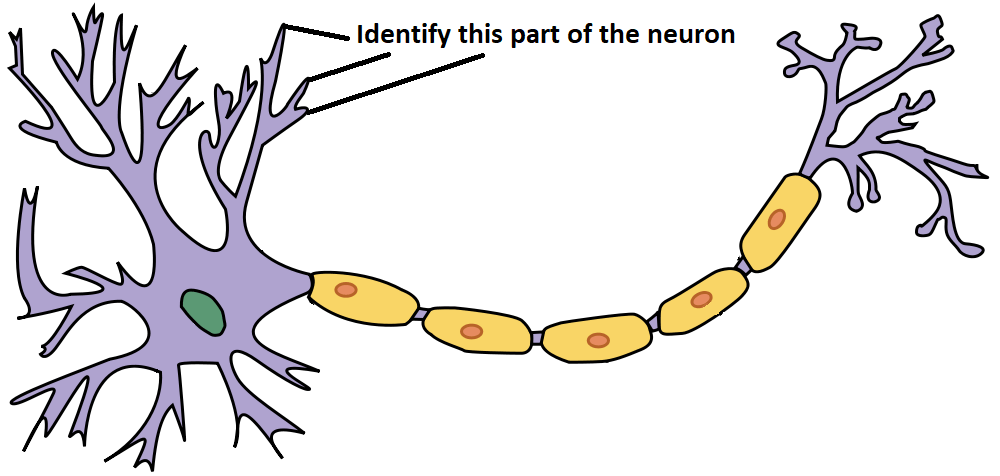
Dendrites
Axon Terminals
Myelin Sheath
Schwann Cells
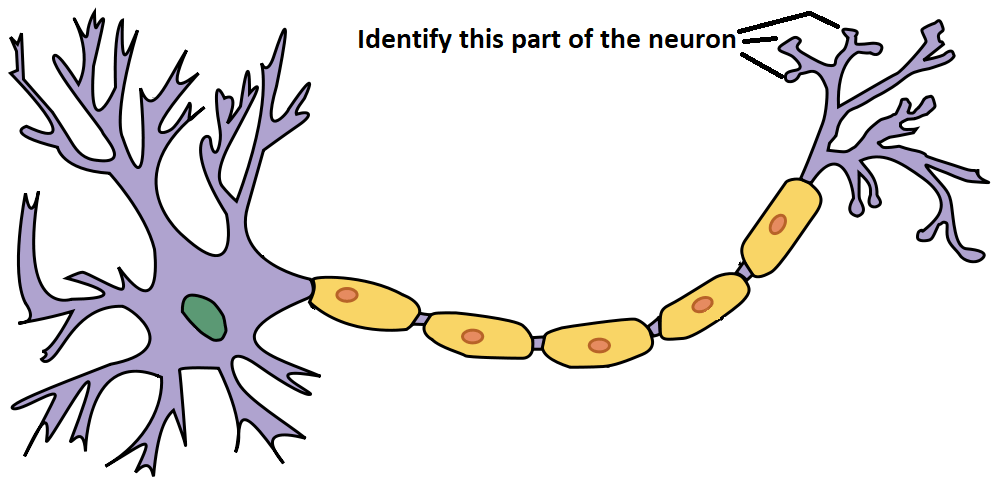
Dendrites
Axon Terminals
Myelin Sheath
Schwann Cells
What direction foes the electrical signal travel through the neuron?
From dendrites, down the Axon, and out Axon terminalsThis is a correct answer
From Axon terminals, down the Axon, & out of the dendrites
Any direction up or down the cell
From the Axon, to the Dendrites, and out the Axon terminals

What is represented by D?
Neurotransmitter
Receptor
Plasma membrane
Vesicle
Synapse
What is represented by C?
Neurotransmitter
Receptor
Plasma membrane
Vesicle
Synapse
What is represented by B?
Neurotransmitter
Receptor
Plasma membrane
Vesicle
Synapse
What is represented by A?
Neurotransmitter
Action potential impulse
Plasma membrane
Vesicle
Synapse
Small cells that engulf and destroy microbes and cellular debris in the CNS
microglia
horns
neuroglia
astrocytes
Produces the hormone insulin and glucagon, which controls the level of glucose in the blood.
Thyroid Gland
Pancreas
Thymus Gland
Pituitary Gland
These release testosterone, which controls changes in a male's body and regulates sperm production.
Ovaries
Target Cells
Parathyroids
Testes


Group of cells that make special chemicals in your body
receptors
glands
hormone makers
What are the functions of hormones?
For coordinating the production, use, and storage of energy.
For reacting to stimuli outside from the body.
For maintaining homeostasis.
For regulating processes like development and reproduction.
What hormone is responsible for a flight-or-fight response?
Androgens
Adrenaline
Progesterone
Follicle-stimulating hormone
What is positive feedback?
It is when something good happens in the endocrine system.
It is when the amount of hormones produced is balanced.
It is when the production of more hormones is counteracted.
It is when increased hormone secretion is enhanced to produce even more hormones.
What is negative feedback?
It is when something bad happens to the endocrine system.
It is when the hormones produce is not balanced.
It is when the production of more hormones is counteracted.
It is when increased hormone secretion is enhanced to produce even more hormones.

