wayground logo

Free Printable Worksheets

Font size

S
M
L
XL
Worksheets

THS Spring 2019 Final Exam Review

Total questions: 167

Worksheet time: 3hrs 36mins

Name
Class
Date
1.
What transports substances around the body?
a)
Blood
b)
Sweat
c)
Tears
d)
Urine
2.
Homeostasis
a)
allows for a wildly fluctuating internal environment
b)
is impossible in vertebrates
c)
is the maintenance of a relatively stable internal environment and often incorporates a form of feedback regulation
d)
is the maintenance of a relatively stable external environment and often incorporates a form of feedback regulation
3.
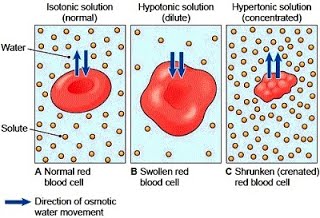
Water diffusing with the concentration gradient from high water concentration to low water concentration across a cell membrane is....
a)
Facilitated Diffusion
b)
Simple Diffusion
c)
Active Transport
d)
Osmosis
4.
Which diagram represents an organ?
a)
#1
b)
#2
c)
#3
d)
#4
5.
Which is the largest structure?
a)
Cells
b)
Tissue
c)
Organ
d)
Organism
6.
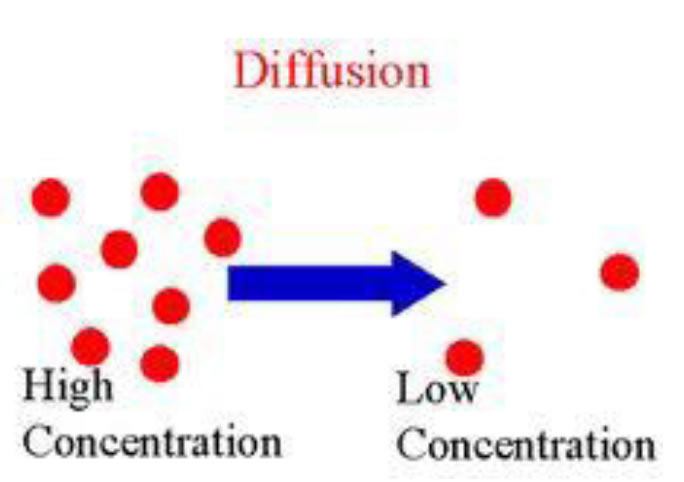
Movement of particles from high to low concentration. 
a)
Passive Transport
b)
Active Transport
7.
a)
Passive Transport
b)
Active Transport
8.
Osmosis is a form of ______________. 
a)
Passive Transport
b)
Active Transport
9.
a)
Passive Transport
b)
Active Transport
10.
Exocytosis
a)
Passive Transport
b)
Active Transport
11.
Endocytosis
a)
Passive Transport
b)
Active Transport
12.
Low to High
a)
Passive Transport
b)
Active Transport
13.
Uses ATP (energy)
a)
Passive Transport
b)
Active Transport
14.
Which organelle performs PHOTOSYNTHESIS?
a)
Chloroplast
b)
Mitochondria
15.
Which of the following is the correct equation for PHOTOSYNTHESIS?
a)
CO+ light + H2O --> O+ Sugar
b)
CO+ sugar + H2O --> O+ light
c)
O2 + light + H2O --> CO+ Sugar
d)
CO+ O2 + H2O --> Light+ Sugar
16.
What is the ultimate ORIGINAL source of energy for living things
a)
Sugar
b)
Sun
c)
Moon
d)
Carbon Dioxide
17.
What is the pigment in chloroplasts that performs photosynthesis?
a)
Chlorosynthesis
b)
Chlorophyll
c)
ADP
d)
Electron Transport
18.
Which gas is removed from the atmosphere during photosynthesis?
a)
hydrogen
b)
oxygen
c)
nitrogen
d)
carbon dioxide
19.
What are the products of photosynthesis?
a)
water and carbon dioxide
b)
oxygen and glucose
c)
oxygen and carbon dioxide
d)
oxygen and water
20.
Which organelle from the plant cell is primarily responsible for converting sunlight to energy?
a)
Mitochonria
b)
Nucleus
c)
Vacuole
d)
Chloroplast
21.
Which of the following is not needed for photosynthesis to occur?
a)
sunlight
b)
carbon dioxide
c)
water
d)
oxygen
22.

Which of the following processes occur in the cytoplasm?

a)

Glycolysis

b)

Alcoholic Fermentation

c)

Lactic Acid Fermentation

d)

All of these

23.

Which of the following is the correct chemical equation for Cellular Respiration?

a)

C6H12O6 + 6O2 --> 6CO2 + 6 H2O + ATP Energy

b)

C6H12O6 + H2O --> 6CO2 + 6 6O2 + ATP Energy

c)

6CO2 + 6 H2O + Light Energy --> C6H12O6 + 6O2

d)

C6H12O6 + 6CO2 --> 6O2 + 6 H2O + ATP Energy

24.

What is the net/overall amount of ATP made in Glycolysis?

a)

1

b)

2

c)

32

d)

36

25.

What is always the first step/process in either type of respiration?

a)

Fermentation

b)

Kreb's Cycle

c)

Electron Transport Chain

d)

Glycolysis

26.

At the END of Glycolysis, Glucose is broken down to 2 molecules of what?

a)

pyruvic acid

b)

lactic acid

c)

NADH

d)

ATP

27.

Which type of fermentation produces CO2 gas and ethyl alcohol?

a)

Alcoholic Fermentation

b)

Lactic Acid Fermentation

28.

Which type of Cellular Respiration occurs when oxygen is NOT present?

a)

Fermentation

b)

Anaerobic Respiration

c)

Aerobic Respiration

d)

Both Fermentation and Anaerobic Respiration

29.

What is the ultimate goal of Fermentation?

a)

to make more ATP for the cell

b)

to make more NADH for the Electron Transport Chain

c)

to remake NAD+ for Glycolysis

d)

to make glucose for the cell

30.
Where does glycolysis take place?
a)
Cytoplasm
b)
Stroma
c)
Thylakoid
d)
Mitochondria
31.
Which type of respiration occurs in the presence of oxygen?
a)
Aerobic
b)
Anaerobic
32.

What are the two reactants of cellular respiration?

a)

Heat & CO2

b)

CO2 & H2O

c)

Glucose & O2

d)

CO2 & Glucose

33.
___ produces the most ATP.
a)
Aerobic respiration
b)
Anaerobic respriation
c)
Glycolysis
d)
Photosynthesis
34.
The overall goal of cellular respiration is to make:
a)
Glucose
b)
ATP
c)
Oxygen
d)
Water
35.

What is the second stage of aerobic respiration?

a)

Calvin cycle

b)

Kreb's cycle

c)

Glycolysis

d)

ETC

36.

What is the total net gain of ATP from glucose at the end of aerobic respiration?

a)

2 ATP

b)

34 ATP

c)

38 ATP

d)

36 ATP

37.

Which is a product of Kreb's Cycle?

a)

Carbon dioxide

b)

Glucose

c)

Pyruvate

d)

Water

38.
Where in the cell does aerobic respiration take place?
a)
Nucleus
b)
Cytoplasm
c)
Mitochondria
d)
Cell membrane
39.
Which produces the most ATP?
a)
Glycolysis
b)
Fermentation
c)
Krebs Cycle
d)
Electron Transport Chain
40.

Before cell division takes place, DNA has to make an exact copy of itself. This is called

a)

duplication

b)

fertilization

c)

hybridization

d)

replication

41.

What phase of interphase does DNA replicate?

a)

G1

b)

S

c)

G2

d)

G0

42.

How many chromosomes are found in a human adult egg cell?

a)

23

b)

46

c)

23 pairs

d)

46 pairs

43.

Meiosis results in

a)

two unique daughter cells

b)

four identical daughter cells

c)

two identical daughter cells

d)

four unique daughter cells

44.

Crossing over occurs in

a)

prophase of mitosis

b)

prophase I of meiosis

c)

interphase

d)

during all stages of meiosis I

45.

Before cell reproduction takes place, what is the correct sequence of events that must occur?

a)

chromosome replication, chromosome checking and repair, growth

b)

growth of cytoplasm, duplication of cellular organelles, chromosome replication

c)

replication of chromosomes, growth, duplication of cellular contents and organelles

d)

growth and duplication of cell organelles, chromosome replication, repair of chromosomal errors

46.

Cell division is also known as

a)

interphase

b)

meiosis

c)

mitosis

d)

replication

47.

This graphic represents

a)

prophase

b)

metaphase

c)

anaphase

d)

telophase

48.

This graphic represents

a)

prophase

b)

metaphase

c)

anaphase

d)

telophase

49.

This graphic represents

a)

prophase

b)

metaphse

c)

anaphase

d)

telophase

50.

This graphic represents

a)

prophase

b)

metaphase

c)

anaphase

d)

telophase

51.

When a cell goes through mitosis, the daughter cells

a)

are genetically unique from the mother cell

b)

are genetically identical to the mother cell

c)

are used in sexual reproduction

d)

have half the number of chromosomes as the mother cell

52.

While mitosis splits the contents of the nucleus between the daughter cells, cytokineses

a)

uses microfilaments to pinch the cell in two in animals

b)

forms a cell plate in plant cells

c)

divides the cytoplasm and organelles between the daughter cells.

d)

all of these

53.

What is cancer?

a)

The cell cycle moves too slowly

b)

Mitosis is skipped in the cell cycle

c)

A cell enters into the G1 phase

d)

Uncontrolled growth of Cells

54.

Tumors are...

a)

all malignant

b)

mass of abnormal cells that can grow uncontrollably

c)

usually benign

d)

always metastasizing

55.

Any substance that is known to cause cancer is called a...

a)

Carcinogen

b)

metastasizer

c)

Pathogen

d)

Retrovirus

56.
Metastasis is
a)
the spread of cancer from one part of the body to another.
b)
the growth of tumors in the lungs
c)
cancer of the blood cells
d)
cancer that is found in connective tissues
57.
Using drugs or medicines to destroy cancer cells.
a)
chemotherapy
b)
radiation therapy
c)
cancer surgery
d)
mitotic spindling
58.
Cancer is caused by, or in other words arises because of...
a)
missing dna fibers
b)
the mutation of a gene
c)
general unhealthyness
d)
all of the above
59.
Mutated cancer causing genes are reffered to as...
a)
oncogenes
b)
oncologists
c)
optometrist
d)
oink
60.
Which type of tumor is dangerous, spreads across bodily systems via blood and lymphatic systems?
a)
benign
b)
malignant
61.
Proto-oncogenes can mutate into...
a)
oncogenes
b)
tumor suppressor genes
c)
DNA repair proteins
62.
________________________ is a process of recognizing defective cells, letting them die, and replacing with normal cells.
a)
Mitosis
b)
Apoptosis
c)
Interphase
d)
Metaphase
63.
Uncontrolled cell division is stopped by...
a)
tumor suppressor genes
b)
oncogenes
64.
Normal cell division is regulated by...
a)
Proto-oncogenes
b)
oncogenes
65.
Cancer creates abnormal cells by disrupting
a)
the cell cycle
b)
red blood cell formation
c)
DNA replication
d)
ATP synthesis
66.
Which of the following shows the correct sequence of the cell cycle?
a)
Mitosis-> G1->S->G2->cytokinesis
b)
S->G1-> G2-> mitosis-> cytokinesis
c)
cytokinesis->mitosis->G1->S->G2
d)
 G1->S->G2->mitosis->cytokinesis
67.
Why do cells go through cell division
a)
Growth
b)
Reproduction
c)
Repair
d)
All of the above
68.
Structure (b) is a ____.
a)
chromosome
b)
chromatid
c)
centromere
69.
________________is a critical point where stop and go signals can regulate the cycle
a)
Metastasis
b)
Checkpoint
c)
Malignant
d)
Benign
70.
Which of the following is a type of protein that regulates the cell cycle? 
a)
actin 
b)
myosin 
c)
cyclin 
d)
pepsin 
71.
The normal function of a tumor suppressor gene is 
a)
to produce growth signals
b)
to code for proteins that inhibit, or slow, cell division
c)
to cause the cell to move faster through the cell cycle
d)
to attack cancer cells in the body
72.

What are cyclins and cyclin dependent kinases?

a)

regulatory proteins

b)

carcinogens

c)

mitotic proteins

d)

mutagens

73.
What is the complimentary mRNA sequence to the DNA sequence A-T-T-G-C-A.
a)
T-A-A-C-G-T
b)
U-A-A-C-G-T
c)
U-A-A-C-G-U
d)
T-A-A-G-C-U
74.
Which defines a codon in DNA or mRNA?
a)
pair of nucleic acid and sugar
b)
pair of phosphate and sugar
c)
three-base code
d)
two-base code
75.
Are all mutations bad?
a)
Yes
b)
No
76.
Any change in the sequence of DNA is...
a)
transgenic shift
b)
Single Genotype
c)
Monohybrid Trait
d)
Mutation
77.
What are the building blocks of proteins called?
a)
DNA
b)
RNA
c)
Ribosomes
d)
Amino Acids
78.
DNA has a ______ strand; RNA has a ______ strand.
a)
double/double
b)
double/triple
c)
double/single
d)
single/single
79.
In RNA, the nitrogen base____ replaces ____ that was present in DNA. 
a)
A, U (adenine, uracil)
b)
C, G (cytosine, guanine)
c)
U, T (uracil, thymine)
d)
U, A (uracil, adenine)
80.
CRISPR can change DNA in humans and animals.  What did scientists look at to help them create CRISPR?
a)
Sheep cloning
b)
Palindromic repeats
c)
Common Cold
d)
Bacteria fighting off viruses
81.
How does CRISPR differ from previous techniques of gene editing?
a)
slower, more expensive, but more accurate
b)
faster, cheaper, and more accurate
c)
faster, more expensive, more accurate
d)
slower, cheaper, less accurate
82.

What possible risks are there to genetic modification of designer babies?

a)

New forms of illnesses may arise

b)

May remove certain genes off target that are important for the baby’s overall development and growth

c)

Both Options

d)

Neither Options

83.

What is CRISPR

a)

finding and replacing DNA

b)

a type of machine

c)

deletion of DNA

84.
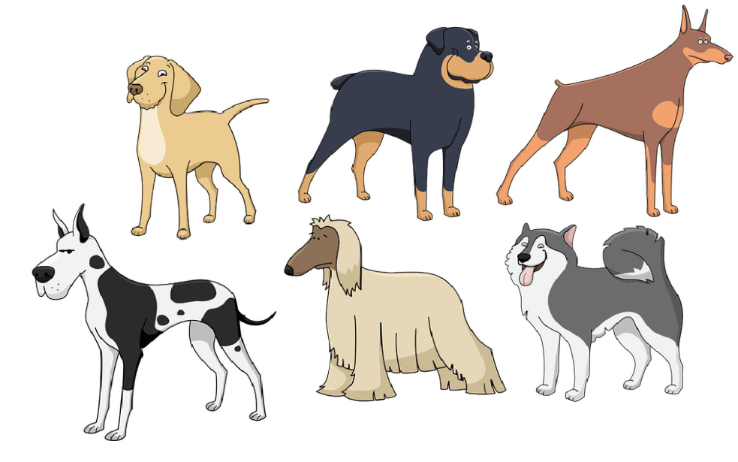
Which of the following have been produced by selective breeding?
a)
horse breeds
b)
cat breeds
c)
dog breeds
d)
all of the above
85.
The purpose of selective breeding is to 
a)
Get bigger animals
b)
get smaller animals
c)
create animals with desirable traits
d)
create animals with bad traits
86.
The transfer of a gene from the DNA of one organism into another organism in order to produce an organism with desired traits.
a)
Genetic Engineering
b)
Karyotype
c)
Pedigree
d)
Genome
87.
A chart or family tree that tracks which members of a family have a particular trait or disease.
a)
Carrier
b)
Karyotype
c)
Pedigree
d)
Genome
88.
The evolution of dogs from wolves is due to:
a)
Natural Selection
b)
Sexual Selection
c)
Artificial Selection
d)
Vestigial Structures
89.
Where humans have bred organisms together based on traits we like.
a)
Evolution
b)
Natural Selection
c)
Extinction 
d)
Artificial Selection
90.
Problems with selective breeding include
a)
Better animals
b)
More Meat
c)
Animals can have bad health problems
d)
more diversity
91.
Corn and rice are two of these most genetically modified crops in the US.
a)
true
b)
false
92.

The term that refers to passing genetics from one generaton to the next.

a)

DNA

b)

behavior

c)

heredity

d)

inheritance

93.

Long hair is a dominant trait. Choose the BEST statement.

a)

This guinea pig received two dominant traits. (HH)

b)

This guinea pig cannot have a recessive allele. (h)

c)

This guinea pig could be homozygous dominant (HH) or heterozygous (Hh)

d)

This guinea pig is homozygous recessive (hh)

94.

Which term refers to an organism's physical appearance

a)

recessive allele

b)

dominant

c)

genotype

d)

phenotype

95.

Which term refers to an organism's genetic traits?

a)

offspring

b)

genotype

c)

phenotype

d)

behavior

96.

Mendel concluded that alleles for tall pea plants is dominant. If you cross a TT with a Tt, how many plants would be tall?

a)

50%

b)

100%

c)

25%

d)

75%

97.

Different forms of a gene are called ______.

a)

alleles

b)

traits

c)

genotype

d)

phenotype

98.

The best genome representation for a homozygous dominant

a)

AA

b)

Aa

c)

aa

99.

The best genome representation for homozygous recessive

a)

AA

b)

Aa

c)

aa

100.

The best genome representation for heterozygous

a)

AA

b)

Aa

c)

aa

101.

In the Punnett square what is the probability that flowers will have a white flower?

a)

3 in 4

b)

1 in 4

c)

2 in 4

d)

4 in 4

102.

The parent flowers could both be described as ____

a)

homozygous recessive

b)

homozygous dominant

c)

heterozygous

d)

phenotypes

103.
A roan cow shows co-dominance in fur color (orange and white). What is the phenotype ratio expected if a roan cow and a roan steer mate together?
a)
4: Orange and White
b)
1: Orange : 1 White
c)
2 Orange: 2 Orange and White: 0 White
d)
1: Orange: 2 Orange and White: 1 White
104.
A red flowered plant (RR) breeds with a White flowered plant (WW). The gene for petal color in these plants expresses incomplete dominance.  What percentage of the offspring will have pink (RW) flowers?
a)
0%
b)
25%
c)
50%
d)
100%
105.
This type of inheritance pattern is a MIXTURE of both traits.
a)
incomplete dominance
b)
co-dominance
c)
complete dominance
d)
recessive pattern
106.
This type of inheritance pattern shows BOTH traits in possible offspring
a)
complete dominance
b)
incomplete dominance
c)
co-dominance
d)
dominant pattern
107.
Snap dragon color is a incomplete dominant trait.  A red flower (RR) is crossed with white flower (rr)? What color are flowers that are Rr?
a)
Red
b)
Red and White
c)
White
d)
Pink
108.

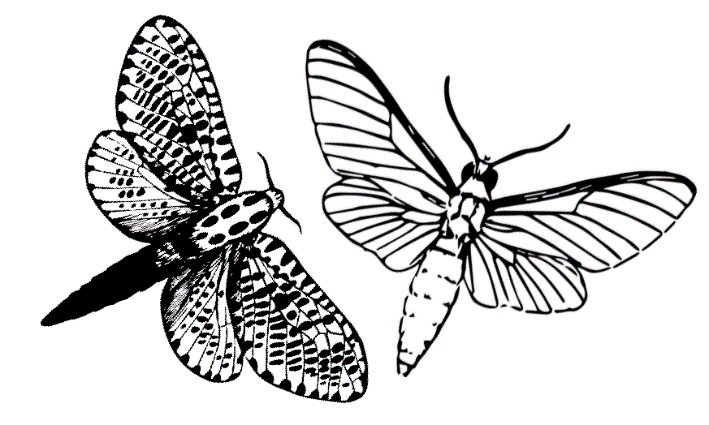
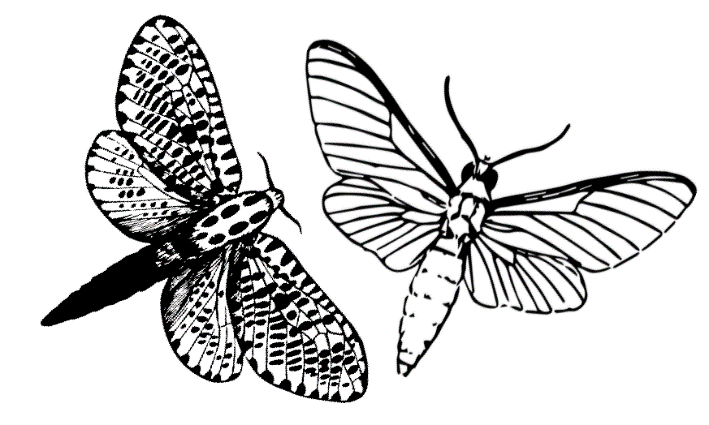
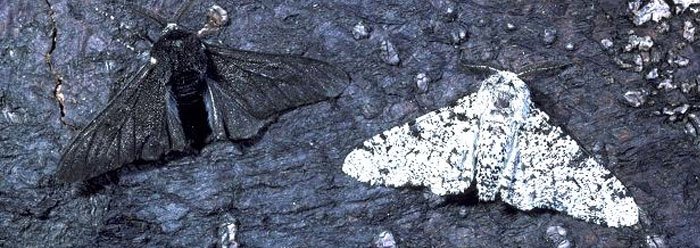
According to natural selection, light colored tree trunks would favor

a)

light colored moths

b)

dark colored moths

c)

red colored moths

d)

red and light colored moths

109.

Genetic diversity in a species makes long term survival of some members

a)

impossible

b)

improvable

c)

more likely

d)

less likely

110.

A physical trait favored by an environmental change can be called an

a)

adaptation

b)

extinction

c)

possibility

d)

mutation

111.

Natural Selection is driven by a change in the environment and survival of the

a)

Earth

b)

Fastest

c)

Fittest

d)

Biggest

112.

Isolated small populations speed up genetic drift.

a)

Gene Pool

b)

Mitosis

c)

Speciation

d)

Founders Effect

113.

Organisms of the same species can no longer interbreed therefore creating two species.

a)

Gene Pool

b)

Genetic Drift

c)

Gene Frequency

d)

Speciation

114.

A characteristic that makes an organism well suited to its environment is called a(n)?

a)

natural selection

b)

trait

c)

adaptation

d)

variation

115.

Which feature of the finches helped support Darwin's theory of Natural Selection?

a)

Finches had different beak shapes to suit their food source

b)

Finches had unusual reproductive behavior

c)

Finches changed features during their lifetime

d)

Finches were able to survive from predator attacks

116.

Which of the following statements is true?

a)

All individuals of a population of animals or plants are identical

b)

Genetic variations happen only in plants

c)

Genetic variations occur in all living things

d)

All animals of a population are identical

117.

Which of the following is the type of adaptation that effects how an animal acts in a situation?

a)

physiological

b)

structural

c)

behavioral

118.

A frog producing poison under their skin to use as a defense mechanism is an example of which type of adaptation?

a)

Behavioral

b)

Structural

c)

Physiological

119.

Fossils are _________

a)

the most significant evidence of evolutionary relationships between species

b)

distinct and direct evidence of evolution

c)

a complete record of evolution

d)

all of the above

120.

Examples of homologous structures include

a)

the wings of a bat and a bird

b)

the wings of a bat and the limbs of a cat

c)

the limbs of a cat and the limbs of a tortoise

d)

none of the above

121.

Examples of analogous structures include

a)

the wings of a bat and a bird

b)

the wings of a bat and the limbs of a cat

c)

the limbs of a cat and the limbs of a tortoise

d)

all of the above

122.

An example of a vestigial structure is

a)

the forelimb of a whale

b)

the wings of an eagle

c)

the pelvic bone of a whale

d)

the tail bone of a monkey

123.

Comparison of DNA sequences shows that we are most closely related to

a)

monkeys

b)

baboons

c)

gorillas

d)

chimpanzees

124.

The strongest evidence for evolution from a common ancestor is

a)

similar DNA sequences

b)

similar body structures

c)

similar fossils

d)

all of the above

125.
Do organisms "decide" to evolve and change?
a)
Yes, they know they need to change to survive 
b)
No, they change because of natural selection
126.
The trees these moths used to live on were white, but have been covered in soot from coal factories. Which moth will be more successful in this environment?
a)
Dark moth
b)
Light moth
c)
Both will be equally successful
d)
Neither will be successful
127.
Only populations can evolve.
Individuals can not evolve.
a)
True
b)
False
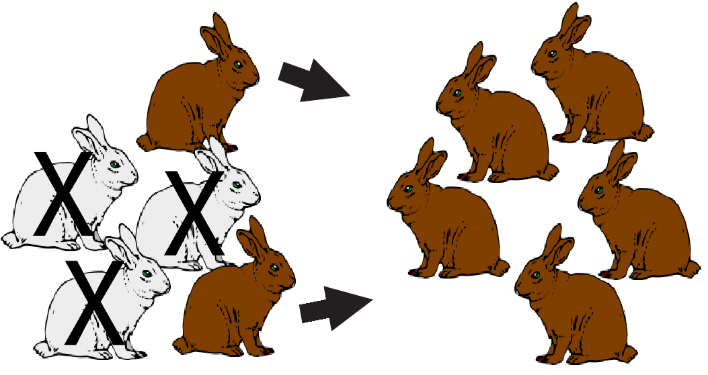
128.

What process is being shown in this image?

a)

Variation

b)

Natural Selection

c)

Selective Breeding

d)

Homeostasis

129.

What did Darwin mean?

a)

Strong organisms can't survive

b)

He didn't believe in 'survival of the fittest'

c)

Organisms that have adapted to their environment are the most likely to survive

d)

Smart organisms are less likely to survive in harsh environments

130.
When every organism of a species has died.
a)
Evolution
b)
Natural Selection
c)
Extinction
d)
Artificial Selection
131.

Variation within a species

a)

are caused by genetic mutations.

b)

are naturally found among members of the group

c)

forms a predictable pattern when graphed.

d)

All statements are true about variation.

132.

Heritable or inheritance refers to

a)

Yeah, baby, rollin in pop's Porsche. Lit!

b)

only good traits that help you survive

c)

only bad traits that will cause you to die

d)

all traits you get from your parents and pass to your offspring

133.
A scientist puts 100 houseflies in a sealed container; then sprays an insecticide into the container.  Ninety-six of the flies die.  Four survive.  The scientist lets the survivors mate and produce offspring, then repeats the experiment with 100 offspring.  Fifty-six of them survive the spray.  This experimental result is evidence of – 
a)
adaptive radiation 
b)
speciation
c)
natural selection
d)
extinction
134.
Which statement does not accurately describe natural selection?
a)
Individual organisms change their genes to adapt to their environment
b)
The genetic composition of a population changes from one generation to the next
c)
More advantageous traits become more common in population
d)
Beneficial and useful traits are inheritable
135.
The greenhouse effect affects life on Earth by
a)
trapping oxygen
b)
cooling the temperatures
c)
trapping warmth
d)
recycling nitrogen
136.
Measurements of carbon dioxide correlates fairly closely with the measurements of _____________
a)
oxygen
b)
temperature
c)
nitrogen
d)
water
137.
The build up of toxins in the upper levels of a food chain is called
a)
autrophism
b)
biomagnification
c)
heterotrophy
d)
respiration
138.
Eutrophication is caused by
a)
runoff of excessive fertilizer and nutrients
b)
cleaning up waterways
c)
using nuclear energy
d)
using solar energy
139.
Increases in global temperature is caused by
a)
aerosols/CFC's
b)
carbon dioxide, methane, and water vapor
c)
nitrogen
d)
hydrogen
140.

Which statement about the effects of natural events and human activities is true?

a)

The environment is not usually affected by natural events.

b)

All human activities change the environment in a negative way.

c)

Natural events always have a positive impact on the environment.

d)

Human activities and natural events can damage the environment.

141.

Which example best describes how human activity can directly impact the geosphere?

a)

Poor farming practices can degrade the soil and cause erosion.

b)

Dumping waste from a factory into a river can pollute the water supply.

c)

Construction activities can release harmful dust and chemicals into the air.

d)

Removing too many fish from the ocean can cause a fish species to go extinct.

142.
Any amount of CO2 (Carbon Dioxide) in the atmosphere is bad for our planet.
a)
True
b)
False
143.
The impact on the planet due to global warming is called...
a)
climate change
b)
the seasons
c)
the weather
d)
natural change
144.
The amount of carbon dioxide CO2 in the atmosphere is decreasing. 
a)
True
b)
False
145.
Which human activity contributes the MOST carbon dioxide to the atmosphere?
a)
Fishing
b)
Breathing
c)
Burning Fossil Fuels
d)
Farming
146.
Global Warming does not affect humans, only plants and animals
a)
True
b)
False
147.

What evidence is there to support that Global Warming is occurring?

a)

Rising ocean temperatures

b)

Declining arctic sea glacers

c)

Sea levels rising

d)

Increase in carbon dioxide in the atmosphere

148.
What is it called when coral loses its color?
a)
bleaching
b)
white out
c)
colorization
149.
What else kills coral besides pollution?
a)
too much sun
b)
too much salt water
c)
humans with boats and divers
150.
What caused the bleaching of a large part of the Great Barrier Reef in 2015-16? 
a)
oil spill
b)
underwater heat wave
c)
formation of iceberg
d)
mass migration of fish out of area
151.
What does ocean acidification do to shell formation? 
a)
less CO2 means less carbon to form shells
b)
Shells that form are weak
c)
Shells don't form properly so animals die and leave hole in food chain
d)
All of these things happen :(
152.
How do zooxanthellae help corals? 
a)
Provide sugars to corals
b)
Provide oxygen to corals
c)
Provide pretty colors to corals
d)
Provide protection to corals
153.

What percentage of the ocean's sea life lives in coral reefs?

a)

10 -15%

b)

20%

c)

45%

d)

25%

154.

Coral reefs are endangered by

a)

climate change

b)

overfishing

c)

pollution

d)

all of the above

155.

What is one way scientists trying to save the coral reefs?

a)

by growing coral and planting it in the ocean

b)

by restricting access to reefs

c)

by adding new species of fish to the reefs

d)

by adding fertilizer to the coral reefs

156.
Coral reef is an animal
a)
false
b)
true
157.
What is the biggest ecological benefit of coral reefs?
a)
tourism
b)
seafood
c)
habitat
d)
protection of shoreline
158.

What percentage of the ocean is taken up by coral reefs?

a)

10-12 percent

b)

25 percent

c)

less than one percent

d)

more than fifty percent

159.

Sustainability is making sure that the planet and its resources can continue to provide life.

a)

True

b)

False

160.
The variety of life in the world, a habitat, or an ecosystem
a)
biodiversity
b)
ecosystem
c)
mutations
d)
diversity
161.

Which of the following is the best definition of a natural resource:

a)

something we get from the environment

b)

something that we can use from the environment

c)

something humans use to meet our needs

d)

Anything humans get or use from nature to meet our needs or wants

162.

A resource that can restore or renew itself (unless badly mismanaged) or can be used over and over is called a:

a)

Renewable resource

b)

Non-renewable resource

c)

Perpetual resource

d)

Indestructible resource

163.

A resource that can only be used once and cannot be replaced once used is called a...

a)

Renewable resource

b)

Non-renewable resource

c)

Perpetual resource

d)

Infinite resource

164.

The term 'carrying capacity' is best defined as ...

a)

How much pressure people put on the Earth

b)

The number of people Earth can support at current rates of consumption

c)

solving environmental problems through science and technology

d)

solving environmental problems by changing the way we live

165.
What is the difference between biotic and abiotic?
a)
Biotic are non-living things
b)
Abiotic are living organisms
c)
Biotic is life,
Abiotic is non-living
d)
Biotic is non-living, Abiotic is living
166.

What does sustainability mean?

a)

Using lots of resources.

b)

Maintaining the world we live in for future generations.

c)

Cutting down trees.

d)

Using lots of water and electricity.

167.

What are examples of non-renewable resources?

a)

Oil, coal and solar energy.

b)

Gas, coal and water.

c)

Oil, gas and wind.

d)

Oil, gas and coal.