wayground logo

Free Printable Worksheets

Font size

S
M
L
XL
Worksheets

Protein Synthesis & Mutations Mini-Test Review

Total questions: 163

Worksheet time: 3hrs 18mins
Name
Class
Date
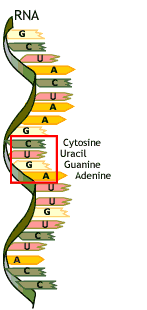
1.
In RNA, Uracil pairs with ______. 
a)
cytosine
b)
adenine
c)
guanine
d)
thymine
2.
The process to go from DNA to mRNA is _______
a)
translation
b)
transcription
c)
replication
3.
DNA holds the code for
a)
lipids
b)
carbohydrates
c)
protein
d)
sugar
4.
Choose the nucleotide sequence of the RNA strand that would be complementary to the following strand: 
GTAGTCA
a)
UATUAGA
b)
ACGACTG
c)
CAUCAGU
d)
CATCAGT
5.
The main function of tRNA is to...
a)
carry a message that, when translated, forms proteins
b)
form a portion of ribosomes
c)
string together complementary RNA and DNA strands
d)
bring amino acids from the cytoplasm to the ribosomes
6.
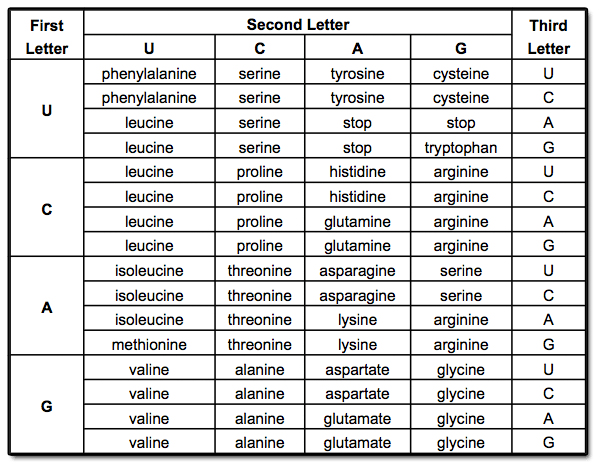
What amino acid is represented by the codon UUA?
a)
Phenylalanine
b)
Tyrosine
c)
Leucine
d)
Stop codon
7.
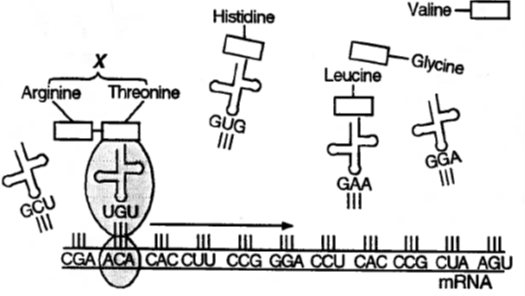
What process is going on in this photo? 
a)
Transcription 
b)
Translation 
c)
Replication 
d)
All the above 
8.
Which component of DNA determines the traits of an organism? 
a)
Nitrogen Bases
b)
Sugar-Phosphate Backbone
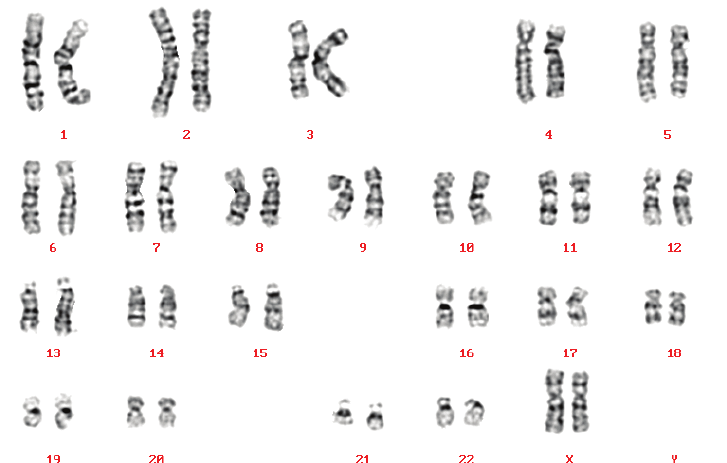
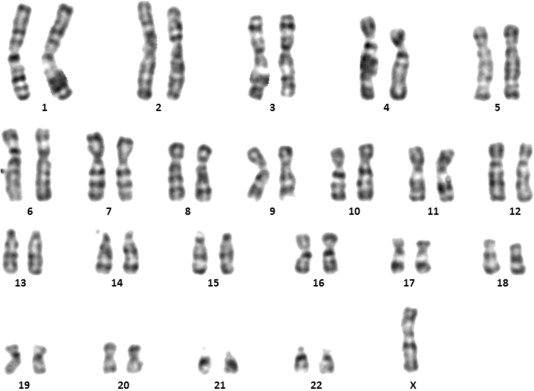
c)
Hydrogen bonds
9.

What is the location in the cell for translation?

a)

nucleus

b)

mitochondria in cytoplasm

c)

ribosome in cytoplasm

d)

chloroplast in cytoplasm

10.
What is the three base sequence of mRNA that codes for a single amino acid?
a)
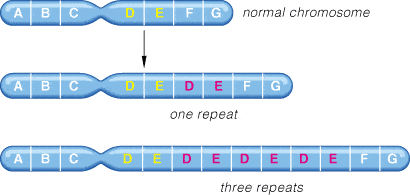
Anticodon
b)
Codon
c)
Protein
11.
What is the location in the cell for transcription?
a)
nucleus
b)
cytoplasm
c)
ribosome
d)
mitochondria
12.
Translation is the process where
a)
mRNA is created in the Nucleus
b)
mRNA is decoded to form a protein 
c)
glucose molecules are made
d)
is where lipids are synthesised
13.
Does the order of amino acids in a protein matter?
a)
YES!
b)
NO!
14.

What process is happening in the diagram?

a)

transcription

b)

translation

c)

dna replication

d)

mitosis

15.
A sugar, a phosphate group, and a nitrogen base form the building blocks of which organic compound?
a)
carbohydrates
b)
nucleic acids
c)
lipids
d)
proteins
16.
Which of the following is the template for the production of RNA within a cell?
a)
DNA
b)
protein
c)
ATO
d)
carbohydrate
17.
When an extra base is inserted into the DNA sequence of a gene, the protein doesn't work. Which explains why?
a)
the base increases rate of translation
b)
the base causes DNA to be transcribed in opposite direction
c)
the inserted base causes the codons in the sequence to be incorrect for the desired protein
d)
the base signals enzymes to translate DNA rather than RNA
18.
What molecules do both DNA and RNA contain?
a)
uracil
b)
nucleotides
c)
thymine
d)
deoxyribose
19.
The genetic material of an organism is composed of
a)
lipids
b)
proteins
c)
deoxyribonucleic acids
d)
complex carbohydrates
20.
Which of the following best describes how DNA and RNA are similar?
a)
they both contain A and T
b)
They both have a double helix
c)
They are both composed of 5 different nucleotides
d)
they both have C and G
21.
The DNA sequence ATCAGCGCTGGC is part of a gene. how many amino acids are coded for by this message?
a)
4
b)
8
c)
12
d)
20
22.
Which of the following best describes how DNA and RNA are similar?
a)
they both contain A and T
b)
They both have a double helix
c)
They are both composed of 5 different nucleotides
d)
they both have C and G
23.
The genetic material of an organism is composed of
a)
lipids
b)
proteins
c)
deoxyribonucleic acids
d)
complex carbohydrates
24.
What molecules do both DNA and RNA contain?
a)
uracil
b)
nucleotides
c)
thymine
d)
deoxyribose
25.
When an extra base is inserted into the DNA sequence of a gene, the protein doesn't work. Which explains why?
a)
the base increases rate of translation
b)
the base causes DNA to be transcribed in opposite direction
c)
the inserted base causes the codons in the sequence to be incorrect for the desired protein
d)
the base signals enzymes to translate DNA rather than RNA
26.
which process is shown?
a)
diffusion
b)
repiration
c)
recombination
d)
translation
27.
A sugar, a phosphate group, and a nitrogen base form the building blocks of which organic compound?
a)
carbohydrates
b)
nucleic acids
c)
lipids
d)
proteins
28.
An RNA polymer is composed of subunits known as
a)
polysaccharides
b)
ribose molecules
c)
nucleotides
d)
uracil molecules
29.
Which process?
a)
mutation
b)
transcription
c)
respiration
d)
translation
30.
What is the relationship between a protein, the cell, and DNA?
a)
DNA is produced by protein which is produced in the cell
b)
Protein is composed of DNA which is produced in the cell
c)
DNA controls the production of protein in the cell
d)
A cell is composed of DNA and protein
31.
DNA sequence is ACAGTGC. How would this be coded on mRNA?
a)
TGTCACG
b)
UGUCACG
c)
GUGACAU
d)
CACUGUA
32.
One human disease is caused by a change in one codon in a gene from GAA to GUA. The disease is a result of 
a)
a mutation
b)
crossing-over
c)
a meiosis error
d)
polyploidy
33.
A scientist puts nucleotide chains of UUUUUU in a test tube under conditions allowing protein synthesis. Soon they are only amino acids chains of phenylalinine. What does the experiment indicate?
a)
phenylalanine is composed of uracil
b)
UUU codes for phenylalanine
c)
protein synthesis malfunctions in test tubes
d)
proteins contain one kind of amino acids
34.
In DNA, Adenine pairs with ___________. 
a)
Guanine
b)
Cytosine
c)
Thymine
d)
Uracil
35.
In RNA, Uracil pairs with ______. 
a)
cytosine
b)
adenine
c)
guanine
d)
thymine
36.
The process to go from DNA to mRNA is _______
a)
translation
b)
transcription
c)
replication
37.
Which of the following is a difference between DNA and RNA?
a)
DNA is single stranded, RNA is double stranded
b)
DNA has thymine, RNA has uracil
c)
There are 3 types of DNA, there is only 1 type of RNA
38.
What happens during translation?
a)
mRNA matches up with tRNA to form a protein
b)
tRNA matches up with DNA to make a protein
c)
DNA is copied into mRNA
39.
Where does translation take place?
a)
Nucleus
b)
Ribosome
c)
Mitochondria
40.
What are proteins made of?
a)
DNA
b)
RNA
c)
Amino acids
41.
What is a change in the genetic material of a cell called?
a)
Transcription 
b)
Mutation
c)
Translation
42.
Where are codons located?
a)
tRNA
b)
DNA
c)
mRNA
43.
DNA is changed from AAA to AAC. What kind of mutation is this?
a)
Substitution
b)
Insertion
c)
Deletion
44.
DNA is changed from TTT to TTG T. What type of mutation is this?
a)
Insertion
b)
Deletion
c)
Substitution
45.
Which of the following would be a nucleotide found in DNA
a)
Ribose + phosphate + uracil
b)
Deoxyribose + phosphate + uracil  
c)
Deoxyribose + phosphate + adenine
d)
Ribose + phosphate + adenine
46.
An RNA molecule is
a)
double helix
b)
always double stranded
c)
usually double stranded
d)
single stranded
47.
In mRNA, each codon specifies a particular 
a)
nucleotide
b)
amino acid
c)
purine
d)
pyrimidine
48.
How many bases are in one codon?
a)
1
b)
2
c)
3
d)
4
49.
What is the correct sequence?
a)
RNA --> DNA --> Protein
b)
Protein --> RNA --> DNA
c)
DNA --> RNA --> Protein
d)
DNA --> Protein --> RNA
50.
What structure in a cell is the site for making proteins?
a)
ribosomes
b)
mitochondria
c)
lysosome
d)
Golgi body
51.
Which amino acid is made from the RNA codon UUA?
a)
Phenylalanine
b)
Leucine
c)
Serine
d)
Tyrosine
52.

An mRNA molecule is produced in which step of protein synthesis:

a)

replication

b)

transcription

c)

duplication

d)

translation

53.
If the mRNA sequence is AGA UUU CGA GCC,
what is the complementary tRNA anticodons?
a)
AGA TTT CGA GCC
b)
UCU AAA GCU CGG
c)
TCT AAA GCT CGG
d)
UCU AAA CGA GGG
54.
Brings the amino acids to the ribosome
a)
mRNA
b)
tRNA
c)
rRNA
d)
DNA
55.

Overall, protein synthesis consists of these steps

a)

DNA synthesis, RNA synthesis and transcription

b)

transcription and translation

c)

DNA synthesis, transcription and translation

56.
What mutation has occurred here? 
T-G-A-C-C-A
T-G-A-G-C-A
a)
Substitution
b)
Deletion
c)
Insertion
d)
Frameshift 
57.
Which of the following would result in a frameshift mutation?
a)
Insertions only
b)
Substitution only
c)
Deletion only
d)
Insertions and Deletions
58.
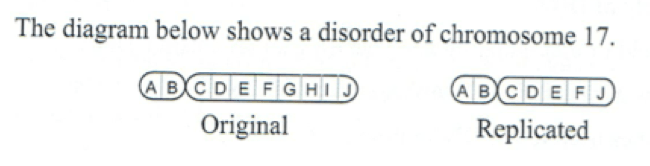
What type of chromosomal mutation has occurred?
a)
substitution
b)
insertion
c)
deletion
d)
nondisjunction
59.

Which Karyotype displays a female with Down syndrome?

a)
b)
c)
d)
60.

A mutation in which only one nucleotide is altered is called a:

a)

Frameshift Mutation

b)

Deletion Mutation

c)

Point Mutation

d)

Insertion Mutation

61.
DNA molecule segment is : TTACGCAAG
The mutated DNA segment is TTCGCAAG. This is an example of ___ mutation.
a)
Substitution
b)
Deletion
c)
Insertion
d)
Inversion
62.

A mutation is defined as:

a)

A change in the cell's structure

b)

Anything that changes in an embryo

c)

Any change in the physical features of a human

d)

A change in the DNA sequence

63.
ATTTGAGCC- Original
ATTGAGCC - Mutated
The example above is an example of a 
a)
Insertion- Frameshift
b)
Deletion- Substitution
c)
Deletion -Frameshift
d)
All of the above
64.
What mutation has occurred here? 
T-G-A-C-C-A
T-G-A-G-C-A
a)
Substitution
b)
Deletion
c)
Insertion
d)
Frameshift 
65.
Why are insertion and deletion (frameshift) mutations so harmful?
a)
They change all of the codons from the mutation on down the line, which changes the amino acid sequence
b)
They insert things that an organism doesn't need.
c)
They often delete things that organisms need.
d)
Insertion and deletions are not any more harmful than substitution mutations.
66.
Identify the DELETION mutation form the following: 
ATG CCA AAT
a)
ATG TCA AAT
b)
ATG CCT AAA T
c)
ATC CA  AT
d)
ATG CCA AAT
67.
Identify the SUBSTITUTION mutation form the following: 
ATG CCA AAT
a)
ATG TCA AAT
b)
ATG CCT AAA T
c)
ATC CA  AT
d)
ATG CCA AAT
68.
The survival of a species depends on its ability to adapt to changes in the environment. Which statement correctly describes a way that mutations increase the likelihood that a species will survive in a changing environment?
a)
Mutations are a source of variation in the species
b)
Mutations are the cause of disease in the species
c)
Mutations are not harmful when they occur in somatic cells
d)
Mutations are always passed on to subsequent generations
69.
A segment of DNA produces methionine, threonine, histidine, aspartate, and glycine when translated. A substitution mutation occurs and causes the sythesis of the segment shown. Which is the new peptide chain when the new DNA segment is translated?
a)
methionine, leucine, histidine, aspartate, glycine
b)
methionine, phenylalanine, histidine, aspartate, glycine
c)
Methionine, proline, histidine, aspartate, glycine
d)
methionine, serine, histidine, aspartate, glycine
70.

Genetic mutations can be...

a)

beneficial, harmful, or neutral

b)

beneficial only

c)

harmful only

d)

neutral only

71.

Would a mutation in the DNA of a skin cell be passed on to an organism's offspring?

a)

Yes, because any change to the DNA is passed on to the offspring

b)

Maybe. Sex cells only use half of the body's genetic code. It might get the copy of a gene that wasn't mutated.

c)

No. Only mutations that occur in the gametes (sex cells) are passed on to the offspring

d)

Without knowing the animal, it would be hard to tell whether or not the mutation would be passed on.

72.
A change in a single nucleotide in a gene sequence is called a...
a)
Point Mutation
b)
Single Error
c)
Mono Mutation
d)
Isolated Mutation
73.

Would a mutation in the DNA of a skin cell be passed on to an organism's offspring?

a)

Yes, because any change to the DNA is passed on to the offspring

b)

Maybe. Sex cells only use half of the body's genetic code. It might get the copy of a gene that wasn't mutated.

c)

No. Only mutations that occur in the gametes (sex cells) are passed on to the offspring

d)

Without knowing the animal, it would be hard to tell whether or not the mutation would be passed on.

74.

What type of mutation is shown in the diagram?

a)

Point mutation - missense

b)

Frameshift Mutation - deletion

c)

Frameshift Mutation - addition

d)

Point mutation - nonsense

75.
Are all mutations bad?
a)
Yes
b)
No
76.
 Are mutations random?
a)
True
b)
False
77.

Would a mutation in the DNA of a skin cell be passed on to an organism's offspring?

a)

Yes, because any change to the DNA is passed on to the offspring

b)

Maybe. Sex cells only use half of the body's genetic code. It might get the copy of a gene that wasn't mutated.

c)

No. Only mutations that occur in the sex cells that are passed on to the offspring

d)

Without knowing the animal, it would be hard to tell whether or not the mutation would be passed on.

78.
Original DNA: CAT GAT
New DNA: CAT AT
What mutation occurred?
a)
deletion
b)
substitution 
c)
tranverse
d)
insertion
79.
What is it called when body cells grow uncontrollably
a)
Spinal Stenosis
b)
Anemia
c)
Cancer
80.
What are the building blocks of proteins called?
a)
DNA
b)
RNA
c)
Ribosomes
d)
Amino Acids
81.
This type of substitution codes for a stop codon
a)
Missense
b)
Nonsense
c)
Silent
d)
Deletion
82.
If you are missing or have an extra base  at the end of your mutated DNA . What type of mutation occurred?
a)
Substitution
b)
Frameshift
c)
Duplication 
d)
Insertion
83.
mRNA is read in chunks of three, called...
a)
quadralets
b)
anticodons
c)
codons
d)
capsids
84.
What is a Gene?
a)
A segment of RNA that encodes for a protein
b)
A chromosome
c)
A segment of DNA that encodes for a protein
d)
Your genome
85.
What type of chromosomal mutation is this?
a)
Translocation
b)
Inversion
c)
Deletion
d)
Duplication
86.
What type of chromosomal mutation is this?
a)
Inversion
b)
Translocation
c)
Deletion
d)
Duplication
87.
A type of substitution in which one amino acid changes is called 
a)
Nonsense
b)
Missense
c)
Silent
d)
all of the above
88.
A type of substitution in which no  amino acids change is called 
a)
Missense
b)
Nonsense
c)
Silent
d)
Deletion
89.

By looking at the chromosomes how can you tell that this person is biologically female?

a)

Because there are two X chromosomes

b)

Because there are more chromosomes than in a male
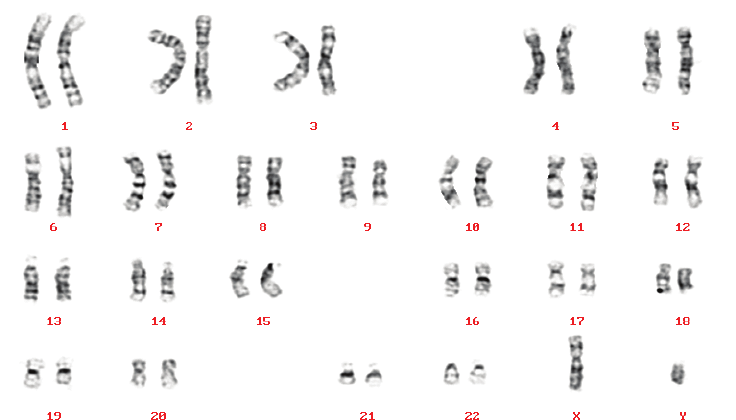
90.

By looking at the chromosomes is this individual biologically male or female? How do you know?

a)

Female, because they have two X chromosomes

b)

Male, because they have one X and one Y chromosome
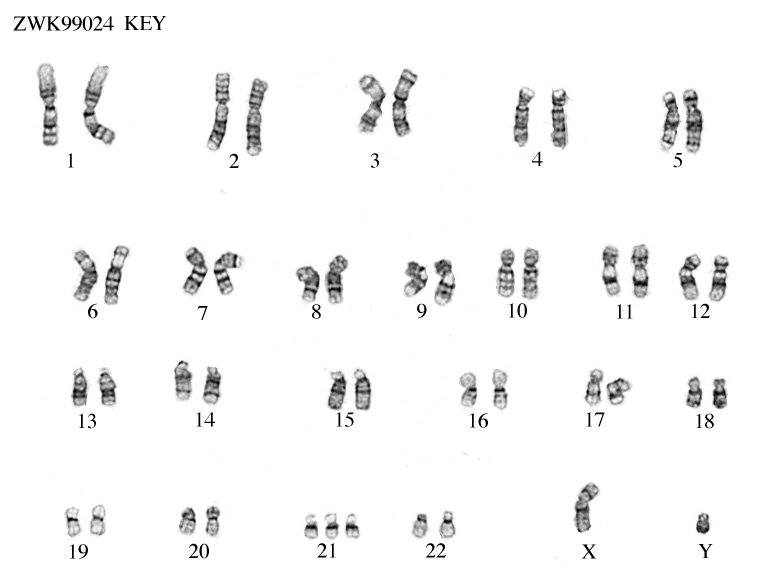
91.

What is the mutation in this persons chromosomes?

a)

There is only one X

b)

7 is shaped like a hockey stick

c)

There's an extra 21

d)

1 is too curved

92.

This is called Turners syndrome, can you notice the mutation in the chromosomes?

a)

Both chromosomes 1 are bent

b)

There are too many chromosomes

c)

There are too many of chromosome 3

d)

There is no Y chromosome

93.
In a molecule of double-stranded DNA, the amount of Adenine present is always equal to the amount of
a)
cytosine
b)
guanine
c)
thymine
d)
uracil
94.
This image show what type of mutation?
a)
non - disjunction
b)
frameshift
c)
gene duplication
d)
gene translocation
95.
Why is the order of amino acids so important?
a)
The order of amino acids dictates what shape the protein will fold into.
b)
It is not important. The protein folding chamber will force the protein to fold into the correct shape.
96.
If you are a boy, what percent of your genes did you get from your dad?
a)
25%
b)
50%
c)
75%
d)
100%
97.
Why is the order of amino acids so important?
a)
The order of amino acids dictates the function of the protein and what shape the protein will fold into.
b)
It is not important. The protein folding chamber will force the protein to fold into the correct shape.
c)
The order of the amino acids tells the cell what DNA to make.
d)
It is not important that is why most mutatiosn are silent.
98.

What kind of mutations exist?

a)

neutral mutations

b)

all of these

c)

beneficial mutations

d)

harmful mutations

99.

Chromosomes are found

a)

only in muscle cells

b)

in the genes of the cell

c)

in the nucleus of the cell

d)

in the proteins of the cell

100.

Chromosomes are made of

a)

DNA

b)

genes

c)

proteins

d)

traits

101.

What do proteins do?

a)

Form cells

b)

Control cell processes

c)

Make DNA

d)

Determine traits

102.

What is an example of a neutral mutation?

a)

None of these

b)

a disease

c)

a change in eye color

d)

lactose intolerance

103.

What is an example of a beneficial mutation?

a)

ability to digest milk

b)

cancer

c)

hemophilia

d)

none of the above

104.
Identify the mutation in the picture.
a)
Inversion
b)
Duplication
c)
Deletion
d)
Translocation
105.
What type of chromosomal mutation has occurred?
a)
substitution
b)
insertion
c)
deletion
d)
nondisjunction
106.

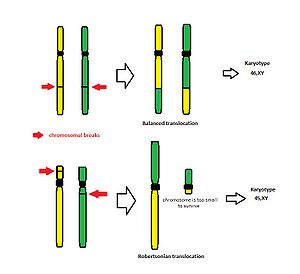
The chromosomal mutation shown in the image is a

a)

deletion

b)

duplication

c)

inversion

d)

translocation

107.

The chromosomal mutation shown in the image is a

a)

deletion

b)

duplication

c)

inversion

d)

translocation

108.
A chromosome is found to be shorter than it's homologous match.  Which type of mutation would this most likely be?
a)
insertion
b)
deletion
c)
translocation
d)
inversion
109.
If you are missing or have an extra base  at the end of your mutated DNA . What type of mutation occurred?
a)
Substitution
b)
Frameshift
c)
Duplication 
d)
Insertion
110.
A type of substitution in which no  amino acids change is called 
a)
Missense
b)
Nonsense
c)
Silent
d)
Deletion
111.
Which of the following would result in a frameshift mutation?
a)
Insertions only
b)
Substitution only
c)
Deletion only
d)
Insertions and Deletions
112.
DNA molecule segment is : TTACGCAAG
The mutated DNA segment is TTCGCAAG. This is an example of ___ mutation.
a)
Substitution
b)
Deletion
c)
Insertion
d)
Inversion
113.
mRNA is read in chunks of three, called...
a)
quadralets
b)
anticodons
c)
codons
d)
capsids
114.
What is a Gene?
a)
A segment of RNA that encodes for a protein
b)
A chromosome
c)
A segment of DNA that encodes for a protein
d)
Your genome
115.
Normal-
GAG-CTC-GAC-AGA
Mutant
GAG CTC-CAC-AGA
a)
no mutation
b)
substitution
c)
insertion
d)
deletion
116.
What mutation has occurred here? 
T-G-A-C-C-A
T-G-A-G-C-A
a)
Substitution
b)
Deletion
c)
Insertion
d)
Frameshift 
117.
Original: ATC CAT
Mutation: ATC GCAT
What mutation occurred?
a)
deletion
b)
insertion
c)
silent
d)
transverse
118.
Are all mutations bad?
a)
Yes
b)
No
119.
Original: A A U U G G C C
Mutated: A U U U G G C C
What kind of mutation occurred?
a)
Substitution
b)
Addition
c)
Deletion
d)
Frameshift
120.
A frameshift mutation can occur with either _________ or __________ mutations.
a)
Addition, division
b)
Deletion, substitution
c)
Addition, substitution
d)
Addition, deletion
121.

DNA sequences can often be used to determine relationships between...

a)

nutritional needs

b)

organisms

c)

habitats

122.
A frameshift mutation can occur with either _________ or __________ mutations.
a)
Addition, division
b)
Deletion, substitution
c)
Addition, substitution
d)
Addition, deletion
123.

DNA sequences can often be used to determine relationships between...

a)

nutritional needs

b)

organisms

c)

habitats

124.

Which type of mutation is MOST LIKELY to cause the greatest disruption?

a)

Frameshift

b)

Silent

c)

Point

125.
In a molecule of double-stranded DNA, the amount of Adenine present is always equal to the amount of
a)
cytosine
b)
guanine
c)
thymine
d)
uracil
126.
What is shown in the diagram shown?
a)
DAN
b)
RAN
c)
DNA
d)
RNA
127.
Identify the SUBSTITUTION mutation from the following DNA sequence: 
ATG CCA AAT
a)
ATG TCA AAT
b)
ATG CCT AAA T
c)
ATC CA  AT
d)
ATG CCA AAT
128.
Identify the DELETION mutation from the following DNA sequence: 
ATG CCA AAT
a)
ATG TCA AAT
b)
ATG CCT AAA T
c)
ATC CA  AT
d)
ATG CCA AAT
129.

The sides of the DNA strand are made of...

a)

nitrogen base pairs- adenine and thymine or guanine and cyotsine

b)

deoxyribose sugar molecules, and phosphate

c)

a characteristic

d)

A trait passed on from family, coded for in the DNA of an organism

130.

Which of the following represents the structure of DNA?

a)
b)
c)
d)
131.

Which sequence of DNA bases would pair with this partial strand ATG TGA CAG?

a)

ATG TGA CAG

b)

TAC ACT GTC

c)

GTA AGT GAC

d)

CAT TCA CTG

132.

DNA replication results in two DNA molecules

a)

each one with two original strands

b)

each one with one new strand and one original strand

c)

each one with two new strands

d)

one with two new strands and the other with two original strands

133.

The picture above represents

a)

insertion

b)

deletion

c)

substitution

134.

The picture above represents

a)

insertion

b)

deletion

c)

substitution

135.

The picture above represents

a)

insertion

b)

deletion

c)

substitution

136.

A piece of a chromosome is lost

a)

deletion

b)

duplication

c)

inversion

d)

translocation

137.

A piece of a chromosome is copied and remains within the chromosome

a)

deletion

b)

duplication

c)

inversion

d)

translocation

138.

A piece of one chromosome detaches and reattaches to a different chromosome

a)

deletion

b)

duplication

c)

inversion

d)

translocation

139.

The chromosomal mutation shown in the image is a

a)

deletion

b)

duplication

c)

inversion

d)

translocation

140.

The chromosomal mutation shown in the image is a

a)

deletion

b)

duplication

c)

inversion

d)

translocation

141.

The chromosomal mutation shown in the image is a

a)

deletion

b)

duplication

c)

inversion

d)

translocation

142.

The chromosomal mutation shown in the image is a

a)

deletion

b)

duplication

c)

inversion

d)

translocation

143.
Identify the mutation in the picture.
a)
Inversion
b)
Deletion
c)
Duplication
d)
Translocation
144.
Identify the mutation in the picture.
a)
Inversion
b)
Duplication
c)
Deletion
d)
Translocation
145.
Identify the mutation in the picture.
a)
Deletion
b)
Inversion
c)
Duplication
d)
Translocation
146.
When can a mutation be passed on to offspring?
a)
only when the mutation is present during or occurs during mitosis
b)
only when the mutation is present during or occurs during meiosis
c)
when the mutation occurs during mitosis or meiosis
d)
when the mutation occurs in somatic cells
147.
A chromosome is found to be shorter than it's homologous match.  Which type of mutation would this most likely be?
a)
insertion
b)
deletion
c)
translocation
d)
inversion
148.
What process occurs during meiosis that can result in chromosomal disorders?
a)
crossing over
b)
non-disjunction
c)
anaphase I
d)
prophase II
149.

Notice the abnormal 23rd chromosome. This individual has an extra X chromosome. What type of mutation is this?

a)

Translocation

b)

Nondisjunction

c)

Dublication

d)

Inversion

e)

Deletion

150.

Inversion

a)

When a segment of a chromosome breaks off.

b)

When a segment of a chromosome breaks off, flips, and reattaches.

c)

When a segment of a chromosome is copied or doubles.

d)

When a segment of a chromosome breaks and attaches to a non homologous chromosome.

e)

When entire chromosomes don't separate evenly during meiosis.

151.

Nondisjunction

a)

When a segment of a chromosome breaks off.

b)

When a segment of a chromosome breaks off, flips, and reattaches.

c)

When a segment of a chromosome is copied or doubles.

d)

When a segment of a chromosome breaks and attaches to a non homologous chromosome.

e)

When entire chromosomes don't separate evenly during meiosis.

152.

Deletion

a)

A

b)

B

c)

C

d)

D

153.

Translocation

a)

A

b)

B

c)

C

d)

D

154.

Duplication

a)

A

b)

B

c)

C

d)

D

155.

Inversion

a)

A

b)

B

c)

C

d)

D

156.

Translocation

a)

A

b)

B

c)

C

d)

D

157.

Inversion

a)

A

b)

B

c)

C

d)

D

158.

Translocation

a)

A

b)

B

c)

C

d)

D

e)

E

159.

Cells with 3 copies of a particular chromosome are said to be what?

(a)  

160.

What is the name of the process whereby chromosomes fail to separate correctly resulting in aneuploidy (one extra or one missing chromosome)?

(a)  

161.

If chromosomes fail top separate properly during either anaphase I or ii, a chromosomal error occurs known as

a)

disjunction

b)

crossing over

c)

non-disjunction

d)

synapsis

162.

An organized picture of an individual's chromosomes used to diagnose extra or missing chromosomes

a)

amniocentesis

b)

urine analysis

c)

blood typing

d)

karyotype

163.

A mutation involving a missing copy of a chromosome

a)

monosomy

b)

disomy

c)

trisomy

d)

triploid