wayground logo

Free Printable Worksheets

Font size

S
M
L
XL
Worksheets

honors biology review for final

Total questions: 160

Worksheet time: 3hrs 54mins

Name
Class
Date
1.
Where does glycolysis occur?
a)
7
b)
6
c)
Cytosol
d)
At a ribosome
2.
Glycolysis is a _______ process
a)
Anabolic
b)
Catabolic
3.
Glycolysis is a __________ process.
a)
7
b)
2
c)
aerobic and anaerobic
d)
neither aerobic nor anaerobic
4.
Glycolysis occurs in __________.
a)
8
b)
3
c)
Archaea
d)
Every living thing that we know of.
5.
How many ATP are gained through glycolysis?
a)
0
b)
2
6.
In this photo, what do the explosions represent?
a)
Glucose
b)
ATP
7.
Which molecule enters Kreb's Cycle?
a)
8
b)
Glucose
c)
Acetyl CoA
d)
6
8.
What enzyme in the ETC is responsible for generating the ATP molecules?
a)
Hexase
b)
ATP synthase
9.
Where does ETC occur?
a)
shoe
b)
in your pants
c)
Inner mitochondrial membrane
d)
Cytosol
10.
after strenuous exercise, a muscle cell would contain decreased amounts of ______ and increased amounts of ______ ____
a)
happy
b)
poop
c)
oxygen lactic acid
d)
lactic acid ATP
11.
Which gas is a product released during photosynthesis that humans need for survival?
a)
Gas
b)
olean
c)
nitrogen
d)
oxygen
12.
Which organism pictured must absorb carbon dioxide to survive?
a)
Air
b)
pellet
c)
insect
d)
tree
13.
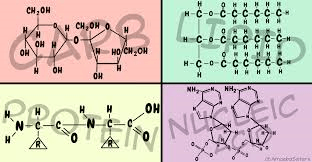
What are the four biological molecules?
a)
proteins, carbohydrates, lipids, nucleic acids
b)
A, T, C, G
c)
Fire,Wind, Water
d)
Joe, Nick, and Kevin Jonas
14.
A biological polymer that stores and transmits genetic information is a ...
a)
nucleic acid
b)
carbohydrate
c)
Santa's
d)
Elves
15.
A biological polymer made of amino acid monomers is a 
a)
protein
b)
lipid
16.
What group of biological molecules contains DNA and RNA...
a)
Nucleic acids
b)
carbohydrates
17.
What is the primary function of carbohydrates in your body?
a)
Speed up chemical reactions.
b)
Give immediate energy.
c)
Big
d)
Toes
18.
A group of organic molecules that includes sugars, starch, and cellulose care called...
a)
proteins
b)
carbohydrates
c)
Flat
d)
Bottom
19.
Monomer of nucleic acids; consists of a phosphate group, deoxyribose (sugar), and a nitrogen-base. ATP is an example of this.
a)
steroid
b)
nucleotide
c)
Girls
d)
Make
20.
What are the monomers of a polysaccharides?
a)
Make
b)
The
c)
Triglycerides
d)
Monosaccharides
21.
A class of biological molecules whose defining characteristic is their relative insolubility in water. Examples of these include steroids, oils, fats, and fatty acids.
a)
Round
b)
Yeah
c)
lipids
d)
glycogen
22.
A series of amino acids linked in a linear fashion
a)
Here
b)
Comes
c)
polypeptide
d)
carbohydrates
23.
Also known as simple sugars, these carbohydrate monomers.
a)
Old
b)
Flattop
c)
monosaccharide
d)
monomer
24.
A type of biological molecule that includes fats, oils, hormones, waxes, and components of cellular membranes is...
a)
lipids
b)
proteins
c)
Holy
d)
Roller
25.
Enzymes are considered to be 
a)
I'm
b)
Dreaming
c)
Protein
d)
Nucleic Acid
26.
What is the purpose  of an enzyme?
a)
of
b)
a
c)
speed up reactions
d)
control how many reactions occur
27.
Where do substrates bind on an enzyme?
a)
white
b)
Christmas
c)
calcium channels
d)
active site
28.
Enzymes are capable of increasing the rate of a chemical reaction within a living cell.  Enzymes accomplish this through which of the following means?
a)
reducing the number of products   
b)
reducing the activation energy
c)
Just
d)
Like
29.
What is a substance called if it speeds up a chemical reaction?
a)
reusable
b)
catalyst
c)
the
d)
Christmas
30.
The "lock and key hypothesis" attempts to explain the mechanism of?
a)
to
b)
know
c)
Sharing of electrons
d)
Enzyme specificity 
31.
a body system that controls and coordinates all body activities through electric impulses/messages between brain, spinal cord and nerves.
a)
endocrine system 
b)
nervous system
c)
children
d)
listen
32.
If the environment gets cold, we will often shiver in order to:
a)
bells
b)
ringing
c)
increase body temperature
d)
regulate blood pressure
33.
Homeostasis in the human body is often maintained by a: 
a)
I
b)
wish
c)
positive feedback loop
d)
negative feedback loop
34.
The "cause" for something to happen is the
a)
you
b)
a
c)
stimulus
d)
homeostasis
35.
Most bacteria that cause sickness in humans grow best at 98.6oF. Sometimes a fever is the body's response to the bacteria. What is the reason for developing a fever?
a)
To lower the temperature of the body to kill the bacteria
b)
The increase the temperature of the body to kill the bacteria
c)
Merry
d)
Christmas
36.
Function of pancreas:
a)
control blood pressure
b)
produces hormones that control BSL (blood sugar level)
c)
I
d)
wish
37.
The "effect" of a given stimulus is the...
a)
response
b)
stimulus
c)
you
d)
a
38.
An example of Negative Feedback Loop could be
a)
Merry
b)
Christmas
c)
Water constantly running
d)
Maintaining Oxygen levels 
39.
Your Kidneys are the organs responsible for 
a)
I
b)
Wish
c)
Osmoregulation
40.
__________________ is secreted in response to low blood sugar levels
a)
you
b)
a
c)
Oxytocin
d)
Glucagon
41.
Platelets act as ___________ during blood clotting
a)
and
b)
a
c)
Effector
d)
Response
42.
Which biomolecule is this a picture of? (Hint: it is made of amino acids)
a)
Proteins
b)
Nucleic Acids
c)
Lipids
d)
Carbohydrates
43.
Which biomolecule is this a picture of? (Hint: it has a "head and tail" structure)
a)
Protein
b)
Nucleic Acid
c)
Lipid
d)
Carbohydrate
44.
Which biomolecule is this a picture of? (Hint: it is used for quick energy!)
a)
Complex Carbohydrate
b)
Nucleic Acid
c)
Lipid
d)
Simple Carbohydrate
45.
Which biomolecule is also known as enzymes? (Hint: enzymes have MANY forms and functions!)
a)
Carbohydrate
b)
Lipid
c)
Nucleic Acid
d)
Protein
46.
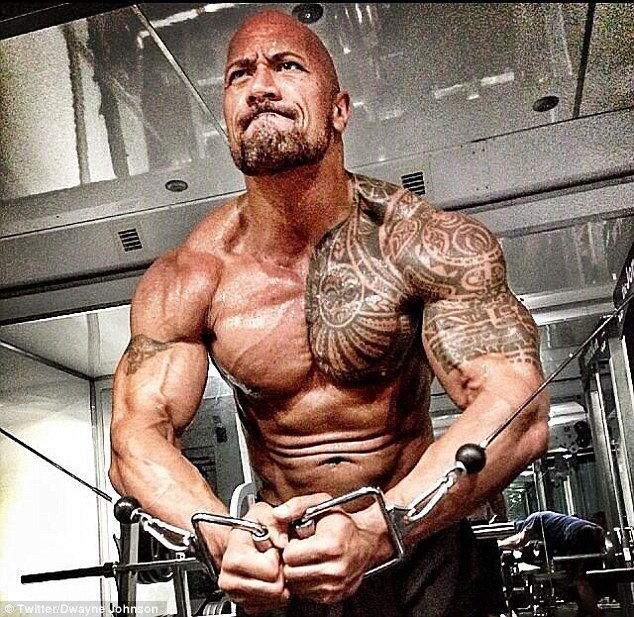
Which biomolecule helps form muscles? 
a)
Nucleic Acid
b)
Carbohydrates
c)
Protein
d)
Lipids
47.
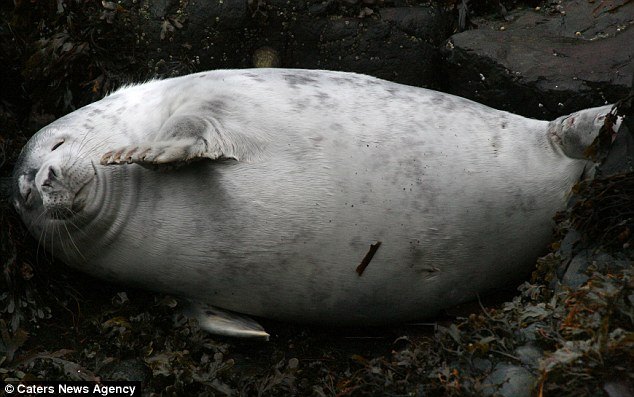
Which biomolecule is responsible for insulation and LONG term energy storage?
a)
Proteins
b)
Nucleic Acids
c)
Lipids
d)
Carbohydrates
48.
Which biomolecule is made of amino acid monomers?
a)
Nucleic Acid
b)
Carbohydrate
c)
Protein
d)
Lipid
49.
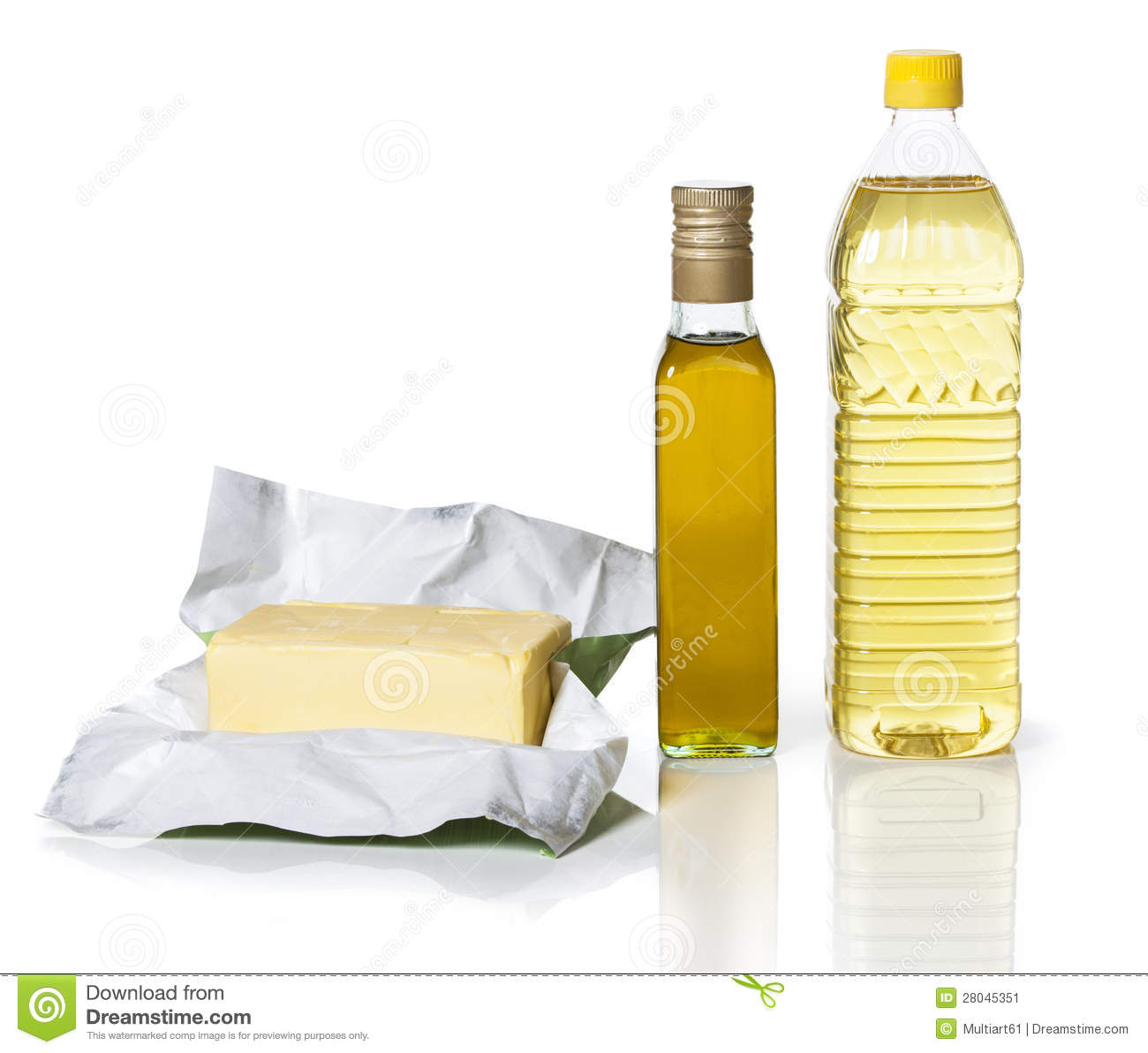
Which biomolecule group includes fats, oils, and waxes?
a)
Proteins
b)
Nucleic Acid
c)
Lipids
d)
Carbohydrate
50.
ALL polymers (large molecules) are made up of...
a)
monosaccharides
b)
monomers
c)
proteins
d)
None of these
51.
Proteins are SO diverse because ....
a)
They all have the same structure
b)
They have a wide range of structures
c)
They just are, it has nothing to do with structure
d)
They are alive and can change their function
52.
What elements are common to all 4 biomolecules?
a)
Carbon, hydrogen, nitrogen
b)
Carbon, Nitrogen, Phosphorus
c)
Carbon, Hydrogen, Oxygen
d)
Carbon, Hydrogen, Phosphorus
53.
Which of the following answers links a biomolecule with one of its proper functions?
a)
Lipids - Store genetic information
b)
Carbohydrates - short term energy storage
c)
Nucleic Acids - Catalyze reactions
d)
Proteins - long term energy storage
54.
Peptide bonds in proteins can be broken down by the enzyme peptidase. Adrian orders a hamburger and French fries for lunch. He adds cheese and mayonnaise to his hamburger and then sits down to eat lunch with his friends. Which structure would most likely result from the action of peptidase in Adrian’s stomach?
a)
Lipids
b)
Glucose
c)
Nucleic Acid
d)
Amino Acid
55.
Molecules consisting only of carbon, hydrogen,   and oxygen atoms make up a large part of a   plant cell wall. These molecules are classified   as (4.1.1)
a)
Enzymes
b)
Proteins
c)
Cellulose
d)
Lipids
56.
Which organic compound is correctly matched   with the subunit that composes it? (4.1.1)
a)
Nucleotide – amino acid
b)
Starch – glucose
c)
Protein – fatty acid
d)
Lipid – sucrose
57.
Which is an organic compound? (4.1.1)
a)
NH3
b)
H2O
c)
NaCl
d)
C12H22O11
58.
Hemoglobin, insulin, albumin, and maltase,   which are composed of chains of amino acids, are examples of: (4.1.1)
a)
Nucleic acids
b)
Carbohydrates 
c)
Lipids
d)
Proteins 
59.
Steroids are a type of ________.
a)
Nucleic Acid
b)
Lipid
c)
Cholesterol
d)
Protein
60.
Which of the following statements is true? 
a)
The function of the biomolecule nucleic acid is carrying genetic code and the main source of energy for the body. 
b)
The function of the biomolecule carbohydrate is energy storage and make up the cell membrane. 
c)
The function of the biomolecule lipid is the main source of energy and structure and support. 
d)
The function of the biomolecule protein is structure or support and enzymes speed up the chemical reactions. 
61.
Alpha helix and beta pleated sheets are part of what level of protein structure?
a)
primary
b)
secondary
c)
tertiary
d)
quaternary
62.
Ionic Bonding involves...
a)
The transfer of protons
b)
The transfer of nuetrons 
c)
The transfer of electrons
d)
None Of the above
63.
What usually forms the positive ion?
a)
Metal
b)
Non Metals
c)
None
64.
What happens when the sodium atom loses an electron?
a)
It become negatively charged 
b)
It become positively charged
c)
none
65.
What usually forms the negative ion?
a)
nonmetals
b)
metal
c)
none
66.
What happens when an atom loses an electron?
a)
Neutral (no charge)
b)
Positive charge
c)
Negative charge
67.

The monomers of nucleic acids are

a)

Monosaccharides

b)

Nucleotides

c)

Amino Acids

d)

Fatty Acids

68.

What biomolecules would help a bear withstand months of hibernation without eating?

a)

Protein

b)

Carbohydrates

c)

Nucleic Acids

d)

Lipids

69.

What element needs to be present to consider a molecule organic?

a)

Nitrogen

b)

Oxygen

c)

Carbon

d)

Phosphorous

70.

Proteins are used by the body for immunity, enzymes and

a)

Storage of energy

b)

Storage of genetic Information

c)

Quick energy release

d)

Structure

71.

DNA and RNA are an example of

a)

Amino Acids

b)

Proteins

c)

Lipids

d)

Nuclei Acids

72.

Which of the following may be caused by a lack of enough proteins in your diets?

a)

Frail nails and hair

b)

Fat deposit in your iris

c)

Low blood-sugar levels

d)

High blood pressure

73.

Which of the following could be cause by a diet rich in saturated fats? (you should select more than 1 answer choice)

a)

Frail nails and hair

b)

High blood pressure

c)

Low blood-sugar levels

d)

Lipid deposit in your eyes

74.
Which biomolecule is a main source of quick energy?
a)
Nucleic Acid
b)
Protein
c)
Lipid
d)
Carbohydrate
75.
Which biomolecule is found in fats, oils, and waxes and is a source of long-term energy
a)
Proteins
b)
Nucleic Acid
c)
Lipids
d)
Carbohydrate
76.

Which biomolecule is also known as enzymes?

a)

Carbohydrate

b)

Lipid

c)

Nucleic Acid

d)

Protein

77.
The reactants of photosynthesis are
a)
sugar and water.
b)
sugar and oxygen.
c)
carbon dioxide and water.
d)
carbon dioxide and oxygen.
78.
Most plants appear green because chlorophyll
a)
absorbs green light.
b)
absorbs violet light.
c)
reflects green light.
d)
does not absorb violet light.
79.
Chlorophyll absorbs a higher percentage of _____ and _______ light.
a)
purple and green
b)
red and blue
c)
black and orange
d)
yellow and green
80.
The main source of energy for all life comes from ____.
a)
the Earth
b)
the moon
c)
the sun
d)
the food we eat/make
81.
The reactants of photosynthesis are
a)
sugar and water.
b)
sugar and oxygen.
c)
carbon dioxide and water.
d)
carbon dioxide and oxygen.
82.
Which statement about photosynthesis is correct?
a)
Plants get the energy they need for photosynthesis from water.
b)
Plants get the energy they need for photosynthesis from soil.
c)
Plants get the energy they need for photosynthesis from sunlight.
d)
Plants do not require energy to perform photosynthesis.
83.
What are the products of photosynthesis?
a)
Carbon dioxide and water
b)
Carbon dioxide and oxygen
c)
Glucose and oxygen
d)
Glucose and water
84.
What pigment absorbs sunlight for photosynthesis?
a)
chloroplast
b)
thylakoid
c)
grana
d)
chlorophyll
85.
Which of the following is the correct equation for PHOTOSYNTHESIS?
a)
6CO2 + 6H2O --> 6O+ C6H12O6
b)
6CO+ C6H12O6 + 6H2O --> O
c)
6O2 + 6H2O --> 6CO+ C6H12O6
d)
C6H12O6 + 6O2 ---> 6H2O + 6CO2 
86.
Which gas is removed from the atmosphere during photosynthesis?
a)
hydrogen
b)
oxygen
c)
nitrogen
d)
carbon dioxide
87.
What is the function of NADPH and ATP?
a)
They absorb light
b)
They power the light-dependent reactions
c)
They are light-reflecting pigments
d)
They are short term energy carriers
88.
Which of the following is NOT a product of the light-dependent reactions?
a)
ATP
b)
NADPH
c)
Oxygen
d)
Glucose
89.
Most plants appear green because chlorophyll
a)
absorbs green light.
b)
absorbs violet light.
c)
does not absorb green light.
d)
does not absorb violet light.
90.
Which of the following best describes photosynthesis?
a)
Photosynthesis converts radiant energy into chemical energy.
b)
Photosynthesis produces carbohydrates.
c)
Plants need sunlight, carbon dioxide, water, nutrients, and chlorophyll to complete photosynthesis.
d)
Plants use chlorophyll, water, and carbon dioxide to make sugar.
91.
In which  organelle does photosynthesis occur?
a)
mitochondria
b)
stomata
c)
xylem
d)
chloroplast
92.
Which of the following is considered a waste product of photosynthesis?
a)
glucose
b)
oxygen
c)
carbon dioxide
d)
sunlight
93.
Animal cells do not have chloroplasts.
a)
TRUE
b)
FALSE
94.
Chloroplasts are organelles found in leaves.
a)
TRUE
b)
FALSE
95.
What is one of the reactants of cellular respiration?
a)
energy
b)
glucose
c)
carbon dioxide
d)
water
96.
______________ produces the most ATP.
a)
photosnthesis
b)
aerobic respiration
c)
anaerobic respiration
d)
glycolysis
97.
What are the products of aerobic respiration?
a)
Glucose and oxygen
b)
Carbon dioxide and water
c)
Lactic acid
d)
Carbon monoxide
98.
The mitochondria is responsible for ...
a)
photosynthesis
b)
anaerobic respiration
c)
aerobic respiration
d)
fermentation
99.
Aerobic respiration is different from anaerobic respiration in that aerobic respiration needs...
a)
chlorophyll
b)
carbon dioxide
c)
glucose
d)
oxygen
100.
What is the correct equation for cellular respiration?
a)
6O2 + C6H12O6 -> 6CO2 + 6H2O + Energy
b)
6O2 + C6H12O6 + Energy -> 6CO2 + 6H2O
c)
6CO2 + 6H2O -> 6O2 + C6H12O6 + Energy
d)
6CO2 + 6H2O + Energy -> 6O2 + C6H12O6
101.

Where does the Krebs Cycle take place?

a)

Cristae

b)

Matrix

c)

cytoplasm

d)

nucleus

102.
Anaerobic respiration.....
a)
doesn't require CO2
b)
requires CO2
c)
doesn't require oxygen
d)
requires oxygen
103.
Cellular Respiration's goal is to
a)
make water
b)
make ATP
c)
make glucose
d)
make  oxygen
104.
What is cellular respiration?
a)
the breakdown of glucose  to release ATP
b)
the breakdown of glucose to release NADH
c)
the breakdown of glucose to release FADH
d)
the breakdown of glucose to release carbon
105.
Where does aerobic respiration occur?
a)
glucose molecule
b)
mitochondria
c)
cytoplasm
d)
chloroplast
106.

Which of the following shows the three stages of respiration in the correct order?

a)

Calvin Cycle, Glycolysis, Electron Transport Chain

b)

Glycolysis, Krebs Cycle, Electron Transport Chain

c)

Glucose, Krebs Cycle, Electron Transport Chain

d)

Glycolysis, Calvin Cycle, Electron Transport Chain

107.

This process does not make ATP alone, but it allows glycolysis to continue making ATP when oxygen is unavailable for cellular respiration.

a)

Anaerobic respiration (fermentation)

b)

Electron Transport Chain

c)

Glycolysis

d)

Kreb's cycle

108.

Respiration and photosynthesis have the opposite raw materials and products. These

two processes are known as -

a)

Helper processes

b)

Similar processes

c)

Complementary processes

d)

Coupled processes

109.
Location at which a neuron can transfer an impulse to another cell with the use of neurotransmitters is called __________.
a)
myelin sheath
b)
axon
c)
threshold
d)
synapse
110.
What is the chemical used by a neuron to transmit an impulse across a synapse to another nerve cell?
a)
Neurotransmitters
b)
Synapse
c)
Threshold
d)
Impulse
111.
Chemicals that emitted into the brain nearly instantly
a)
neurotransmitters
b)
hormones
c)
blood sugar
d)
adrenaline
112.
Chemicals emitted into the blood stream of the body.  Slower for the body to absorb, but more powerful.
a)
neurotransmitters
b)
hormones
c)
endorphins
d)
dopamine
113.
This neurotransmitter is most often associated with pleasure/reward sensations:
a)
Acetylcholine
b)
GABA
c)
Dopamine
d)
Serotonin
114.
Which neurotransmitter is involved in the "Fight of Flight" response?
a)
Acetylcholine
b)
Endorphins
c)
Norepinephrine
d)
Serotonin
115.
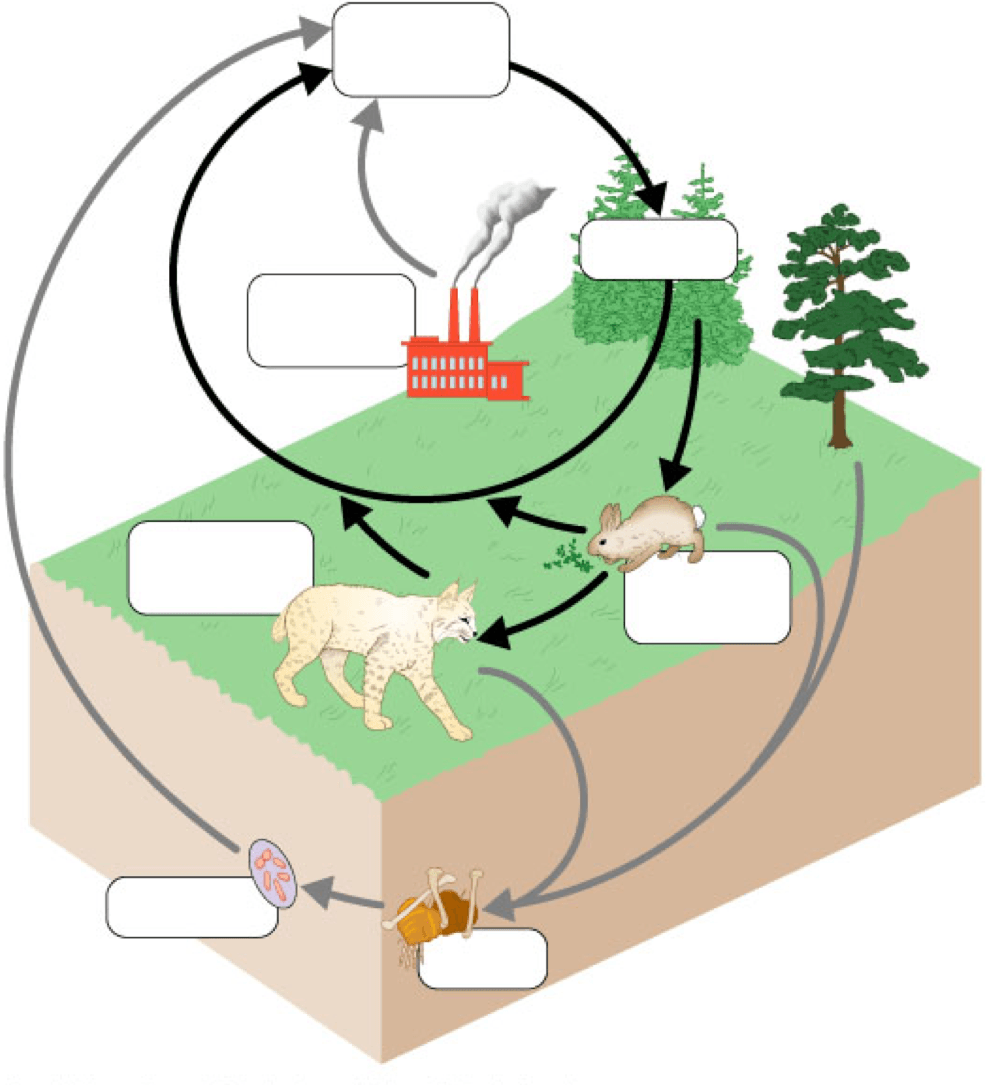
How do animals get nitrogen from?
a)
Soil
b)
Plants
c)
The Sun
d)
Air
116.
Where does the nitrogen from the air go?
a)
Soil
b)
Plants
c)
The Sun
d)
Air
117.
Where do plants get nitrogen from?
a)
Soil
b)
Plants
c)
The Sun
d)
Air
118.
From the plant which letter does nitrogen go to?
a)
A
b)
B
c)
C
d)
D
119.
From C where does the nitrogen go to?
a)
A
b)
B
c)
C
d)
D
120.
From D where does nitrogen not go?
a)
A
b)
B
c)
C
d)
D
121.
From B where does the nitrogen go to?
a)
A
b)
B
c)
C
d)
D
122.
What part of the water cycle does this picture show?
a)
condensation
b)
precipitation
c)
evaporation
123.
Which of these is an example of precipitation?
a)
snow
b)
air
c)
clouds
d)
vapor
124.
Which is the opposite of condensation?
a)
runoff
b)
evaporation
c)
precipitation
d)
transpiration
125.
Which best explains why runoff is important?
a)
It returns water to other locations on Earth
b)
It increases the chance of flooding
c)
It makes evaporation occur faster
d)
It increases condensation
126.
What is it called when WATER is FORMED from an LIQUID to a WATER VAPOR Oor an [GAS]?
a)
EVAPORATION
b)
PRECIPITATION
c)
TRANSPIRATION
127.
What does groundwater do?
a)
It sends water to our buildings, houses, and water transplant places
b)
to the sky
c)
to the sun
d)
To the Earth's surfaces
128.
After the rain falls down onto Earth's surface, what most likely happens? What is it called?
a)
1. The remains of the water is soaked into the ground.
2.Groundwater
b)
1. Groundwater
2. The remains of the water is soaked into the ground.
c)
1. Groundwater
2. Transpiration happens to the plants.
d)
1. The liquid turns into an gas or an water vapor
2. Evaporation
129.
What follows evaporation during the water cycle? How does this occur?
a)
Water evaporates into water vapor
b)
Water vapor condenses and forms a  cloud
c)
Water precipitates to the ground
d)
Water runs down into the hydrosphere
130.
What is it called when plants give off water vapor as a waste product?
a)
condensation
b)
evaporation
c)
sublimation
d)
transpiration
131.
When humans burn fossil fuels, most of the carbon quickly enters the                       as carbon dioxide.
a)
Water
b)
Atmosphere
c)
Sun
d)
Air
132.
Which one of these does not add CO2 to the atmosphere?
a)
cooking with gas
b)
planting trees
c)
burning wood
d)
riding in a bus
133.
What does not produce carbon dioxide?
a)
Photosynthesis
b)
Burning Fossil Fuels
c)
Animal respiration
d)
Plants decaying
134.
How do living organisms return carbon to the atmosphere in the carbon cycle?
a)
respiration and photosynthesis
b)
 decomposition and respiration
135.
In the carbon cycle, producers take in the gas __
a)
carbon dioxide
b)
oxygen
c)
nitrogen
d)
carbon monoxide
136.
In what process is Carbon transformed into chemical energy?
a)
Photosynthesis
b)
Respiration
c)
Primary Production
d)
Secondary Production
137.
oxygen is a gas produced by _ and used by  _ 
a)
plants and animals 
b)
photosynthesis and carbon dioxide 
c)
animals and plants 
d)
carbon dioxide and photosynthesis
138.
All of the carbon in existence is continually recycled in the carbon cycle
a)
True
b)
False
139.
Which of the following removes carbon from the atmosphere?
a)
Combustion
b)
Respiration
c)
Photosynthesis
d)
Death
140.
Organisms that do not decompose can be buried and become what?
a)
water
b)
nutrients
c)
air
d)
fossil fuels
141.
Carbon dioxide is produced by the burning of fossil fuels
a)
True
b)
False
142.
Which of the following processes can maintain the level of carbon dioxide in the atmosphere?
a)
Photosynthesis
b)
Respiration
c)
Combustion
d)
ALL OF THEM
143.

Decomposers are described in all answers apply except

a)

consume dead material .

b)

return nutrients back to the ecosystem.

c)

produce matter to be eaten by consumers.

d)

gainGain energy from dead organisms for growth and reproduction.

144.

Which statements are true about the nonliving environment

a)

Another name for nonliving is abiotic.

b)

Store energy from the sun

c)

An example of a nonliving factor is a maggot

d)

Nitrogen is in the soil and is used by plants

145.

Consumers have several energy levels. All the statements are false except

a)

As consumers advance to other levels, they get fewer in number.

b)

As consumers advance to higher levels, they become more numerous.

c)

As consumers advance, they restrict their diet to one organism.

d)

As consumers advance they make more energy.

146.

What cycle is this and how does it help producers and consumers?

a)

It helps plants as fertilizer in the soil.

b)

This is the nitrogen cycle

c)

The Carbon cycle helps us breath

d)

The nitrogen cycle helps us breath

147.

What does this cycle not do.

a)

Plants take in CO2.

b)

Consumers breath out CO2.

c)

Makes up 78% of the air we breath.

d)

When left for millions of years, carbon becomes coal.

148.

Compare matter and energy.

a)

Matter cycles through ecosystems and recycles.

b)

Energy transfers and flows through matter.

c)

N, C, O cycles with biotic and abiotic factors.

d)

All of the above

149.
Which type of rock results from melting and cooling of magma?
a)
Igneous
b)
Metamorphic
c)
Sedimentary
d)
Extrusive
150.
Which type of rock forms from extreme heat and pressure?
a)
Igneous
b)
Sedimentary
c)
Organic
d)
Metamorphic
151.
A metamorphic rock changes into an igneous rock by what two processes?
a)
Melting and cooling
b)
Extreme heat and pressure
c)
Compaction and cementation
d)
Weathering and erosion
152.
Wind, water, and ice breaking down rock is called
a)
Erosion
b)
Deposition
c)
Compaction
d)
Weathering
153.
When sediments are pressed together tightly, this is called ____________.
a)
Compaction
b)
Cementation
c)
Weathering
d)
Erosion
154.
What are the 3 major types of rocks?
a)
Igneous, Metamorphic, Sedimentary
b)
Metamorphic, Igneous, Cementation
c)
Brown, Red, Gray
d)
Streak, Hardness, Breakage
155.
Each rock type can follow only one pathway of the rock cycle.
a)
True
b)
False
156.
Deep Ocean currents are a result of
a)
Global Wind Patterns
b)
Earth's Rotation
c)
Density
d)
All of the above
157.
What happens to a current when it comes in contact with a continent or landmass?
a)
It continues over the continent
b)
It stops
c)
It changes direction
d)
It is absorbed by the land
158.
As you go deeper in the ocean, the water is colder and less salty.
a)
True
b)
False
159.
Warm ocean currents generally come from
a)
The North Pole
b)
The South Pole
c)
The Equator
d)
Both A and B
160.
Cold ocean currents generally come from
a)
The North Pole 
b)
The South Pole
c)
The Equator
d)
Both A and B