
 Worksheets
A&P II Final Review 2025
Total questions: 172
Worksheet time: 3hrs 47mins


Which macromolecule is shown?
lipid
protein
nucleic acid
carbohydrate
What is proteins?
Macromolecules made up of no linear chains of animo acids.
Macromolecules no have animo acids.
Macromolecules made up of linear chains of amino acids.
What is the monomer in the protein?
Animo acid.
Lipids.
Sugar.
What is the monomer acid of the Lipids?
Fatty acids.
Nucleotides
Monosaccharides.
What is the monomer of the Nucleid acids?
Fatty Acids.
Amino acid.
Nucleotides.

In this picture you see the formula of what?
Polypeptide.
Animo acid.
Nucleotide
Which biomolecular group carries and passes on the hereditary information of the organism?
a. carbohydrates
b. lipids
c. nucleic acids
d. proteins
Which biomolecules are significant features of the cell membrane?
a. carbohydrate and nucleic acid
b. lipid and nucleic acid
c. nucleic acid and protein
d. protein and lipid
Atom is the basic unit of a chemical element. What are the atoms that make up carbohydrates?
a. C and H
b. C, H and N
c. C, H and O
d. C, H, O and N
Which nutrient group is used in the composition of waxes and responsible for insulation of some organisms?
a. carbohydrates
b. lipids
c. nucleic acids
d. proteins
Which of the following does NOT belong to the classification of lipids?
a. hemoglobin
b. phospholipids
c. steroid
d. triglyceride
The excessive consumption of carbohydrates is converted into which polysaccharide that is stored in the liver and in muscles?
a. creatinine
b. glycogen
c. hemoglobin
d. uric acid
Which is a good example of saturated fat?
a. butter
b. corn oil19
c. olive oil
d. sunflower oil
Which is termed as the blueprint of life?
a. deoxyribonucleic acid
b. fatty acid
c. nucleic acid
d. ribonucleic acid
Proteins are composed of four elements, namely: carbon, hydrogen, oxygen and what other element?
a. magnesium
b. nitrogen
c. phosphorous
d. sulfur
This is a major insoluble fibrous protein found in connective tissues such as tendons, ligaments, skin, cartilage and the cornea of the eye. What is it?
a. albumin
b. collagen
c. keratin
d. pepsin
Which is not a part of a nucleotide?
a. nitrogenous base
b. phosphate group
c. ribonucleic acid
d. sugar
6. Sucrose is a disaccharide.
TRUE
FALSE
7. Starch is composed of many glucose units.
TRUE
FALSE
8.Fructose is also known as blood sugar.
TRUE
FALSE

Which of the following diagrams above is an example of a carbohydrate?
1
2
3
4

Study the diagram above of the cell membrane. What is the building block of structure G?
nucleotide
fatty acids
amino acids
monosaccharides
Which macromolecule makes up the majority of the cell membrane?
nucleotide
lipid
protein
carbohydrate

The diagram above shows a monomer a macromolecule. Which type of molecule contains these monomers?
carbohydrate
protein
nucleic acids
lipid
RNA and DNA are which type of macromolecules?
carbohydrates
lipids
nucleic acids
proteins


THE MOVEMENT OF FOOD THROUGH THE BODY:
INGESTION
PERISTALYSIS
DIGESTION
ABSORPTION
The passage of nutrients from the digestive tract into the blood stream:
INGESTION
DIGESTION
ABSORPTION
DEFECATION
ONCE FOOD IS BREAKING DOWN MECHANICALLY, IT TURNS INTO:
CHYME
BOLUS
ONCE FOOD IS BROKEN DOWN CHEMICALLY, IT IS TURNED INTO:
BOLUS
CHYME

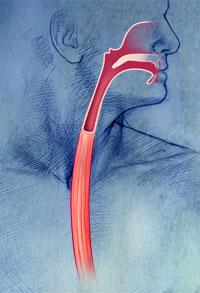
Which organ prevents food from entering the windpipe?
The uvala
The tongue
The trachea
The epiglottis
The gastrointestinal tract (GI tract)includes all the following, EXCEPT
Esophagus
Liver
Stomach
Small intestine
What breaks food into smaller pieces to begin mechanical digestion?
Stomach
Esophagus
Amylase
Teeth

Which of the following is the longest part of the Alimentary Canal?
A. Large intestine
A. Small intestine
A. Liver
A. Stomach
Complete digestion of food occurs in:
Stomach
Small intestine
Pancreas
Large intestine

Posterior part of the stomach is
Cardiac part
Fundus
Pyloric part
Pylorus
Which organ(s) is not part of the alimentary canal?
Stomach
Small intestine
Rectum
Liver
Pancreas
What word means to take food into the body?
absorb
defecate
digest
ingest

Which type of teeth are indicated by the color blue?
(a)

Which organ is indicated by letter G?
(a)
Where does protein digestion begins?
large intestine
mouth
small intestine
stomach
Which of the following kills bacteria in the human alimentary canal?
gastric juice
mucus
pancreatic juice
saliva
A part of digestive system that secretes bile for emulsifying fats
Liver
Lungs
Gall Bladder
Pancreas
Which organ stores bile?
stomach
gallbladder
pancreas
liver

At the end of the digestion process, protein will be broken down into
glucose
amino acid
polypeptide
glycerol and fatty acid
At the end of the digestion process, fat will be broken down into
fatty acid and glycerol
glucose
amino acid
fatty acid
Stores bile & releases it into the small intestine. If you have a fatty diet, then you might find stones here
gallbladder
pancreas
liver
stomach
Muscular bag that stores the food that you eat and breaks it down into tiny pieces. Also contains acid which helps to kill bacteria on the food you eat.
stomach
liver
gallbladder
large intestine
Creates bile while filtering out toxins and wastes including drugs, alcohol, and poisons
liver
pancreas
stomach
gallbladder
Produces digestive enzymes to digest fats, carbohydrates, and proteins. Also regulates blood sugar by producing insulin
pancreas
liver
large intestine
gallbladder
Once food enters here, the majority of nutrients from the food get absorbed into the bloodstream through the walls of this structure (w/ help from small fingerlike projections called villi). This structure also secretes digestive enzymes.
small intestine
large intestine
stomach
esophagus
Absorbs any remaining nutrients. In addition to that, this structure absorbs more water, concentrates waste, and stores it until it is ready to be expelled.
large intestine
small intestine
liver
stomach
Moves food from the throat to the stomach using a muscle movement called peristalsis.
esophagus
gallbladder
large intestine
small intestine

A?
mouth
esophagus
stomach
small intestine
large intestine

C?
mouth
esophagus
pancreas
rectum

J?
liver
stomach
gallbladder
pancreas

D?
stomach
liver
mouth
esophagus

K?
gallbladder
pancreas
stomach
small intestine

L?
pancreas
gallbladder
small intestine
esophagus

E?
small intestine
large intestine
colon
esophagus

F?
large intestine
small intestine
esophagus
pancreas

What is the label for 1
Dendrites
Cell body
Myelin sheath
Axon
Somatic Nervous System
Controls skeletal muscle contractions.
Controls the bodily functions not consciously directed.
A large round nucleus with a prominent nucleolus.
nerve fiber, is a long, slender projection of a nerve cell
Substance released by the nerve fiber by a nerve impulse.


What is a nerve impulse?
Your body's reaction to a certain event.
An electric signal that passes through neurons.
A message passed through the blood.
Electrical signal created in the brain.
Which of the following divisions of the nervous system controls voluntary behaviors?
Sympathetic
Parasympathetic
Autonomic
Somatic
Afferent
The sympathetic and parasympathetic nervous systems together make up which division of the nervous system?
Central
Autonomic
Somatic
Peripheral
Regional
Mukucha's heart is beating rapidly, his pupils are dialated, and his mouth is dry. This response was triggered by which division of his nervous system?
Sympathetic
Parasympathetic
Somatic
Afferent
Peripheral
Afferent neurons are primarily responsible for which of the following?
Moving voluntary muscle.
Activating the fight or flight response.
Bringing sensory information from the sensory organs to the central nervous system.
Maintaining the rest or digest response.
Keeping the heart beating.
"Fight or flight" is mostly associated with which subdivision of the nervous system?
Somatic
Central
Sympathetic
Parasympathetic
Spinal
Another name for motor neurons is
efferent neurons.
afferent neurons.
somatic neurons.
sympathetic neurons.
parasympathetic neurons .


Action potentials run along the ______ from ______ to ________.
axon, dendrites, axon terminals
axon, axon terminals, dendrites
dendrites, axon, axon terminals
axon terminals, axon, dendrites
As the neuron fires, there's a reversal in _____ as the axon undergoes ________.
direction, depolarization
charge, depolarization
direction, repolarization
charge, repolarization
What is the purpose of the refractory period in a neuron?
To prevent signals from traveling in both directions down the axon
To maintain the resting membrane potential
To trigger the sodium-potassium pump
To open ligand-gated channels
What happens during repolarization of a neuron?
Voltage-gated sodium channels open
Voltage-gated potassium channels open
The neuron undergoes hyperpolarization
The sodium-potassium pump is activated
What is the main force behind every action, thought, and feeling in the body?
Voltage
Current
Resistance
Action potentials

Letter "Z" represents:
Dendrite
Axon Terminal
Neurotransmitters
Synapse


Contains the medulla oblongata, pons and midbrain.
diencephalon
brain stem
cerebrum
cerebellum
Contains the medulla oblongata, pons and midbrain.
diencephalon
brain stem
cerebrum
cerebellum
What is the primary function of the cerebellum in the brain?
Processing visual information
Regulating emotions and mood
Controlling language comprehension
Coordinating motor movements and balance
personality, intelligence, and executive function are all functions of the _____ area
Prefrontal
Premotor
Sensory Association
Primary Sensory
Primary Motor
Learned movements are stored in the _____ area
Prefrontal
Premotor
Sensory Association
Primary Sensory
Primary Motor
Each spot of the ___ area FEELS for a specific body part.
Prefrontal
Premotor
Sensory Association
Primary Sensory
Primary Motor
The ____ area allows for physical sight.
Visual Cortex
Visual Association
Primary Auditory
Auditory Association
The ____ area makes sense of what you see.
Visual Cortex
Visual Association
Primary Auditory
Auditory Association
The ____ area makes sense of what you hear.
Visual Cortex
Visual Association
Primary Auditory
Auditory Association
The ____ area allows for you to HEAR.
Visual Cortex
Visual Association
Primary Auditory
Auditory Association
Gustatory cortex is associated with
taste
touch
sight
smell
Wernicke's area is said to be responsible for speech _______________, whereas Broca's area is involved in speech _______________.
production; comprehension
syntax; production
comprehension; syntax
comprehension; production

Name this structure.
Cerebrum
Cerebellum
Brain Stem
Basal Ganglia

Which lobe?
Frontal
Parietal
Temporal
Occipital

Which lobe?
Frontal
Parietal
Temporal
Occipital

Voluntary movements
primary motor cortex
Premotor cortex
Primary somatosensory
Somatosensory Association Cortex
Learned motor skills- muscle memory
primary motor cortex
Premotor cortex
Primary somatosensory
Somatosensory Association Cortex
Controls muscles associated with forming words or speech
Broca's
Wernicke's
Auditory association area
Gustatory cortex
Understanding the written word or speech
Broca's
Wernicke's
Auditory association area
Gustatory cortex
integrating or making sense of what we hear
Broca's
Wernicke's
Auditory association area
Primary auditory area
Recieves auditory information
Broca's
Wernicke's
Auditory association area
Primary auditory area
Receives information from smell receptors
gustatory cortex
vestibular cortex
prefrontal cortex
olfactory cortex
Receives information from taste buds and perceives taste
gustatory cortex
vestibular cortex
prefrontal cortex
olfactory cortex
Which of these is associated with good judgement?
Prefrontal cortex
Wernicke's
General interprative area
Primary motor cortex

