
 Worksheets
Tissues
Total questions: 167
Worksheet time: 1hrs 23mins

What is the vascular tissue that carries water throughout a plant?
phloem
seedling
xylem
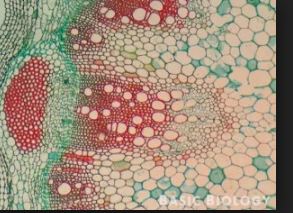
_____________________ is a vascular tissue that carries sugars and other foods throughout a plant.
stems
phloem
roots
xylem
Tissues with active cell division
Permanent
Meristematic
Meristems at the tip of roots and shoots
Lateral
Apical
Ploem
Parenchyma walls are made up of
Pectin
Hemicellulose
Cellulose
Tissues commonly found in the fruit wall of nuts
Parenchyma
Sclerenchyma
Collenchyma

Both a plant and animal cells have a cell wall
True
False
Do meristematic tissues have vacuoles present in them?
Yes
No
Intercalary meristems are found in which part of the plants?
Growing tips
Lateral side
Nodes
This type of tissue contains cells of same types
Simple permanent tissues
Complex permanent tissues
There is more Intercellular space found in this tissue
Collenchyma
Sclerenchyma
Parenchyma
Epidermis
I am a kind of parenchymatous cell, and I perform photosynthesis. Who am I?
Collenchyma
Aerenchyma
Chlorenchyma
Sclerenchyma
It helps water Hyacinth to float on water. What type of parenchyma tissue is it?
Chlorenchyma
collenchyma
Aerenchyma
schlerenchyma
The size of the stem increases in width due to ___________.
primary meristem
apical meristem
intercalary meristem
lateral meristem
It is difficult to pull out the husk of coconut because
sclerenchyma cells are closely packed
collenchyma cells have thickened corners
xylem gives mechanical strength
epidermis has a thick cuticle
How many types of epithelial tissues are there?
3
4
8
6
What tissues out of these are fluid connective tissues?
blood
neuron
lymph
cartilage

What tissue is this?
Parenchyma
Xylem
Phloem
Collenchyma
Which of the following is not an animal tissue?
Epithelial tissue
Connective tissue
Parenchymal tissue
Muscular tissue
Which of the following are Supportive connective tissues
Bone
Blood
Adipose
Cartilage
How many major types of cells are there in blood corpuscles?
3
4
6
2
What are the types of plant tissues?
Permanent tissues
Connective tissues
Epithelial tissues
Meristematic tissues

Which tissue is this?
Phloem
Xylem
Parenchyma
Sclerenchyma
What are the types of simple permanent tissues
Parenchyma
Sclerenchyma
Correnchyma
Xylem
Phloem
What are the types of complex permanent tissues
Xylem
Phloem
Parenchyma
Collenchyma

This vessel makes up part of the vascular tissue of a plant. It carries water and dissolved ions from the roots to the stems and leaves.
Meristem
Xylem
Cambium
Phloem

This vessel carries dissolved sugars from the leaves to all other parts of the plant.
Meristem
Xylem
Cambium
Phloem
Epidermal cells secrete a waxy substance called _____, which coats, waterproofs, and protects the above-ground parts of plants.
Dermis
Stomata
Cuticle
Phloem

Within the epidermis, thousands of pairs of bean-shaped cells called ________, swell and shrink by osmosis to open and close tiny pores which control the exchange of gases and the release of water vapor.
stomata
guard cells
Schwann cells
prokaryotic cells

Within the epidermis, thousands of pairs of bean-shaped cells swell and shrink to open and close _______, which are tiny pores that control the exchange of oxygen and carbon dioxide gases and the release of water vapor.
stomata
stamen
stigma
style
This type of tissue is capable of cell division (mitosis).
Ground tissue
Vascular tissue
Dermal tissue
Meristematic tissue
Find out incorrect sentence.
Parenchymatous tissues have intercellular spaces
Collenchymatous tissues are irregularly thickened at corners
Apical and intercalary meristems are permanent tissues
Meristematic tissues, in its early stage, lack vacuoles
Which of the following tissues has dead cells?
Parenchyma
Sclerenchyma
collenchyma
epithelial tissue
Girth of stem increases due to
apical meristem
lateral meristem
intercalary meristem
vertical meristem
In desert plants, rate of water loss gets reduced due to the presence of
cuticle
stomata
lignin
suberin

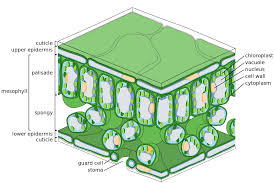


Which of the following is NOT a function of the roots?
Store sugars
Absorb water and minerals
Anchor plant to the ground
Photosynthesis

What are the levels of organization in plants?
Plants have cells, but not tissues.
Plants are made up of cells, tissues, organs, and organ systems
Plants contain cells and tissues, but not organs.
Tissues with active cell division
Permanent
Meristematic
Intercalary meristems are found in which part of the plants?
Growing tips
Lateral side
Nodes

Which of the following tissues whose role is to protect and cover the plant?
Dermal tissue
Epidurial tissue
Ground tissue
Vascular tissue
Which of the following is an example of sclerenchyma tissue that are shorter than fiber and primary component in seed coat, coconut shells, and gave gritty texture on ripe pears?
lignin
Pectin
Fiber
Sclereid
Cell is the structural and functional unit of life. The word cell is derived from the Latin word ‘cellula’ which means “a little room”. Can you name the scientist who coined the term cell?
Robert Hooke
Anton Von Leeuwenhoek
Robert Brown
Ernst Haeckel
The process of plasmolysis in plant cell is defined as:
Breakdown of plasma membrane in hypotonic solution.
Shrinkage of cytoplasm in hypertonic medium.
Shrinkage of Nucleoplasm.
None of these.
The proteins and lipids, essential for building the cell membrane, are manufactured by:
Endoplasmic reticulum
Golgi apparatus
Mitochondria
Ribosomes
Plastid that is colourless is-
Chromoplast
Leucoplast
Chloroplast
Lysosome
A cell that contains a large central vacuole is-
Plant cell
Animal cell
Bacterial cell
Yeast cell
Which is the main constituent of cell wall?
Cellulose
Pectin
Starch
Proteins
What do prokaryotic cells lack?
Cell membrane
Cytoplasm
Cell wall
Membrane bound nucleus
Animal cell lacking nuclei would also lack in -
Chromosome
Ribosome
Lysosome
Endoplasmic Reticulum
Food storing simple permanent tissue is:
. Parenchyma
Collenchyma
Sclerenchyma
none
Guard cells and stoma are found in which part of the plant?
Parenchyma
Collenchyma
Sclerenchyma
Epidermis
Phloem and Xylem are:
Simple permanent tissue
Complex permanent tissue
Vascular tissue
Complex and Vascular
Skeletal cells are voluntary cells. There are:
Striated
Unstriated
Uninucleate
Multinucleate
a and d both
Which muscles act involuntarily?
(i) Striated
(ii) Smooth
(iii) Cardiac
(iv) Skeletal
(i) and (ii)
(ii) and (iii)
(iii) and (iv)
(i) and (iv)
Select the incorrect statement-
Blood has matrix containing proteins, salts and hormones
Two bones are connected with ligament
Tendons are non-fibrous tissues
Cartlage is a form of connective tissue
Cells of squamous epithelium are-
columnar
tall with elongated nuclei
flat plate like
cube like

The most common type of ground tissue is
epidermis
collenchyma
sclerenchyma
parenchyma

Simple tissues are these
parenchyma, xylem and collenchyma
parenchyma, collenchyma and sclerenchyma
parenchyma, xylem and sclerenchyma
parenchyma, xylem and phloem

Whose living cells provide tensile and mechanical strength?
collenchyma
sclerenchyma
phloem
sclereids

Lignified elongated dead cells are
parenchyma
collenchyma
sclerenchyma
none of the above

Phloem in the plants performs the function of
conduction of food
conduction of water
providing support
photosynthesis

Grass stems elongates by the activity of
primary meristem
secondary meristem
intercalary meristem
apical meristem

Which one of the following tissue gives mechanical support to young dicotyledonous stem?
parenchyma
collenchyma
sclerenchyma
chlorenchyma

Husk of coconut is made of
sclerenchymatous tissue
sclerenchymatous tissue
collenchyma
chlorenchyma

Guard cells are present in
cork
cortex
stomata
vascular bundle

Girth of stem increases due to
apical meristem
lateral meristem
intercalary meristem
vertical meristem
This name means that there are multiple layers of cells
Simple
Stratified
Columnar
Pseudostratified
These cells are small and flat
Cuboidal
Columnar
Squamous
Pseudostratified
Which of the following is NOT a function of epithelial tissues?
covering exposed surfaces
lining internal passageways
producing glandular secretions
contracting to produce movement
Which of the following is NOT true about epithelial tissue?
it forms glandular tissue
it has a good blood supply
one side rests on a basement membrane
it forms continuous cellular sheets

Name the tissue
Pseudostratified
Simple columnar
Transitional
Stratified Squamous
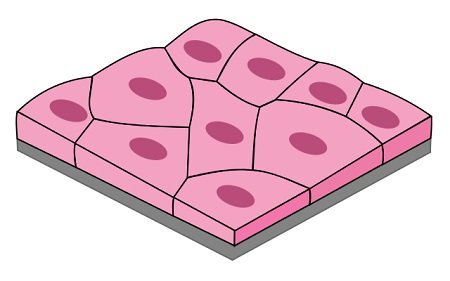
Name the type of epithelium
simple cuboidal
simple squamous
simple columnar
stratified squamous
Which of the following tissues has dead cells?
Parenchyma
Sclerenchyma
collenchyma
epithelial tissue
Find out incorrect sentence.
Parenchymatous tissues have intercellular spaces
Collenchymatous tissues are irregularly thickened at corners
Apical and intercalary meristems are permanent tissues
Meristematic tissues, in its early stage, lack vacuoles
Girth of stem increases due to
apical meristem
lateral meristem
intercalary meristem
vertical meristem
Which cell does not have perforated cell wall?
Tracheids
Companion cells
Sieve tubes
Vessels
The dead element present in the phloem is
companion cells
phloem fibres
phloem parenchyma
sieve tubes
In desert plants, rate of water loss gets reduced due to the presence of
cuticle
stomata
lignin
suberin
A long tree has several branches. The tissue that helps in the side ways conduction of water in the branches is
collenchyma
xylem parenchyma
parenchyma
xylem vessels
If the tip of sugarcane plant is removed from the field, even then it keeps on growing in length. It is due to the presence of
cambium
apical meristem
lateral meristem
intercalary meristem
Parenchyma cells are
relatively unspecified and thin-walled
thick walled and specialised
lignified
none of these
Flexibility in plants is due to
collenchyma
sclerenchyma
parenchyma
chlorenchyma
Cork cells are made impervious to water and gases by the presence of
cellulose
lipids
suberin
lignin
Survival of plants in terrestrial environment has been made possible by the presence of
intercalary meristem
conducting tissue
apical meristem
parenchymatous tissue
The water conducting tissue generally present in gymnosperm is
vessels
sieve tube
tracheids
xylem fibres
A nail is inserted in the trunk of a tree at a height of 1 metre from the ground level. After 3 years the nail will
move downwards
move upwards
remain at the same position
move sideways
The size of the stem increases in width due to ___________.
primary meristem
apical meristem
intercalary meristem
lateral meristem
Sieve tubes and companion cells are present in _____________.
xylem
phloem
cork
cambium
Sieve tubes and companion cells are present in _____________.
xylem
phloem
cork
cambium
A twig of white-coloured flowers is placed in a beaker containing coloured water. After some time, the white petals become coloured. Which tissue is responsible for this?
Xylem
Phloem
cork
cambium
Which of the following is not a function of epidermal tissue?
Protection
Absorption of water
Transport of water
Gaseous exchange
The flexibility in plants is due to a tissue called ___________.
chlorenchyma
parenchyma
sclerenchyma
collenchyma
A permanent tissue is described as complex tissue when it has ___________.
one type of cells, performing two or more different functions
more than one type of cells, performing different functions
one type of cells, performing one function
more than one type of cells, performing one common function
A mango tree can grow up to a height of 40 metres. This growth is brought about by
apical meristem
lateral meristem
intercalary meristem
vertical meristem
Permanent tissues are made up of cells that ______________.
have lost the power of division
may be living or dead
both a and b
none of the above
A leaf tendril is flexible and strong due to the presence of _______________.
thickenings at corners of parenchyma tissue
intercellular spaces in parenchyma tissue
intercellular spaces in collenchyma tissue
thickenings at corners of collenchyma tissue
The hard covering of nuts is made of _______________.
parenchyma tissue
collenchyma tissue
sclerenchyma tissue
aerenchyma tissue
Lignin is a substance that thickens the walls of _______________.
parenchyma cells
collenchyma cells
sclerenchyma cells
meristematic cells
Ground tissue is
simple permanent tissue
complex permanent tissue
simple meristematic tissue
complex meristematic tissue
Parenchyma walls are made up of
Pectin
Hemicellulose
Cellulose
Do meristematic tissues have vacuoles present in them?
Yes
No
Intercalary meristems are found in which part of the plants?
Growing tips
Lateral side
Nodes
There is more Intercellular space found in this tissue
Collenchyma
Sclerenchyma
Parenchyma
Epidermis
I am a kind of parenchymatous cell, and I perform photosynthesis. Who am I?
Collenchyma
Aerenchyma
Chlorenchyma
Sclerenchyma
The connective tissue that keeps organs in place is....
Squamous epithelium
Skin
Areolar tissue
Bhuvan
Fat is stored in this tissue...
Adipose tissue
Blood
Cartilage
None of these
The cells present in bone are called....
Red blood cells
Platelets
Monocytes
Osteocytes
Bones are made up of.....
(Tick correct option/options)
Calcium phosphate
Calcium carbonate
Nitrogen
None of these
Granulocytes are subtype of cells in..
Leukocytes
Platelets
Agranulocytes
RBC
Muscles present in the heart are...
Striated muscles
Cardiac muscles
Non striated muscles
All the above

Identify the tissue present in this figure..
Nerve tissue
Adipose tissue
Cuboidal epithelial tissue
Areolar tissue
Muscles present in the heart are...
Striated muscles
Cardiac muscles
Non striated muscles
All the above
Nissl's granules are present in which part of neuron?
Cell body
Axon
Dendrites
All the above
Which blood cells are known as scavengers?
Esiniohils
Basophils
Neutrophils
Monocytes
The connective tissue that connects bones at the joints is...
Cartilage
Bone
Ligament
Both cartilage and bone
What type of muscle(s) is involuntary?
skeletal and smooth
cardiac and skeletal
smooth and cardiac
skeletal
What type of muscle is/are voluntary?
smooth and cardiac
smooth
skeletal and smooth
skeletal
Which is NOT a type of meristematic tissue?
Lateral meristem
Intercalary meristem
Companion meristem
Apical meristem
Which is NOT a function of the parenchyma cells?
They contain chlorophyll and help in photosynthesis
Provide buoyancy
Store food for the plant
Provides mechanical support
Choose the parts of xylem tissue.
Vessels
Fibres
Sieve tubes
Tracheids
Companion cells
Choose the correct option:
Smooth muscles are uninucleated
Cardiac muscles do not have striations
Skeletal muscles help in involuntary movements
Our heart beats tirelessly because of smooth muscles
Wat is/are the function(s) of stomata?
Directly participates in the process of photosynthesis
Helps with the exchange of gases
Helps to create water pressure, forcing water upward
All of the above
None of the above
Wat is/are the function(s) of stomata?
Directly participates in the process of photosynthesis
Helps with the exchange of gases
Helps to create water pressure, forcing water upward
All of the above
None of the above
Which of the following has a matrix made of calcium and phosphate conpounds?
Muscle tissue
Bone tissue
Areolar tissue
Adipose tissue
Rapid elongation of a bamboo stem is due to
Lateral meristem
Intercalary meristem
Apical meristem
Cambium
None of the above
The cells of cork are dead and have a chemical in their walls that makes them impervious to gases and water. The chemical is
Lignin
Suberin
Cutin
Wax
The flexibility in plants is due to tissue called
Chlorenchyma
Parenchyma
Sclerenchyma
Collenchyma
The tissue present in the lining of kidney tubules and ducts of salivary glands is
Squamous epithelium tissue
Glandular epithelium tissue
Cuboidal epithelium tissue
Collumnar epithelium tissue
The connective tissue that connects muscles to bone is called
Ligament
Tendon
Nervous tissue
All of these
The tissue that helps in the movement of our body is
Muscular tissue
Skeletal tissue
Nervous tissue
All of these
Sieve tubes and companion cells are present in
Xylem
Phloem
Cork
Cambium
The size of the stem increases in the width due to
Apical meristem
Intercalary meristem
Primary meristem
Lateral meristem
Cartilage and bone are types of
Muscular tissue
Connective tissue
Meristematic tissue
Epithelial tissue
Xylem and phloem are examples of
Epidermal tissue
Simple tissue
Protective tissue
Complex tissue
A tissue whose cells are capable of dividing and redividing is called
Complex tissue
Connective tissue
Permanent tissue
Meristematic tissue
Sieve tubes and companion cells are present in _____________.
xylem
phloem
cork
cambium

Select the correct term for the following definition:
"The water transport system in plants."
Villi
Bronchi
Bolus
Xylem

Recall what is dissolved in the water in the xylem.
Glucose
Amino acids
Mineral ions
Starch

Recall which of the following form part of the phloem.
Sieve-tube elements
Trachieds
Vessels
Companion cells
This structure is dead; waterproof; with holes; hollow
Xylem
Phloem
This structure transports glucose/ sugar (food)
Xylem
Phloem
This structure transports substances both up and down
xylem
phloem
This structure transports substances upwards only
xylem
phloem
Tissues with active cell division
Permanent
Meristematic

