
 Worksheets
Final Exam Review
Total questions: 163
Worksheet time: 2hrs 56mins
Name
Class
Date
1.
Which system enables the body to move, moves food through the digestive system, and keeps the heart beating?
a)
skeletal
b)
muscular
c)
digestive
d)
nervous
2.
Which system provides shape and support, enables you to move, protects your internal organs, and stores minerals?
a)
skeletal
b)
muscular
c)
digestive
d)
nervous
3.
Which system takes oxygen into the body and eliminates carbon dioxide?
a)
immune
b)
nervous
c)
respiratory
d)
circulatory
4.
Which system takes food into the body, breaks down food, and absorbs the digested materials?
a)
respiratory
b)
circulatory
c)
digestive
d)
excretory
5.
Which system is made of the smooth, skeletal, and cardiac muscles?
a)
skeletal
b)
muscular
c)
nervous
d)
excretory
6.
Which system detects information from the environment and directs the way your body responds to this information?
a)
excretory
b)
circulatory
c)
respiratory
d)
nervous
7.
Which system includes bones, cartilage, and ligaments?
a)
nervous
b)
muscular
c)
skeletal
d)
excretory
8.
Which system includes the nose, trachea and the lungs?
a)
respiratory
b)
circulatory
c)
immune
d)
digestive
9.
Which system includes the mouth, esophagus, and the small and large intestines?
a)
nervous
b)
excretory
c)
respiratory
d)
digestive
10.
Which system fights disease?
a)
excretory
b)
nervous
c)
immune
d)
digestive
11.
Which system collects and removes wastes?
a)
Muscular
b)
Circulatory
c)
Digestive
d)
Excretory
12.
Which system carries needed materials to the body cells and carries wastes away from the body cells?
a)
Circulatory
b)
Digestive
c)
Nervous
d)
Excretory
13.
Which system includes the lymph, lymph nodes, white blood cells, T and B cells?
a)
Excretory
b)
Digestive
c)
Immune
d)
Nervous
14.
Which system includes the kidneys, ureters, urinary bladder, urethra, lungs and skin?
a)
digestive
b)
excretory
c)
circulatory
d)
muscular
15.
Which system includes the heart and blood vessels?
a)
respiratory
b)
circulatory
c)
nervous
d)
skeletal
16.
Which system includes the brain, spinal cord, eyes, ears, and skin?
a)
Muscular
b)
Nervous
c)
Respiratory
d)
Skeletal
17.
Which three body systems allow you to move?
a)
muscular, skeletal, digestive
b)
nervous, respiratory, digestive
c)
nervous, muscular, skeletal
d)
Muscular, skeletal, circulatory
18.
Which two body systems deliver oxygen to your cells and take away carbon dioxide?
a)
respiratory and nervous
b)
circulatory and nervous
c)
circulatory and excretory
d)
Respiratory and circulatory
19.
Which two body systems work together to break down food and get rid of wastes?
a)
digestive and excretory
b)
digestive and circulatory
c)
excretory and respiratory
d)
nervous and digestive
20.
What is the level o organization known as a group of cells that work together?
a)
cells
b)
organ system
c)
organ
d)
tissue
21.
How does a virus cause a person to develop the common cold?
a)
invades the host cell to reproduce
b)
removes energy from the host cell
c)
produces toxins in the host cell
d)
protects the host cell from bacteria
22.

What part of the phage is the DNA?
a)
A
b)
B
c)
C
d)
D
23.
Antibiotics kill viruses
a)
True
b)
False
24.
When a virus invades a living cell, its _______
takes over the cell's functions.
takes over the cell's functions.
a)
outer coat
b)
genetic material
c)
core
d)
cytoplasm
25.
What part of a virus is the protein capsule that houses the genetic material (DNA/RNA)?
a)
tail
b)
nucleus
c)
capsid
d)
glycoprotein
26.
Which viral life cycle allows viral genetic material to lay dormant while the host cell reproduces?
a)
lytic
b)
mitosis
c)
lysogenic
d)
S phase
27.
Which viral life cycle kills its host cell by lysing?
a)
lytic
b)
mitosis
c)
lysogenic
d)
S phase
28.
What do viruses need to reproduce?
a)
they need genetic material
b)
They need a host cell
c)
They need bacteria
d)
They need insulin
29.
What happens in the lytic cyle?
a)
Virus goes in and leaves the host cell
b)
Virus quickly kills the host cell
c)
Virus sleeps inside of the host cell
d)
Virus stay dormant for a long time
30.
What happens in the lysogenic cycle?
a)
Virus goes in and leaves the host cell
b)
Virus quickly kills the host cell
c)
Virus inject the nucleic acid into the host cell, and the nucleic acid integrates into the host cell DNA, and stay dormant for a long time
d)
Bacteria injects DNA into a host cell
31.

What process is this?
a)
phagocytosis
b)
lytic cycle
c)
lysogenic cycle
d)
formation of antibodies
32.
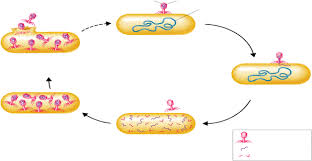
What is shown here?
a)
Lysogenic Cycle
b)
Lytic Cycle
c)
Binary Fission
d)
Conjugation
33.

The lysing of a cell occurs in which phase?
a)
1
b)
2
c)
4
d)
5
34.

Host DNA is compromised and viral DNA takes over in which phase?
a)
1
b)
2
c)
4
d)
5
35.
What helps prevent viral diseases?
a)
Vaccines
b)
Antibiotics
c)
Herbal tea
d)
Gene Therapy
36.
A pathogen.........
a)
makes proteins
b)
causes infection or disease
c)
is made of cells
d)
is a living thing
37.
What is the 1st step of virus infection?
a)
Entry
b)
Attachment
c)
Replication
d)
Assembly
38.
HIV is an example of which type of virus?
a)
Lysogenic
b)
Bacterial
c)
Lytic
d)
None of the above
39.
Which virus reproduction cycle causes the cell to immediately rupture and die?
a)
Lytic Cycle
b)
Lysogenic Cycle
c)
Mitosis
d)
Meiosis
40.
Viruses are made up of
a)
Nucleus, membrane
b)
Capsid, nucleus
c)
Capsid, nucleic acid
d)
Mitochondria, nucleus
41.
What is the difference between the lytic and lysogenic virus reproductive cycles?
a)
lysogenic is longer
b)
they are the same
c)
Lytic is longer
d)
Both are different each time
42.
What anchor plants to the ground and absorb water and nutrients?
a)
Roots
b)
Stem
c)
Xylem
d)
Leaves
43.
Which of the following is NOT a function of the stem of a plant?
a)
Hold the leaves toward the sun
b)
Hold the petals up for pollinators
c)
Provide a way for xylem to transport food
d)
Support the plant
44.
What is the tissue that is used to transport necessary materials throughout the plant?
a)
Circulatory tissue
b)
Transport tissue
c)
Vascular tissue
d)
Pathway tissue
45.
Which of the following statements best describes xylem's function in the plant?
a)
transpports water and minerals up from the roots to the rest of the plant
b)
transports food down from the leaves to the rest of the plant
c)
transports water and minerals down from the roots to the rest of the plant
d)
transports food up from the leaves to the rest of the plant
46.
Which of the following statements best describes phloem's function in the plant?
a)
transpports water and minerals up from the roots to the rest of the plant
b)
transports food down from the leaves to the rest of the plant
c)
transports water and minerals down from the roots to the rest of the plant
d)
transports food up from the leaves to the rest of the plant
47.
What is the part of the flower that is brightly colored to attract pollinators?
a)
Petals
b)
Stamen
c)
Pistil
d)
Sepals
48.
What is the male part of the flower?
a)
Petals
b)
Stamen
c)
Pistil
d)
Sepals
49.
What is the female part of the flower?
a)
Petals
b)
Stamen
c)
Pistil
d)
Sepals
50.
What part of the male part of the flower makes pollen?
a)
Ovary
b)
Anther
c)
Filament
d)
Stigma
51.
What part of the male part of the flower holds up the anther?
a)
Ovary
b)
Anther
c)
Filament
d)
Stigma
52.
What part of the female part of the flower gathers pollen?
a)
Ovary
b)
Style
c)
Filament
d)
Stigma
53.
What part of the female part of the flower is a tube that pollen travels through?
a)
Ovary
b)
Style
c)
Filament
d)
Stigma
54.
What part of the female part of the flower is the place that holds the eggs?
a)
Ovary
b)
Style
c)
Filament
d)
Stigma
55.
What is the male reproductive material of plants?
a)
Seeds
b)
Pollen
c)
Fruit
d)
Sepals
56.
What are the small, green leaf-like structures that protect the flower when it is a bud?
a)
Seeds
b)
Pollen
c)
Petals
d)
Sepals
57.
What part of the flower turns into the fruit?
a)
Seeds
b)
Ovary
c)
Stamen
d)
Sepals
58.
What organelle in the leaves of plants capture light energy from the sun to complete photosynthesis?
a)
Chloroplasts
b)
Mitochondria
c)
Nucleus
d)
Ribosomes
59.
What is the waxy layer on leaves?
a)
Chloroplasts
b)
Plastic
c)
Wax
d)
Cuticle
60.
What is the function of the cuticle on a leaf?
a)
to keep water from entering the leaf
b)
to keep water from leaving the leaf
c)
to keep bacteria out of the leaf
d)
to keep oxygen in the leaf
61.
What are the openings on the underside of leaves that let carbon dioxide into the leaf and let oxygen out?
a)
Chloroplasts
b)
Stomata
c)
Stomach
d)
Cuticle
62.
What is pollination?
a)
the transfer of pollen from the anther to the stigma
b)
the union of pollen and egg cells in the ovary of the flower
c)
the dispersal of seeds to a new location
d)
the transfer of cash in a business transaction between plants
63.
What is fertilization?
a)
the transfer of pollen from the anther to the stigma
b)
the union of pollen and egg cells in the ovary of the flower
c)
the dispersal of seeds to a new location
d)
the transfer of cash in a business transaction between plants
64.
Which of the following would NOT be an example of a pollinator?
a)
Bumblebee
b)
Hummingbird
c)
Fruit Bat
d)
Praying Mantis
65.
What helps plants pollinate by carrying pollen from one plant to another?
a)
Mailman
b)
Pollinator
c)
Terminator
d)
Commentator
66.
What is the depositing of seeds in new areas called?
a)
Scattering
b)
Dispersal
c)
Disposal
d)
Pollination
67.
In which type of growth response does the plant grow toward a light source?
a)
Phototropism
b)
Heliotropism
c)
Geotropism
d)
Hydrotropism
68.
In which type of growth response does the plant follow the sun?
a)
Phototropism
b)
Heliotropism
c)
Geotropism
d)
Thigmotropism
69.
In which type of growth response does the plant grow in response to touch?
a)
Hydrotropism
b)
Heliotropism
c)
Geotropism
d)
Thigmotropism
70.
In which type of growth response does the plant grow in response to gravity?
a)
Hydrotropism
b)
Phototropism
c)
Geotropism
d)
Thigmotropism
71.
In which type of growth response does the plant's roots grow toward a water source?
a)
Hydrotropism
b)
Phototropism
c)
Heliotropism
d)
Thigmotropism
72.

An organism that needs to eat other organisms to obtain energy is known as a:
a)
Autotroph
b)
Producer
c)
Consumer
d)
Mutualist
73.
Consumer that eats plants
a)
heterotroph
b)
herbivore
c)
producer
d)
community
74.

relationship in which two species live closely together
a)
resource
b)
mutualism
c)
succession
d)
symbiosis
75.

The rabbit in this food web would be considered a:
a)
Decomposer
b)
Producer
c)
Secondary Consumer
d)
Primary Consumer
76.
Where an organism lives
a)
habitat
b)
niche
c)
heterotrogh
d)
biosphere
77.

In this Food Web Pyramid Which type of consumer gets only 10% of the energy stored in plants?
a)
Herbivore
b)
Carnivore
c)
Omnivore
d)
Secondary Consumer
78.
Which one is not a consumer?
a)
anemone
b)
bear
c)
shark
d)
vulture
79.
What is the term for each step in the transfer of energy and matter within a biological community?
a)
energy path
b)
food web
c)
trophic level
d)
food pyramid
80.

The image provided is an example of a(n):
a)
Carnivore
b)
Herbivore
c)
Producer
d)
Autotroph
81.
An illustration that uses arrows to show the MANY possible directions in which matter and energy can pass through the organisms in an ecosystem.
a)
Food chain
b)
Food web
c)
Energy Pyramid
d)
Succession Map
82.
The nonliving aspects of an ecosystem.
a)
Abiotic factors
b)
Biotic factors
83.
The living portions of the ecosystem.
a)
Biotic factors
b)
Abiotic factors
84.
A graphic illustration that shows each trophic level and the amount of useable energy contained within.
a)
Food chain
b)
Food web
c)
Energy Pyramid
d)
All of these
85.
A collection of organisms that make up a community as well as all of the nonliving aspects of the environment.
a)
Population
b)
Community
c)
Habitat
d)
Ecosystem
86.
As you move upward, from level to level, in an energy pyramid, energy _____.
a)
increases
b)
decreases
c)
stays the same
d)
increases exponentially
87.
plants that convert energy from the sun
a)
decomposer
b)
primary consumer
c)
secondary consumer
d)
producer
88.

What are the Abiotic factors in this image?
a)
water, sunlight, dirt, air
b)
birds and plants
c)
birds, water, dirt
d)
plants, water
89.
An organism that produces its own food supply from inorganic compounds is called a(an)
a)
heterotroph
b)
consumer
c)
detritivore
d)
autotroph
90.
What is the original source of almost all energy in most ecosystems?
a)
carbohydrates
b)
sunlight
c)
water
d)
carbon
91.
What is the term for each step in the transfer of energy and matter within a biological community?
a)
energy path
b)
food web
c)
trophic level
d)
food pyramid
92.
Autotrophs make up the _______ level in all ecosystems.
a)
First
b)
Second
c)
Third
d)
Fourth
93.

which symbiosis is this
a)
parasitism
b)
mutualism
c)
commensalism
d)
nonalism
94.

symbiotic relationship in which both organisms benefit
a)
competition
b)
Mutualism
c)
nitrogen fixation
d)
energy pyramid
95.

A living relationship between two species in which one organism is harmed is called...
a)
mutualism
b)
commensalism
c)
parasitism
d)
niche
96.

What does a food web represent?
a)
All connections of energy flow throughout all organisms in a habitat.
b)
The specific ways that mutualism is carried out.
c)
A single pathway or energy flow between organisms.
d)
How carnivores get their food.
97.
The amount of energy that usually transfers from one trophic level to the next...
a)
10%
b)
20%
c)
80%
d)
50%
98.
Which of the following would be the definition of a detritivore?
a)
Animals that eat insects.
b)
Organisms that feed on rocks, recycling the nutrients back into the ground.
c)
Organisms that eat only pants
d)
Things that feed on dead organisms, recycling the nutrients back into the ground.
99.
An illustration that uses arrows to show the many possible directions in which matter and energy can pass through the organisms in an ecosystem.
a)
Food chain
b)
Food web
c)
Energy Pyramid
d)
Succession Map
100.
The nonliving aspects of an ecosystem.
a)
Abiotic factors
b)
Biotic factors
101.
The living portions of the ecosystem.
a)
Biotic factors
b)
Abiotic factors
102.
A collection of organisms that belong to different populations but all live in the same area and interact with one another.
a)
Population
b)
Ecosystem
c)
Community
d)
Ecosphere
103.
A place where an organism lives.
a)
Terrain
b)
Habitat
c)
Community
d)
Population
104.
A collection of organisms that make up a community as well as all of the nonliving aspects of the environment.
a)
Population
b)
Community
c)
Habitat
d)
Ecosystem
105.
Organisms that can capture energy from inorganic, nonliving sources.
a)
Producers
b)
Consumers
c)
Detritivores
d)
Carnivores
106.
Organisms that feed on both living producers and other consumers.
a)
Carnivores
b)
Omnivores
c)
Herbivores
d)
Detritivores
107.
Who is the father of evolution?
a)
Darwin
b)
Mendel
c)
Newton
d)
Einstein
108.
What is another name for natural selection?
a)
survival of the smartest
b)
survival of the fastest
c)
survival of the biggest
d)
survival of the fittest
109.
What is a change in an organism that allows for it to survive in its environment?
a)
homologous
b)
vestigial
c)
variation
d)
adaptation
110.
When all of the organisms of a species have died it is called
a)
evolution
b)
extinction
c)
adaptation
d)
natural selection
111.
What is the study of organisms at the early stages of development?
a)
DNA studies
b)
embryology
c)
extinction
d)
fossil record
112.
What is an organism that has similar characteristics and can reproduce?
a)
species
b)
organism
c)
embryology
d)
vestigial
113.

What is this an example of?
a)
diversity of species
b)
variation
c)
vestigial structures
d)
DNA studies
114.
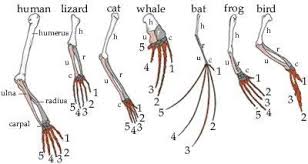
What is this an example of?
a)
vestigial structures
b)
embryology
c)
homologous structures
d)
fossil record
115.

Which layer is the oldest?
a)
1
b)
2
c)
3
d)
4
116.
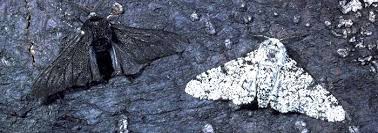
Predict which moth would increase in population
a)
light
b)
dark
117.
When individuals choose traits possessed by the opposite sex it is called…
a)
Mutation
b)
Gene Flow
c)
Genetic Drift
d)
Sexual Selection
118.
The cause of artificial selection is…
a)
The environment
b)
Humans
c)
Mutation
d)
Gene Flow
119.

Darwin wrote that organisms with traits that are best suited to the environment will ________________
a)
increase in number
b)
become extinct
120.
Which of the following is NOT an example of natural selection?
a)
People selectively breeding hamsters.
b)
Insect populations developing resistance to certain pesticides.
c)
Bacteria becoming resistant to antibiotics.
d)
Male birds of certain species developing colorful feathers to attract female mates.
121.
Which term refers to the process by which individuals that are better suited to the environment survive and reproduce therefore passing down their genes to their offspring?
a)
Evolution
b)
Variation
c)
Adaptation
d)
Natural Selection
122.

Which species’ DNA is most similar to the DNA of the toothed whale?
a)
Hippopotamus
b)
Baleen Whale
c)
Grazing Mammals
d)
Camels
123.
The environment around Manchester, England, changed during the Industrial Revolution. How did this change affect peppered moths living in the area?
a)
Natural selection favored moths with dark wings because predators could not see them on the soot-colored trees.
b)
Natural selection favored moths with white wings that were easy for predators to see.
c)
Natural selection favored moths with white wings because predators could not see them on the soot-colored trees.
d)
Natural selection caused moths with white wings to become extinct.
124.
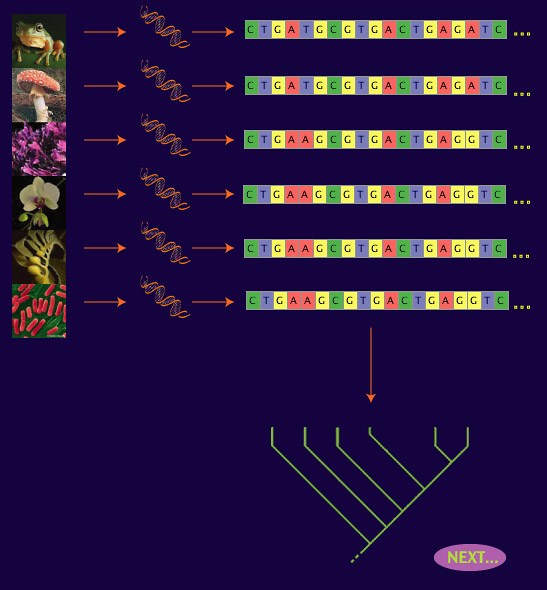
Two organisms that are closely related would have
a)
very similar DNA sequence
b)
exactly the same DNA sequences
c)
no proteins in common
d)
completely different DNA sequence
125.
A remnant or trace of an organism from the past is called a _______.
a)
Ancestor
b)
Skeleton
c)
Fossil
d)
Imprints
126.
Inherited trait that helps an organism survive is a(n) __________.
a)
Fossil
b)
Adaptation
c)
Ancestor
d)
Natural selection
127.
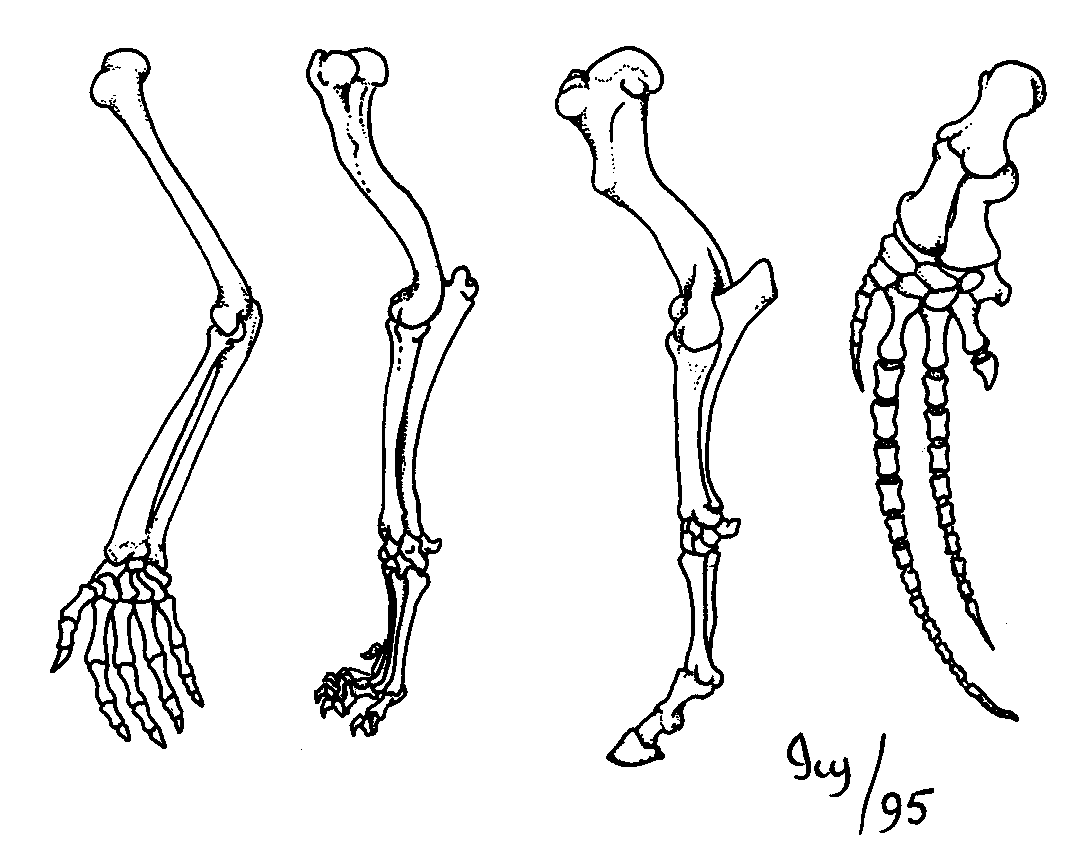
Structures with the same parts have different functions; suggests that organisms share a common ancestry
a)
vestigial structures
b)
homologous structures
c)
adaptive radiation
d)
fossil
128.
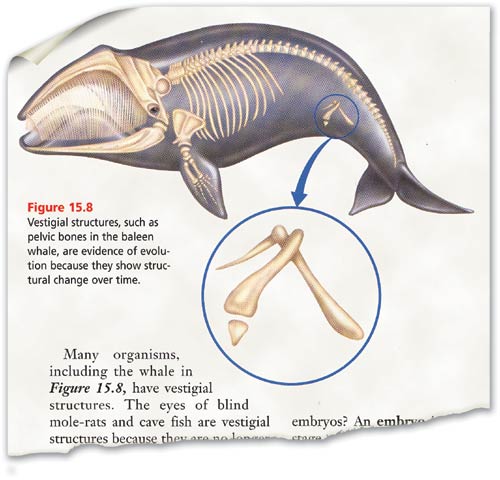
Which of the following is an example of a vestigial structure?
a)
the wings of a red-tailed hawk
b)
the hind limbs of a house cat
c)
the fins of sharks
d)
the tailbone of a human
129.

The diagram shows fossils in different rock layers. Which of these statements about the age of these fossils is most likely correct?
a)
Fossil A and C are the same age
b)
Fossil B is older than fossil C
c)
Fossils A is older than fossil B
d)
Fossil D is older than fossil C
130.

Which of the following is a term for a group of similar organisms that can reproduce fertile offspring?
a)
individual
b)
population
c)
species
d)
fossil
131.
Why are advantageous traits more likely to be passed onto offspring?
a)
Because they are more likely to survive and reproduce.
b)
Because they come from dominant alleles.
c)
Because they come from recessive alleles.
d)
Because the trait is an acquired phenotype.
132.
The ability of an organism to survive and reproduce in its specific environment
a)
diversity.
b)
evolution
c)
adaptation
d)
fitness
133.
Which of the following genotypes is homozygous recessive?
a)
RR
b)
Rr
c)
rr
d)
None of the Above
134.
Brown (B) is dominant over white (b). Which genotype is a purebred for brown fur?
a)
BB
b)
Bb
c)
bb
d)
All of the above
135.
Which of the following terms refers to the different possibilities of a gene?
a)
chromosome
b)
DNA
c)
Punnett Squares
d)
allele
136.
If something is heterozygous, it is also...
a)
purebred
b)
hybrid
c)
dominant
d)
recessive
137.
True/False: Different genotypes can code for the same phenotype.
a)
True
b)
False
138.

This image shows a...
a)
Punnett Square
b)
Phenotype
c)
Genotype
d)
Dominant allele
139.
What does a Punnett Square help you do?
a)
Determine the ratio of phenotypes
b)
Determine the ratio of genotypes
c)
Predict possible traits the offspring will have
d)
All of the above
140.
A phenotype is the...
a)
letter combination
b)
dominant gene
c)
recessive gene
d)
physical appearance
141.
Another word for homozygous is...
a)
purebred
b)
hybrid
c)
heterozygous
d)
dominant
142.
Dominant alleles are-
a)
capital
b)
lowercase
c)
both
d)
neither
143.
Recessive alleles are-
a)
capital
b)
lowercase
c)
both
d)
neither
144.
Tt is-
a)
homozygous dominant
b)
homozygous recessive
c)
heterozygous
d)
none of these
145.
Purple is dominant to white. A heterozygous purple flower is crossed with a white flower. What are the genotypes and phenotypes of the offspring?
a)
100% Pp (purple)
b)
50% Pp (purple); 50% pp (white)
c)
75% Pp (purple); 25% pp (white)
d)
25% PP, 50% Pp, 25% pp
75% purple, 25% white
75% purple, 25% white
146.
If a pea plant were homozygous recessive for height, how would its alleles be represented?
a)
TT
b)
Tt
c)
tt
d)
tT
147.

Which is the correct phenotype for this organism?
a)
BB
b)
blue
c)
green
d)
bb
148.

What is the genotype for this organism?
(E= 3 eyes, e= 1 eye)
(E= 3 eyes, e= 1 eye)
a)
EE
b)
Ee
c)
ee
d)
EE or Ee
149.

If green is dominant over purple, then what is the genotype for this individual?
a)
Purple
b)
Green
c)
GG
d)
gg
150.

Brown fur color is dominant over black fur color. Which of the following is the actual genotype of ALL of the offspring in the next generation of this cross for fur color?
AA x aa
AA x aa
a)
AA
b)
Aa
c)
aa
d)
brown fur
151.
B - black, b - brown. Two black mice mate and have some black and some brown mice. What is the genotype of the parents?
a)
BB x Bb
b)
BB x bb
c)
Bb x Bb
d)
Bb x bb
152.
Which represents the genotype of a homozygous condition?
a)
Bb
b)
BC
c)
bb
d)
bc
153.
One reason for Mendel's success with genetic studies of peas was that he
a)
used only hybrid pea plants
b)
used peas with large chromosomes
c)
studied large numbers of offspring
d)
discovered the sources of variation in peas
154.
A cross of a red cow with a white bull produces all road offspring. This type of inheritance is known as
a)
codominance
b)
incomplete dominance
c)
multiple alleles
d)
"breed time:
155.
If an organism with a homozygous dominant trait was mated in a test cross, all the F1 offspring would be
a)
homozygous dominant
b)
homozygous recessive
c)
heterozygous
d)
50% homozygous;50% heterozygous
156.
A woman with blood genotype I(A)i marries a man with blood genotype I(B)i. What is the probability that they would have a child with type O blood?
a)
1/1
b)
1/2
c)
1/3
d)
1/4
157.
A cross between two tall garden pea plants produced 314 tall plants and 98 short plants. What genotypes are the parents?
a)
TT and tt
b)
TT and Tt
c)
Tt and Tt
d)
TT and TT
158.
Pairs of genes that control the same trait are known as
a)
allelles
b)
gametes
c)
hybrids
d)
loci
159.
If the four existing children in a family are all sons, what chance would there be that the next child would also be a son?
a)
75%
b)
50%
c)
25%
d)
20%
160.
A person with type O blood marries a person with type AB blood. Possible blood genotypes of their children are
a)
I(A)i and I(B)I(B)
b)
I(B)I(B) and I(A)I(A)
c)
I(A)i and I(B)i
d)
I(A)I(B) and ii
161.

In certain rats, black fur is dominant over white fur. If two rats, both heterozygous for fur color are mated, their offspring would be expected to have
a)
four different genotypes and two different colors
b)
two different genotypes and three different colors
c)
three different genotypes and two different colors
d)
three different genotypes and three different colors
162.
In screech owls, red feathers are dominant over gray feathers. If two heterozygous red-feathered owls are mated, what percentage of their offspring would be expected to have red feathers?
a)
25%
b)
50%
c)
75%
d)
100%
163.
In certain rats, black fur is dominant over white fur. If two rats, both heterozygous for fur color are mated, their offspring would be expected to have
a)
four different genotypes and two different colors
b)
two different genotypes and three different colors
c)
three different genotypes and two different colors
d)
three different genotypes and three different colors
100 %

