

wayground logo

Free Printable Worksheets

NEW

Font size

S
M
L
XL
Worksheets

Science Revision Year 9

Total questions: 60

Worksheet time: 57mins

Name
Class
Date
1.
In an experiment, the one thing "I" change or manipulate is the...
a)
Independent Variable
b)
Dependent Variable
c)
Constant
2.
What a scientist finds out at the END of an experiment is the...
a)
Independent Variable
b)
Dependent Variable
c)
Constant
3.
In an experiment, the things a scientist purposefully keeps the same are the...
a)
Independent Variable
b)
Dependent Variable
c)
Constant
4.
During an experiment, scientists know it is important to...
a)
Forget Information
b)
Collect Data
c)
Only do the experiment once
5.
During experiments, scientists write down what they see which is called...
a)
Hypothesis
b)
Observations
c)
Materials
d)
Procedure
6.
During an experiment to see which type of food a dog likes best, using different types of dog food would be an example of a/an ..............
a)
Independent Variable
b)
Dependent Variable 
c)
Constant
7.
Which unit should you use to measure the length of the classroom?
a)
Millimeter (mm)
b)
Centimeter (cm)
c)
Meter (m)
d)
Kilometer (km)
8.
Which instrument is used to measure the mass of an object?
a)
Graduated Cylinder
b)
Beaker
c)
Balance Scale
d)
Stopwatch
9.
Which unit should be used to measure the amount of soda in a can?
a)
Milliliter (ml)
b)
Quart (qt)
c)
Gallon (gal)
10.
What is room temperature in Celsius?
a)
0 degrees Celsius
b)
20 degrees Celsius
c)
100 degrees Celsius
11.

Use the drawing to answer the question.


A student wants to compare how long a flashlight will continue to shine using different brands of batteries. How can the student make sure that the test is fair?

a)

A. Test the same brand of batteries in two flashlights.

b)

B. Test each brand of batteries in the same flashlight.

c)

C. Test different sizes of batteries in the same flashlight.

d)

D. Test whether some flashlights can work with only one battery.

12.
The triple-beam balance shown above measures in grams. What is the mass of the chick? 
a)
10 kg, 7.5 g
b)
175 g
c)
17.5 g
d)
10.75 g
13.
An experiment is performed on plants to see how different liquids affect plant growth. Each plant in the experiment is given a different liquid; water, apple juice, or milk. Each plant has the same amount of soil, sunlight, and listens to the same music. In this investigation, what are the controlled variables?
a)
Type of plant, amount of music, and sunlight
b)
Water, apple juice, milk
c)
Plant growth
14.
This experiment was set up to test the hypothesis that plants grow faster in green light.  What is the independent variable in the experiment
a)
amount of water
b)
type of plant
c)
color of light
d)
size of pot
15.
Students are growing plants in the dark or in the light to see which grows better.  They put 3 seeds in the dark and 5 seeds in the light because they know seeds are more likely to dry out in the light. 
How could this experiment be improved?
a)
Put all plants in the light.
b)
Put all plants in the dark (where they sprout better)
c)
Put the same number of seeds in each container.
d)
put all the plants in the light so they grow better
16.
Students put two plants in the sun.  Plant A is in the sun for 10 minutes.  Plant B is in the sun for 1 hr.  Students decide that plant B is better at photosynthesis.  This is wrong because...
a)
They didn't control all variables
b)
The independent variable was sunlight
c)
The dependent variable was amount of gas produced
d)
they used different amounts of water
17.
Why are approved eye protection devices (such as goggles) are worn in the lab?
a)
A. To improve your vision
b)
B. To make you look like a bug
c)
 C. To give you headaches
d)
 D. To protect eyes around chemicals, heat, or glassware
18.
When mixing chemicals students should always wear
a)
hair bows
b)
goggles
c)
flip flops
19.
To arrange in categories or groups according to shared qualities or characteristics
a)
apron
b)
classify
c)
predict
d)
safety
20.
You should never ______ chemicals in the lab. 
a)
taste
b)
touch
c)
smell
d)
all of the above
21.
What is the mean of the following data set?
5, 5, 10, 10, 20 
a)
20
b)
10
c)
15
d)
25
22.
What is the range of the following data set? 
1, 5, 10, 20, 25, 30, 35, 40, 45, 50, 55, 60
a)
32.5
b)
26.3
c)
59
d)
30
23.
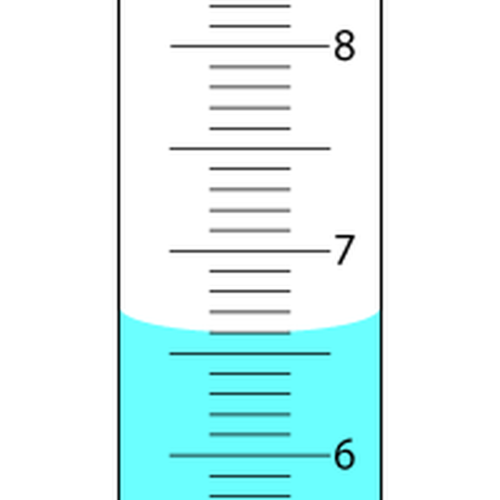
What is the volume? 
a)
6.5mL
b)
6.6 mL
c)
6.1 mL
d)
66 mL
24.
What type of graph should be used if you are measuring something over time? 
a)
Line
b)
Bar
c)
Pie
d)
Any graph will work
25.
What type of graph is this?
a)
Bar Graph
b)
Line Plot
c)
Pictograph
d)
Tally Chart
26.
How many people liked Mickey Mouse best?
a)
4
b)
10
c)
5
d)
6
27.
A scientist wants to find out the growth rate of a Daisy plant. She measures the height of the plant every 5 days from the day it emerges from the ground to the day the plant dies. 
What kind of graph would be best for this data? 
a)
Line Graph
b)
Bar Graph
c)
Pie Chart
d)
Any graph would work best
28.
Theo placed two of the same beakers of solution outside next to each other for 15 minutes. Each beaker had the same amount of solution.  One beaker was covered with black paper and one was covered with white paper.  He then took the temperature of the water.  What was the variable in the experiment? 
a)
The color of the paper
b)
The size of the beakers
c)
The amount of solution in the beakers
d)
The temperature outside
29.
The alkali metals are in group 1, on the far left of the periodic table. Which of these is NOT an alkali metal?
a)
Lithium
b)
Iron
c)
Potassium
d)
Francium
30.
What gas is always produced when a metal reacts with water?
a)
Oxygen
b)
Carbon Dioxide
c)
Hydrogen
d)
Carbon Monoxide
31.
What else is produced when a metal reacts with water? (HINT: Water has the formula H2O)
a)
Metal Oxide
b)
Metal Carbonate
c)
Metal Hydride
d)
Metal Hydroxide
32.
Metals can also react with acids. This produces a gas. What is the name of this gas?
a)
Hydrogen
b)
Carbon Dioxide
c)
Nitrogen
d)
Oxygen
33.
As well as a gas, there is another product made when an acid reacts with a metal. What is the name for this?
a)
Salt
b)
Water
c)
Alkali
d)
Carbon
34.
When a metal salt reacts with a more reactive salt, what sort of reaction occurs?
a)
Displacement
b)
Neutralisation
c)
Combustion
d)
No Reaction
35.
Metals have many useful properties. For example, they...
a)
...conduct electricity
b)
...are malleable
c)
...are good thermal conductors
d)
All of these
36.
Another useful property of metals is that they are ductile. What does this mean?
a)
The conduct heat well
b)
They can be bent into shape
c)
They have high melting points
d)
They can be stretched into wires
37.

Metal A is more reactive than Metal B. The following displacement reaction takes place.


Metal A + Metal B in compound ---> Metal B + Metal A in compound.


True or False.

a)

True

b)

False

38.

Which of the following is MOST reactive?

a)

Magnesium

b)

Lead

c)

Tin

d)

Copper

e)

Zinc

39.

Which metal is more reactive than calcium?

a)

magnesium

b)

potassium

c)

silver

d)

aluminum

40.

Choose the least reactive metal

a)

calcium

b)

magnesium

c)

iron

d)

copper

41.

Choose the most reactive metal

a)

calcium

b)

magnesium

c)

iron

d)

copper

42.

Magnesium chloride + Sodium → ?

a)

Sodium chloride + Magnesium

b)

Magnesium chloride + Sodium (No change)

c)

Sodium magnesium + Chlorine

43.

Zinc sulphate + Magnesium → ?

a)

Magnesium + Sulphur + Hydrogen

b)

Zinc sulphate + Magnesium

c)

Magnesium sulphate + Zinc

44.

Lithium chloride + Iron → ?

a)

Lithium chloride + Iron (No change)

b)

Iron chloride + Lithium

c)

Lithium oxide + hydrogen

45.

Which is least reactive?

a)

gold

b)

Calcium

c)

Magnesium

46.

Which can displace Calcium from calcium sulphate?

a)

Sodium

b)

Copper

47.
Which gas is required for something to burn?
a)
Carbon dioxide 
b)
Hydrogen 
c)
Oxygen 
d)
Water 
48.
Wind energy 
a)
is less expensive than fossil fuels
b)
is difficult to utilize in areas with low wind availability
c)
is a renewable source of energy
d)
utilizes small or large areas of land not previously used
49.
Stored energy in water behind a dam falls and changes into mechanical energy that turns a turbine that turns coils in a generator that produces electrical energy.  What is this?
a)
Fossil Fuel Power Plant
b)
Nonrenewable Power Plant
c)
Nuclear Power Plant 
d)
Hydroelectric Power Plant
50.
Hydropower 
a)
produces no air pollution
b)
can be built in any location
c)
has no construction costs
d)
uses a nonrenewable resource
51.
Which is an advantage of installing solar panels?
a)
Reduced amount of air polllution
b)
High cost to install
c)
Number of cloudy days
d)
Use of nonrenewable resources
52.
Oil, Natural Gas, Nuclear, Coal - What do these items have in common?
a)
They are examples of inexhaustible energy resources.
b)
They are examples of renewable energy resources.
c)
They are examples of energy resources that do not cause pollution.
d)
They are examples of nonrenewable energy resources.
53.
Which of the following energy resources is nonrenewable?
a)
Biomass
b)
Geothermal
c)
Fossil Fuel
d)
Hydropower
54.
Which energy resource, once depleted, is essentially nonrenewable?
a)
Coal
b)
Solar
c)
Biomass
d)
Wind
55.
Coal, oil, and natural gas are _____ resources created from the remains of early plants and animals.
a)
natural
b)
small
c)
large
d)
waste
56.
____ is the remains of plants and animals.
a)
Biomass
b)
Natural gas
c)
Geothermal
d)
Hydropower
57.
What type of fossil fuel is mined from the ground?
a)
wind
b)
coal
c)
biomass
d)
air
58.
Fossil fuels are classified as nonrenewable because they.......
a)
require expensive equipment
b)
take millions of years to replace
c)
can be found all over 
d)
provide all the energy we use
59.
 Energy from the sun is known as......... 
a)
hydroelectric energy
b)
geothermal energy
c)
solar energy
d)
wind energy
60.
Hydroelectric power produces electricity using.....
a)
Wind
b)
Sunlight
c)
Moving water
d)
Dung
