wayground logo

Free Printable Worksheets

NEW

Font size

S
M
L
XL
Worksheets

YR 7 SC - Earth & Space Revision Quiz

Total questions: 60

Worksheet time: 52mins

Name
Class
Date
1.
What causes the day and night cycle on Earth?
a)

Rotation of the Sun

b)

Revolution of the Earth

c)

Gravitational pull from the moon

d)

Rotation of the Earth

2.
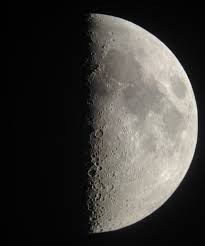
What phase is illustrated here?
a)
1st Quarter
b)
Waning gibbous
c)
Waxing crescent
d)
New moon
3.

By how many degrees is the Earth tilted on its axis?

a)

90

b)

2.5

c)

23.5

d)

28

4.

If there is a full moon today, what moon phase will be occur tomorrow?

a)

waning gibbous

b)

waxing gibbous

c)

new moon

d)

3rd quarter

5.

It is currently Spring in the northern hemisphere, what season is it currently in the southern hemisphere?

a)

winter

b)

spring

c)

summer

d)

autumn

6.

During which season do we experience the most hours of daylight because of the tilt of the Earth?

a)

Summer

b)

Fall

c)

Winter

d)

Spring

7.
In Which position would the Southern Hemisphere experience winter?
a)
Position A
b)
Position B
c)
Position C
d)
Position D
8.
In which position would the Northern Hemisphere be experiencing spring?
a)
Position A
b)
Position B
c)
Position C
d)
Position D
9.

During which season do we experience the most hours of daylight because of the tilt of the Earth?

a)

Summer

b)

Fall

c)

Winter

d)

Spring

10.
What is this diagram representing? 
a)
Earth revolving on its axis every 365 days to make day/night
b)
Earth rotating on its axis around the sun every year
c)
The sun rotates on its axis around Earth to make day/night
d)
The Earth rotates on its axis every 24 hours to make day/night
11.
Why is this model representing Earth's Revolution around the sun?
a)
It shows how there are 4 weeks in a month as Earth rotates on its axis
b)
Earth revolving on its axis in 1 month
c)
It is showing how Earth has 4 seasons as it orbits around the sun in a year
d)
All of the above are correct
12.
About how many days does the moon repeat its phases?
a)
about 28 days
b)
about 24 hours
c)
about 365 days
13.
What causes Earth to have a day/night cycle? 
a)
Earth orbits on its axis around the sun every 365 days
b)
Earth's rotation (spin/turn) on its axis every 24 hours
c)
Earth revolving around the sun in 1 year
d)
The moon's orbit around earth about 28 days
14.
The Earth has seasons because Earth is titled as it
a)
revolves around the sun every 24 hours
b)
rotates around the sun in 28 days
c)
Revolves/Orbits around the sun every 1 year
d)
Orbits around the moon
15.
What keeps Earth revolving around the sun?
a)
the force of gravity
b)
the pull of the moon
c)
the tilt of Earth's axis
d)
the rotation of Earth
16.

What do inner planets all have in common?

a)

They are small, rocky planets.

b)

They are made mostly of gases and liquids.

17.
What is an eclipse?
a)
A circle stretched out in an opposite direction.
b)
Occurs when an object in space gets between the sun and another object and casts its shadow on the other object.
c)
Occurs when the moon passes between the sun and Earth and casts its shadow on Earth.
d)
Occurs when the moon passes through Earth's shadow.
18.
What is a rotation?
a)
The movement of one object around another.
b)
Occurs when an object in space gets between the sun and another object and casts its shadow on the other object.
c)
The spinning of a planet, moon, or star around its axis.
d)
Occurs when the moon passes through Earth's surface.
19.

What is a lunar eclipse?

a)

Occurs when the moon passes through Earth's shadow.

b)

Occurs when an object in space gets between the sun and another object and casts its shadow on the other object.

c)

Occurs when the moon passes between the sun and Earth and casts its shadow on Earth.

d)

The sun, the planets and their moons, and other objects.

20.
Why do we have night and day?
a)
Earth's rotation
b)
Earth's revolution around the Sun
c)
The Sun rotating
d)
The moon block the sun
21.
What planet is 5th from the Sun?
a)
Jupiter
b)
Saturn
c)
Earth
d)
Mars
22.
What planet is closest to the Sun?
a)
Mars
b)
Mercury
c)
Earth
d)
Jupiter
23.
How long does it take earth to make on complete revolution of the sun?
a)
24 hours
b)
1 day
c)
365 days
d)
365.25 days
24.
How long does it take the moon to rotate on its axis?
a)
24 hours
b)
23 days
c)
365.25 days
d)
28 days
25.
A word used to describe a moon that is "getting larger"
a)
gibbous
b)
crescent
c)
waxing 
d)
waning
26.
The imaginary line that passes through earth and the north and south poles.
a)
axis
b)
graviy
c)
equator
d)
prime meridian
27.
The dark side of the moon is the side of the moon that never sees the sunlight.
a)
true
b)
false
28.
Of the Earth, Sun, and Moon, which ones orbit another object?
a)
the Sun and the Earth
b)
the Sun and the Moon
c)
the Moon and the Sun
d)
the Moon and the Earth
29.
What moon phase came right BEFORE this one?
a)
First Quarter
b)
Last Quarter
c)
New Moon
d)
Full Moon
30.
Name the moon phase
a)
First Quarter
b)
Last Quarter
c)
New Moon
d)
Full Moon
31.

Which choice below lists the correct order of the planets from the sun?

a)

Mercury, Venus, Earth, Mars

b)

Earth, Mars, Venus, Jupiter

c)

Mars, Venus, Earth, Saturn

d)

Uranus, Jupiter, Neptune, Saturn

32.

What do Jupiter, Saturn, Uranus, and Neptune have in common?

a)

They all have rocky surfaces.

b)

They all appear to be similar to Earth.

c)

They are all gaseous planets.

d)

They all appear to be made of rock and ice.

33.

Why does the sun appear larger than other stars?

a)

The sun is closer to Earth than other stars

b)

The sun is the largest star in the galaxy

c)

The sun has a brighter light than other stars

d)

The light from the sun is magnified by Earth's atmosphere

34.

Which planet is the largest?

a)

Earth

b)

Neptune

c)

Jupiter

d)

Uranus

35.

The earth's rotation lasts for _______. 

a)

24 hours

b)

24 days

c)

365 days

d)

365 hours

36.
In the Northern Hemisphere, when are the number of daylight hours the shortest?
G
M
T
Text-to-speech function is limited to 200 characters
Options : History : Feedback : DonateClose
a)
Fall
b)
Winter
c)
Summer
d)
Spring
37.
Why do some stars look brighter than others?
a)
The Sun makes other stars look dim because the sun is so bright.
b)
Some stars are bigger than others and are at different distances from the Earth.
c)
All stars are the same distance from the Earth, but they are different sizes.
d)
All stars are the same size, but they are at different distances from the Earth.
38.

Why do we have moon phases?

a)

The revolution of the Earth allows different amounts of light to be reflected from the surface of the moon.

b)

The rotation of the Sun allows us to see different amounts of light reflected from the surface of the moon

c)

The rotation of the Earth allows us to see different amounts of light reflected from the surface of the moon.

39.

When the Earth faces towards the Sun, it is _____.

a)

Daytime

b)

Nighttime

40.
If the earth didn't rotate on its axis.  What natural cycle would this affect?
a)
seasons
b)
tides
c)
day and night
d)
moon phases
41.

How does Earth’s rotation cause day and night?

a)

As Earth rotates toward the east, the sun appears to rise in the west and set in the east.

b)

As Earth rotates toward the east, the sun appears to rise in the east and set in the west.

c)

Earth rotates in a clockwise direction, which makes the sun appear in the sky during the day.

d)

Earth’s rotation does not cause day and night; its revolution does.
42.
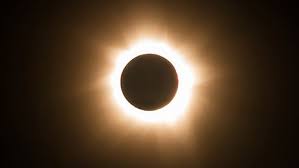
In order to have an eclipse, the Moon, Sun and Earth have to be?
a)
Below each other
b)
Above each other
c)
In alignment
43.
Which type of eclipse occurs when the Moon comes directly between Earth and the Sun?
a)
Lunar eclipse
b)
Solar eclipse
44.
During a solar eclipse...
a)
The sun is blocked by the moon
b)
The Earth is blocked moon
c)
The moon is blocked by the sun
d)
You are blocked
45.
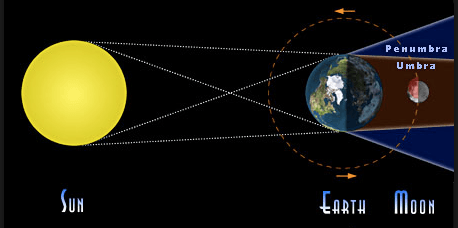
Which type of eclipse is shown in the diagram?
a)
Solar Eclipse
b)
Lunar Eclipse
c)
Total Eclipse
d)
Partial Eclipse
46.
A lunar eclipse occurs when the Moon casts a shadow on Earth.
a)
True
b)
False
47.

_______are daily changes in ocean water.

a)

Waters

b)

Tides

c)

Colors

d)

Earths

48.

The tidal force exerted by the ______ is stronger that the tidal force exerted by the _______.

a)

earth, ocean

b)

sun, moon

c)

moon, stars

d)

moon, sun

49.

The bulges that occur in the Earth's oceans are called ______ _______.

a)

low waters

b)

low tides

c)

high tides

d)

big dips

50.

The tidal bulge follows the movement of the _____.

a)

moon

b)

sun

c)

Earth

d)

ocean

51.
What causes tides?
a)
gravity
b)
wind
c)
spring
d)
neap
52.
Why does the moon's gravitational pull have more of effect on tides than the sun's gravitational pull?
a)
they are the same
b)
the moon is larger than the sun
c)
tides are not caused by the moon
d)
the moon is closer to the Earth than the sun
53.

A ______________ tide occurs when the sun is at right angles to the line between Earth and the moon.

a)

high

b)

neap

c)

low

d)

spring

54.

A___________ tide occurs when the sun, Earth, and the moon are in a straight line.

a)

spring

b)

high

c)

low

d)

neap

55.

Wha type of tide would this arrangement of earth-moon-sun create?

a)

full moon tide

b)

new moon tide

c)

neap tide

d)

spring tide

56.

What type of tides would this arrangement of earth-moon-sun create?

a)

neap tide

b)

spring tide

c)

new moon tide

d)

full moon tide

57.
What is a difference between spring and neap tides?
a)
Spring tides occur when the earth and sun are IN LINE with the new or full moon. 
b)
Spring tides occur when moon in 3rd or 1st quarter phases
c)
Spring tides are LOWER than neap tides
d)
Spring tides occur in Spring and neap tides can occur in any season
58.

Which is found in the belt between Mars and Jupiter

a)

Comets

b)

Asteroids

c)

Meteors

d)

Stars

59.

I am a rock entering a planet's atmosphere.

a)

meteor

b)

moon

c)

asteroid

d)

comet

60.

After orbiting the sun frequently Comets break into:

a)

meteors

b)

meteoroids

c)

meteorites