wayground logo

Free Printable Worksheets

NEW

Font size

S
M
L
XL
Worksheets

Ecology

Total questions: 60

Worksheet time: 32mins

Name
Class
Date
1.
Temperature, light, air, water, and soil are all  _____  parts of the environment
a)
alive
b)
biotic 
c)
abiotic
d)
living
2.

Is a deer an abiotic or biotic factor?

a)

abiotic

b)

biotic

3.

Is a fern an abiotic or biotic factor?

a)

abiotic

b)

biotic

4.

Is a weather an abiotic or biotic factor?

a)

abiotic

b)

biotic

5.
Which of the following is not an abiotic factor?
a)
sun
b)
temperature
c)
soil
d)
grass
6.
A nonliving element in an ecosystem is an 
a)
animal
b)
abiotic factor
c)
biotic factor
d)
organism
7.
Which of the following is not a biotic factor?
a)
mushroom
b)
air
c)
elephant
d)
coyote
8.
Which of the fallowing has only abiotic factors?
a)
Sunlight, algae, and temperature
b)
Guppy, crab, oxygen
c)
Sunlight, soil, and weather
d)
Algae, temperature, and dog
9.
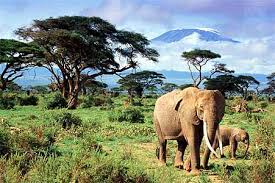
What are the biotic factors in this image?
a)
sunlight, elephants, and grasses
b)
sunlight, water,  and air
c)
elephants, plants, trees 
10.
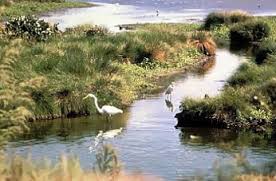
What are the abiotic factors in this image? 
a)
water, sunlight, dirt, air
b)
birds and plants
c)
water, plants, and birds 
11.
A certain plant needs moisture, carbon dioxide, oxygen, light, and minerals to survive. This scenario shows that this particular living organism depends on .
a)
Biotic and Abiotc Factors
b)
Biotic Factors 
c)
Abiotic Factors 
d)
None of the Above
12.
Which of the following lists has ONLY biotic factors?
 
a)
snail, algae, guppy, sunlight
b)
temperature, Daphnia (water flea), snail, guppy (fish)
c)
snail, guppy (fish), Daphnia (water flea), algae
d)
temperature, pH, conductivity, nitrite concentration
13.
The factors in an ecoysystem that have never had the ability to live.
a)
Biotic Factor
b)
Abiotic Factor
c)
Biome
d)
Community
14.
The study of relationships between biotic and abiotic factors interacting in the same area.
a)
Ecology
b)
Biology
c)
Zoology
d)
Botany
15.

Is your cellphone considered abiotic or biotic?

a)

Abiotic

b)

biotic

c)

neither

16.

Is a rock considered abiotic or biotic?

a)

Abiotic

b)

biotic

c)

neither

17.
Put the levels of organization in an ecosystem in order from the largest to the smallest. 
a)
population, organism, community
b)
organism, community, population
c)
community, population, organism
d)
community, organism, population
18.
An ecosystem is made up of all the ___________ and _____________ factors in an area. 
a)
not/without
b)
Limiting Factor/ Carrying Capacity
c)
Living/ Nonliving
d)
life/ biotic factor
19.

Termites are tiny insects that can cause severe damage to homes and other structures that consist of wood. Termites are an example of what type of factor.

a)

Biotic

b)

Abiotic

20.

The Sun is the source of all energy within an ecosystem. Plants depend on light from the sun in order to perform the process of photosynthesis. Sunlight is an example of what type of factor?

a)

Biotic

b)

Abiotic

21.

A black mamba is a highly venomous snake that can reach lengths of 14 feet. They are also able to slither at speeds of 12 miles per hour (mph). A black mamba is an example of what type of factor?

a)

Biotic

b)

Abiotic

22.

Water is a compound that consists of 2 hydrogen atoms and 1 oxygen atom. Up to 60% of an adult human is made up of water. Water is an example of what type of factor?

a)

Biotic

b)

Abiotic

23.

Air is a mixture of colorless gases. The air that makes up the Earth's atmosphere consists primarily of nitrogen and oxygen. Air is an example of which type of factor?

a)

Biotic

b)

Abiotic

24.

Brandon and his dad cut a tree that fell in a storm into smaller sections. Then they split the wood to use for firewood. Firewood is an example of which type of factor.

a)

Biotic

b)

Abiotic

25.

An arctic blast pushed its way through several of the Northern state in the United State. The temperatures dropped below freezing for several days. Temperature is an example of which type of factor?

a)

Biotic

b)

Abiotic

26.

Pyrite is a mineral that is also referred to as "fools gold." It is commonly found in many types of rocks such as limestone. Pyrite is an example of which type of factor?

a)

Biotic

b)

Abiotic

27.

An angler fish has a fleshy growth on its head that gives off light. This part acts as a lure to help the angler fish catch its prey. An anglerfish is an example of which type of factor?

a)

Biotic

b)

Abiotic

28.
Which level of organization is the most complex?
a)
organism
b)
population
c)
community
d)
ecosystem
29.
Multiple organisms of the same species describes a
a)
organism
b)
population
c)
community
d)
ecosystem
30.
What do ecosystems have that the other three levels of organization do not have?
a)
living things
b)
biotic factors
c)
abiotic factors
d)
organisms
31.
Which is an example of an organism?
a)
a beetle
b)
a lake
c)
a rock
d)
a shell
32.
Which level of organization is more complex than a population and less complex than an ecosystem?
a)
organism
b)
population
c)
community
d)
ecosystem
33.
Which is an example of a population?
a)
different kinds of bacteria
b)
A group of fish and sharks
c)
deer, bear, and rabbits
d)
A herd of cattle
34.
which is the correct order of the levels of organization from simple to complex?
a)
organism, population, community, ecosystem
b)
ecosystem, community, population, organism
35.
which is another word for an organism?
a)
abiotic factor
b)
biotic factor
c)
nonliving thing
36.
Which is the definition of a community
a)
multiple organisms of the same species
b)
all the living and nonliving things in an area
c)
a living thing
d)
multiple organisms of different species
37.
A group of organisms with multiple species an in the same location is know as a ___________.
a)
Individual
b)
Population
c)
Community
d)
Ecosystem
38.
A group of organisms and the biotic and abiotic factors that impact them is known as a ___________.
a)
Individual
b)
Population
c)
Community
d)
Ecosystem
39.

Which of the following is biotic interacting with abiotic factors?

a)

A rock rolls off a cliff

b)

The sun heats up the inside of a car

c)

Human builds a house with stone

d)

A cow eats grass

40.

Which of the following is NOT an example of biotic interacting with abiotic?

a)

Giraffe eats leaves off a tree

b)

Penguins slide across ice to travel

c)

Lion use a cliff to search for prey

d)

Zebra drinks water from a pond

41.

Which DOES NOT represent an Ecosystem?

a)

A

b)

B

c)

C

d)

D

42.

Group of populations in an area.

a)

Organism

b)

Ecosystem

c)

Community

d)

Biosphere

43.

What level is represented in the picture?

a)

Organism

b)

Population

c)

Community

d)

Ecosystem

44.

What level is represented in the picture?

a)

Organism

b)

Population

c)

Community

d)

Ecosystem

45.

What level is represented in the picture?

a)

Organism

b)

Population

c)

Community

d)

Ecosystem

46.

What level is represented in the picture?

a)

Organism

b)

Population

c)

Community

d)

Ecosystem

47.

What level is represented in the picture?

a)

Organism

b)

Population

c)

Community

d)

Ecosystem

48.

What level is represented in the picture?

a)

Organism

b)

Population

c)

Community

d)

Ecosystem

49.

What level is represented in the picture?

a)

Organism

b)

Population

c)

Community

d)

Ecosystem

50.

What level is represented in the picture?

a)

Organism

b)

Population

c)

Community

d)

Ecosystem

51.

What level is represented in the picture?

a)

Organism

b)

Population

c)

Community

d)

Ecosystem

52.

What level is represented in the picture?

a)

Organism

b)

Population

c)

Community

d)

Ecosystem

53.

What level is represented in the picture?

a)

Organism

b)

Population

c)

Community

d)

Ecosystem

54.

What level is represented in the picture?

a)

Organism

b)

Population

c)

Community

d)

Ecosystem

55.

What level is represented in the picture?

a)

Organism

b)

Population

c)

Community

d)

Ecosystem

56.

What level is represented in the picture?

a)

Organism

b)

Population

c)

Community

d)

Ecosystem

57.

What level of organization does the picture represent?

a)

Organsim

b)

Population

c)

Community

d)

Ecosystem

58.

What level of organization does the picture represent?

a)

Organsim

b)

Population

c)

Community

d)

Ecosystem

59.

What level of organization does the picture represent?

a)

Organsim

b)

Population

c)

Community

d)

Ecosystem

60.

What level of organization does the picture represent? (Don't include grass)

a)

Organsim

b)

Population

c)

Community

d)

Ecosystem