wayground logo

Free Printable Worksheets

Font size

S
M
L
XL
Worksheets

8.1 Prequiz: What do you know?

Total questions: 93

Worksheet time: 54mins

Name
Class
Date
1.
A possible explanation to a problem that has not yet been tested. 
a)
data
b)
theory
c)
hypothesis
d)
fact
2.
What step does every scientific experiment begin with?
a)
hypothesis
b)
question/problem
c)
procedures
d)
conclusion
3.
The summary at the end of an experiment that explains the results. 
a)
conclusion
b)
procedures
c)
materials
d)
responding variable
4.
Testing a hypothesis often involves a(n):
a)
answer
b)
experiment
c)
problem
d)
safety check
5.
Observations made during an experiment are called:
a)
data
b)
problems
c)
conclusions
d)
questions
6.
Which is NOT a step in the scientific method?
a)
Make observation
b)
Form a theory
c)
Collect data
d)
Form a hypothesis
7.
Where are electrons of an atom found?
a)
Nucleus
b)
Electron Cloud
c)
Some are in the nucleus and some in the electron cloud.
d)
They are moving everywhere.
8.
Which of the following is a positively charged subatomic particle found in the nucleus of an atom?
a)
Electron
b)
Proton
c)
Neutron
d)
Quark
9.

An atom has an atomic number of 15 and a mass number of 31. How many protons are there in the atom?

a)

15

b)

31

c)

16

d)

47

10.
What carries no charge 
a)
Neutrons
b)
Electrons
c)
Protons
11.
What is the Atomic Mass?
a)
6.941
b)
7
c)
3
d)
6
12.
How many Protons are in one atom of Lithium?
a)
3
b)
6
c)
7
d)
6.941
13.
Which is the smallest?
a)
electron
b)
proton
c)
atom
d)
neutron 
14.
An atom has 5 protons and 7 neutrons. What is the mass number of the atom?
a)
5
b)
7
c)
2
d)
12
15.
What is in the nucleus of an atom?
a)
Neutrons and protons 
b)
Protons
c)
Protons and Electrons
d)
Electrons and Nuetrons
16.
An atom has an atomic number of 19 and a mass number of 29. How many neutrons are in the atom?
a)
30
b)
19
c)
10
d)
38
17.
What are the basic building blocks for all matter?
a)
atoms
b)
elements
c)
compounds
d)
chemicals
18.
What do we call a substance consisting of a single atom?
a)
coefficient
b)
element
c)
compound
d)
molecule
19.
What do we call a chemical substance made up of 2 or more different types atoms bonded together?
a)
formula
b)
atom
c)
subscript
d)
compound
20.
All ____________ are made up of two or more atoms bonded together.
a)
atoms
b)
molecules
c)
electrons
d)
elements
21.
Bonds between atoms in a molecule form as a result of the sharing  of?
a)
formulas
b)
electrons
c)
atoms
d)
chemicals
22.
When __________ form, the elements lose there individual chemical properties and take on new properties.
a)
compounds
b)
atoms
c)
subscript
d)
formula
23.
A recipe for a chemical substance is called a ________ _________.
a)
coefficent
b)
chemical formula
c)
Oxygen
d)
atom
24.
H2O2← ?
This number tells the number of atoms present.
a)
coefficient
b)
molecule
c)
subscript
d)
atom
25.
2H2O
This number tells how many molecules are in a chemical equation.
a)
coefficient
b)
subscript
c)
compound
d)
element
26.
 2H2O
How many Hydrogen atoms are present?
a)
2
b)
4
c)
1
d)
10
27.
2H2O
How many Oxygen atoms are present?
a)
2
b)
4
c)
1
d)
5
28.
2H2O
How many H2O molecules are present?
a)
1
b)
4
c)
2
d)
8
29.
Which property of matter is determined by dividing its mass by its volume?
a)
elasticity
b)
buoyancy
c)
density
d)
viscosity
30.
The following liquids are poured together in a beaker: alcohol (density=0.79), corn syrup (density=1.38), water (density=1.0), and cooking oil (density=0.93).  Which of these liquids will sink to the bottom of the beaker?
a)
alcohol
b)
corn syrup
c)
water
d)
cooking oil
31.
What is the density of water?
a)
0 g/ml
b)
1 g/ml
c)
10 g/ml
d)
100 g/ml
32.
Why do some substances float on water?
a)
they are warmer than water
b)
they are cooler than water
c)
they are more dense than water
d)
they are less dense than water
33.
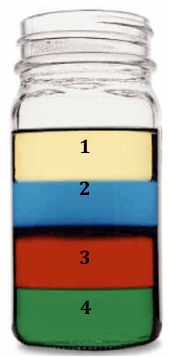
Put the liquids in order from most dense to least dense?
a)
4, 3, 2, 1
b)
1, 2, 3, 4
c)
3, 4, 2, 1, 
d)
4, 3, 1, 2
34.
Which box has a higher density?  
a)
Box A
b)
Box B
c)
cannot be determined
d)
they are the same
35.
A piece of copper has a mass of 89g and a volume of 10 cm3.  What would be the density of the copper?
a)
0.89 g/cm3
b)
89 g/cm3
c)
8.9 g/cm3
d)
890 g/cm3
36.
What is the measuring unit for mass?
a)
centimeter 
b)
millimeter 
c)
grams 
d)
pounds
37.
Which units of measurement are used for volume?
a)
grams
b)
centimeters
c)
grams/milliliter
d)
milliliter
38.
Which lab tool might you use to measure the volume of a liquid?
a)
electric scale
b)
bunsen burner
c)
test tube
d)
graduated cylinder
39.
What units are used to measure Density?
a)
cm3/g
b)
g
c)
g/cm3
d)
cm3
40.
Define the term "mass".
a)
Mass/Volume
b)
Anything that has mass and takes up space 
c)
The amount of space an object occupies.
d)
The amount of matter in an object.
41.
Volume is ...
a)
Mass/Volume
b)
The amount of matter in an object.
c)
The amount of space an object occupies.
d)
Anything that has mass and occupies space.
42.
Density is...
a)
the amount of mass in an object
b)
the amount of space an object takes up
c)
the amount of mass in a given space
d)
the weight of an object
43.
The pH scale is a range from:
a)
1-7
b)
0-14
c)
1-14
d)
1-20
44.
A(n) ______ is a substance with a pH less than 7
a)
Acid
b)
Alkaline
c)
Base
d)
Buffer
45.
A(n) _______ is a substance with a pH greater than 7.
a)
Base
b)
Acid
c)
Buffer
d)
Water
46.
What is the only substance with a neutral pH of 7?
a)
Milk
b)
Orange Juice
c)
Water
d)
Blood
47.
A solution with a pH of 3.6 would be...
a)
Acid
b)
Base
c)
Neutral
d)
Acid and Base
48.
A solution with a pH of 8.6 would be...
a)
Acid
b)
Base
c)
Neutral
d)
Acid and Base
49.
Which is most acidic?
a)
Baking Soda
b)
Lemon Juice
c)
Black Coffee
d)
Milk
50.
Tastes Sour
a)
Acids
b)
Bases
c)
Salts
d)
All
51.
Tastes bitter.
a)
Acids
b)
Bases
c)
Salts
d)
All
52.
According to the pH range which substance is more acidic than lemon juice
a)
Hydrochloric acid
b)
cabbage
c)
milk
53.
Bleach is a strong base, what is the pH level of bleach?
a)
13
b)
14
c)
1
d)
2
54.
Feels slippery.
a)
Acids
b)
Bases
c)
All
55.
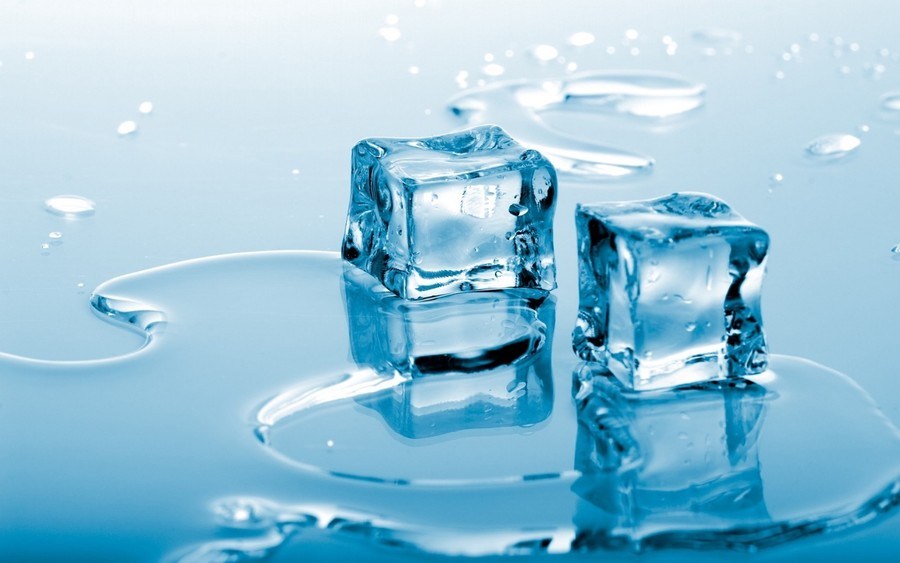
Water freezing into ice is an example of a...
a)
Physical Change
b)
Chemical Change
56.
A change that alters the physical properties of a substance without changing its composition.
a)
Physical Change
b)
Chemical Change
57.
Which of the following is an example of sublimation?
a)
Dry Ice
b)
Water boiling into steam
c)
Ice cream melting
d)
Water freezing into ice
58.
Any change in the state of matter of a substance is a...
a)
Physical Change
b)
Chemical Change
59.
A change in matter that forms one or more new substances with new chemical properties is a/an...
a)
Physical Change
b)
Chemical Change
60.
Which of the following indicates a chemical change?
a)
Change in state of matter
b)
Temperature change
c)
Change in size 
d)
Change in shape
61.
A solid substance that forms when 2 liquid solutions are combined?
a)
Sublimation
b)
Precipitate
c)
Condensation
d)
Freezing
62.
Which of the following DOES NOT indicate a chemical change/reaction is occurring?
a)
Color Change
b)
Formation of a Precipitate
c)
Formation of gas/bubbles
d)
State of matter change
63.
We use chemical equations to show what happens in a....
a)
Chemical Change
b)
Physical Change
64.
Which of the following indicates a PHYSICAL change?
a)
Change in temperature
b)
Change in shape
c)
Formation of a precipitate
d)
Change in color
65.
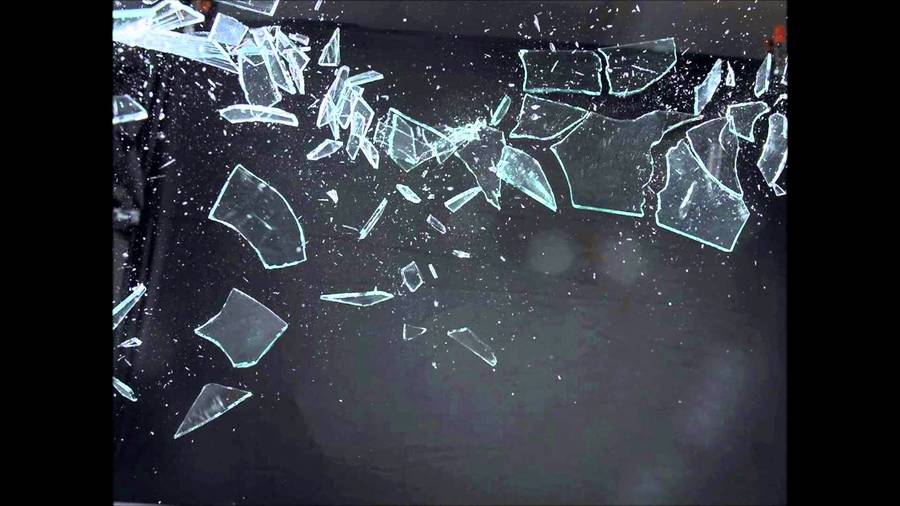
Chemical or Physical?  Glass breaking into tiny shards
a)
Chemical Change
b)
Physical Change
66.
Which Law states that Matter cannot be created or destroyed during a Chemical Change/Reaction?
a)
Conservation of Energy
b)
Conservation of Matter (Mass)
c)
Conservation of Momentum
d)
Conservation of Thermodynamics
67.
Physical or Chemical Change?  Iron rusts
a)
Physical Change
b)
Chemical Change
68.
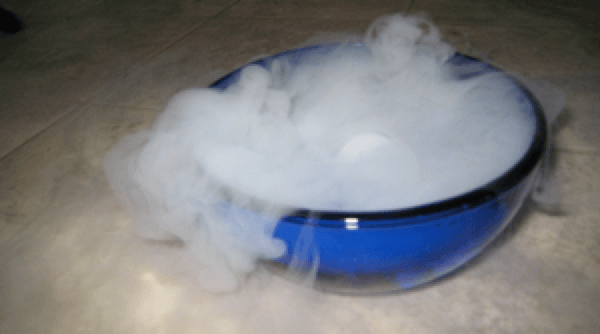
Physical or Chemical Change? 
a)
Physical Change
b)
Chemical Change
69.
Physical or Chemical Change?
a)
Physical Change
b)
Chemical Change
70.
Physical or Chemical Change?  Cutting an orange into wedges.
a)
Physical Change
b)
Chemical Change
71.
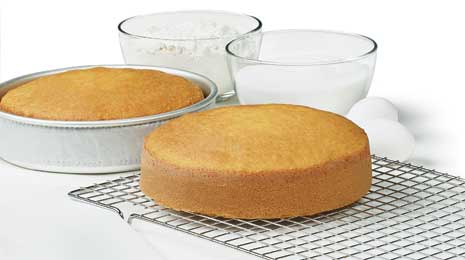
Physical or Chemical Change?  Baking a cake.
a)
Chemical Change
b)
Physical Change
72.
Physical or Chemical Change?  Logs burning in a campfire.
a)
Physical Change
b)
Chemical Change
73.
Physical or Chemical Change?  Sodium metal burning in water.
a)
Physical Change
b)
Chemical Change
74.
Physical or Chemical Change?  Making a paper airplane.
a)
Physical Change
b)
Chemical Change
75.
Which of the following is NOT a Natural Resource?
a)
Coal
b)
Paper
c)
Solar
d)
Wind
76.
Which of the following is NOT a Natural Resource?
a)
Oil
b)
Natural Gas
c)
Plastic
d)
Water
77.
Renewable resources 
a)
can be replenished.
b)
cannot be replenished.
c)
are limited.
d)
are fossil fuels.
78.
Which of the following is a Renewable Natural Resource?
a)
Crops
b)
Nuclear
c)
Gasoline
d)
Electricity
79.

Nonrenewable resources

a)

can be replenished.

b)

cannot be replenished.

c)

are not limited.

d)

are not fossil fuels.

80.
Which of the following is Nonrenewable Natural Resource?
a)
Heating
b)
Cooling
c)
Solar
d)
Coal
81.
This is the result of using Natural Resources but is NOT a natural resource.
a)
Biomass
b)
Oil
c)
Electricity
d)
Natural Gas
82.
This is the result of using Natural Resources but is NOT a natural resource.
a)
Nuclear
b)
Paper
c)
Wind
d)
Geothermal
83.

How does population growth affect natural resources?

a)

The more people on the planet, the less natural resources that are available for each person.

b)

The less people on the planet, the less natural resources that are available for each person.

c)

The more people on the planet, the more natural resources that are available for each person.

84.

Which of the following natural resources are nonrenewable?

a)

Water

b)

Animals

c)

Nuclear

d)

Wind

85.

Fossil fuels are nonrenewable because...

a)

they are used to produce heat.

b)

they take a long time to form.

c)

they can be found underground.

86.

Diamonds and other minerals

a)

nonrenewable.

b)

renewable.

87.
Can be replaced within a human lifetime
a)
Nonrenewable resource
b)
Renewable resource
88.

Which group includes ALL renewable resources?

a)

Coal, Trees, Water, Oil

b)

Water, Wind, Sun, Plants

c)

Minerals, Sun, Natural Gas, Water

89.

Which of these is renewable?

a)

Biomass

b)

Oil

c)

Coal

d)

Minerals

90.

We dig metal out of the Earth to make steel for buildingsand automobiles. Metal is a nonrenewable resource.

a)

True

b)

False

91.

Why is water a renewable resource?

a)

It can be frozen into ice.

b)

It evaporates into air.

c)

It is constantly replaced.

92.

Oil, coal, and natural gas are considered __________ ___________ because it takes millions of years for them to form.

a)

nonrenewable resources

b)

renewable resources

c)

energy resources

d)

very expensive

93.

Which of the following is NOT a natural resource?

a)

Electricity

b)

Crops

c)

Uranium