wayground logo

Free Printable Worksheets

NEW

Font size

S
M
L
XL
Worksheets

Module 1 Test Review

Total questions: 60

Worksheet time: 40mins

Name
Class
Date
1.
The positive particles of an atom are 
a)
electrons 
b)
positrons 
c)
neutrons 
d)
protons 
2.
Particles in an atom that are neutral and have no charge are 
a)
negatrons 
b)
electrons 
c)
neutrons 
d)
protons 
3.
The particles that are found in the nucleus of an atom are
a)
neutrons and electrons
b)
electrons only
c)
protons and neutrons
d)
protons and electrons
4.
Neutrons are _______________ particles.
a)
negative
b)
positive
c)
neutral
d)
cows
5.
The positive particles of an atom are called ___________.
a)
electrons 
b)
atoms
c)
neutrons 
d)
protons 
6.
The central region of an atom where its neutrons and protons are is called the
a)
nucleus 
b)
electron cloud
c)
core 
d)
center 
7.
electrons have this type of charge?
a)
negative
b)
positive
c)
neutral
8.
The smallest part of an element is known as the 
a)
Periodic Table
b)
Atom
c)
Group
d)
Period
9.
Where are neutrons located in the atom?
a)
shells/orbitals
b)
rings
c)
center
d)
nucleus
10.
Can a mixture be separated? 
a)
No
b)
Yes
c)
Only sometimes
11.
Another example of a mixture is 
a)
Water and oil
b)
Cereal and Milk 
c)
Sand and water 
d)
All of the above
12.
What is a mixture?
a)
elements chemically combined
b)
a combination of different things
c)
it is found on the Periodic Table 
d)
it is made of chemical
13.
What does it mean if a mixture is heterogeneous?
a)
you can see the different parts
b)
cannot tell one part from another
c)
very well blended
d)
made of elements
14.
What does it mean if a mixture is homogeneous?
a)
you can see the different parts
b)
cannot tell one part from another
c)
chunks of particles
d)
made of elements
15.
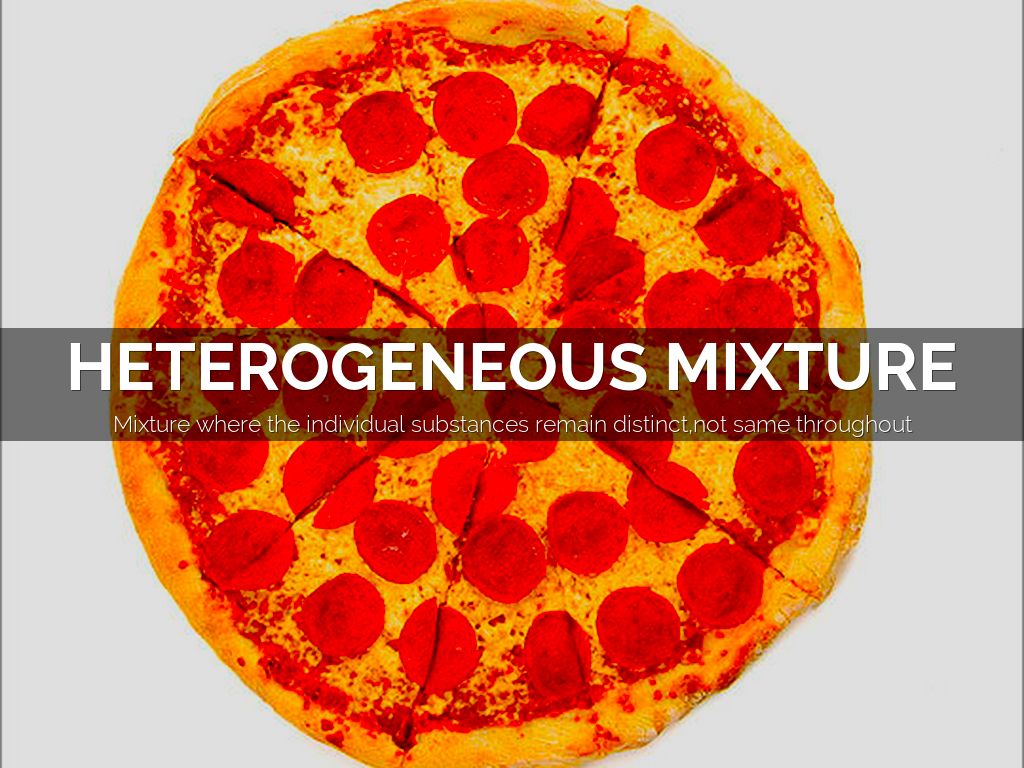
What type of mixture is this?
a)
heterogeneous 
b)
homogeneous
16.
What type of mixture is this?
a)
heterogeneous 
b)
homogeneous
17.
What type of mixture is this?
a)
heterogeneous 
b)
homogeneous
18.
To separate trail mix what method should you use?
a)
filtration 
b)
sorting
c)
magnet
d)
boiling
19.
To separate iron filings and sulfur what method should you use?
a)
filtration 
b)
sorting
c)
magnet
d)
boiling
20.
To separate noodles from water what method should you use?
a)
filtration with a strainer
b)
boiling while it is cooking
c)
magnet for the noodles
21.
Elements and compounds are always ___.
a)
pure
b)
mixed
22.
Mixtures are always ___.
a)
pure
b)
mixed
23.
A substance that is made up of two or more different types of atoms bonded together e.g. water
a)
compound
b)
solvent
c)
element
d)
solution
24.
Type of mixture that has the SAME COMPOSITION in every part.
a)
Homogenous
b)
Heterogeneous
25.
Type of mixture that DOESN'T HAVE the same composition in every part.
a)
Homogeneous
b)
Heterogeneous
26.
Chocolate milk is an example of a
a)
homogeneous mixture
b)
heterogeneous mixture
27.
Salad is an example of a
a)
homogeneous mixture
b)
heterogeneous mixture
28.
Dishwasher soap is an example of a
a)
homogeneous mixture
b)
heterogeneous mixture
29.
A combination of pure substances, not in fixed amounts, that can be easily separated.is a
a)
MIXTURE
b)
COMPOUND
c)
ATOM
d)
PARTICLE
30.
One specific type of homogeneous mixture is
a)
An atom
b)
An element
c)
A solution
d)
A compound
31.
Two substances physically combined and that appears the same throughout is classified as
a)
A homogeneous mixture
b)
A heterogeneous mixture
c)
An element
d)
  A compound
32.

Which property is used to separate iron fillings and sand?

a)

Size

b)

Shape

c)

Magnetism

d)

Color

33.

A ______________ is made up of different kinds of atoms chemically combined.

a)

element

b)

compound

c)

mixture

d)

molecule

34.

An _______________ is made up of one or more of the same kind of atom chemically combined.

a)

atom

b)

element

c)

molecule

d)

compound

35.

A ______________ is made up of different kinds of atoms chemically combined.

a)

element

b)

compound

c)

mixture

d)

molecule

36.

A _____________ contains a variety of elements and compounds that are not chemically combined with each other.

a)

compound

b)

element

c)

molecule

d)

mixture

37.

A __________________ is a substance that has definite physical and chemical properties such as appearance, melting point, and reactivity.

a)

mixture

b)

pure substance

c)

compound

d)

element

38.

True or False: elements AND compounds are pure substances.

a)

True

b)

False

39.

A ______________ mixture is one that does not have a uniform composition.

a)

heterogeneous

b)

homogenous

c)

pure substance

40.
How many protons does Lithium have?
a)
3
b)
4
c)
6
d)
7
41.
What is the mass number of an oxygen atom?
a)
6
b)
8
c)
10
d)
16
42.
What is the atomic number of Fluorine?
a)
9
b)
10
c)
19
d)
28
43.
How many neutrons does an atom of Boron have?
a)
5
b)
6
c)
10
d)
11
44.
How many electrons does a neutral atom of Neon have?
a)
10
b)
18
c)
20
d)
30
45.
Which particles are NOT included in the mass number?
a)
Protons
b)
Protons and Neutrons
c)
Electrons
d)
Neutrons
46.
Which particles are included in the atomic number?
a)
Protons
b)
Protons and Neutrons
c)
Protons and Electrons
d)
Protons, Neutrons, and Electrons
47.
True or False - Protons and Neutrons have about the same mass.
a)
True - They have about the same mass
b)
False - They do not have about the same mass
48.
Where are the Electrons found in the structure of an atom?
a)
In the nucleus
b)
In spaces around the nucleus
49.
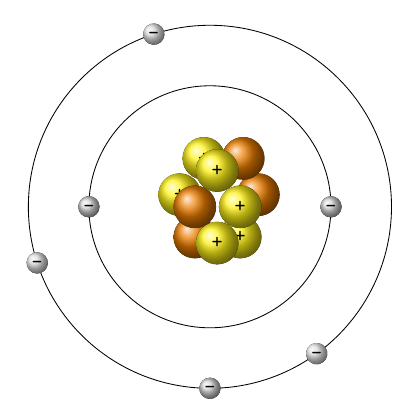
How many protons does this atom have?
a)
3
b)
6
c)
4
d)
2
50.

A combination of two or more atoms

a)

Period

b)

Molecule

c)

Atom

d)

Family

51.

What is the atomic number?

a)

35

b)

18

c)

17

d)

52

52.

How many protons and electrons does this element have?

a)

35

b)

18

c)

17

d)

52

53.

How many neutrons does Chlorine have?

a)

18

b)

17

c)

35

d)

52

54.

What is the atomic mass of Neon?

a)

10

b)

20

c)

30

55.

How many neutrons does calcium have?

a)

20

b)

40

c)

60

d)

0

56.
What is the atomic number of this atom?
a)
2
b)
4
c)
6
d)
none of the above
57.

What is the element symbol of Lithium?

a)

Li

b)

6.94

c)

Lithium

d)

3

58.
The number of protons in the nucleus of an atom is the ____________ ____________.
a)
Atomic Number
b)
Atomic Mass
c)
Mass Number
d)
12
59.
What is the atomic number of this nucleus?
a)
1
b)
3
c)
4
d)
7
60.
What is the mass number of this nucleus?
a)
1
b)
3
c)
4
d)
7