wayground logo

Free Printable Worksheets

Font size

S
M
L
XL
Worksheets

Unit 2 Pre-Review

Total questions: 70

Worksheet time: 2hrs 16mins

Name
Class
Date
1.
Which biomolecule is also known as enzymes?
a)
Carbohydrate
b)
Lipid
c)
Nucleic Acid
d)
Protein
2.
Which biomolecule is made of nucleotides and contain you DNA?
a)
Carbohydrate
b)
Lipids
c)
Protein
d)
Nucleic Acid
3.
Which biomolecule is responsible for insulation and energy storage?
a)
Protein
b)
Nucleic Acid
c)
Lipid
d)
Carbohydrate
4.
Which biomolecule is made of amino acids?
a)
Nucleic Acid
b)
Carbohydrate
c)
Protein
d)
Lipid
5.
Which biomolecule is your main source of quick energy?
a)
Nucleic Acid
b)
Protein
c)
Lipid
d)
Carbohydrate
6.
Which biomolecule contain your genetics?
a)
Carbohydrate
b)
Lipid
c)
Nucleic Acid
d)
Protein
7.
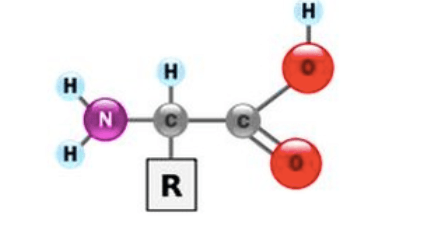
Which biomolecule is this a picture of?
a)
Protein
b)
Nucleic Acid
c)
Lipid
d)
Carbohydrate
8.
Name this biomolecule
a)
carbohydrate
b)
lipid
c)
nucleic acid
d)
protein
9.
Fats and oils are composed of what two groups of molecules?
a)
 glucose and fructose 
b)
starch and sugar 
c)
water and cellulose
d)
fatty acids and glycerol 
10.
Carbon, Hydrogen, Oxygen and Nitrogen are the elements that make up______?
a)
Carbohydrate
b)
Lipid
c)
Protein
d)
Nucleic acid
11.
Which 2 molecules contains the elements C-H-O and function pertains to energy?
a)
Lipids and Protein
b)
Carbohydrates and Nucleic Acids
c)
Protein and Carbohydrates
d)
Carbohydrates and Lipids
12.
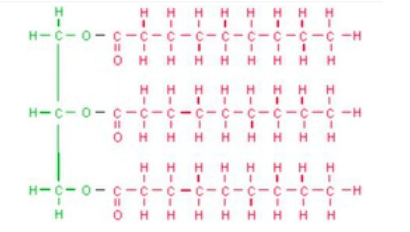
Which biomolecule is this a picture of?
a)
Protein
b)
Nucleic Acid
c)
Lipid
d)
Carbohydrate
13.
Which biomolecule is this a picture of?
a)
Protein
b)
Nucleic Acid
c)
Lipid
d)
Carbohydrate
14.
Lipids are made of
a)
monosaccharides
b)
amino acids
c)
glycerol and 3 fatty acids
d)
nucleotides
15.
Which are the atoms most commonly found in lipids?
a)
CHO 
b)
CH
c)
CHON
d)
CHONS
16.
What is the function of a carbohydrate?
(Why do I need this before a workout?)
a)
Quick energy
b)
Movement
c)
Stores genetic information
d)
Speeds up reactions
17.
Carbohydrates are made of... 
a)
C H O
b)
C H O N
c)
C H O N P
d)
C H O N S
18.
Which of the following is a carbohydrate (monosaccharide)?
a)
A
b)
B
c)
C
d)
D
19.
Which of the following is a protein (amino acid)?
a)
A
b)
B
c)
C
d)
D
20.
Which of the following is a lipid (fatty acid)?
a)
A
b)
B
c)
C
d)
D
21.
Which of the following is a nucleic acid (nucleotide)?
a)
A
b)
B
c)
C
d)
D
22.

a sugar a phosphate and a base-this monomer is called a(n)__

a)

nucleus

b)

nucleous

c)

nuclotide

d)

nucklehead

23.

cellulose is found in plant cell walls and is a __

a)

protein

b)

carbohydrate

c)

lipid

d)

nucleic acid

24.
Which of the following units are repeatedly joined together to form a strand of DNA?
a)
amino acids
b)
nucleotides
c)
fatty acids
d)
polysaccharides
25.
The enzyme that unwinds the DNA to prepare for replication
a)
helicase
b)
replicase
c)
polymerase
d)
synthase
26.
DNA replication results in two DNA molecules,
a)
each one with two original strands
b)
each one with two new strands
c)
each one with one new strand and one original strand
d)
one with two new strands and the other with two original strands
27.
In what phase of the cell cycle does DNA replication take place?
a)
G1
b)
S
c)
G2
d)
M
28.
In a molecule of double-stranded DNA, the amount of Adenine present is always equal to the amount of
a)
cytosine
b)
guanine
c)
thymine
d)
uracil
29.

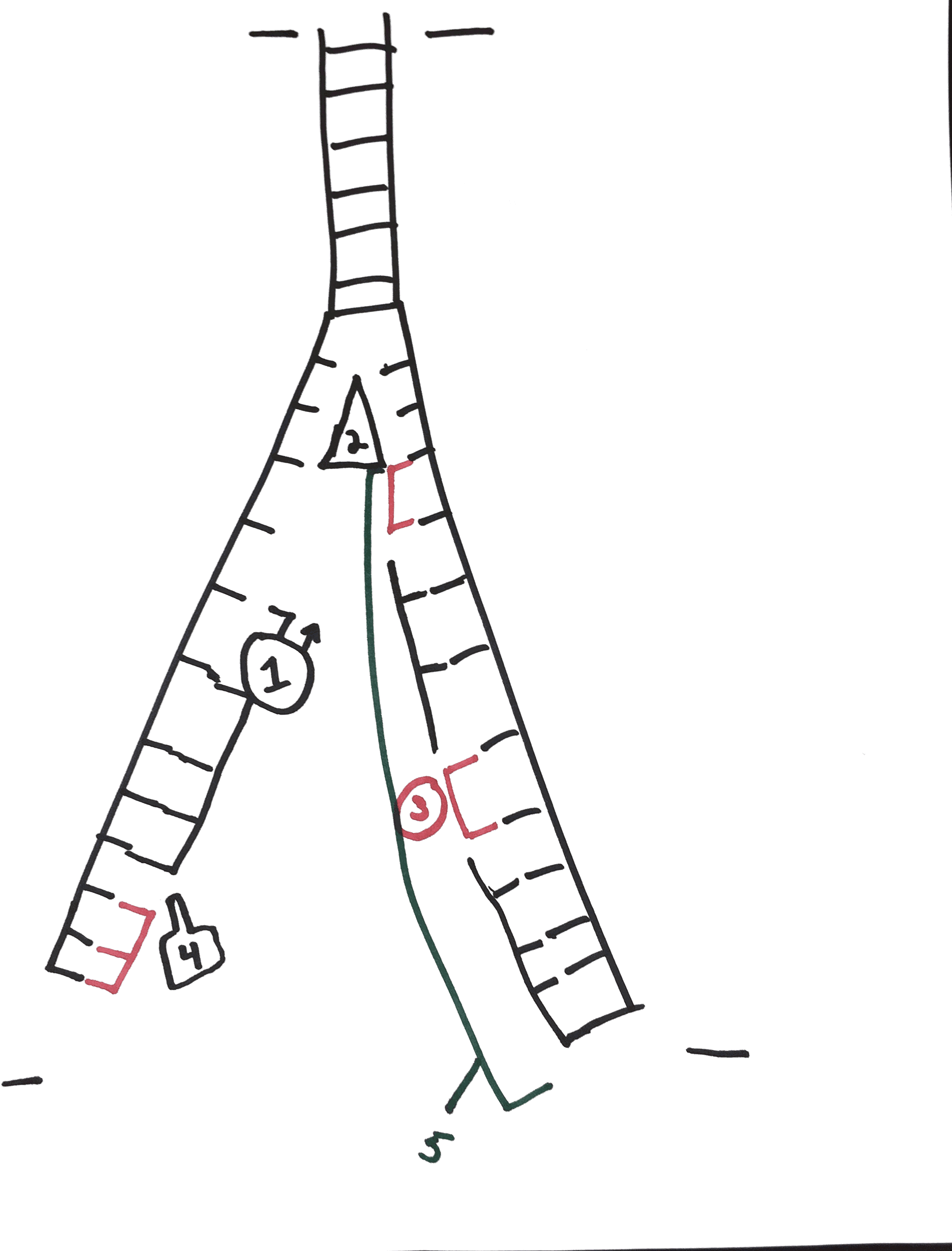
#1 in the picture above (builder)

a)

Helicase

b)

Primase

c)

Polymerase

d)

Ligase

30.
Fill in the complementary bases according to the base-pair rule in DNA: A T C C A G
a)
T U G G T C
b)
T A G G T C
c)
T A C G T G
d)
T A C C A C
31.
What is the function of DNA helicase?
a)
Attach new nucleotides
b)
To unzip the strands of DNA
c)
Remove nucleotides
d)
To perform crossing over
32.
Which sequence of DNA bases would pair with this partial strand
ATG TGA CAG
a)
ATG TGA CAG
b)
TAC ACT GTC
c)
GTA AGT GAC
d)
CAT TCA CTG
33.
Guanine bonds with ______________.
a)
Adenine
b)
Guanine
c)
Cytosine
d)
Thymine
34.
The principle Watson and Crick created that said adenine pairs with thymine and guanine pairs with cytosine is called
a)
base pairing
b)
super coiling
c)
replication
d)
substitution
35.
When do the chromosomes condense and become visible?
a)
Metaphse
b)
Telophase
c)
Anaphase
d)
Prophase
36.
What holds the two sides of the DNA ladder together?
a)
Ionic bonds
b)
Hydrogen bonds
c)
Covalent bonds
d)
Van der waals
37.
What does DNA polymerase do during replication?
a)
It builds the new DNA strand
b)
Unwinds and unzips the DNA
c)
Glues the Okazaki fragments together
d)
Sets the RNA primer for DNA helicase
38.

The name for the process that includes growth, DNA synthesis, and cell division. This process repeats itself throughout the lifetime of the cell.

a)

Cell Life

b)

Growth and Development

c)

Homeostasis

d)

Cell Cycle

39.

When a cell divides, what do we call the newly created cells?

a)

Daughter cells

b)

Brother Cells

c)

Son Cells

d)

Sister Cells

40.

Which phase of mitosis is shown?

a)

Prophase

b)

Metaphase

c)

Anaphase

d)

Telophase

41.

Which phase of mitosis is shown?

a)

Prophase

b)

Metaphase

c)

Anaphase

d)

Telophase

42.

Which phase of mitosis is shown?

a)

Prophase

b)

Metaphase

c)

Anaphase

d)

Telophase

43.

What is the result of mitosis?

a)

4 genetically different cells

b)

2 genetically different cells

c)

4 genetically identical cells

d)

2 genetically identical cells

44.
Structure (a) is a ____.
a)
chromosome
b)
chromatid
c)
centromere
45.

During metaphase

a)

DNA lines up in the middle of the cell and DNA attaches to spindle fibers

b)

centrioles and spindle fibers appear

c)

2 new identical cells are created

d)

DNA gets copied

46.

During anaphase

a)

DNA lines up in the middle of the cell and DNA attaches to spindle fibers

b)

centrioles and spindle fibers appear

c)

Each DNA gets pull to the opposite sides of the cell

d)

DNA gets copied

47.
a)

metaphase

b)

prophase

c)

anaphase

d)

telophase

48.
I am the stage of mitosis where the sister chromatids are pulled apart.
a)
interphase
b)
metaphase
c)
anaphase
d)
telophase
49.
What are the phases of mitosis IN ORDER?
a)
Metaphase, Anaphase, Prophase, Telophase
b)
Prophase, Metaphase, Anaphase, Telophase
c)
Prophase, Metaphase, Telophase, Anaphase
d)
Telophase, Prophase, Anaphase, Metaphase
50.
What are the phases of mitosis IN ORDER?
a)
Metaphase, Anaphase, Prophase, Telophase
b)
Prophase, Metaphase, Anaphase, Telophase
c)
Prophase, Metaphase, Telophase, Anaphase
d)
Telophase, Prophase, Anaphase, Metaphase
51.
Programmed cell death refers to..... 
a)
Apoptosis 
b)
Helionisis 
c)
Karyokinesis
d)
Meiosis 
52.
DNA is replicated during ______ of the cell cycle.
a)
Gap 1 
b)
Synthesis
c)
Gap 2
d)
Gap 0
53.
What stage is this?
a)
Prophase
b)
Metaphase
c)
Anaphase
d)
Telophase
54.
What stage is this?
a)
Prophase
b)
Metaphase
c)
Anaphase
d)
Telophase
55.
What stage is this?
a)
Prophase
b)
Metaphase
c)
Anaphase
d)
Telophase
56.
The cell cycle involves several checkpoints. Why?
a)
To repair DNA damage.
b)
To check for glucose.
c)
To prevent dehydration.
57.
Which of the following shows the correct order of the entire cell cycle?
a)
IMPACT
b)
IPMATC
c)
MATPIC
d)
IPAMTC
58.

NAME THE PHASE

a)

PROPHASE

b)

ANAPHASE

c)

TELOPHASE

d)

METAPHASE

59.
a)

INTERPHASE

b)

ANAPHASE

c)

PROPHASE

d)

TELOPHASE

60.
Which of the following is a possible result of a disruption in the cell cycle?
a)
cancer
b)
photosynthesis
c)
cellular respiration
d)
protein synthesis
61.

A student is looking for evidence that spindle fibers are separating the chromosomes to ensure that each new nucleus has one copy of each chromosome. Which diagram is the student looking for?

a)

Cell 1

b)

Cell 2

c)

Cell 3

d)

Cell 4

62.

Cells pass through a G2 checkpoint before entering mitosis. Ideally, if DNA damage is detected, the cells do not enter mitosis until the damage is repaired. Why is DNA damage repaired before cells enter mitosis?

a)

So that another round of DNA synthesis does not have to take place

b)

So that the chromosomes can align at the metaphase plate during mitosis

c)

So that the cytoplasm can be divided equally between the two daughter cells

d)

So that healthy daughter cells are produced, allowing the organism to continue growing

63.

Oncogenes are mutated forms of genes. Oncogenes can transform a cell into a tumor cell. Some tumor cells are benign, while others are malignant. How does the presence of an oncogene lead to the formation of a tumor?

a)

ATP production is inhibited.

b)

Cell division is unregulated.

c)

Somatic cell growth is inhibited.

d)

Antibody activity is unregulated.

64.

Each strand of a DNA molecule contains nitrogenous bases that pair with other nitrogenous bases in very specific ways. A diagram of a section of DNA is shown. Which DNA strand is complementary to the one shown above?

a)

AGU GCU GCG CGU A

b)

TGT AGC TGC GCG T

c)

ACA TCG ACG CGC A

d)

TCG CGC AGC TAC A

65.

This part of the cell cycle is best described as the process that —

a)

duplicates the DNA

b)

completes cell division

c)

maintains genetic homeostasis

d)

synthesizes new molecules

66.

Which table correctly identifies the four most-abundant elements in biomolecules?

a)
b)
c)
d)
67.

Which statement describes this model of DNA?

a)

The model is inaccurate because the base pairs are incorrect.

b)

The model is accurate because it contains correctly paired bases.

c)

The model is accurate because it shows each base splitting to form a double helix.

d)

The model is inaccurate because some typical bases in

DNA are missing.

68.
A segment of DNA is represented in the illustration.
How is information for a specific protein carried on the DNA molecule?
a)
As a sequence of nucleotides
b)
In the double-helix shape of the condensed chromosome
c)
In the ratio of adenines to thymines
d)
As a pattern of phosphates and sugars
69.
Which DNA strand is complementary to the top one shown in the picture?
a)
A
b)
B
c)
C
d)
D
70.
The uncontrolled division of cells...
a)
meiosis
b)
cancer
c)
nondisjunction
d)
crossing over