wayground logo

Free Printable Worksheets

NEW

Font size

S
M
L
XL
Worksheets

The Cell Review

Total questions: 70

Worksheet time: 2hrs 38mins
Name
Class
Date
1.
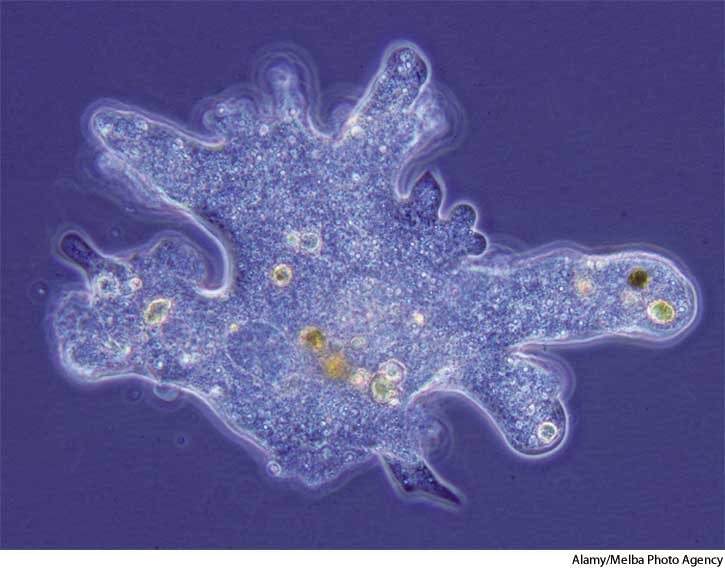
An Amoeba is a unicellular, animal-like protist that lives in ponds and streams. According to cell theory, where did this cell come from?
a)
another pre-existing amoeba cell.
b)
energy from sun that allowed the protist to reproduce.
c)
a multicellular organism.
d)
the nonliving environment.
2.
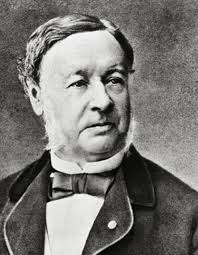
Robert Hooke, Anton van Leeuwenhoek, Theodor Schwann, Rudolf Virchow, and Matthias Schliden were all responsible for what theory?
a)
The Theory of Gravity
b)
The Theory of Relativity
c)
The Cell Theory
d)
The Theory of Continental Drift
3.
What tool do you use to view the cells?
a)
metric ruler
b)
centrifuge
c)
microscope
d)
telescope
4.
All living things are made up of...
a)
cells
b)
cell tissues
c)
organ
d)
organ systems
5.
All cells come from___________ cells.
a)
pregnant
b)
pre-existing
c)
paternal
d)
pin size
6.
What is the basic structural and functional unit of all living things? 
a)
atom
b)
cell
c)
molecule
d)
human
7.
An organism made of one cell is called
a)
unicellular organism
b)
multicellular organism
8.
Which of the following statements is not part of the cell theory?
a)
Cells are the basic unit of structure and function in all living things.
b)
All cells are produced from other cells.
c)
Only animal cells are composed of cells.
d)
All living things are composed of cells.
9.
Which of the following scientists concluded that all animals are made of cells?
a)
Rudolf Virchow
b)
Matthais Schleiden
c)
Robert Hooke
d)
Theodor Schwann
10.
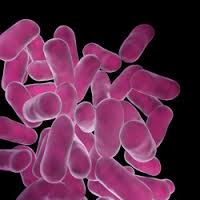
Which of the following scientists was the first to observe bacteria under a microscope?
a)
Anton van Leuwenhoek
b)
Matthais Schleiden
c)
Robert Hooke
d)
Theodor Schwann
11.
what is a cell classified as?
a)
a basic unit of structure and function of all living organisms
b)
a unit based on only plants and animals that are living
12.
In order to sustain life, all cells must...
a)
digest nutrients and water
b)
excrete waste and fluids
c)
must be able to maintain a homeostasis environment (aka cellular respiration and regulation)
d)
All of the above
13.
How are unicellular organisms different from multicellular organisms? 
a)
There are no differences.
b)
They are made of many cells. 
c)
They are only classified as prokaryotes.
d)
They are made of only one cell. 
14.

What kingdom includes unicellular eukaryotes?

a)

Fungi

b)

Plantae

c)

Eubacteria

d)

Protista

15.

What is the function of a contractile vacuole in the paramecium?

a)

Site of photosynthesis

b)

Pump out excess water

c)

Make energy

d)

Movement

16.

Which cell structure is short, hairlike, and helps a paramecium with movement and food intake?

a)

Flagella

b)

Pseudopods

c)

Cilia

d)

Contractile vacuole

17.

Which cell structure is a long, whiplike tail?

a)

Flagellum

b)

Cilia

c)

Contractile vacuole

d)

Eyespot

18.
Which invention from the 17th century allowed for the development of modern cell theory?
a)
x-rays
b)
computers
c)
the light microscope
d)
the scanning electron microscope
19.
Cell theory was first proposed in 1838. Evidence obtained through additional scientific investigations resulted in the current cell theory. Which statement describes a component of the original cell theory that was removed because of the new scientific knowledge?
a)
 All living things are made of cells.
b)
All cells come from other preexisting cells.
c)
Cells form through spontaneous generation.
d)
 Cells are the basic structural and functional units of life.
20.
Unlike eukaryotes, prokaryotes do not have:
a)
DNA
b)
cytoplasm
c)
cell walls
d)
a membrane bound nucleus
21.
The smallest unit that can perform the basic activities of life is
a)
a cell 
b)
a tissue
c)
an organ
d)
an organism
22.
This type of cell sends messages throughout the body in the form of electrical impuses.
a)
nerve
b)
gamete
c)
muscle
d)
skin
23.
This type of cell is found in males and is responsible for reproduction.
a)
sperm cell
b)
egg cell
c)
muscle cell
d)
nerve cell
24.
This type of cell expands and contracts to allow for movement.
a)
nerve cell
b)
platelet
c)
muscle cell
d)
bone cell
25.
This type of cell carries oxygen throughout the body.
a)
gamete
b)
platelet
c)
white blood cell
d)
red blood cell
26.

Embryonic stem cells are

a)

cells that grow uncontrollably

b)

cells present early in development that can form into any type of cell

c)

not able to go through cell division

d)

found within the tissues of a fully developed human

27.

What causes differentiation?

a)

The DNA is different in each type of cell.

b)

Some cells have more or less DNA than others.

c)

Only specific genes in the DNA are activated.

28.

Which is true about adult stem cells?

a)

They are only able to divide and form more adult stem cells

b)

They are able to develop into a variety of specialized cells but are more limited than embryonic stem cells

c)

They can become any cell type in the body

d)

They are found in embryos

29.

What is cell specialization?

a)

a thing with cells

b)

biology problems

c)

the differentiation of cells as they develop

d)

the development that occurs depending on their location

30.

Once a stem cell differentiates, can it ever reverse back into a stem cell?

a)

Yes

b)

No

31.
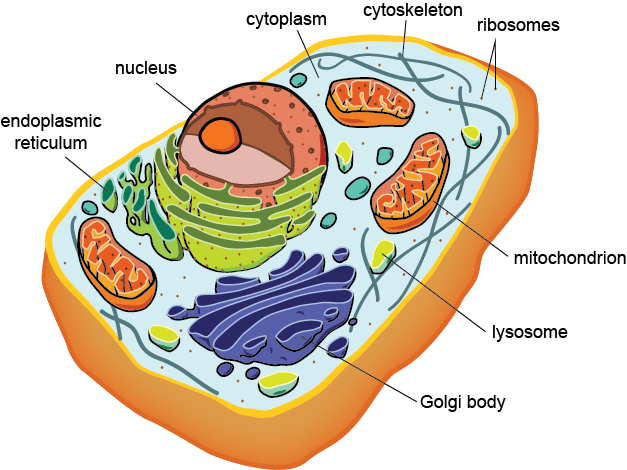
The picture illustrates a
a)
Prokaryotic Plant Cell
b)
Prokaryotic Animal Cell
c)
Eukaryotic Plant Cell
d)
Eukaryotic Animal Cell
32.
When looking at the cell membrane, where are the lipid tails located?
a)
Inner part of the bilayer
b)
Outer part of the bilayer
c)
At the end of the bilayer
d)
Goes through each end of the bilayer
33.

A phospholipid has 2 parts. What are they called?

a)

Hydrophilic Head, Hydrophobic Tail

b)

Hydrophobic Head, Hydrophilic Tail

34.

How many layers is the lipid bilayer?

a)

1

b)

2

c)

3

d)

4

35.
Another name for plasma membrane is....
a)
cell wall
b)
Nuclear membrane
c)
Cell membrane
d)
plasma membrane
36.
When looking at the cell membrane, where are the lipid heads located?
a)
Floating between bilayer levels
b)
Outer part of the bilayer
c)
Inner part of the bilayer
d)
Located at different parts throughout the bilayer
37.
The cell membrane is selectively permeable, which means...
a)
All materials can enter and leave the cell
b)
Certain things can enter while others cannot
c)
The cell manually sorts through all materials
d)
Only certain cells can interact with the cell.
38.
All the following are part of a plasma membrane EXCEPT
a)
phospholipid
b)
glycolipid
c)
Carrier proteins
d)
axonal terminals
39.
The head of a phospholipid is hydrophobic
a)
true
b)
false
40.
Cell membranes are said to be
a)
selectively permeable
b)
non-permeable
c)
permeable
d)
psuedopermeable
41.
This is a example of........ 
a)
organ system
b)
cells
c)
organ
d)
tissue
42.
When many organ systems work together it can form...
a)
organ
b)
cells
c)
organ system
d)
organism 
43.
Organs that work together to perform a related function is called _____________?
a)
cells
b)
tissues 
c)
organ system
d)
organs
44.
 A group of cells that have similar functions? Examples are nervous, epithelial, muscle and connective
a)
cells
b)
tissues
c)
organs
d)
atoms
45.
A group of tissues that work together to perform a similar function is called_____. (Examples include the heart, lungs or stomach)
a)
cells
b)
tissues
c)
organs
d)
organ system
46.
Where are ribosomes produced?
a)
Nucleolus
b)
Endoplasmic reticulum
c)
Golgi body
d)
Vessicle
47.
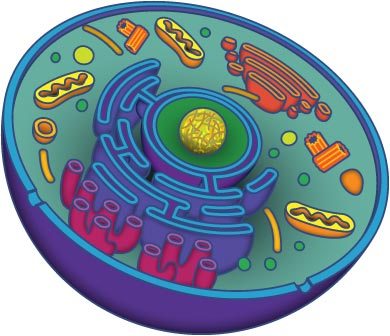
What am I?
a)
Nucleus
b)
Golgi Body
c)
Mitochondrion
d)
Plasma Membrane
48.
What am I?
a)
vacuole
b)
ribosome
c)
endoplasmic reticulum
d)
golgi apparatus
49.
What am I?
a)
cell wall
b)
mitochondria
c)
cytoplasm
d)
chloroplast
50.
What am I?
a)
mitochondria
b)
lysosomes
c)
chloroplast
d)
endoplasmic reticulum
51.
Transportation network for the cell, moves materials around in the cell
a)
Lysosome
b)
Nuclear Membrane
c)
Endoplasmic Reticulum
d)
Centriole
52.
jello-like material, fills the space between cell organelles, is where many chemical reactions occur
a)
cytoplasm
b)
chromatin
c)
chloroplast
d)
cell membrane
53.
break down (digest) worn out cell parts, mostly in animal cells
a)
cytoplasm
b)
lysosomes
c)
mitochondria
d)
vacuoles
54.
hold/store water, mainly found in plant cells
a)
nuclolus
b)
ribosomes
c)
golgi bodies
d)
vacuoles
55.
collect sunlight which it converts to sugars
a)
chloroplasts
b)
cytoplasm
c)
cell wall
d)
mitochondria
56.
packages proteins for delivery
a)
Endoplasmic reticulum
b)
ribosomes
c)
golgi apparatus
d)
lysosomes
57.
Amino acids link together to form proteins. In which organelle would this process occur?
a)
Lysosome
b)
Ribosome
c)
Centriole
d)
Mitochondria
58.
releases energy for cells to use, most common in animal cells
a)
mitochondria
b)
ribosomes
c)
lysosomes
d)
nucleolus
59.
stiff, protective outer layer of plant cells
a)
cell membrane
b)
nuclear membrane
c)
cell wall
d)
cytoplasm
60.
Controls what enters/leaves a cell
a)
cell membrane
b)
Nuclear membrane
c)
cell wall
d)
cytoplasm
61.
control, read, and direct the cell using DNA instructions
a)
nucleus
b)
mitochondria
c)
endoplasmic reticulum
d)
lysosome
62.
The structure labelled X in the diagram is known as a
a)
cholesterol
b)
pore protein
c)
phospholipid
d)
carrier protein
63.
Most of the cell membrane is made of...
a)
Lipids
b)
Carbohydrates
c)
Proteins
d)
Nucleic acids
64.
Which of the following is NOT part of the cell membrane?
a)
Lipids
b)
Carbohydrates
c)
Proteins
d)
Nucleic Acids
65.
Which of the following is responsible for getting large or charged (polar) molecules across the cell membrane?
a)
E
b)
B
c)
C
d)
D
66.
Part of the plasma membrane responsible for cell recognition... 
a)
C
b)
E
c)
B
d)
D
67.
The _____ in the plasma membrane prevents the fatty acids tails from sticking together. 
a)
carbohydrate chains
b)
cholesterol
c)
proteins
d)
lipids
68.
Protein...
a)
A
b)
B
c)
C
d)
D
69.
Hydrophilic portion of cell membrane?
a)
A
b)
C
c)
D
d)
70.
Hydrophobic region of the cell membrane?
a)
E
b)
B
c)
C
d)