wayground logo

Free Printable Worksheets

NEW

Font size

S
M
L
XL
Worksheets

Physical Science Unit 1 Pretest

Total questions: 65

Worksheet time: 53mins

Name
Class
Date
1.

Which of the following is NOT a unit of measurement in the metric system?

a)

Meter

b)

Second

c)

Centimeter

d)

Foot

2.

What two parts does a measurement have?

a)

Time and distance

b)

Value and unit

c)

SI and English

d)

Mass and length

3.

Which is an example of a quantity of time?

a)

Friday at 2:00

b)

One year

c)

4:05 p.m

d)

December 10, 2011 at 9:00 a.m

4.
A possible explanation to a problem that has not yet been tested. 
a)
data
b)
theory
c)
hypothesis
d)
fact
5.
This part of the experiment serves as a basis of comparison; the one variable being tested has been omitted. 
a)
experimental group
b)
control group
c)
data
d)
variables
6.
This variable in an experiment is the one being deliberately changed by the scientist. 
a)
dependent variable
b)
independent variable
c)
data
d)
control group
7.
An experiment is performed on plants to see how different liquids affect plant growth. Each plant in the experiment is given a different liquid; water, apple juice, or milk. Each plant has the same amount of soil, sunlight, and listens to the same music. In this investigation, the independent variable is ...
a)
The type of plant
b)
The amount of sunlight
c)
The type of music
d)
The type of liquid
8.
The summary at the end of an experiment that explains the results. 
a)
conclusion
b)
procedures
c)
materials
d)
responding variable
9.
A student wants to test the effects of type of exercise on heart rate.  What is the dependent variable?
a)
heart rate
b)
type of exercise
c)
amount of exercise
d)
time of day exercise occurs
10.
An experiment is performed on plants to see how different liquids affect plant growth. Each plant in the experiment is given a different liquid; water, apple juice, or milk. Each plant has the same amount of soil, sunlight, and listens to the same music. In this investigation, what are the controlled variables?
a)
Type of plant, amount of music, and sunlight
b)
Water, apple juice, milk
c)
Plant growth
11.
Metric unit used to measure the amount of matter in an object.
a)
Meter
b)
Liter
c)
degree Celsius
d)
Gram
12.
Metric unit used to measure the amount of time.
a)
Liter
b)
Degree Celsius
c)
Second
d)
Gram
13.
Metric unit to measure the length of an object or distance.
a)
Meter
b)
Liter
c)
Degree Celsius
d)
Second
14.

Metric unit used to measure the temperature of an object.

a)

Meter

b)

Liter

c)

Kelvin

d)

Gram

15.

The prefix "centi" means which of the following?

a)

10

b)

1000

c)

100

d)

1 Penny because it says cent

16.

The prefix "milli" means which of the following?

a)

10

b)

1

c)

1000

d)

1 million because it says milli

17.

Where does the independent variable go on a graph?

a)

Y axis

b)

X axis

c)

None of the above

18.

Where does the dependent variable go on a graph?

a)

Y axis

b)

X axis

19.
Four colored liquids were poured into a beaker. If the liquids settled into separate layers as shown, which of the colored liquids has the greatest density?
a)
green
b)
black
c)
blue
d)
red
20.
Convert into kilometers.
452.159 meters.
Round to the nearest thousandth.
a)
0.452159
b)
4.52159
c)
45.2159
d)
452159
21.
Convert into grams.
763.1247 milligrams.
a)
7631.247
b)
76312.47
c)
0.7631247
d)
7631247
22.
You know 1000 mg = 1 g.  Convert 2.5 grams into milligrams.
a)
25 mg
b)
25,000 mg
c)
250 mg
d)
2,500 mg
23.
You know that 1000 mL = 1 L.  Convert 600 mL into L.
a)
0.6 L
b)
0.006 L
c)
600,000 L
d)
0.06 L
24.
Convert 12 km to m
a)
120 m
b)
1,200 m
c)
12,000 m
d)
120,000 m
25.
There are ___ millimeters(mm) in 2.7 centimeters (cm)
a)
270 mm
b)
.27 mm
c)
27 mm
d)
.027 mm
26.

What type of graph is best used to compare data?

a)

Line

b)

Circle

c)

Bar

d)

Pictograph

27.

What type of graph is best used to represent parts of a whole?

a)

Line

b)

Circle

c)

Bar

d)

Pictograph

28.

What type of graph is best used to represent trends in data?

a)

Line

b)

Circle

c)

Bar

d)

Pictograph

29.

What is the independent variable on this graph?

a)

Year

b)

Number of Visitors

c)

Visitors to a Park

d)

none of these

30.

What is the dependent variable on this graph?

a)

Year

b)

Number of Visitors

c)

none of these

31.

How many people visited the park in 1997?

a)

20

b)

40

c)

60

d)

50

e)

35

32.
Which number in the ordered pair, (-4, 5) represents the x-value? 
a)
-4
b)
5
33.
Which letter matches the coordinate (4, -6)?
a)
G
b)
Z
c)
K
d)
None of the above
34.
What is meant by the ordered pair (3, 300) ?
a)
In 3 months, I made $300
b)
In 3 months, $300 was raised for the science fair
c)
In 300 months, $3 was made
d)
In 3 months, I made $200
35.
How do you write an ordered pair?
a)
(X,X)
b)
(Y,X)
c)
(X,Y)
d)
(Y,Y)
36.
What step does every scientific experiment begin with?
a)
hypothesis
b)
question/problem
c)
procedures
d)
conclusion
37.
Testing a hypothesis often involves a(n):
a)
answer
b)
experiment
c)
problem
d)
safety check
38.
Observations made during an experiment are called:
a)
data
b)
problems
c)
conclusions
d)
questions
39.
These kind of observation use your senses to observe results.
a)
Qualitative
b)
Quantitative
c)
Scientific
40.
These kind of observations are made using instruments such as rulers, balances and thermometers.
a)
Qualitative
b)
Quantitative
c)
Scientific
41.
The leaf is 5mm wide.
a)
Qualitative
b)
Quantitative
42.
It makes a loud crackling sound.
a)
Qualitative
b)
Quantitative
43.

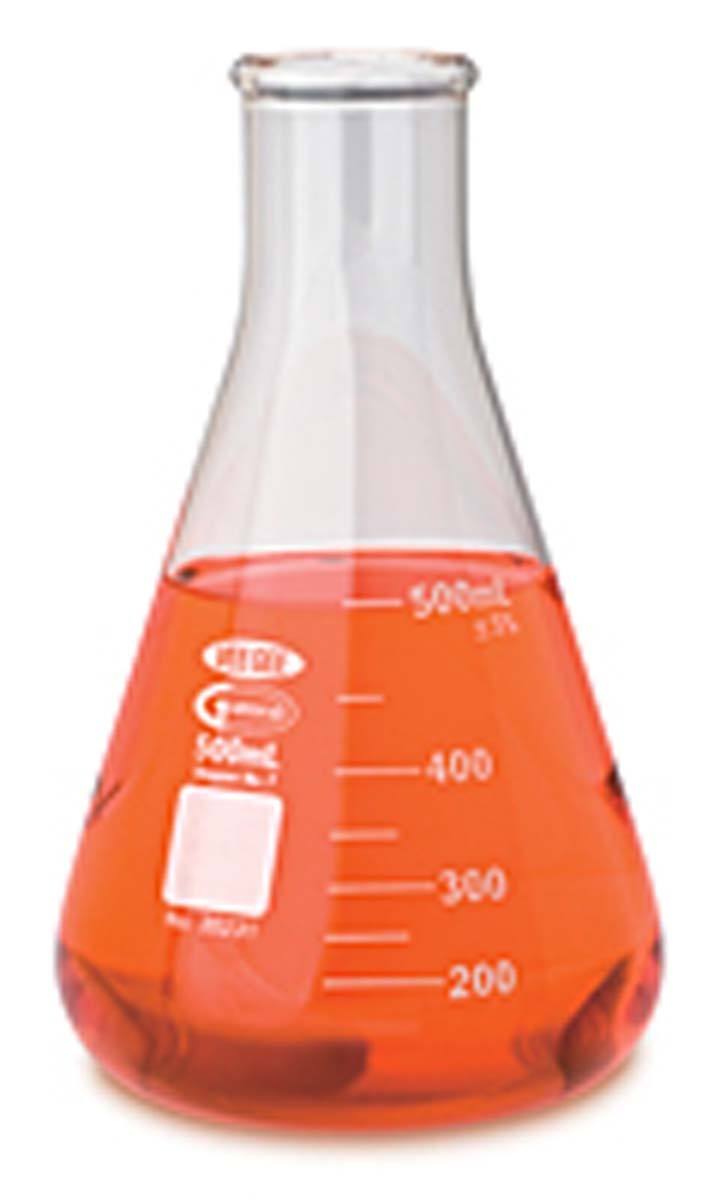
What is used to measure, heat, and mix large amounts of liquids?

a)

Beaker

b)

Flask

c)

Test Tube

d)

Graduated Cylinder

44.

What is used to swirl, mix, or store chemicals?

a)

Beaker

b)

Flask

c)

Test Tube

d)

Graduated Cylinder

45.
What is used to protect your eyes from chemicals, broken glass, and fire?
a)
Fire blanket
b)
Eye wash
c)
Goggles
d)
Flask
46.
What is used to measure mass of an object in grams?
a)
Triple beam balance
b)
Test tube rack
c)
Meter stick
d)
Graduated Cylinder
47.
What is used to measure the volume of liquids more precisely in milliliters?
a)
Beaker
b)
Flask
c)
Graduated Cylinder
d)
Test tubes
48.

What is used to transfer small amounts of liquid?

a)

Graduated Cylinder

b)

Medicine Dropper/Pipette

c)

Beaker

d)

Flask

49.
How long is the crayon in the picture?
a)
1 inch
b)
3 inches
c)
2 inches
d)
4 inches
50.
How much longer is the key than the paper clip?
a)
3 cm
b)
2 cm
c)
4 cm
d)
1 cm
51.
What is the volume of the liquid in this graduated cylinder?
a)
19 mL 
b)
35 mL 
c)
24 mL 
d)
1.9 mL
52.
What is the volume of the liquid in this graduated cylinder?
a)
1.5 mL 
b)
15 mL 
c)
1.05 mL 
d)
.15 mL
53.
What is the correct ascending order of the following terms: hecto, centi, deci, base, milli, kilo, deka?
a)
milli, centi, deka, base, deci, hecto, kilo
b)
milli, centi, deci, base, deka, hecto, kilo
c)
kilo, deka, hecto, base, centi, deci, milli
d)
deka, kilo, centi, deci, base, milli, hecto
54.
What is the volume of this solid?
a)
5 meters
b)
17 meters
c)
2 meters
d)
100 meters
55.
The diagram shows a graduated cylinder containing water.  From which position will the most accurate measure of the volume of water be made?
a)
Position 1
b)
Position 2
c)
Position 3
d)
Position 4
56.
Read the balance
a)
272.05 g
b)
272.25 mL
c)
272.1 g
d)
720.25 g
57.
This image is:
a)
Accurate
b)
Accurate and precise
c)
Precise
d)
Neither accurate or precise
58.
What is the mass of the unknown object?
a)
273 g
b)
272 g
c)
272.5 g
d)
2270 g
59.
What is the mass of this object?
a)
142 grams
b)
412 grams
c)
140.2 grams
d)
140 grams
60.
When is it OK to eat or drink in the lab?
a)
Always
b)
Never
61.
What should you do if you break glass in the lab?
a)
Tell the teacher.
b)
Sweep up the glass.
c)
Pick up the glass with your hands.
d)
Ignore it; the teacher will clean it up when she sees it later.
62.
I will perform only those activities that have been authorized by the instructor.
a)
True
b)
False
63.
Horseplay, jokes, and pranks are appropriate in the science classroom at any time.
a)
True
b)
False
64.
If you break glassware in the lab, you should...
a)
Tell the teacher
b)
Clean it up quickly before the teacher notices
c)
Scream at the top of your lungs
65.
Part of lab safety includes reading the lab procedure...
a)
before doing the lab
b)
while doing the lab
c)
after doing the lab
d)
only if you think you really need it