wayground logo

Free Printable Worksheets

Font size

S
M
L
XL
Worksheets

UNit 2 Exam review

Total questions: 37

Worksheet time: 24mins

Name
Class
Date
1.
What does a virus have on the inside?
a)
DNA, but never RNA
b)
RNA but never DNA
c)
DNA or RNA
d)
neither DNA or RNA
2.

What do viruses need to reproduce?

a)

they need cell membrane

b)

They need a host cell

c)

They need bacteria

d)

They need insulin

3.
What do viruses have in common with living cells? They both...
a)
store genetic information
b)
have chloroplasts
c)
use glucose for cellular respiration
d)
have endoplasmic reticulum
4.
Reasons that viruses are considered to be nonliving is because
a)
They are not cellular
b)
They cannot reproduce on their own
c)
They cannot make proteins
d)
all of the above
5.
What part of the phage is the DNA?
a)
A
b)
B
c)
C
d)
D
6.
What part of a virus is the protein capsule that houses the genetic material (DNA/RNA)?
a)
tail
b)
nucleus
c)
capsid
d)
glycoprotein
7.

Which of these is not an essential life function that a cell shares with a virus?

a)

Grow

b)

Genetic material

c)

Evolve

d)

Reproduce

8.

Which cell could this virus infect?

a)
b)
c)
d)
9.

What process introduced oxygen into the atmosphere?

a)

Cellular respiration

b)

Photosynthesis

c)

Chemosynthesis

d)

Anaerobic Archaea

10.

What gas is needed for photosynthesis to occur?

a)

Carbon dioxide

b)

Oxygen

c)

Nitrogen

d)

Hydrogen

11.

Photo means

a)

picture

b)

chemical

c)

light

d)

food

12.

Aerobic organisms

a)

Require oxygen

b)

Do not require oxygen

c)

Create oxygen

13.

Anaerobic organisms

a)

Require oxygen

b)

Do not require oxygen

c)

Create oxygen

14.

Prokaryotes

a)

Have a nucleus

b)

Lack a nucleus

15.

Which organisms can still thrive without sunlight?

a)

Chemosynthetic organisms

b)

Photosynthetic organisms

c)

Cyanobacteria

d)

Plants

16.

Where is the DNA found in prokaryotes?

a)

In the nucleus

b)

In the cytoplasm

c)

In the ribosome

d)

In the nucleolus

17.

Which cell structure controls what moves in and out of the cell?

a)

Cell wall

b)

Cell membrane

c)

Smooth and rough ER

d)

Ribosomes

18.

Which two organelles support the endosymbiotic theory?

a)

Golgi and Chloroplast

b)

Nucleus and Mitochondria

c)

Mitochondria and Ribosome

d)

Chloroplast and Mitochondria

19.

Photosynthesis can occur with the help of which organelle?

a)

Mitochondria

b)

Nucleus

c)

Ribosome

d)

Chloroplast

20.

These single-celled organisms are eukaryotic. They are classified as protists. Which of the following statements are true?

a)

They contain a nucleus

b)

They lack a nucleus

c)

They are a species of bacteria

d)

Their DNA floats in the cytoplasm

21.

Which organelle can you associate with energy (ATP)?

a)

Chloroplast

b)

Mitochondria

c)

Ribosome

d)

Nucleus

22.

Which of these organelles are not found in human cells?

a)

Cell wall

b)

Chloroplast

c)

Central vacuole

d)

all of these

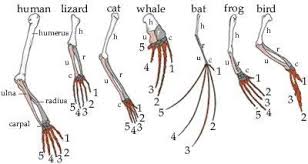
23.
What is this an example of?
a)
vestigial structures
b)
embryology
c)
homologous structures
d)
fossil record
24.

The picture shows the members of the Camelidae family. The physical features and the geographical origin of these animals provide evidence that -

a)

they live in the same type of environment.

b)

they have slowly evolved to become herbivores.

c)

they have a common ancestor.

d)

exchanged DNA in the past.

25.
What is the study of organisms at the early stages of development?
a)
DNA studies
b)
embryology 
c)
extinction
d)
fossil record
26.
Which layer is the oldest?
a)
1
b)
2
c)
3
d)
4
27.
Two organisms that are closely related would have
a)
very similar DNA sequence
b)
exactly the same DNA sequences
c)
no proteins in common
d)
completely different DNA sequence
28.
The similarities of the bones in the diagram provide evidence that---
a)
The organisms shown lived in the same natural envionrment
b)
The organisms shown may have developed from a common ancestor
c)
The organisms shown have the same genetic diseases
d)
All vertebrate species have identical forelimbs
29.
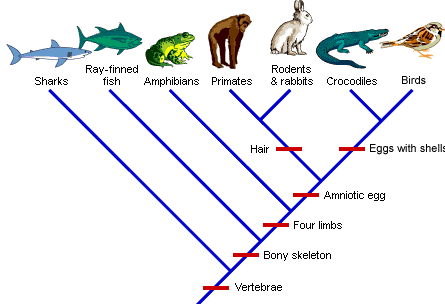
According to this cladogram, sharks are MOST closely related to which organism? 
a)
Amphibians
b)
Ray finned fish
c)
Crocodiles
d)
Birds
30.
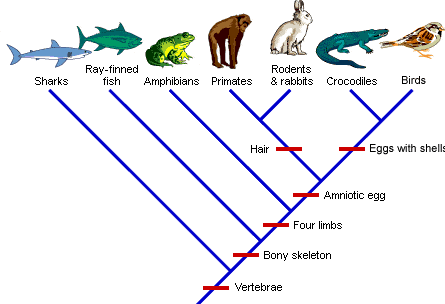
According to this cladogram, birds are LEAST related to: 
a)
Amphibians
b)
Sharks
c)
Ray Finned Fish
d)
Crocodiles
31.
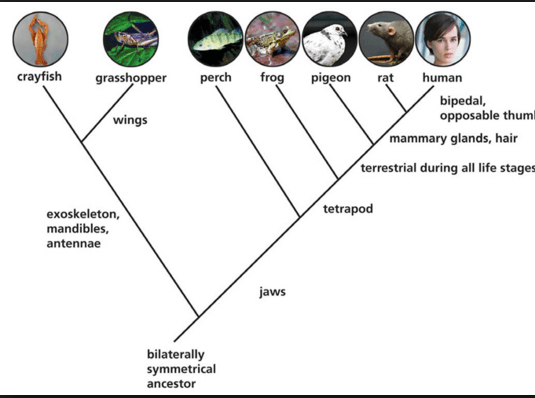
According to the cladogram, which organism is most distantly related to the human?
a)
crayfish
b)
grasshopper
c)
perch
d)
frog
32.
What is suggested by the similarity of early embryos of different species of vertebrates?
a)
no evolutionary relationships between the groups
b)
recent common ancestry
c)
ability to be successful in the same environment
d)
evolution from a common ancestor
33.
Which evidence of common ancestry is being studied in this visual?
a)
biogeography
b)
fossil record
c)
anatomical homology
d)
molecular homology
34.
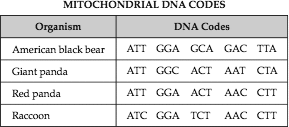
Which evidence of common ancestry is being studied in this visual?
a)
biogeography
b)
fossil record
c)
anatomical homology
35.
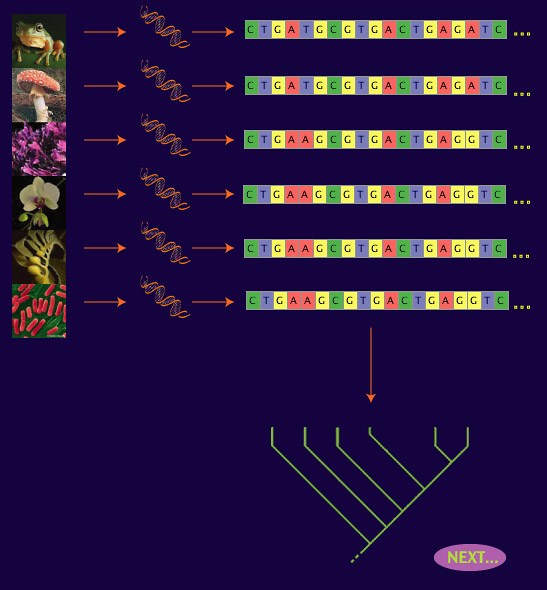
Which evidence of common ancestry is being studied in this visual?
a)
developmental homology
b)
molecular homology
c)
anatomical homology
36.
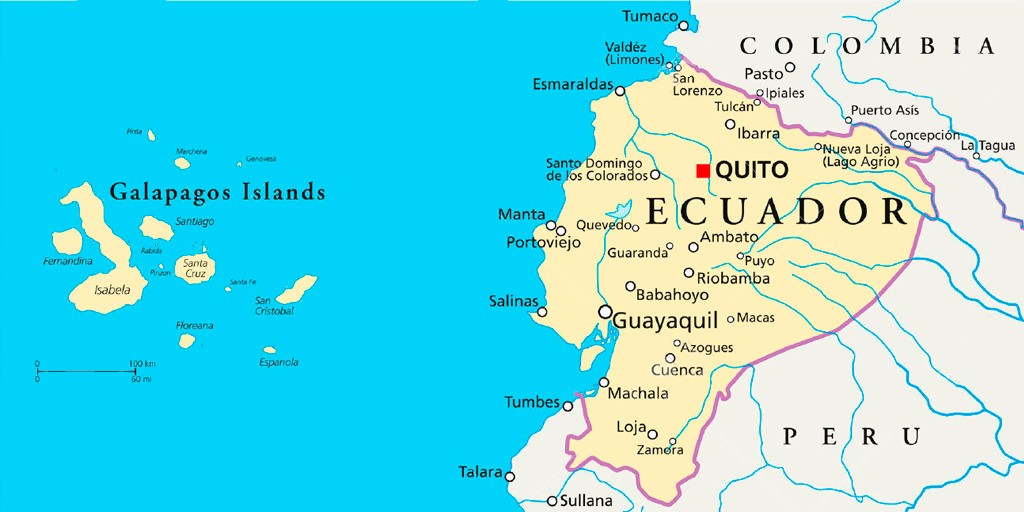
The Galapagos Islands, a small group of islands off the coast of Ecuador, is home to reptiles such as the giant tortoise and the iguana. The eastern islands are much older than the islands to the west.  Which statement about the origin of these reptiles is best supported by this information?
a)
The ancestor of each species came from different continents at different times.
b)
The common ancestors of the reptiles probably came from Equador.
c)
The common ancestor of each species evolved in Peru and came to the islands at the same time.
37.

Which of the following is true regarding the evidence of evolution

a)

Vestigial structures are not real evidence of evolution.

b)

Homologous structures and fossils are the most dependable forms of evidence.

c)

Comparing DNA gene sequence is the most definitive and accurate method to show evolutionary relationships.

d)

Embryology and Homologous structures do not support the theory of evolution.