
NEW
Font size
 Worksheets
Unit 2 Review
Total questions: 63
Worksheet time: 2hrs 6mins

Which thing in this picture represents a gas?
ice cubes
bubbles
soda
iquid to gas?
boiling
freezing
melting
Matter that has a fixed shape and a fixed volume.
solid
liquid
gas
Matter that takes the shape and volume of its container.
solid
liquid
gas
Liquid to Gas?
evaporation
burning
melting
freezing

Solid to Gas?
deposition
melting
evaporation
sublimation
Which state of matter does not take the shape of its container?
liquid
gas
solid
air
A gas has...
the shape and volume of the container it is in.
Fixed shape, Fixed volume
Fixed shape and takes the volume of the container.
Fixed volume and takes the shape of the container.
Solid to gas?
Deposition
Sublimation
Evaporation
Freezing
Liquid to solid?
Deposition
Sublimation
Evaporation
Freezing
Particles in a liquid
are tightly packed together and stay in a fixed position.
have no viscosity.
decrease in volume with increasing temperature.
are free to move around one another but still touch.
liquid to solid?
freezing
melting
boiling
sublimation
Properties that DO depend on the amount of matter present.
Mass
Hardness
Extensive
Intensive
Properties that DO NOT depend on the amount of the substance, just its identity.
Mass
Hardness
Extensive
Intensive
Which of the following is an extensive property?
Color
Mass
Odor
Luster
Which of the following is an extensive property?
Hardness
Boiling Point
Density
Weight
How shiny a substance is.
Luster
Conductivity
Hardness
Volume
The mass of a substance divided by its volume.
Volume
Density
Mass
Length
Which of the following is an intensive property?
Color
Mass
Volume
Weight
Length
Intensive Property
Extensive Property
Density
Intensive Property
Extensive Property
Melting point
Intensive Property
Extensive Property
Volume
Intensive Property
Extensive Property
Color
Intensive Property
Extensive Property
H2O liquid to H2O gas
Physical Change
Chemical Change
Ice melts
Physical Change
Chemical Change
Sugar dissolves in water
Physical Change
Chemical Change
Is melting butter for popcorn a chemical or physical change?
Chemical Change
Physical Change
When you break a cracker into pieces it is a...
Chemical Change
Physical Change
A mixture is the result of a physical change because...
The parts can be separated
A new substance is made
There is a chemical reaction
One part of the mixture disappears


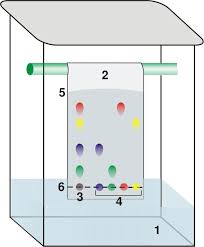
Dyes in water soluble markers may be separated by means of..
crystallization
sublimation
chromatography
sedimentation
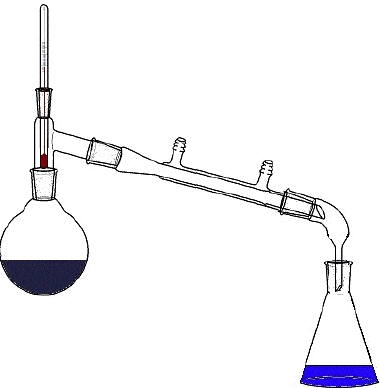
Water and alcohol are easily separated by
chromatography
filtration
picking out
distillation
To separate a mixture of sand/rocks and water what separation method is used?
Filtration
Distillation
Chromatography
Evaporation

This technique is based on the differences of the boiling point of the substance in the mixture.
decantation
distillation
filtration
chromatography

What method of separating mixtures is shown in the picture?
filtration
distillation
picking out
chromatography
Matter that is made of just one element or compound is called:
Mixture
Atom
Matter
Substance
Substance that consists of one type of atom. Found on the Periodic Table.
Element
Compound
Mixture
I don't know

If a mixture has different parts you can see is a...
solution
compound
homogeneous mixture
heterogeneous mixture


A Mixture is defined as
A combination of two or more substances that are not chemically combined
A combination of compounds that are chemically bonded
2 or more elements chemically bonded
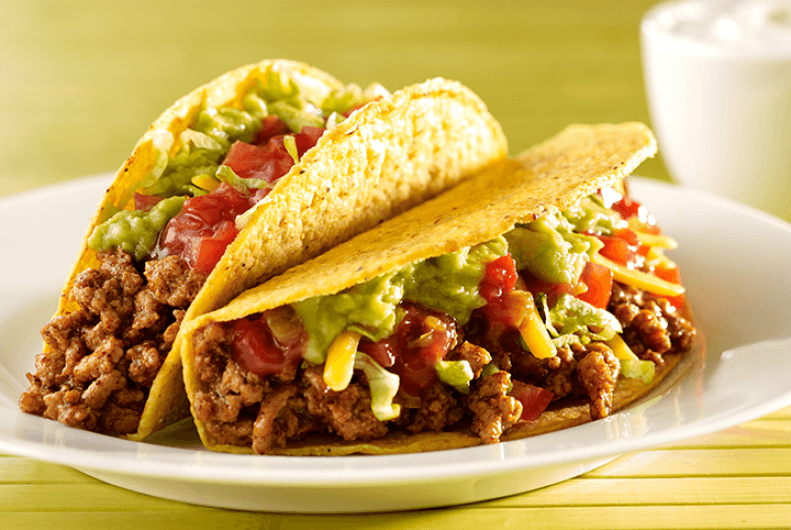
A Taco is an example of a
Homogeneous Mixture
Heterogeneous Mixture
Anything that has mass and takes up space.
atom
mixture
element
matter
Which item is a substance?
aluminum
apple juice
muddy water
Gas to Solid?
deposition
melting
evaporation
sublimation
A piece of copper has a mass of 89g and a volume of 10 cm3. What would be the density of the copper?
0.89 g/cm3
89 g/cm3
8.9 g/cm3
890 g/cm3

What is the volume of the ring?
64 mL
68 mL
8 mL
4 mL

