
 Worksheets
Unit 1 -Physical Properties of Matter
Total questions: 34
Worksheet time: 30mins
Name
Class
Date
1.
Anything that has mass and takes up space is called
a)
volume
volume
volume
b)
matter
c)
magnetism
d)
electricity
2.

Which box has a higher density?
a)
Box A
b)
Box B
c)
cannot be determined
d)
they are the same
3.

Mass
a)
Anything that has mass and takes up space.
b)
The property of attraction to a magnet.
c)
Group together based on similar traits.
d)
The amount of stuff in something; can be measured in kg.
4.
The Law of Conservation of matter states that the total amount of matter ______________ after it undergoes change.
a)
disappears
b)
stays the same
c)
weighs less
d)
explodes
5.
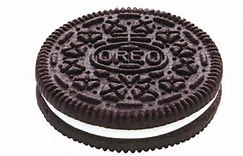
An oreo cookie weighs 20 grams. It gets crushed into crumbs for a recipe. How much do its crumbs weigh?
a)
15 grams
b)
25 grams
c)
20 grams
6.

How much does a 5 gram Hershey's kiss weigh after it is melted in the microwave?
a)
5 grams
b)
3 grams
c)
7 grams
7.
Suppose a reaction were to happen in an open container in a lab. During the reaction, the scientist observes the chemicals bubble, and produce a gas. During the analysis the scientist notices that the reactants weighed 20 g when he started, and the product weighed 18 g. Explain what happened.
a)
His chemical reaction defied the law of conservation of mass
b)
The product destroyed mass during the reaction
c)
The reactants created matter during the reaction
d)
The gas that was produced was not able to be weighed since the container was open.
8.
How many significant figures: 216 m
a)
1
b)
2
c)
3
d)
0
9.
How many significant figures: 2016 m
a)
1
b)
2
c)
3
d)
4
10.
How many significant figures: 153.0 mL
a)
1
b)
2
c)
3
d)
4
11.
How many significant figures: 0.012 km
a)
1
b)
2
c)
3
d)
4
12.
How many significant figures: 1000 mL
a)
1
b)
2
c)
3
d)
4
13.
Round 0.010229 to four sig figs
a)
1022
b)
1023
c)
0.01023
d)
0.01022
14.
Round 1009 to three sig figs
a)
100
b)
101
c)
1010
d)
1000
15.

a)
6.5
b)
6.60
c)
6
d)
6.65
16.

length?
a)
3.2 cm
b)
3.12 cm
c)
3 cm
d)
3.219 cm
17.
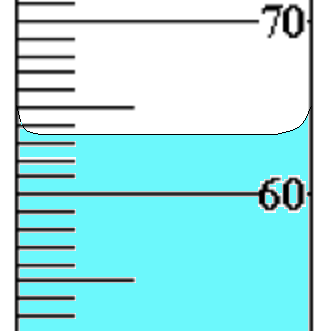
Volume?
a)
63.5 mL
b)
63 mL
c)
63.55 mL
d)
6 mL
18.

What is the volume of liquid in this graduated cylinder?
a)
43.0 mL
b)
43 mL
c)
43.05 mL
d)
44.5 mL
19.

What is the length of this line?
a)
5 cm
b)
4.300 cm
c)
4.30 cm
d)
4.3 cm
20.
All of the following have one significant figure except:
a)
100 cm
b)
0.0001 cm
c)
2 cm
d)
2.00 cm
21.
True or False: The density of a specific type of material never changes.
a)
True
b)
False
22.
Frank has a paper clip. It has a mass of 9g and a volume of 3cm3. What is its density?
a)
3 g/cm3
b)
1/3 g/cm3
c)
27 g/cm3
d)
39 g/cm3
23.
Frank has an eraser. It has a mass of 4g, and a volume of 2cm3. What is its density?
a)
8 g/cm3
b)
2 g/cm3
c)
1/2 g/cm3
d)
24 g/cm3
24.

What is the volume of Object X?
a)
10.0 cm3
b)
15.0 cm3
c)
20.0 cm3
d)
25.0 cm3
25.

what is the volume of the cube?
a)
123
b)
144
c)
244
d)
150
26.
If you cut a wooden block in half, each half would have
a)
Half the density of the original piece
b)
Twice the density of the original piece
c)
The same density as the original piece
d)
No density at all
27.
What is the volume of 150 grams of lead if it has a density of 11.3 g/cm3?
a)
13.3 g
b)
13.3 cm3
c)
.075 g
d)
1695 cm3
28.
If a block of wood has a density of 0.6 g/cm3 and a mass of 120 g, what is its volume?
a)
200 cm3
b)
0.005 cm3
c)
200.0 ml
d)
72 ml
29.

I have two objects with the same volume but different masses. Which object will be more dense?
a)
The object with less weight.
b)
The object with more weight.
c)
The object with more mass.
d)
The object with less mass.
30.
The unit cm3 is used to express
a)
length
b)
mass
c)
volume
d)
time
31.
Calculate the mass of a liquid with a density of 2.5 g/mL and a volume of 15 mL.
a)
37.5 g /15 mL; Mass = 37.5 g
b)
2.5 g/mL; Mass = 2.5 g
c)
15 mL/37.5 g; Mass = 0.4 g
d)
37.5 g/15 mL; Mass = 37.5 mL
32.
Calculate the volume of a liquid with a density of 5.45 mL and a mass of 65 g.
a)
D = 5.45 g/mL = 65 g/11.927 mL; V = 11.927 mL
b)
V = 5.45 g/mL = 65 g/11.927 mL; D = 11.927 mL
c)
D = 5.45 mL/g = 11.927 mL/65 g; V = 0.183 mL
d)
V = 5.45 mL/g = 11.927 mL/65 g: D = 0.183 mL
33.

Calculate the slope.
a)
m=-4/3
b)
m=4/3
c)
m=-3/4
d)
m=3/4
34.

Find the slope
a)
-5/7
b)
7/5
c)
-7/5
d)
5/7
100 %

