
 Worksheets
Unit Test #1 Chemistry
Total questions: 90
Worksheet time: 1hrs 23mins
Name
Class
Date
1.
You should never ______ chemicals in the lab.
a)
taste
b)
touch
c)
smell
d)
all of the above
2.
If you are not sure what to do during a lab activity:
a)
guess
b)
change lab partners
c)
ask a teacher
d)
just sit quietly and do nothing
3.
Keeping your work area neat and clean is important because:
a)
My teacher is a neat-freak
b)
I won't lose my supplies in the clutter.
c)
It keeps the room from looking messy.
d)
It helps prevent accidents.
4.
I can perform my own experiments with lab materials ___.
a)
I am sure it is safe to do so.
b)
Whenever I want to.
c)
When all of my group is ready.
d)
Never.
5.
Disrupting other students in the laboratory with horseplay in the lab is:
a)
helpful.
b)
allowed
c)
dangerous.
d)
the quickest way to do a job.
6.
What is the CORRECT procedure for students to follow if a chemical is spilled?
a)
Stand back and advise the teacher of the spill.
b)
Run madly out of the room.
c)
Splash large amounts of water onto the spill.
d)
Immediately ask to go to the restroom.
7.
Helping to clean up the lab or classroom is the job of
a)
old students.
b)
transfer students.
c)
each and every student.
d)
only the teacher.
8.
Which of the following IS considered safety equipment in our classroom?
a)
Eyewash Station
b)
Emergency Shower
c)
Fire Extinguisher
d)
All of the Above.
9.
You should report accidents to the teacher __.
a)
after the class is over
b)
immediately
c)
the following day
d)
never
10.
Which of the following are examples of dressing appropriately in the lab?
a)
Pulling long hair back
b)
Leaving long hair down to get in the chemicals.
c)
Wearing sandals
11.
Bob and Lizzy are working in the lab. They are goofing off and break a glass test tube. Which rule did the break?
a)
Know the location of the safety equipment.
b)
Do not eat or drink in the lab.
c)
Read instructions.
d)
No playing around!
12.
If you do not understand a direction or part of a lab procedure, you should
a)
skip it and go on to the next part.
b)
ask the teacher before proceeding
c)
try several methods until something works
d)
figure it out as you do the lab
13.
It’s okay to pick up broken glass with your bare hands as long as the glass is placed in the trash.
a)
True
b)
False
14.
Which of the following is a sign that a chemical reaction has occurred?
a)
change in shape
b)
melting
c)
formation of a gas
d)
dissolving
15.
Is melting butter for popcorn a chemical or physical change?
a)
chemical
b)
physical
16.
A solid piece of chocolate is melted and changed to liquid form. Which property of the piece of chocolate will remain the same?
a)
Texture
b)
Temperature
c)
Shape
d)
Mass
17.
Which of the following is NOT an example of a physical change?
a)
crumpled paper
b)
pencil sharpening
c)
shrunken clothing
d)
rust
18.
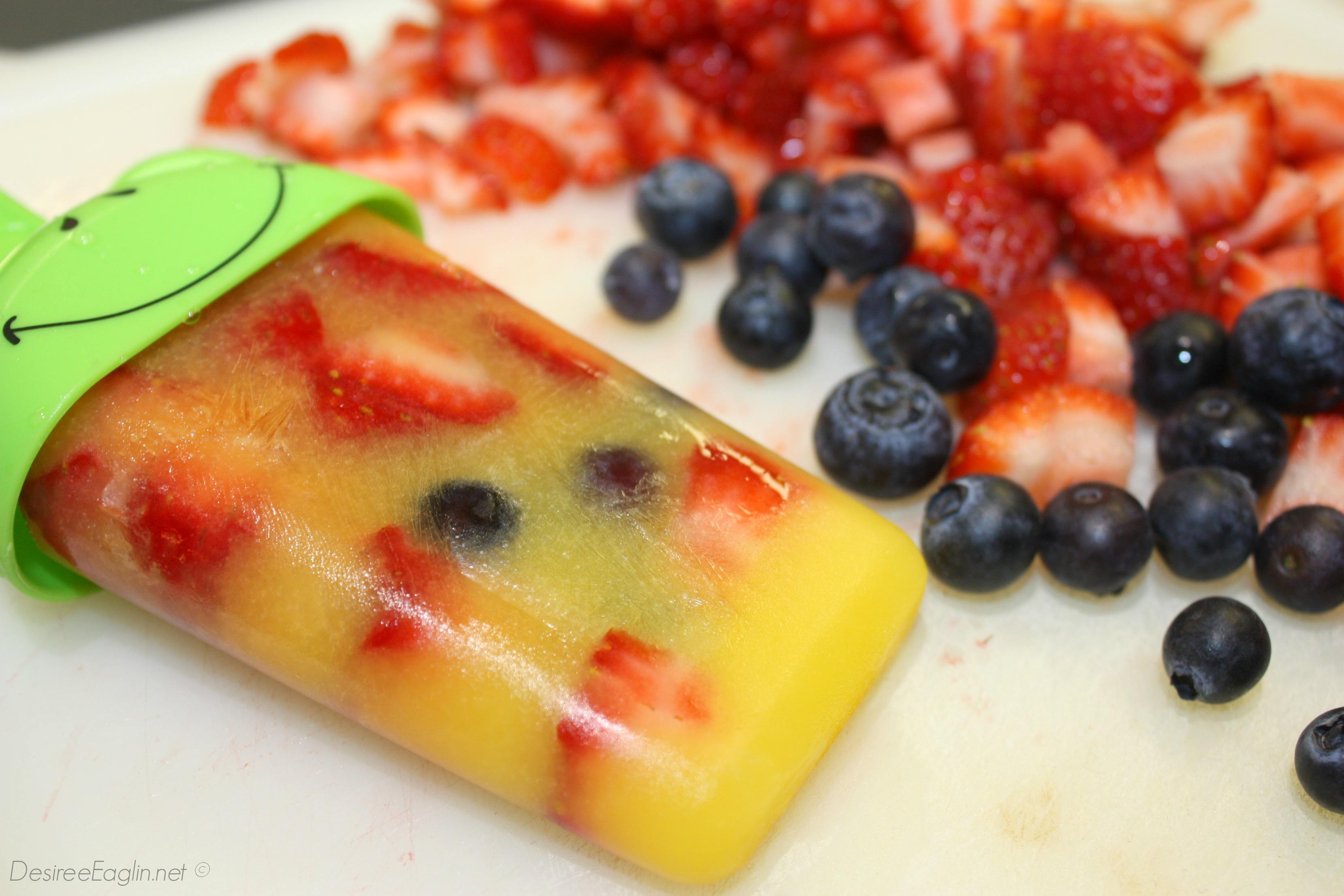
Freezing Juice?
a)
Physical Change
b)
Chemical Change
19.
A change where one or more new substances are created.
a)
Physical Change
b)
Chemical Change
20.
Change in color is a physical change.
a)
True
b)
False
21.
Change in density is a physical change.
a)
True
b)
False
22.
Fizzing, foaming, and burning are all examples of
a)
Chemical change
b)
Physical change
23.
Rust on an iron bar is an example of chemical change.
a)
True
b)
False
24.
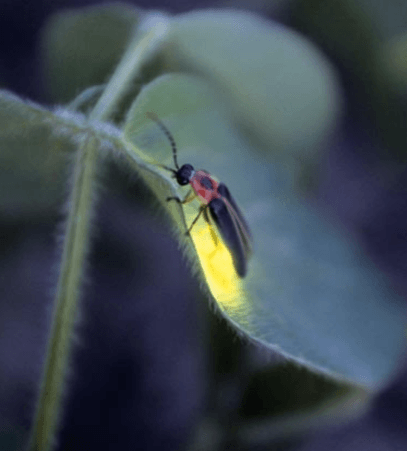
Is a firefly lighting up a physical or chemical change?
a)
Physical
b)
Chemical
25.
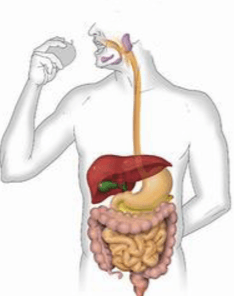
Is digesting your food a physical or chemical change?
a)
Physical
b)
Chemical
26.
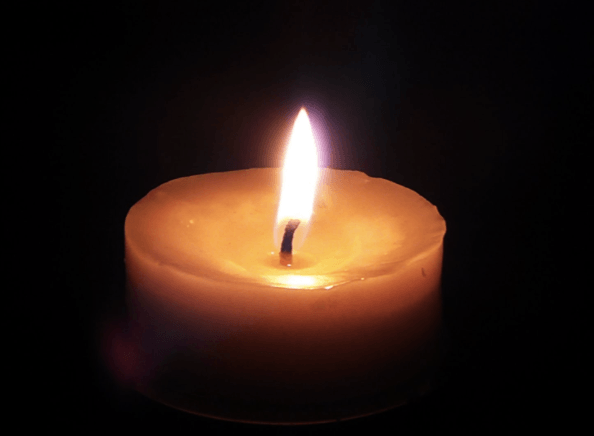
Is a burning candle a physical or chemical change?
a)
Physical
b)
Chemical
27.
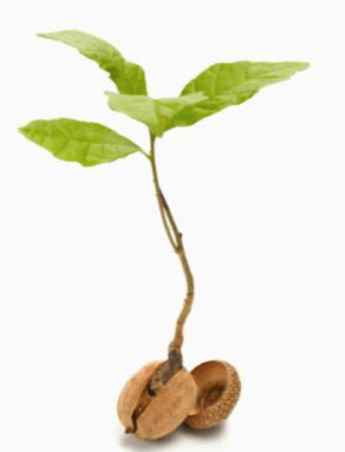
Is a tree sprouting a physical or chemical change?
a)
Physical
b)
Chemical
28.

Is getting a tan a physical or chemical change?
a)
Physical
b)
Chemical
29.

Is melting iron a physical or chemical change?
a)
Physical
b)
Chemical
30.

Is sour milk a physical or chemical change?
a)
Physical
b)
Chemical
31.
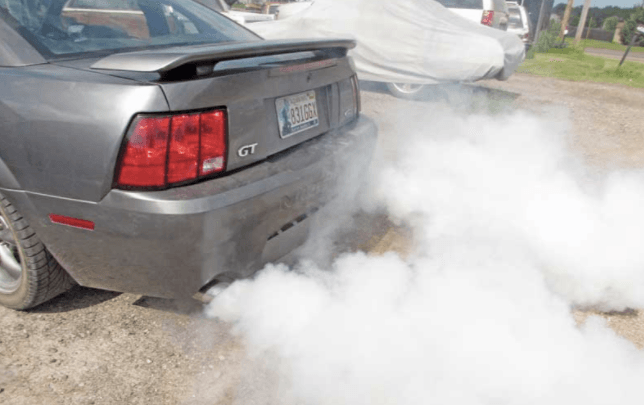
Is a car using fuel a physical or chemical change?
a)
Physical
b)
Chemical
32.
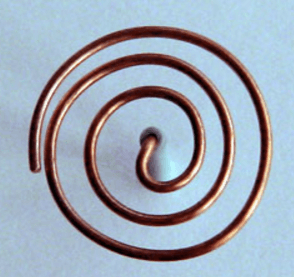
Is bending copper wire a physical or chemical change?
a)
Physical
b)
Chemical
33.
These can only be separated by chemical means.
a)
element
b)
compound
c)
mixture
d)
stuff
34.
These contain only one kind of atom.
a)
element
b)
compound
c)
mixture
d)
water
35.
The air is a _________.
a)
element
b)
mixture
c)
compound
d)
energy
36.
Water is a ___________.
a)
element
b)
mixture
c)
compound
37.
Elements can be broken down into simpler substances.
a)
false
b)
true
c)
sometimes
38.
Compounds contain a _____ set of elements.
a)
fixed
b)
random
c)
sweet
d)
inaccurate
39.
These must be separated chemically.
a)
elements
b)
compounds
c)
mixtures
d)
homogeneous mixtures
40.
These are mixtures that are the same throughout.
a)
homogeneous mixtures
b)
heterogeneous mixtures
c)
mixed mixtures
41.

Examples are milk and gasoline.
a)
elements
b)
mixtures
c)
compounds
42.
Examples are diamonds (C) and Uranium (U)
a)
elements
b)
mixtures
c)
compounds
43.
Is sugar (C12H22O11) an element or a compound?
a)
Element
b)
Compound
44.
What is H2SO4
made up of?
made up of?
a)
2 hydrogen, 1 sulfur, 4 oxygen
b)
1 hydrogen, 2 sulfur, 4 oxygen
c)
2 hydrogen & 4 sodium
d)
1 hydrogen & 6 sodium
45.
An element is made up of only one kind of _____.
a)
isotope
b)
plastic
c)
atom
d)
metal
46.

What is salad?
a)
element
b)
compound
c)
mixture
47.

Classify the picture with the correct label.
a)
Element
b)
Compound
c)
Mixture of Elements
d)
Mixture of Compounds
48.

Classify the picture with the correct label.
a)
Element
b)
Compound
c)
Mixture of Elements and Compounds
d)
Mixture of Elements
49.

Classify the picture with the correct label.
a)
Element
b)
Compound
c)
Mixture of Elements & Compounds
d)
Mixture of Compounds
50.

Classify the picture with the correct label.
a)
Compounds
b)
Mixture of Elements
c)
Mixture of Compounds
d)
Mixture of Elements & Compounds
51.

Classify the picture with the correct label.
a)
Mixture of Elements
b)
Compound
c)
Mixture of Compounds
d)
Element
52.

Classify the picture with the correct label.
a)
Element
b)
Compound
c)
Mixture of Compounds
d)
Mixture of Elements
53.

Classify the picture with the correct label.
a)
Mixture of Compounds
b)
Mixture of Elements
c)
Compound
d)
Mixture of Elements & Compounds
54.
True or False: The density of a specific type of material never changes.
a)
True
b)
False
55.
Frank has a paper clip. It has a mass of 9g and a volume of 3cm3. What is its density?
a)
3 g/cm3
b)
1/3 g/cm3
c)
27 g/cm3
d)
39 g/cm3
56.
Frank has an eraser. It has a mass of 4g, and a volume of 2cm3. What is its density?
a)
8 g/cm3
b)
2 g/cm3
c)
1/2 g/cm3
d)
24 g/cm3
57.
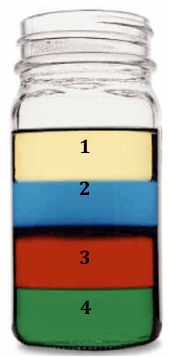
Put the liquids in order from most dense to least dense?
a)
4, 3, 2, 1
b)
1, 2, 3, 4
c)
3, 4, 2, 1,
d)
4, 3, 1, 2
58.
An object with which of the following densities will float on water?
a)
0.7 g/cm3
b)
1.2 g/cm3
c)
3.5 g/cm3
d)
11.4 g/cm3
59.
Helium balloons rise on earth because
a)
helium is less dense than air
b)
helium is more dense than air
c)
helium is cooler than air
d)
helium is warmer than air
60.
A student knows the mass of an object. What other variable does the student need to know to calculate the object's density?
a)
Color
b)
Weight
c)
Volume
d)
Length
61.

What is the volume of Object X?
a)
10.0 cm3
b)
15.0 cm3
c)
20.0 cm3
d)
25.0 cm3
62.
Which lab tool might you use to measure the volume of a liquid?
a)
electric scale
b)
bunsen burner
c)
test tube
d)
graduated cylinder
63.
Which units of measurement are used for volume?
a)
grams
b)
centimeters
c)
grams/milliliter
d)
milliliter
64.
The tool used to measure the mass of a substance or object is a ______________.
a)
balance
b)
graduated cylinder
c)
ruler
d)
thermometer
65.

The density of this material is 2 g/cm3.
There are 24 cm3 Find the total mass.
There are 24 cm3 Find the total mass.
a)
12 grams
b)
48 grams
c)
12 g/cm3
d)
48 g/cm3
66.

What is the volume of the fish?
a)
18.0 cm3
b)
6.0 cm3
c)
38.0 cm3
67.

Which box has a higher density?
a)
Box A
b)
Box B
c)
cannot be determined
d)
they are the same
68.
What units are used to measure Density?
a)
cm3/g
b)
g
c)
g/cm3
d)
cm3
69.
Volume is ...
a)
Mass/Volume
b)
The amount of matter in an object.
c)
The amount of space an object occupies.
d)
Anything that has mass and occupies space.
70.

Look at this image. Which object has the LOWEST density in water? How?
a)
The Ping Pong Ball because it floats to the top
b)
The bolt because it has sunk to the bottom
c)
The soda cap because it is not just full of air like the Ping Pong ball
71.
How many significant figures: 216 m
a)
1
b)
2
c)
3
d)
0
72.
How many significant figures: 2016 m
a)
1
b)
2
c)
3
d)
4
73.
How many significant figures: 153.0 mL
a)
1
b)
2
c)
3
d)
4
74.
How many significant figures: 0.012 km
a)
1
b)
2
c)
3
d)
4
75.
How many significant figures: 1000 mL
a)
1
b)
2
c)
3
d)
4
76.
How many significant figures: 100.000 cL
a)
1
b)
3
c)
5
d)
6
77.
How many significant figures: 0.001 g
a)
4
b)
3
c)
2
d)
1
78.
How many significant figures: 4.20 cm
a)
1
b)
2
c)
3
d)
4
79.
How many significant figures: 0.010 L
a)
1
b)
2
c)
3
d)
4
80.
How many significant figures: 450 m
a)
3
b)
2
c)
1
d)
0
81.
How many sig figs are there?
100000000
100000000
a)
1
b)
9
c)
10
82.
How many sig figs are there?
0.000008
0.000008
a)
1
b)
2
c)
6
d)
7
83.
Write 0.00000707 in scientific notation.
a)
7.07 x 10⁻⁶
b)
7.07 x 10⁶
c)
707 x 108
d)
707 x 10-8
84.
UNDERSTANDING
If the exponent is a negative number...
If the exponent is a negative number...
a)
you will get a large number
b)
you will get a small number
85.
UNDERSTANDING:
The first number in scientific notation must be...
The first number in scientific notation must be...
a)
between and including 0 and 10
b)
between and including 1 and 9.9999
c)
between and including 0 and 9.999
d)
between and including 1 and 10
86.
Which is the smallest?
1.3 x 10²⁰
2.9 x 10²¹
9.5 x 1032
8.4 x 10¹⁹
1.3 x 10²⁰
2.9 x 10²¹
9.5 x 1032
8.4 x 10¹⁹
a)
1.3 x 10²⁰
b)
2.9 x 10²¹
c)
9.5 x 1032
d)
8.4 x 10¹⁹
87.
How would you write 0.0005 in scientific notation?
a)
50 x 10-5
b)
5 x 10⁻⁴
c)
5 x 10³
d)
.5 x 103
88.
Convert to scientific notation:
520,000,000
a)
52 x 107
b)
5.2 x 10⁻⁷
c)
5.2 x 10⁸
d)
0.52 x 10⁹
89.
Express the following in scientific notation:
.000457
.000457
a)
457 x 106
b)
457 x 10-6
c)
4.57 x10⁴
d)
4.57 x 10⁻⁴
90.
If the exponent is a positive number the original number was...
a)
a really big number.
b)
a really small number.
100 %

