wayground logo

Free Printable Worksheets

Font size

S
M
L
XL
Worksheets

Physical Science Packet 2

Total questions: 81

Worksheet time: 3hrs 46mins

Name
Class
Date
1.
Which particle contributes the negative charge to the atom?
a)
proton
b)
electron
c)
neutron
d)
nucleus
2.
Which particle does not contribute mass to the atom?
a)
Proton
b)
Neutron
c)
Electron
d)
Nucleus
3.
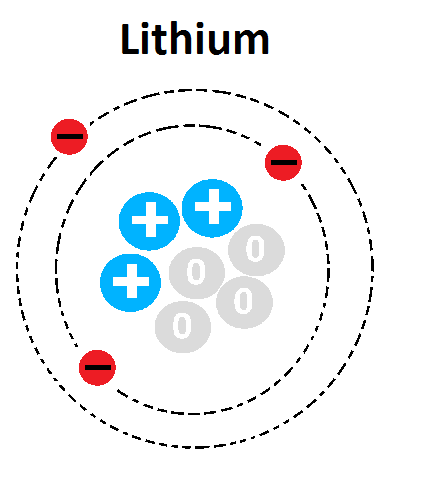
Bonus question: What element is this an atom of?
a)
nitrogen
b)
lithium
c)
beryllium
d)
carbon
4.
The three main subatomic particles are electrons, protons and ____________.
a)
photons
b)
neurons
c)
neutrons
d)
quarks
5.
What are the two main parts of the atom?
a)
nucleus and cytoplasm
b)
nucleus and electron cloud
c)
core and electron cloud
d)
protons and neutrons
6.
What is the standard unit of mass at the atomic level?
a)
centimeters
b)
millimeters
c)
amu
d)
milligrams
7.
Most of the mass in an atom is made up of _____________________?
a)
protons and electrons
b)
protons and neutrons
c)
neutrons and electrons
d)
electrons and quarks
8.
What is the electrical charge of a proton?
a)
1+
b)
1-
c)
neutral
d)
2-
9.
Water is an element
a)
true
b)
false
10.
Flammability is an example of what property?
a)
Chemical property
b)
Physical property
11.

All the following species have the same number of electrons except...

a)

F

b)

Ne

c)

Na+

d)

Al3+

12.

Which two subatomic particles are in the nucleus?

a)

Protons and Neutrons

b)

Protons and Electrons

c)

Neutrons and Electrons

13.

Electrons have a ____________ charge.

a)

positive

b)

negative

c)

neutral

14.

Neutrons have a _____________charge.

a)

positive

b)

negative

c)

neutral

15.

Which is NOT part of an atom?

a)

protons

b)

neutrons

c)

neurons

d)

electrons

16.

Most of an atom is made up of...

a)

energy

b)

protons

c)

empty space

d)

neutrons

17.

In which way are protons and electrons the same?

a)

same mass

b)

same number of particles

c)

same charges

18.

Electrons are located______.

a)

outside the nucleus

b)

inside the nucleus

19.

Which two particles have about the same amount of mass?

a)

neutrons and protons

b)

protons and electrons

c)

electrons and neutrons

20.
The building blocks of matter
a)
Mass Number
b)
Atoms
c)
Nobel Gases
d)
Isotopes
21.
The total number of Protons and Neutrons.
a)
Mass Number
b)
Atomic Number
c)
Matter
d)
Ion
22.
Number of protons in an atom.
a)
Atomic Number
b)
Mass Number
c)
Isotope
d)
Valence electrons
23.
Electrons in the outermost orbital.
a)
Protons
b)
Neutrons
c)
Valence Electrons
d)
Isotopes
24.
Group on the periodic table that is naturally stable and does not react with other elements.
a)
Nobel Gases
b)
Alkali Metals
c)
Alkaline Earth Metals
d)
Halogens
25.
Anything that has mass and takes up space
a)
isotope
b)
matter
c)
ion
d)
atomic number
26.
Atoms of the same element but with different numbers of neutrons.
a)
Ion
b)
Isotope
c)
Mass Number
d)
electron
27.
An atom that has become charged by gaining or losing electrons.
a)
Ion
b)
Isotope
c)
Electron
d)
Valence Electron
28.

To calculate average atomic mass, you need

a)

the atomic mass of each isotope

b)

the percent abundance of each isotope

c)

the atomic mass and percent abundance of each isotope

d)

to find the average of the atomic masses of each isotope

29.
The mass listed on the periodic table for each element is known as the 
a)
average atomic mass
b)
atomic mass
c)
atomic weight
d)
weighted mass
30.

Which subatomic particle determines the identity of an element?

a)

protons

b)

neutrons

c)

electrons

31.

Which subatomic particle determines if an atom is stable or unstable?

a)

protons

b)

neutrons

c)

electrons

32.

Which subatomic particle determines the charge of an atom?

a)

protons

b)

neutrons

c)

electrons

33.

An element has two isotopes, one with a mass of 39 and one with a mass of 41. If the average mass is 40.6, which isotope is more abundant?

a)

mass of 39

b)

mass of 41

c)

they are both equally abundant

34.
What is the atomic number?
a)
the number of protons
b)
the number of protons and neutrons
c)
the number of neutrons
d)
the number of protons and electrons
35.
What is the mass number?
a)
the number of protons
b)
the number of protons and neutrons
c)
the number of neutrons
d)
the number of protons and electrons
36.
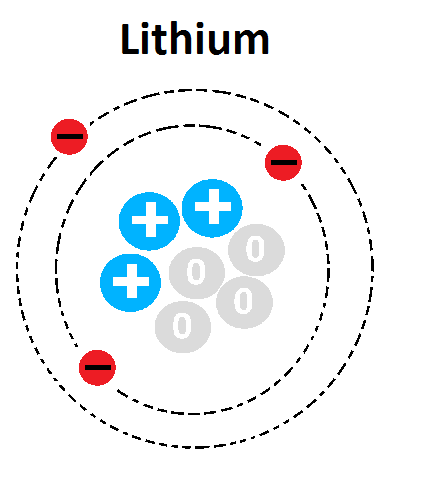
What is the atomic number of this atom?
a)
1
b)
3
c)
4
d)
7
37.

What is the atomic mass of this atom?

a)

1

b)

3

c)

4

d)

7

38.
In order for an atom to be neutral what has to be true?
a)
The atom has more protons than neutrons
b)
The atom has more neutrons than protons
c)
The atom has the same number of protons and neutrons
d)
The atom has the same number of protons and electrons
39.
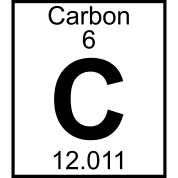
What does the C represent?
a)
atomic mass
b)
atomic number
c)
element name
d)
chemical symbol 
40.
what does the 6 represent?
a)
Atomic mass
b)
atomic number
c)
chemical symbol
d)
element name
41.
The atomic number of this pictured element is
a)
28
b)
58.6934
c)
Ni
d)
Nickel
42.
What does the H stand for?
a)
Hydrogen
b)
atomic number
c)
atomic mass
d)
atomic explosion
43.
How is the number of neutrons in the nucleus of an atom calculated?
a)
Add the number of e- and p+ together
b)
Subtract the number of e- from p+
c)
Subtract the number of p+ from the mass number
d)
Add the mass number to the number of e-
44.
The atomic number of an elements is the total number of which particles in the nucleus?
a)
neutrons
b)
protons
c)
electrons
d)
protons and electrons
45.
The smallest particle of an element that retains the properties of that element is a(n)
a)
atom
b)
electron
c)
proton
d)
neutron
46.
What is the atomic number for an element with 41 neutrons and a mass number of 80?
a)
39
b)
41
c)
80
d)
121
47.
How many protons are in Beryllium?
a)
4
b)
9
c)
5
d)
2
48.
Most of the nonmetals on the periodic table are located...
a)
on the left side
b)
at the bottom
c)
on the right side
d)
in the middle
49.
In the modern periodic table, elements are arranged by:
a)
atomic mass
b)
atomic number
c)
valence electrons
d)
number of isotopes
50.
What does "1.00794" mean in this image?
a)
number of protons
b)
number of neutrons
c)
average number of protons and neutrons
d)
average number of valence electrons
51.
_______ are the ROWS on the periodic table.
a)
Families
b)
Groups
c)
Periods
d)
Elements
52.
________ are the COLUMNS on the periodic table and are organized by similar properties.
a)
Classifications
b)
Groups
c)
Periods
d)
Elements
53.
Atoms with similar properties are most likely located...
a)
in the same period.
b)
in the same group.
c)
in different periods.
d)
to the right and left of each other.
54.
If an atom had the same properties as fluorine (F), it would probably be located in
a)
period 1.
b)
period 2.
c)
group 2.
d)
group 17.
55.
As you move from left to right across the periodic table, the atomic number increases. 
a)
True
b)
False
56.
Most of the elements on the periodic table are classified as "metal".
a)
True
b)
False
57.
Elements in the same period have similar characteristics.
a)
True
b)
False
58.
What is the element symbol for boron? 
a)
B
b)
Bo
c)
Bn
d)
W
59.
Each element is unique based on its number of protons, also known as the...
a)
atomic mass
b)
valence number
c)
atomic symbol
d)
atomic number
60.
In the modern periodic table elements are arranged by:
a)
atomic mass
b)
atomic number
c)
valence electrons
d)
number of isotopes
61.
Each column in the periodic table is called a 
a)
period
b)
group
c)
cluster
d)
unit
62.
The yellow atoms are called 
a)
metals
b)
nonmetals
c)
metalloids
d)
noble gases
63.
The periodic table has __ periods.
a)
18
b)
8
c)
2
d)
7
64.
An element's identity is determined by the number of
a)
electrons.
b)
protons.
c)
neutrons.
d)
valence.
65.
Elements in the same ________ are more chemically similar.
a)
group
b)
period
c)
club
d)
table
66.
Which elements have the most similar chemical properties?
a)
K and Na
b)
K and Ca
c)
K and Cl
d)
K and S
67.
Rows on the period table are called _____ while columns are called _____.
a)
groups, families
b)
groups, periods
c)
periods, groups
d)
families, groups
68.
The periodic table has __ groups.
a)
8
b)
7
c)
18
d)
2
69.
What is the number of protons that the element in this image contain?
a)
14
b)
7
c)
15
d)
18
70.
How many neutrons does the isotope of lithium have?
a)
8
b)
3
c)
4
d)
5
71.
all matter is made of what 
a)
energy 
b)
atoms 
c)
electrons 
d)
compounds 
72.
What is the atomic mass of "F"
a)
9
b)
18
c)
17
d)
19
73.
the element with atomic number 11 is
a)
sodium
b)
helium 
c)
magnesium
d)
nitrogen
74.
How many neutron are in the atom "K"?
a)
7
b)
2
c)
39
d)
20
75.

What property did Mendeleev use to arrange the elements?

a)

alphabetical

b)

density

c)

melting point

d)

atomic weight

76.

Mendeleev started a new row whenever the properties of the elements _?_.

a)

changed

b)

reversed

c)

were no longer evident

d)

repeated

77.

The months of the year are __?__ because they repeat in the same order every 12 months. So are the hours of the day.

a)

periodic

b)

group

c)

period

d)

halogens

78.

Mendeleev placed elements with similar properties in the same _?_.

a)

row

b)

column

c)

table

d)

pile

79.

A property that was unknown to Mendeleev was _?_.

a)

atomic number

b)

atomic weight

c)

density

d)

melting point

80.

A significant accomplishment of Mendeleev's organization method is that he successfully used it to _?_.

a)

classify the noble gases

b)

measure the atomic masses of elements

c)

discover new elements

d)

predict the properties of undiscovered elements

81.

The periodic table got its name from the _?_.

a)

repeating similarities in the properties of elements

b)

punctuation after chemical symbols

c)

shape of the table

d)

last name of the founder