wayground logo

Free Printable Worksheets

NEW

Font size

S
M
L
XL
Worksheets

benchmark

Total questions: 60

Worksheet time: 1hrs 25mins

Name
Class
Date
1.
What nucleic acid is this?
a)
DNA
b)
RNA
c)
ribosomes
d)
proteins
2.
Which of the following macromolecules store energy?
a)
Carbohydrates
b)
Lipids
c)
Both carbohydrates and lipids store energy.
d)
Neither carbohydrates nor lipids store energy.
3.
Which of the following statements about water is true?
a)
Water is a polar molecule.
b)
Water can exhibit adhesive behavior.
c)
Water can exhibit cohesive behavior.
d)
All of the above
4.
What are the monomers of nucleic acid?
a)
Fatty acids
b)
Polypeptides
c)
Phospholipids
d)
Nucleotides
5.
Special proteins called enzymes are biological catalysts. This means that they:
a)
Speed up the rate of chemical reactions in biological processes
b)
Reduce the activation energy required to start a chemical reaction
c)
All of the above
d)
None of the above
6.
The specific location where a substrate binds on an enzyme is called the:
a)
Active site
b)
Catalyst region
c)
Connection site
d)
Reactant complex
7.
Which of the following is listed from smallest to largest?
a)
Cells - tissues - organs - organ systems - organism
b)
Cells - organs - tissues - organ systems - organism
c)
Organism - organ systems - organs - tissues - cells
d)
Organism - organs - organ systems - tissues - cells
8.
Enzymes are made up of:
a)
carbohydrates
b)
proteins
c)
DNA
d)
lipids
9.
_______ is to the ability of the body or a cell to seek and maintain a condition of equilibrium or stability within its internal environment when dealing with external changes.
a)
cell theory
b)
homeostasis
c)
evolution
d)
growth
10.
If you burn your hand, heat is the _______, and pulling your hand away is the ______.
a)
reflex; stimulus
b)
stimulus; reflex
c)
homeostasis; feedback
d)
feedback; homeostasis
11.
How do consumers get the energy they need to survive?
a)
photosynthesis
b)
eating other organisms
c)
decomposing dead materials
d)
chemosynthesis
12.

Reproduction that only involves one parent and all offspring are identical; for example, binary fission of bacteria or amoebas.

a)

Asexual

b)

Sexual

c)

Division

d)

Addition

13.

Maintaining a stable internal

environment is called

a)

homeostasis

b)

equilibrium

c)

balance

d)

evenness

14.
When you step out into the cold, your body shivers in order to keep its temperature at 98.6F.
a)
All living things use energy
b)
All living things contain cells
c)
All living things maintain homeostasis
d)
All living things grow
15.
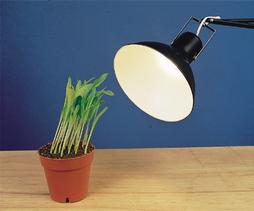
A plant growing towards the light is an example of 
a)
reproduction.
b)
responding to a stimuli.
c)
metabolism.
d)
homeostasis.
16.
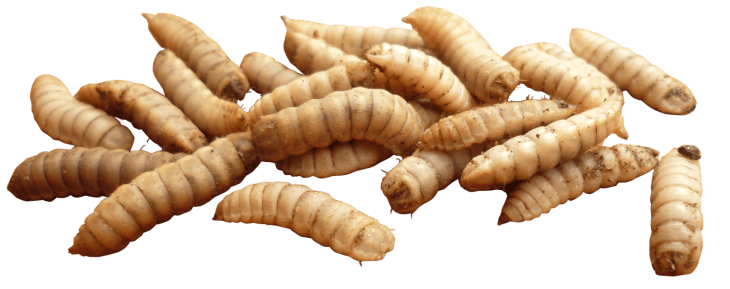
A maggot changing into a fly is an example of 
a)
reproduction.
b)
growth and development.
c)
homeostasis.
d)
evolution.
17.
What is an adaptation?
a)
A feature or behavior that helps an animal survive.
b)
The food that an animal eats.
c)
How energy moves in a food web.
d)
How animals evolve throughout time.
18.
What is the main source of energy on Earth?
a)
stars
b)
moon
c)
water
d)
sun
19.
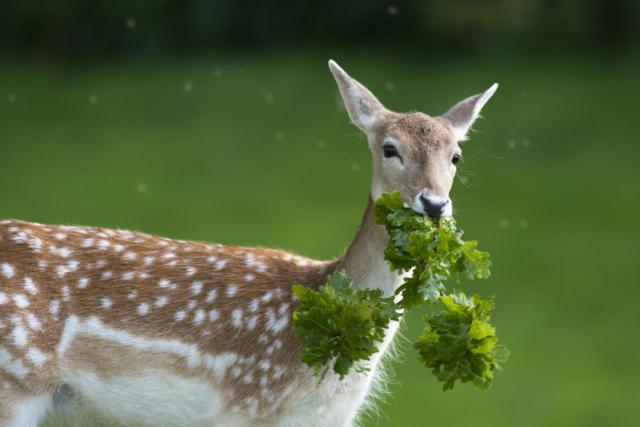
A plant using sunlight to make food to use or a deer eating leaves from a shrub are examples of
a)
universal genetic codes.
b)
organisms made of cells.
c)
responding to a stimulus.
d)
metabolism.
20.
A testable explanation to a problem that has not yet been tested. 
a)
data
b)
theory
c)
hypothesis
d)
fact
21.
This variable in an experiment is the one being changed by the scientist. 
a)
dependent variable
b)
independent variable
c)
data
d)
control group
22.
An experiment is performed on plants to see how different liquids affect plant growth. Each plant in the experiment is given a different liquid; water, apple juice, or milk. Each plant has the same amount of soil, sunlight, and listens to the same music. In this investigation, the independent variable is ...
a)
The type of plant
b)
The amount of sunlight
c)
The type of music
d)
The type of liquid
23.
Dependent variable means
a)
the scientist controls what to test
b)
educated guess
c)
ask a question
d)
what is being measured
24.
If I ride my bike to school instead of walking, then I will get to school faster. What is the dependent variable?
a)
True
b)
How fast you get to school
c)
Riding a bike or walking
d)
False
25.

Some researchers are developing a new fertilizer designed to improve the growth of plants in hot, dry climates. The fertilizer was applied to one hundred desert plants in a greenhouse. The average daytime temperature in the greenhouse was 90°F, and the humidity levels were low. Which is best for the researchers to do next?

a)

A compare plants that received fertilizer to similar plants that received none

b)

B begin selling the fertilizer to gardeners living in hot, dry climates

c)

C change the conditions in the greenhouse and retest the fertilizer

d)

D test the fertilizer on plants that are adapted to cooler climates

26.

A scientist investigates the effect of carbon dioxide on plant height. The scientist grows plants in several closed containers. All the plants receive the same amounts of water and light, but the air in each container has a different amount of carbon dioxide. What is the independent variable in this experiment?

a)

the amount of carbon dioxide in each container

b)

the number of plants in each container

c)

the amount of water provided to the plants

d)

the height of each plant after a period of time

27.

What is the independent variable on this graph?

a)

Year

b)

Number of Visitors

c)

Visitors to a Park

d)

none of these

28.
In which year did exactly 60 students have scholarships?
a)
2010
b)
2011
c)
2012
d)
2013
29.
In August, how many metric tons did Clark's Paper Mill and Tyler Paper Mill produce all together?
a)
10
b)
70
c)
80
d)
90
30.
What is this graph showing you?
a)
The worlds population is staying the same.
b)
The worlds population is going down (decreasing).
c)
The worlds population was growing but now is decreasing.
d)
The worlds population has been growing and will continue to grow. 
31.

How does a catalyst work in speeding up a reaction?

a)

By lowering the activation energy or reaction

b)

by giving them more energy

c)

by making them more available

32.
The following graph shows two different reaction pathways for the same overall reaction at the same temperature. Which pathway is slower and why?
a)
Red, because the activation energy is larger
b)
Blue, because the activation energy is lower
c)
both reaction progress at the same rate
33.

At the end of this reaction, has energy been released or absorbed?

a)

Absorbed

b)

Released

c)

There is not enough information to tell.

d)

There is not change in the amount of energy in the system.

34.

Looking at the graph, how would you know which reaction took place with the help of an enzyme?

a)

The peak for the activation energy is lower.

b)

The peak for the activation energy is higher.

c)

There is less energy in the products than the reactants.

d)

There is no way to really tell which line on the graph shows a reaction that takes place with a reaction.

35.

Which of the following is NOT a carbohydrate?

a)

Glucose

b)

Glycogen

c)

Cholesterol

d)

Galactose

36.

Which of the following is the primary structural component of the cell membrane?

a)

Carbohydrates

b)

Lipids

c)

Proteins

d)

Nucleic Acids

37.

DNA and RNA

a)

carbohydrates

b)

lipids

c)

proteins

d)

nucleic acids

38.

Fats, oils, waxes, cholesterol, hormones

a)

carbohydrates

b)

lipids

c)

proteins

d)

nucleic acids

39.

Stores genetic information

a)

carbohydrates

b)

lipids

c)

proteins

d)

nucleic acids

40.

This molecule is a(n) ____________.

a)

nucleic acid

b)

lipid

c)

protein

d)

carbohydrate

41.

What biomolecule is pictured here?

a)

protein

b)

lipid

c)

carbohydrate

d)

nucleic acids

42.

What biomolecule is this?

a)

protein

b)

carbohydrate

c)

lipid

d)

nucleic acid

43.

What symbol is this?

a)

Chemical Hazard:

This picture of a spill shows that the material could be dangerous. Be careful to avoid spills, and ask an adult to help clean up if there is a spill.

b)

Biological Hazard:

This symbol is placed on equipment, such as refrigerators or cabinets, that may contain biohazards, such as blood samples or toxins.

c)

Irritant:

The material could harm your skin, and you should wear gloves whenever you use it.

44.
What safety symbol is this?
a)
Flammable 
b)
Oxidizing Agent
c)
No Open Flame
d)
Explosion
45.
If you are not sure what to do during a lab activity:
a)
guess
b)
change lab partners
c)
ask a teacher
d)
just sit quietly and do nothing
46.
What is the purpose  of an enzyme?
a)
give permission for the reaction
b)
raise activation energy
c)
speed up reactions
d)
control how many reactions occur
47.
Each enzyme only has 1 substrate that will fit its active site.  What is this called?
a)
reusable
b)
catalyst
c)
specific
d)
fragile
48.
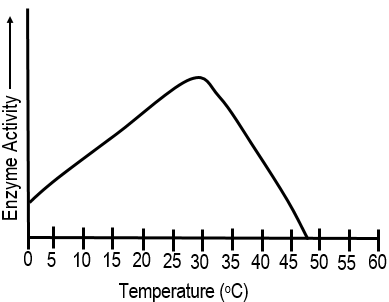
Based on the graph, what is the optimal temperature for this enzyme? 
a)
15oC
b)
40oC
c)
30oC
d)
35oC
49.
A covalent bond is formed when two atoms ____ electrons
a)
share
b)
lose
c)
transfer
d)
gain
50.
Which type of bond transfers electrons?
a)
Covalent bond
b)
Ionic bond
51.
The property where water molecules are attracted to other water molecules.
a)
adhesion
b)
capillary action
c)
cohesion
d)
universal solvent
52.
The property where water can pull itself up tubes or through spaces in paper or fabrics.
a)
adhesion
b)
capillary action
c)
cohesion
d)
universal solvent
53.
A water strider can skate along the top of a pond because:
a)
covalent bonds result in water cohesion
b)
hydrogen bonds result in water cohesion (surface tension)
c)
water striders have adapted to take advantage of water cohesion
d)
low surface tension of water
54.
What word describes when water is attracted to other substances?
a)
cohesion
b)
adhesion
c)
capillary action
d)
surface tension
55.
Attractions between water molecules are called
a)
Covalent bonds
b)
Ionic bonds
c)
Polar bonds
d)
Hydrogen bonds
56.
Which variable is the one you use to compare all your data to? (Tells you that your data is correct)
a)
Independent
b)
Dependent
c)
Constant
d)
Control
57.
An experiment is performed on plants to see how different liquids affect plant growth. Each plant in the experiment is given a different liquid; water, apple juice, or milk. Each plant has the same amount of soil, sunlight, and listens to the same music. In this investigation, the independent variable is ...
a)
The type of plant
b)
The amount of sunlight
c)
The type of music
d)
The type of liquid
58.
When experimenting with the growth of a plant, a scientist uses three (of the same type of) plants, two different fertilizers, equal light, and equal water. What type of variable is the fertilizer?
a)
Dependent
b)
Independent
c)
Control
d)
Compound
59.

What are the proper complementary base-pairs?

a)

A--T and G--C

b)

A--G and C--T

c)

G--T and A--C

d)

A--C and T--G

60.

T A G G A C T


The complementary strand is...

a)

T A G G A C T

b)

A T G G T G A

c)

A T C C T G A

d)

T T C C A G T