
 Worksheets
Atoms and Elements
Total questions: 39
Worksheet time: 27mins
Name
Class
Date
1.
Which of the following best describes an atom?
a)
protons and neutrons grouped together
b)
protons and electrons grouped together
c)
a core (center) of protons and neutrons surrounded by electrons
d)
a core of electrons and neutrons surrounded by protons
2.
Which of the following is found farthest from the center of an atom?
a)
nucleus
b)
proton
c)
neutron
d)
electron
3.

Use your periodic table to answer the following question.
Which of the following atoms has 14 electrons?
Which of the following atoms has 14 electrons?
a)
Carbon (C)
b)
Silicon (Si)
c)
Sulfur (S)
d)
Argon (Ar)
4.

Use the picture of an atom below to answer the question.
Which statement best describes the part of the atom that is shown by the letter B?
Which statement best describes the part of the atom that is shown by the letter B?
a)
It is an electron, and it has a negative charge.
b)
It is an electron, and it has a positive charge.
c)
It is a proton, and it has a negative charge.
d)
It is a neutron, and it has a neutral charge.
5.
The protons in an atom’s nucleus have what kind of charge?
a)
positive
b)
negative
c)
neutral
d)
no charge
6.
What kind of charge do neutrons have?
a)
positive
b)
negative
c)
neutral
d)
-3
7.
What is the basic unit of matter (smallest part of an element)?
a)
atoms
b)
elements
c)
protons
d)
compounds
8.
The periodic table is arranged in different ways. One way is by ______________.
a)
atomic mass
b)
atomic number
c)
neutrons
d)
whether they share neutrons
9.

What is the name of this element?
a)
K
b)
Potassium
c)
39.098
d)
19
10.
The smallest part of any substance is?
a)
Element
b)
Compound
c)
Atom
d)
Molecule
11.
A substance that cannot be separated or broken down into simpler substances by chemical means is?
a)
Mixture
b)
Element
c)
Compound
d)
Molecule
12.

What is the atomic number of this element?
a)
19
b)
Potassium
c)
39.098
d)
K
13.

What is the chemical symbol of this element?
a)
Potassium
b)
K
c)
39.098
d)
19
14.

What element is this?
a)
Oxygen
b)
Carbon
c)
Hydrogen
d)
Helium
15.

What element is this?
a)
Hydrogen
b)
Helium
c)
Lithium
d)
Beryllium
16.

Which element has similar properties to Chlorine (Cl)?
a)
Fluorine
b)
Sulfur
c)
Boron
d)
Oxygen
17.
Neon has 10 electrons. The electrons fill the energy levels in Neon like this...
a)
Two in the first, four in the second and four in the third.
b)
Four in the first, Four in the second and two in the third.
c)
Two in the first and eight in the second.
d)
Two in the first, two in the second and six in the third.
18.

Which picture represents an element/molecule made of the same atoms?
a)
O2
b)
H2O
19.
What are the basic building blocks for all matter?
a)
atoms
b)
elements
c)
compounds
d)
chemicals
20.
What do we call a substance consisting of a single atom?
a)
coefficient
b)
element
c)
compound
d)
molecule
21.
What do we call a chemical substance made up of 2 or more different types atoms bonded together?
a)
formula
b)
atom
c)
subscript
d)
compound
22.
A recipe for a chemical substance is called a ________ _________.
a)
coefficent
b)
chemical formula
c)
Oxygen
d)
atom
23.
2H2O
How many Hydrogen atoms are present?
How many Hydrogen atoms are present?
a)
2
b)
4
c)
1
d)
10
24.
2H2O
How many Oxygen atoms are present?
How many Oxygen atoms are present?
a)
2
b)
4
c)
1
d)
5
25.
2H2O
How many H2O molecules are present?
How many H2O molecules are present?
a)
1
b)
4
c)
2
d)
8
26.
The Atomic Number is the same as the number of:
a)
protons
b)
electrons
c)
protons and neutrons
d)
electron shells
27.
A subatomic particle that has a positive electric charge
a)
Proton
b)
Neutron
c)
Electron
d)
Isotope
28.
A subatomic particle that orbits an atom's nucleus, has a negative charge, and has very little mass
a)
Proton
b)
Neutron
c)
Electron
d)
Isotope
29.
This forms when two or more different elements chemically combine.
a)
monoatomic elements
b)
diatomic element
c)
compound
30.
Atoms are most stable when their outer shell is complete.
a)
true
b)
false
31.
What is a valence electron?
a)
The sum of neutrons and protons.
b)
The # of electrons in the last shell.
c)
A type of bond.
d)
A popular compound.
32.

a)
2
b)
3
c)
5
33.

a)
2
b)
8
c)
3
d)
13
34.
How many elements are in the following equation:
HO2C
HO2C
a)
2
b)
1
c)
4
d)
3
35.
Elements are made of
a)
many types of atoms
b)
the periodic table
c)
one type of atom
d)
molecules
36.
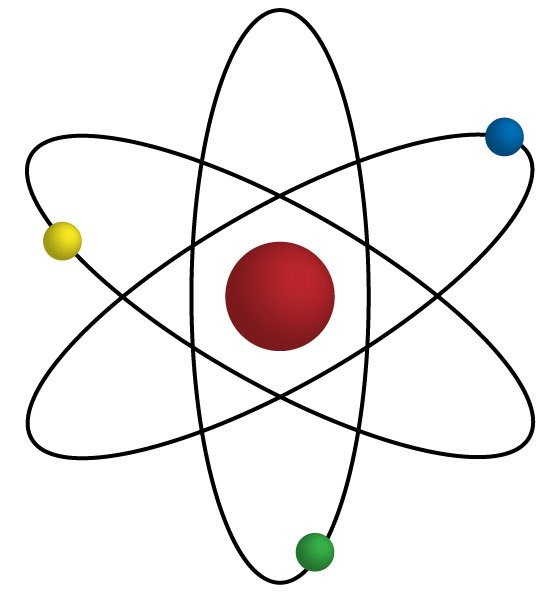
What are the 3 particles that make-up the atom?
a)
protons, neutrons, and isotopes
b)
neutrons, isotopes, and electrons
c)
positives, negatives, and electrons
d)
protons, neutrons, and electrons
37.
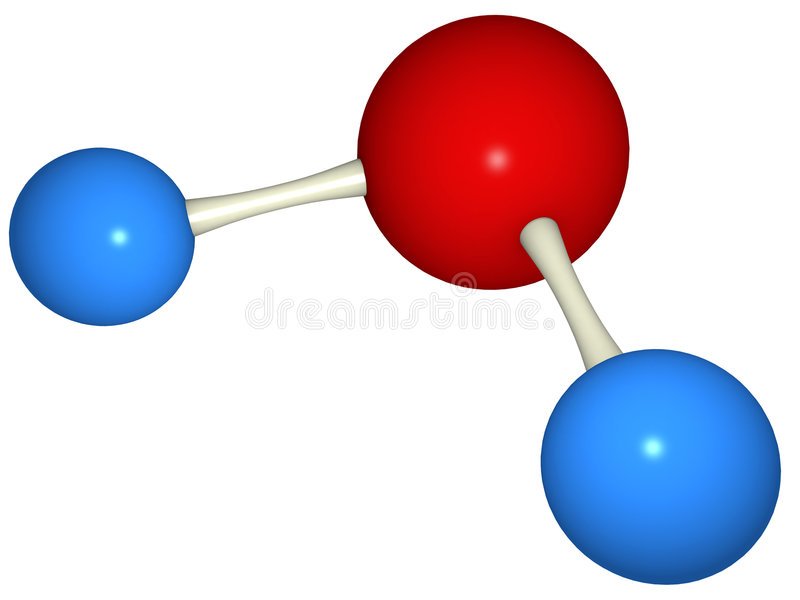
How many hydrogen atoms are there in a water molecule?
a)
0
b)
1
c)
2
d)
3
38.

What is the total number of atoms in an ammonia (NH3) molecule?
a)
1
b)
2
c)
3
d)
4
39.

Carbon dioxide (CO2) contains how many atoms of oxygen?
a)
0
b)
1
c)
2
d)
3
100 %

