wayground logo

Free Printable Worksheets

NEW

Font size

S
M
L
XL
Worksheets

Ecology Review

Total questions: 63

Worksheet time: 2hrs 30mins

Name
Class
Date
1.
What do we call the non-living part of the environment?
a)
Biotic
b)
Population
c)
Abiotic
d)
Antibiotic
2.
What does the direction of the arrow represent in a food chain or energy pyramid?
a)
the flow of energy
b)
which way is north
c)
the expenditure of energy
d)
increase of energy
3.
What do we call several different populations interacting in some way?
a)
Population
b)
Community
c)
Ecosystem
d)
Biome
4.
The study of how living things interact with their environment and abiotic factors is the study of ____________________.
a)
Astrology
b)
Microbiology
c)
Ecology
d)
Geology
5.
How can abiotic factors change in an ecosystem?
a)
Flooding
b)
Forest fires
c)
drought
d)
All of the above
6.
Where do plants get their energy?
a)
Powerade
b)
5 hour energy drinks
c)
candy
d)
sun
7.
What is a diagram that shows a direct straight line of a feeding relationship?
a)
energy pyramid
b)
food pyramid
c)
food web 
d)
food chain
8.
What is the diagram that shows all feeding relationships possible with available resources in an ecosystem?
a)
energy pyramid
b)
food pyramid
c)
food chain
d)
food web
9.
Bees pollinating flowers is an example of:
a)
Predation
b)
Commensalism
c)
Mutualism
d)
Parasitism
10.
Your cat has fleas. Fleas suck blood and your kitty gets an infection.
a)
Mutualism
b)
Predation
c)
Commensalism
d)

Parasitism

11.
A remora hitches a ride with the shark. It gets a free ride unbeknownst to the shark.
a)
Parasitism
b)
Predation
c)
Commensalism
d)
Mutualism
12.
A wolf eating a lamb is an example of:
a)
Parasitism
b)
Mutualism
c)
Predator/Prey
d)
Commensalism
13.
I had chicken and broccoli for dinner. That makes me a:
a)
Herbivore
b)
Carnivore
c)
Parasite
d)
Omnivore
14.
What is an animal called that eats only plants?
a)
Carnivore
b)
Omnivore
c)
Parasite
d)
Herbivore
15.
A lion eats meat. That makes a lion a_____________
a)
Carnivore
b)
Herbivore
c)
Plant hater
d)
Omnivore
16.
Grass --> Grasshopper --> Mockingbird represents __________. 
a)
food chain
b)
food pyramid
c)
food web
d)
ecosystem
17.
An organism`s role in its community is its __________, and where it lives is its _________.
a)
habitat; niche
b)
role in community; niche
c)
niche; role in the community
d)
niche; habitat
18.
Which level has the least amount of energy?
a)
producer
b)
decomposer
c)
primary consumer
d)
secondary consumer
19.

An ongoing relationship in which one organism benefits and the other is harmed.

a)

A. Predator & Prey

b)

B. Mutualism

c)

C. Commensalism

d)

D. Parasitism

20.

There are birds that eat the food from between the teeth of alligators, leaving the alligators with clean teeth and the birds with a meal. What type of ongoing relationship is this?

a)

A. Predator & Prey

b)

B. Mutualism

c)

C. Commensalism

d)

D. Parasitism

21.

Which of the following is a predator and prey relationship?

a)

A. Cow and grass.

b)

B. Vulture and a dead lion.

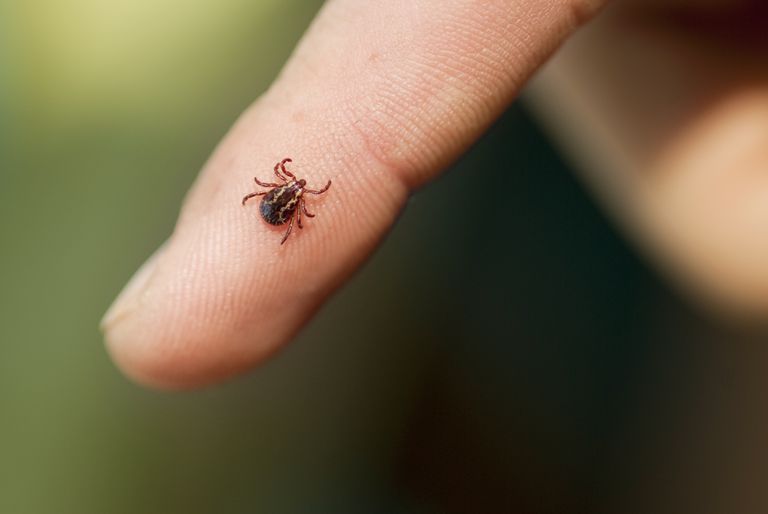
c)

C. Tick and a deer.

d)

D. Spider and a fly.

22.
What part of the water cycle does this picture show?
a)
condensation
b)
precipitation
c)
evaporation
d)
transpiration
23.
Which of these is an example of precipitation?
a)
snow
b)
air
c)
clouds
d)
vapor
24.
What is it called when plants give off water vapor as a waste product?
a)
condensation
b)
evaporation
c)
sublimation
d)
transpiration
25.
What is water that flows in rivers and streams into the oceans and lakes?
a)
evaporating
b)
condensing
c)
precipitating
d)
runoff
26.
Organisms that break down dead plants & animals and release nitrogen back into atmosphere...
a)
bacteria
b)
plants
c)
animals
d)
producers
27.
Plants and animals cannot use nitrogen directly from the air.
a)
True
b)
False
28.
What happens when organisms die and decay? 
a)
Their bodies are lifted up
b)
Their nitrogen returns to the soil
c)
they keep their nitrogen
d)
They stay on earth forever
29.
The process in which Nitrogen circulates and is recycled is called ____________
a)
The nitrogen cycle
b)
The water cycle
c)
The carbon cycle
d)
Nitrogen Fixation 
30.
Which of the following will increase the size of a population?
a)
emigration and births
b)
immigration and deaths
c)
immigration and births
d)
emigration and deaths
31.
Which of the following is a density-dependent limiting factor?
a)
human activities 
b)
unusual weather
c)
competition
d)
natural disaster
32.
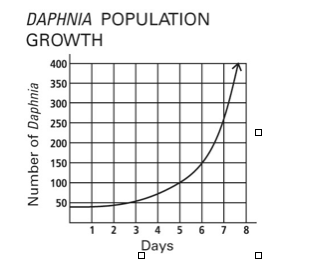
What type of growth is shown on this graph?
a)
logistic
b)
exponential
c)
average
d)
density-independent
33.
Which of the following is a density-independent limiting factor?
a)
natural disaster
b)
predation
c)
disease
d)
parasitism
34.
The movement of a single caribou into a herd is an example of
a)
population
b)
immigration
c)
emigration
d)
predation
35.
What pattern of growth will a population with limited resources show?
a)
density-dependent
b)
exponential 
c)
logistic
d)
logical 
36.
Diseases may spread more rapidly when an area is crowded, so disease is considered to be a
a)
type I survivorship curve
b)
population crasher
c)
density-dependent limiting factor
d)
population enhancer
37.
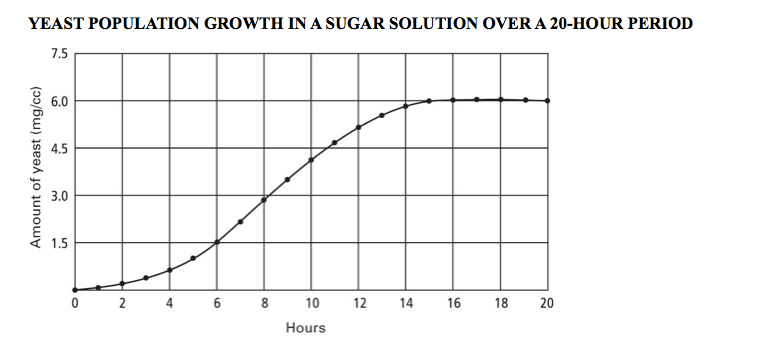
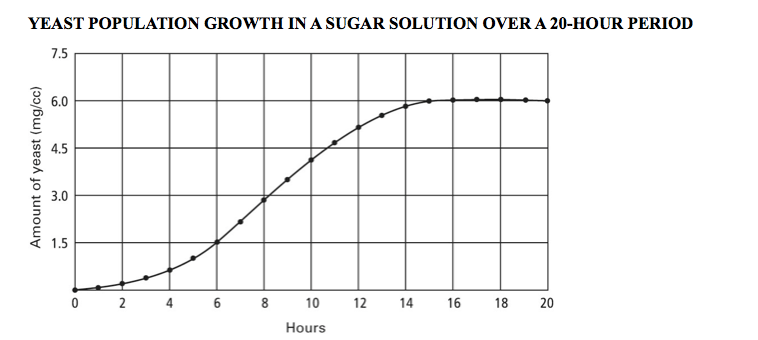
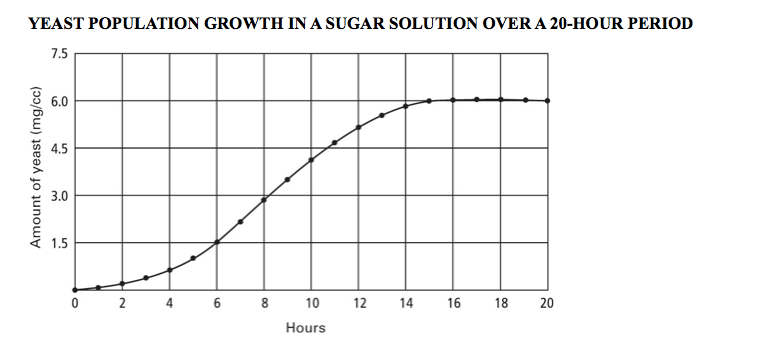
What type of population growth is shown in the graph?  
a)
logistic growth
b)
logical growth
c)
exponential growth
d)
density-dependent growth
38.
 What is the name for this leveling off shown in the graph?
a)
logistic line
b)
carrying capacity
c)
climax point
d)
mediocre
39.
After how many hours does the yeast population shown in the graph reach its carrying capacity?
a)
15 hours
b)
10 hours
c)
6 hours
d)
At the start
40.
What 2 factors decrease population size?
a)
Immigration, Births
b)
Emigration, Births
c)
Emigration, Deaths
d)
Immigration, Deaths
41.
What does biodiversity mean?
a)
Only one species in an area.
b)
The different amount of species in an area
c)
All abiotic life
d)
Nitrogen fixation
42.

Image "B" shows more biodiversity than image "A". Why?

a)

Because "B" shows more different species than image "A"

b)

Because image "B" has less different species than "A"

c)

"A" has a greater number of same species plants so this statement is wrong.

d)

Both images show the same biodiversity

43.
A collection of organisms that belong to different populations but all live in the same area and interact with one another.
a)
Population
b)
Ecosystem
c)
Community
d)
Ecosphere
44.
A collection of organisms that make up a community as well as all of the nonliving aspects of the environment.
a)
Population
b)
Community
c)
Habitat
d)
Ecosystem
45.
What are the biotic factors in this image?
a)
sunlight, elephants, and grasses
b)
sunlight, water,  and air
c)
elephants, plants, trees 
46.
Which of the following best describes a community?
a)
sharks, groupers, anemones and shrimp on a coral reef
b)
decorator crabs on the seafloor
c)
loggerhead sea turtles in Atlantic
d)
prairie grassland in Wyoming
47.
Which level of ecological organization is composed of many similar ecosystems with the same climate and geographic locations? 
a)
A community
b)
A population
c)
A biome
d)
A biosphere
48.
What level of organization can be observed in the image?
a)
Species
b)
Population
c)
Community
d)
Ecosystem
49.
The main human activity that releases greenhouse gases is
a)
using bottled water
b)
burning fossil fuels
c)
texting on cellphones
d)
eating meat
50.
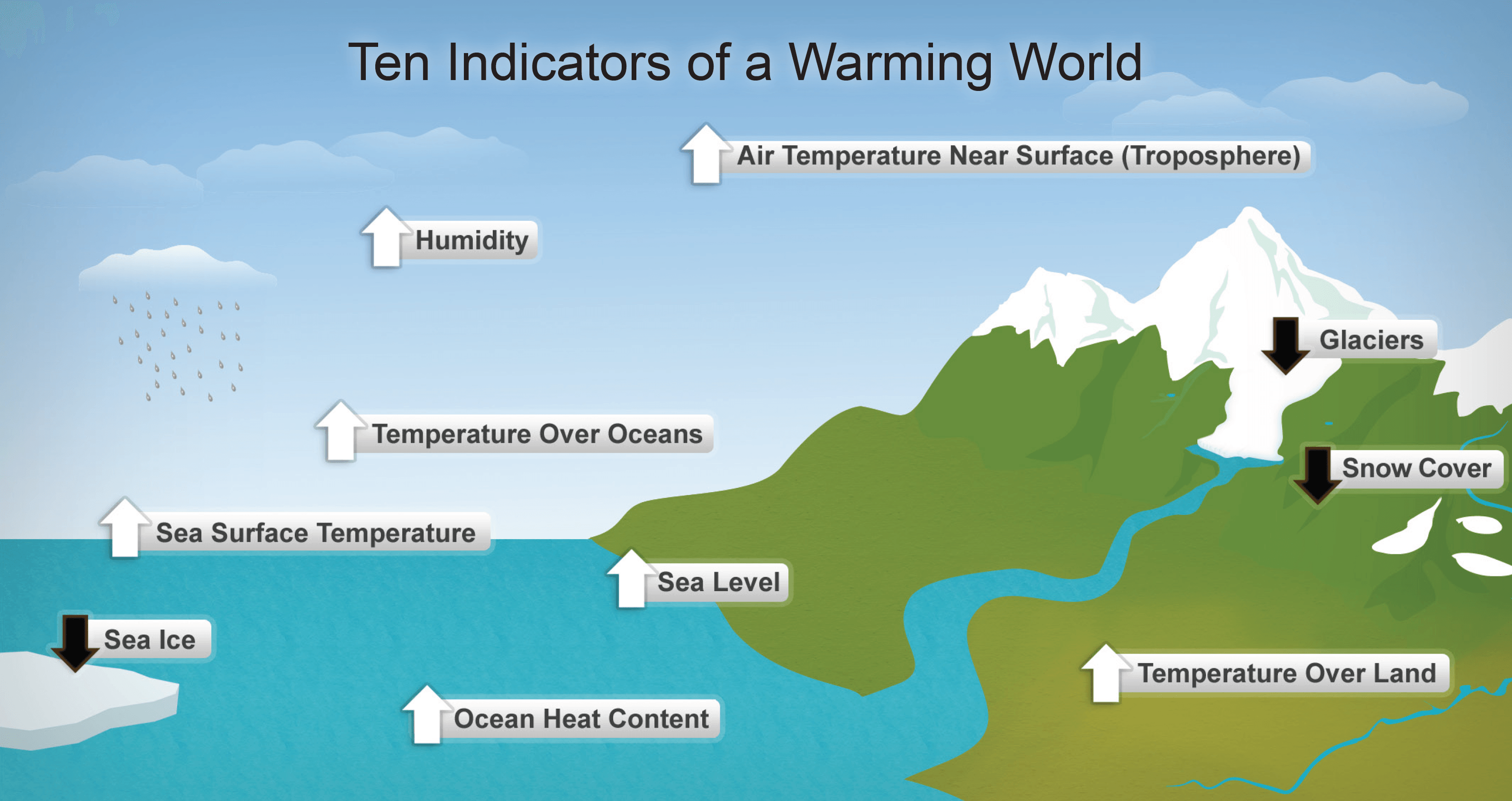
Worldwide, temperatures have been increasing for more than 100 years.  Is this evidence of global warming?
a)
yes
b)
no
51.
The greenhouse gas having the greatest role in human-caused global warming is
a)
methane
b)
carbon dioxide
c)
CFCs (chlorofluorocarbons)
d)
ozone
52.
Human activity is adding additional greenhouse gases to the amount that are in the atmosphere naturally
a)
True
b)
False
53.
Carbon is used by plants during which process?
a)
Respiration
b)
Transpiration
c)
Photosynthesis
d)
Transportation
54.
What is the greenhouse effect?
a)
warming of the earth due to gases in our atmosphere.
b)
cooling of the earth due to gases in our atmosphere
55.
Is wood a renewable resource?
a)
No, once you cut down a tree it is gone forever.
b)
Yes, we can manage forests and replace trees that are used.
56.
Do we need greenhouse gases on Earth?
a)
Yes - they keep the Earth warm
b)
Yes - they keep all the gases on our planet
c)
No - they only cause terrible climate change
d)
No - they only block some of the Sun's rays
57.
The gradual increase in the temperature of the atmosphere is known as ________________.
a)
Greenhouse Effect
b)
Global Warming
c)
Carbon Dioxide Gases
d)
Methane
58.
How can global warming cause sea levels to rise? Choose the best answer.
a)
by causing it to rain more often
b)
by melting glaciers and ice caps
c)
by increasing the number of undersea volcanic eruptions
d)
by creating bigger and more powerful hurricanes
59.
Why does cutting down trees increase global warming?
a)
trees soak up carbon dioxide
b)
trees provide shade which counteracts global warming
c)
trees absorbs the sun's energy without radiating back into the atmosphere
d)
trees drain greenhouse gases like methane from soil
60.
Which of the following is NOT an effect of Global Warming?
a)
Polar ice caps will melt.
b)
Coastal regions will be covered with rising sea levels.
c)
Some areas will experience serious droughts
d)
The Earth's rotation will slow down and eventually stop
61.
Things you can do to help decrease global warming include:
a)
Eat more ice cream.
b)
Keep your freezer door open.
c)
Keep your air conditioner on high.
d)
Turn off your lights when you’re not using them.
62.
Carmen is going to the market to purchase food for her family. She is very conscious of her choices and is working to reduce her carbon footprint. Which of the following would help her to be successful in her goal?
a)
Purchasing meats packaged at the local supermarket, but trucked in from out of state
b)
Purchasing fresh fruits and vegetables at the local supermarket that were shipped from out of state
c)
Purchasing fresh fruits and vegetables from the local farmer’s market
d)
None of these choices will reduce her carbon footprint
63.
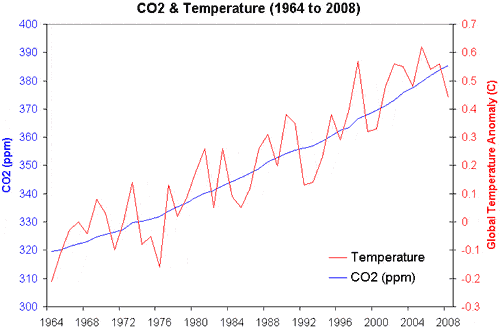
The graph below shows CO2 emissions and temperatures from 1909 to 1949.  What conclusion is best supported by the graph?
a)
There is no relationship between carbon dioxide concentrations and temperatures
b)
As carbon dioxide concentrations increase, temperatures increase
c)
As carbon dioxide concentrations increase, temperatures decrease
d)
As carbon dioxide concentrations decrease, temperatures increase