wayground logo

Free Printable Worksheets

Font size

S
M
L
XL
Worksheets

Cell Energy, Cell Cycle, and Cell Specialization

Total questions: 35

Worksheet time: 27mins

Name
Class
Date
1.

The long, thin, strand-like structures in the nucleus that are made of DNA are

a)

organelles

b)

genes

c)

chromatin

d)

popcornosomes

2.

The coiled, linear DNA found in eukaryotic cells is called

a)

plasmid

b)

chromatin

c)

chromosomes

d)

nucleus

3.

Which organelle is DNA usually found in?

a)

cell membrane

b)

vacuole

c)

ribosome

d)

nucleus

4.
This picture shows which process?
a)
mitosis
b)
meiosis
c)
the cell cycle
5.

Which of the following has the correct order for the cell cycle

a)

G1, S, G2, M

b)

G1, G2, S, M

c)

G1, M, G2, S

d)

S, G1, G2, M

6.
Before cells can divide, what must be copied?
a)
mitochondria
b)
cytoplasm
c)
DNA
d)
Cell Wall
7.
The cell spends most of it's life in ________________.
a)
mitosis
b)
cytokinesis
c)
Interphase
d)
None of the above
8.
In the S stage of interphase_______________
a)
the cell grows
b)
the nucleus divides
c)
the cell membrane divides
d)
the DNA is replicated
9.
The division of the nucleus is known as:
a)
Synthesis
b)
Mitosis
c)
G1
d)
G2
10.

Reorder the images to show you understand the order of mitosis

a)

A, B, C, D

b)

B, C, D, A

c)

D, A, B, C

d)

B, A, D, C

11.
In which image do the chromatids split from each other at the centromere making individual chromosomes for the daughter cells
a)
A
b)
C
c)
E
d)
G
12.
In which image shows cytokinesis
a)
A
b)
C
c)
E
d)
G
13.
When a plant cell goes through cell division,  _____________.
a)
the 2 new nuclei are separated by the cell membrane pinching off.
b)
4 new cells are formed
c)
a cell plate forms, dividing the 2 new nuclei
d)
None of the above
14.
Uncontrollable cell growth is known as _____
a)
obesity
b)
cancer
c)
diabetes
d)
hepatitis
15.
In asexual reproduction, all of the offspring are:
a)
Physically Identical
b)
Genetically Identical
c)
Physically and Genetically Identical
d)
Not Identical
16.
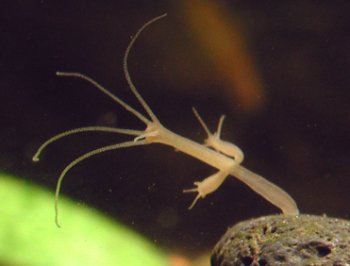
This is when a new organism grows by cell division on the body of its parent. The bud, or offspring is identical to the parent. The bud, when large enough, can break off of the parent and live on its own.  Examples of this include yeast, hydra and potatoes.
 
a)
Regeneration
b)
Vegetative propagation
c)
Fission
d)
Budding
17.
This type of cell carries oxygen throughout the body.
a)
gamete
b)
platelet
c)
white blood cell
d)
red blood cell
18.
This type of cell sends messages throughout the body in the form of electrical impulse.
a)
nerve cell
b)
sperm cell
c)
muscle cell
d)
skin cell
19.
The diagram shows the process of cell specialization from a single stem cell. Which of the following statements is true about the process of specialization.
a)
Specilized cells (blood, skin, nervous etc) cannot be produced from a single stem cell
b)
Specilized cells are produced immediately following fertilization
c)
Even though all the cells in an organism come from one single cell, they can specialize into different cell types
d)
Sincce all the cells in an organism come from one single cell, they must all have the same structure and function
20.
What is one goal of cellular differentiation/specialization?
a)
To create specialized cells to help organism maintain homeostasis.
b)
To many cells.
c)
To make stem cells
d)
to make single celled organisms
21.
What is the function of ATP in living things?
a)
provides energy for cells
b)
stores genetic information
c)
provides structure in the nucleus
d)
controls what enters and leaves the cell
22.
Which of the following is the correct equation for PHOTOSYNTHESIS?
a)
CO+ H2O →O+ C6H12O6
b)
CO+ C6H12O6 → O+ H2
c)
O+  H2O → CO+ C6H12O6
d)
C6H12O6 + O2 → CO+ H2O
23.
What is the ultimate ORIGINAL source of energy for living things
a)
Sugar
b)
Sun
c)
Moon
d)
Carbon Dioxide
24.
Which of the following is an example of an AUTOTROPH?
a)
Shrub
b)
Goosehawk
c)
Mushroom
d)
Earthworm
25.
Which gas is removed from the atmosphere during photosynthesis?
a)
hydrogen
b)
oxygen
c)
nitrogen
d)
carbon dioxide
26.
Which IS NOT a limiting factor on photosynthesis
a)
Carbon dioxide
b)
Oxygen
c)
Light
d)
Temperature
27.
Which DOES NOT limit aerobic cellular respiration?
a)
Sugar
b)
Oxygen
c)
Methane
d)
Temperature
28.
What are the reactants of aerobic cellular respiration?
a)
water and carbon dioxide
b)
oxygen and glucose
c)
oxygen and carbon dioxide
d)
oxygen and water
29.
Which process makes the least ATP?
a)
Photosynthesis
b)
Aerobic Cellular Respiration
c)
Anaerobic Cellular Respiration
d)
Fermentation
30.
Which organelle from the plant cell is primarily responsible for converting sugar into ATP?
a)
Heterotrophs
b)
Nucleus
c)
Vacuole
d)
Chloroplast
31.

Which process makes lactic acid or alcohol after anaerobic respiration to help recycle molecules for ATP production?

a)

Photosynthesis

b)

Aerobic Cellular Respiration

c)

Anaerobic Cellular Respiration

d)

Fermentation

32.
Which organisms do aerobic cellular respiration?
a)
Heterotrophes
b)
Autotrophes
c)
Autotrophes and Heterotrophes
33.

If yeast are deprived of oxygen, they perform aerobic respiration and fermentation. They produce... (select as many as you need)

a)

Oxygen

b)

Carbon dioxide

c)

Lactic acid

d)

Alcohol

e)

ATP

34.

Prokaryotic and eukaryotic cells can do the process of fermentation. Where in the cell does anaerobic fermentation happen?

a)

mitochondria

b)

nucleus

c)

chloroplast

d)

cytoplasm

e)

ribosome

35.

Which is the correct order for energy flow?

a)

Sun--> Glucose --> ATP

b)

Glucose--> Sun--> ATP

c)

Sun--> ATP --> Glucose

d)

ATP--> Sun--> Glucose