
 Worksheets
VSEPR theory and polarity practice
Total questions: 54
Worksheet time: 46mins
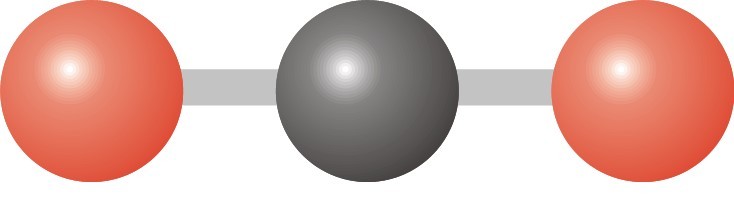
Which molecule would have this molecular geometry?
BF3
CH4
PCl5
CO2
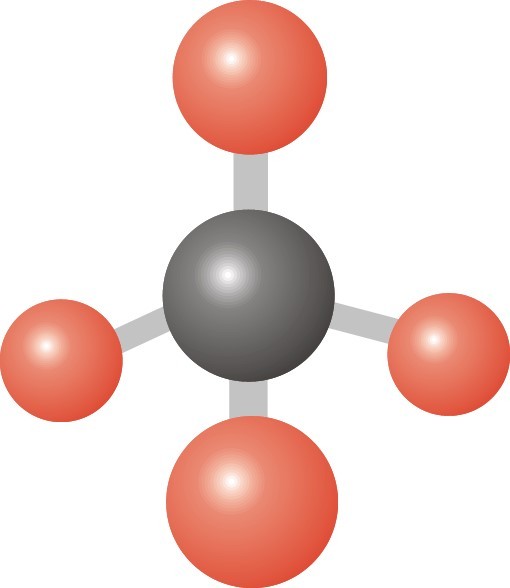
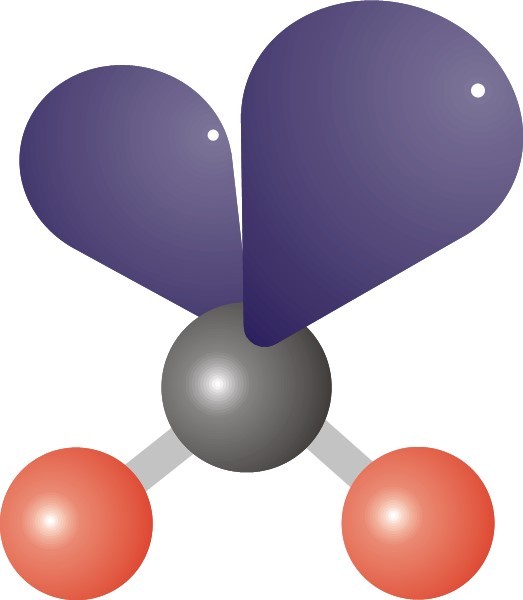
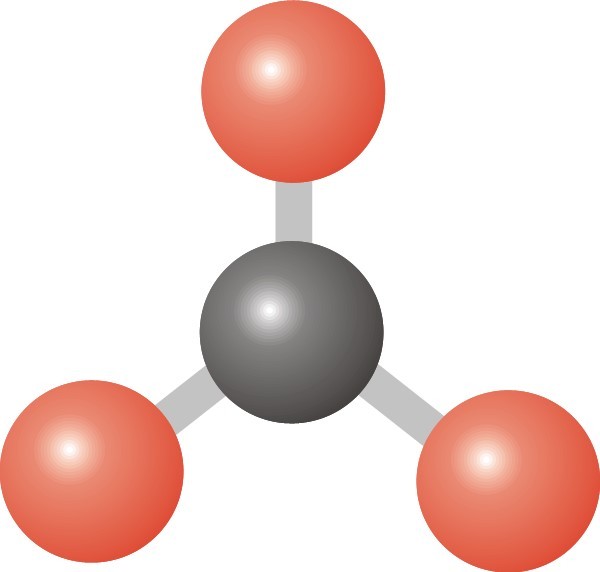
Is this molecule polar?
Yes
No
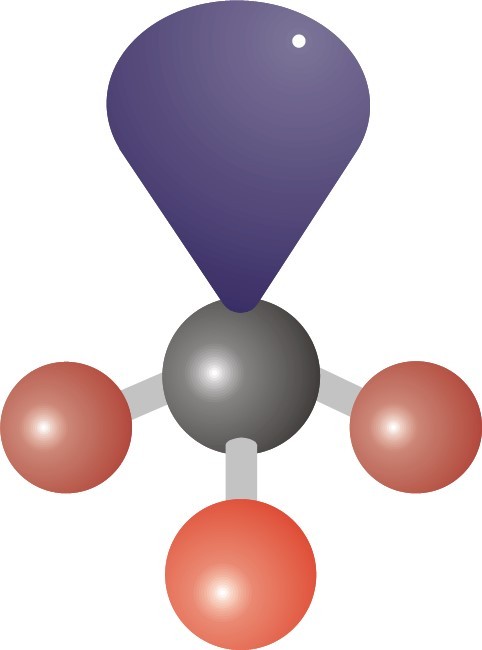
Is this molecule polar?
No, there are four things around the central atom.
Yes, the dipole moment (+-->)would point to the purple area that represents the unbonded pair of electrons.


Bond angle for bent. Look at your second reference chart.
120o
109.5o
104.5o
107o

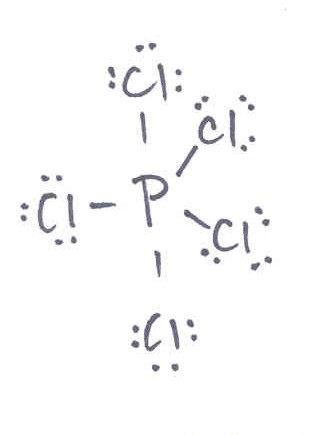

How many sigma bonds are in the following molecule?
0
1
2
3

How many pi bonds are in the following compound?
0
1
2
3
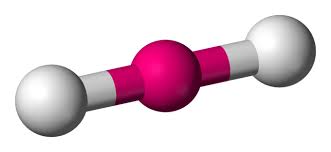
What is the hybridization of a linear molecule? Count the bonds and then figure out which hybrid gives you the same number of bonds.
sp
sp2
sp3
sp3d
Which of the following bonds is least polar?
C--O
O--H
S--Cl
Br--Br
I--F
Which of the following molecules has a dipole moment? Remember that is when the molecule is polar. Write out the Lewis Dot and/or draw the 3D shape to figure this out.
CO2
SO2
CH4
I2
none of these
Of the following, which molecule has the largest bond angle based on their geometry and how far apart the attached atoms are?
O3
OF2
HCN
H2O
more than one of these has equally large bond angles


tetra
six
Four
Five
seven
Does this molecule have polar bonds? Is the whole thing polar?
Yes. No.
Yes. Yes.
No. Yes.
No. No.
Is this polar?
No
Yes, and you draw the dipole moment pointing toward the orange balls.
Yes, and you draw the dipole moment pointing toward the purple areas.
I can't tell because there are no atoms.

IS this polar?
No, there are 4 atoms attached.
Yes, and you draw the dipole moment pointing toward the hydrogens because they are positive.
Yes, and you draw the dipole moment toward the fluorine because it is very electronegative.

Is this molecule polar?
Yes, and you draw the dipole moment pointing between the white balls, the hydrogens.
Yes, and you draw the dipole moment pointing between the green atoms, the fluorines.
No, there are 4 atoms attached.

Is this molecule polar?
No, there are 4 atoms attached.
Yes, and you draw the dipolement pointing toward the hydrogen.
Yes, and you draw the dipole moment pointing in the middle of the bromines because they are more electronegative.

In the middle is carbon. Is this molecule polar?
Yes, and you draw the arrow (dipole moment) pointing between the Br because Br is more electronegative.
Yes, and you draw the arrow (dipole moment) between a F and a Br to balance it out.
Yes, and you draw the arrow (dipole moment) pointing between the Fs because F is more electronegative.
No, there are 4 atoms attached and they are all very electronegative.
What ways can you make a sigma bond? Click all that apply.
S orbital to S orbital
P orbital straight on to P orbital straight on
P orbital parallel to P orbital
S orbital to P orbital head on
What is the strongest bond type?
sigma
Pi


What is the picture showing?
All of the resonance structures for carbonate.
The formal charge on each atom in carbonate.
The electronegativity for carbonate.
The ionization energy for carbonate.

Does this compound have a dipole moment?
Yes
No
A nonpolar compound can only contain nonpolar bonds.
True
False
We want to write the Lewis Diagram for the compound ClO3- (chlorine and oxygen). How many valence electrons are in this compound?
28
26
27
25

molecule in which opposite ends have opposite electric charges
cohesion
nonpolar molecule
solution
polar molecule

Opposite electrically charged areas _______________.
repel each other
attract each other
A molecular geometry with 2 lone pairs and 2 bonding pairs is
Tetrahedral
Trigonal pyramidal
Bent
Linear
The two (2) factors that determine if a molecule is Polar or Non-polar:
The atoms's ionization energy
the type of atoms in the molecule
The atom's oxidation number
the shape of the molecule


When you draw the direction of the dipole moment for the whole molecule (+-->) you draw the arrow pointing to what side?
The negative end of the molecule
The positive end of the molecule.
The middle of the molecule.


