Worksheets
CHM40 End of term1 practice
Total questions: 89
Worksheet time: 1hrs 14mins
How many micrometers are there in 7.0 cm?
7.0 X 10⁴
7.0 X 10⁻⁹
7.0 X 10⁶
7.0 X 10⁹
7.0 X 10³


( 1 cm = 10 mm)

(1 cm is 10 mm)

(1 m is 100 cm)
How would you write 0.0005 in scientific notation?
50 x 10-5
5 x 10⁻⁴
5 x 10³
.5 x 103
8.317 x 10⁶
in standard form?
23,948
How many significant digits in 0.00500?
5
6
1
3
4
If the exponent is a negative number...
If the exponent is a positive number...
10,030,400,000
How would you write 0.0005 in scientific notation?
50 x 10-5
5 x 10⁻⁴
5 x 10⁻³
.5 x 103
one picometer is _______________ of a meter
one billionth
one trillionth
one thousandth
one millionth
one zillionth
one micrometer is _______________ of a meter
one billionth
one trillionth
one thousandth
one millionth
one zillionth


8.317 x 10⁶
in standard form?

(1 cm = 10 mm)
(1 cm is 10 mm)
(1 liter = 1000 ml)
How can we separate an insoluble solid from a liquid?
chromatography
evaporation
filtration
condensation
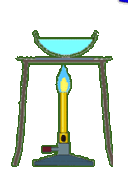
Which one of the following is the name for separation technique in the picture below
distillation
filtration
evaporation
chromatography

Which separation technique is shown below
Evaporation
Simple Distillation
Decantation
Fractional Distilation

Which separation technique is shown below
using a magnet
separating funnel
Centrifuging
Chromatography

Which separation technique is shown below
filtration
crystallization
sublimation
evaporation

Which separation technique is shown below
using a magnet
separating funnel
Centrifuging
Chromatography
Which of the following is a disadvantage of evaporation?
It always requires heat
It cannot be used for insoluble solids
All of the solute is recovered
The solvent (water) is not recovered

Which of these statements best describes the contents of the pile?