
 Worksheets
Classification of Matter Review
Total questions: 60
Worksheet time: 3hrs 41mins
Name
Class
Date
1.
Are made from a combination of 2 or more elements...
a)
Molecules
b)
Pure Substances
c)
Compounds
d)
Elements
2.
Which is NOT a chemical change?
a)
Leaves changing colors in the fall
b)
Iron rusting
c)
Digesting Lunch
d)
Ice Melting
3.
If you change a substance into a new substance...
a)
Partial Change
b)
Physical Change
c)
Chemical Change
d)
Freezing
4.
Any characteristic of a material, such as shape or size, that you can observe or attempt to observe without changing the identity of the material.
a)
physical change
b)
chemical change
c)
physical property
d)
chemical property
5.
Substance with atoms that are all alike.
a)
element
b)
compound
c)
homogeneous mixture
d)
heterogeneous mixture
6.

This picture represents:
a)
Element
b)
Compound
c)
Mixture of Elements
d)
Mixture of Compounds
7.
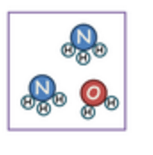
This picture represents:
a)
Element
b)
Compound
c)
Mixture of Elements
d)
Mixture of Compounds
8.
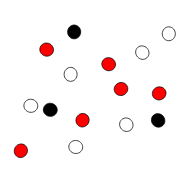
This picture represents:
a)
Element
b)
Compound
c)
Mixture of Elements
d)
Mixture of Compounds
9.
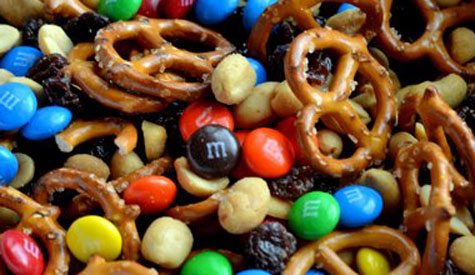
What type of mixture is this?
a)
homogenous mixture
b)
chemical
c)
heterogeneous mixture
d)
solid mix
10.
All matter is made up of .....
a)
Compounds
b)
Atoms
c)
Molecules
d)
Sunshine
11.
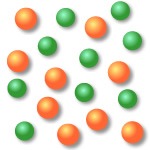
This picture represents which of the following?
a)
element
b)
compound
c)
mixture
12.
Alex goes into the garden and digs up a shovel full of dirt. This is a _____________ mixture.
a)
Homogeneous
b)
Heterogenous
13.
Which of the following is an element?
a)
Sugar
b)
Salt
c)
Water
d)
Oxygen
14.
What are the three states of matter?
a)
solid, volume, mass
b)
density, volume, mass
c)
solid, liquid, gas
d)
density, gas, volume
15.
Something that takes up space and has mass.
a)
volume
b)
matter
c)
mass
d)
density
16.
A state of matter that has a definite volume and shape.
a)
solid
b)
liquid
c)
gas
d)
matter
17.
The amount of space something takes up
a)
density
b)
volume
c)
mass
d)
matter
18.

A pure substance containing only one kind of atom.
a)
element
b)
mixture
c)
compound
19.

Can only be separated by chemical means.
a)
element
b)
mixture
c)
compound
20.

This picture represents which of the following?
a)
element
b)
compound
c)
mixture
21.
Physical or Chemical? Water is nonflammable
a)
Physical
b)
Chemical
c)
Neither
22.
Physical or Chemical Property? If copper comes in contact with water, it will turn green.
a)
Physical
b)
Chemical
c)
Neither
23.
Physical or Chemical Property? The temperature of boiling water is 100 degrees Celsius.
a)
Physical
b)
Chemical
c)
Neither
24.
Physical or Chemical Property? If copper comes in contact with water, it will turn green.
a)
Physical
b)
Chemical
c)
Neither
25.
Physical or Chemical Property? The solid form of water is ice.
a)
Physical
b)
Chemical
c)
Neither
26.
Physical or Chemical Property? The temperature of boiling water is 100 degrees Celsius.
a)
Physical
b)
Chemical
c)
Neither
27.
Define a Chemical Property
a)
A property which depends on the objects size or matter.
b)
A property of matter not involving in its manifestation a chemical change
c)
A property or behavior of a substance which undergoes a chemical change or reaction.
d)
A property which makes the object smell or taste different.
28.
Define a Physical Property
a)
A property of matter not involving in its manifestation a chemical change
b)
A property in which stops a chemical reaction from occuring.
c)
A property or behavior of a substance which undergoes a chemical change or reaction.
d)
A property which makes the object smell or taste different.
29.
Boiling point,melting point, and density are some of an element's
a)
pure properties
b)
physical properties
c)
chemical properties
30.
A mixture that appears to be evenly mixed throughout:
a)
an atom
b)
a compound
c)
a homogeneous mixture
d)
a heterogeneous mixture
31.
Can a mixture be separated?
a)
No
b)
Yes
c)
Only sometimes
32.
An example of a physical change would be a change in...
a)
Color
b)
Shape
c)
Size
d)
All of the above
33.
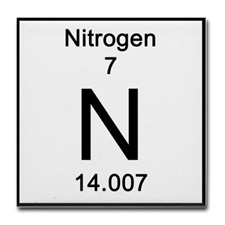
What is the number of protons that the element in this image contain?
a)
14
b)
7
c)
15
d)
18
34.
The positive particles of an atom are
a)
Electrons
b)
Positrons
c)
Neutrons
d)
Protons
35.
The central region of an atom where its neutrons and protons are is its _______.
a)
Nucleus
b)
Electron cloud
c)
Core
d)
Center
36.
An atom with atomic number 6 would have how many protons?
a)
6
b)
12
c)
3
d)
Cannot be determined
37.
An atoms overall charge is _____.
a)
Positive
b)
Depends on its mood
c)
Neutral
d)
Negative
38.
Particles in an atom that are neutral and have no charge are ______.
a)
Negatrons
b)
Electrons
c)
Neutrons
d)
Protons
39.
Which of the following is a negatively charged subatomic particle?
a)
Electron
b)
Proton
c)
Neutron
d)
Quark
40.
The particles that are found in the nucleus of an atom are _____.
a)
Neutrons and electrons
b)
Electrons only
c)
Protons and neutrons
d)
Protons and electrons
41.
Where are electrons of an atom found?
a)
Nucleus
b)
Electron Cloud
c)
Some are in the nucleus and some in the electron cloud.
d)
They are moving everywhere.
42.

What are the 3 particles that make-up the atom?
a)
Protons, neutrons, and isotopes
b)
Neutrons, isotopes, and electrons
c)
Positives, negatives, and electrons
d)
Protons, neutrons, and electrons
43.
Which statement best describes an electron?
a)
Smaller mass than a proton and a negative charge
b)
Smaller mass than a proton and a positive charge
c)
Greater mass than a proton and a negative charge
d)
Greater mass than a proton and a positive charge
44.
How many carbon atoms (C) are in a CO2 molecule?
a)
1
b)
2
c)
3
d)
0
45.
How many Oxygen atoms (O) are in a molecule of CO2
a)
1
b)
2
c)
3
d)
0
46.
How many Hydrogen atoms (H) are in a molecule of H2O?
a)
1
b)
2
c)
3
d)
0
47.
How many oxygens atoms ( O )atoms in a molecule of H2O?
a)
1
b)
2
c)
3
d)
0
48.
The small number to the right of an elemental symbol ( H2) is called?
a)
a subscript
b)
a coefficient
c)
a variable
d)
a divisor
49.
More than two atoms stuck together is called a ...................
a)
element
b)
molecule
c)
Chemical property
d)
Physical property
50.
There are over 100 different kinds of atoms these different atoms are known as ....................
a)
elements
b)
mixtures
c)
chemical bond
d)
chemistry
51.
A mixture that can be easily be separated into his different parts ( think fruit salad)
a)
heterogeneous mixtures
b)
homogeneous mixtures
52.
A series of numbers and letters that are used to represent a molecule
a)
physcial property
b)
chemical property
c)
chemical formula
d)
atom
53.
How many atoms of carbon (C) are in C6H12O6?
a)
3
b)
6
c)
12
d)
24
54.
Element or compound?
H2O
H2O
a)
element
b)
compound
55.
Which of the following is a compound?
a)
Co
b)
O2
c)
C
d)
CO2
56.
Which is the correct formula for:
three hydrogen (H)
one sulfur (S)
four oxygen (O)
three hydrogen (H)
one sulfur (S)
four oxygen (O)
a)
H3SO4
b)
HSO4
c)
H4S3O
d)
H2O
57.

The blue numbers in the image below represent ________
a)
I don't know, and don't want to try
b)
coefficients
c)
subscripts
d)
none of the answers are correct
58.
How many atoms are there TOTAL in:
H2SO4
H2SO4
a)
6
b)
5
c)
7
d)
3
59.
Which of the following is a positively charged subatomic particle found in the nucleus of an atom?
a)
Electron
b)
Proton
c)
Neutron
d)
Quark
60.
An atom has an atomic number of 15 and a mass number of 31. How many protons are there in the atom?
a)
15
b)
31
c)
16
d)
47
100 %

