
 Worksheets
DNA AND PROTEIN SYNTHESIS
Total questions: 71
Worksheet time: 1hrs 17mins
Name
Class
Date
1.
Which sequence of DNA bases would pair with this partial strand
ATG TGA CAG
ATG TGA CAG
a)
ATG TGA CAG
b)
TAC ACT GTC
c)
GTA AGT GAC
d)
CAT TCA CTG
2.
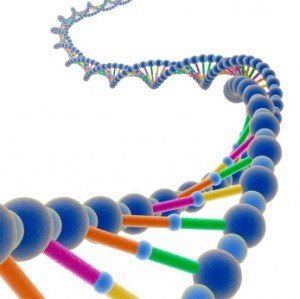
Which of the following best describes a DNA molecule?
a)
double helix
b)
contains ribose
c)
made of amino acids
d)
contains Uracil
3.
Which of the following units are repeatedly joined together to form a strand of DNA?
a)
amino acids
b)
nucleotides
c)
fatty acids
d)
polysaccharides
4.

In a molecule of double-stranded DNA, the amount of Adenine present is always equal to the amount of
a)
cytosine
b)
guanine
c)
thymine
d)
uracil
5.
Adenine bonds with ______________.
a)
Guanine
b)
Thymine
c)
Cytosine
d)
Adenine
6.
Guanine bonds with ______________.
a)
Adenine
b)
Guanine
c)
Cytosine
d)
Thymine
7.
Why is DNA important?
a)
it is very small and very complicated
b)
it's in everything
c)
it serves as the blueprint for traits of all living things
d)
because we eat it every day for energy
8.
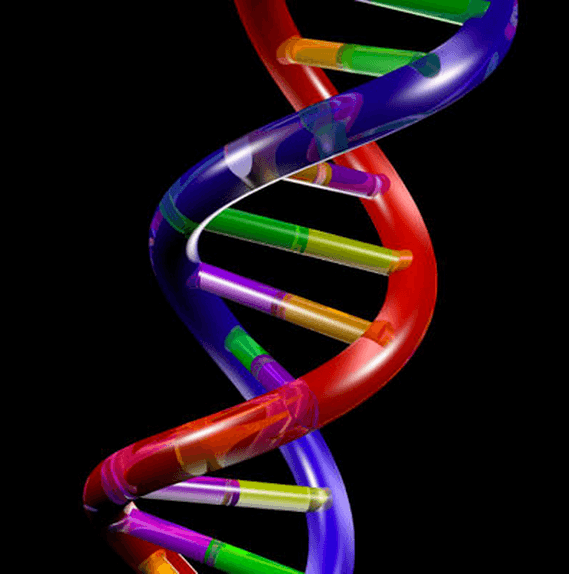
What determines the code, or information, of a DNA molecule?
a)
the shape (structure) of the nitrogen bases
b)
the order (sequence) of the nitrogen bases
c)
the color of the nitrogen bases
d)
the frequency (number) of nitrogen bases
9.
Which 2 molecules form the sides (backbone) of the DNA ladder?
a)
deoxyribose sugar and adenine
b)
deoxyribose sugar and a hydrogen bond
c)
deoxyribose sugar and the nucleus
d)
deoxyribose sugar and phosphate
10.
Which organelle is DNA usually found in?
a)
cell membrane
b)
vacuole
c)
chloroplast
d)
nucleus
11.
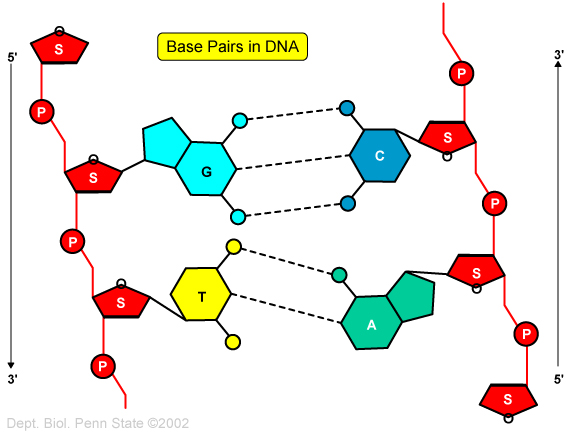
Nitrogenous bases are joined by which type of bond?
a)
polar bonds
b)
ionic bonds
c)
covalent bonds
d)
hydrogen bonds
12.

Replicate the following strand of DNA:
AATCATGGA
AATCATGGA
a)
AATCATGGA
b)
TTAGTACCT
c)
UUAGUACCU
d)
GGATAUCUA
13.
The enzyme that unzips the DNA to prepare for replication
a)
helicase
b)
replicase
c)
polymerase
d)
synthase
14.
DNA replication results in two DNA molecules,
a)
each one with two original strands
b)
each one with two new strands
c)
each one with one new strand and one original strand
d)
one with two new strands and the other with two original strands
15.

order of replication
a)
3, 2, 1, 4
b)
2, 1, 4, 3
c)
2, 3, 1, 4
d)
3, 4, 1, 2
16.
What is the correct complimentary strand for the following DNA?ATCGAG
a)
TACGAG
b)
ATCGAG
c)
TAGCTG
d)
TAGCTC
17.
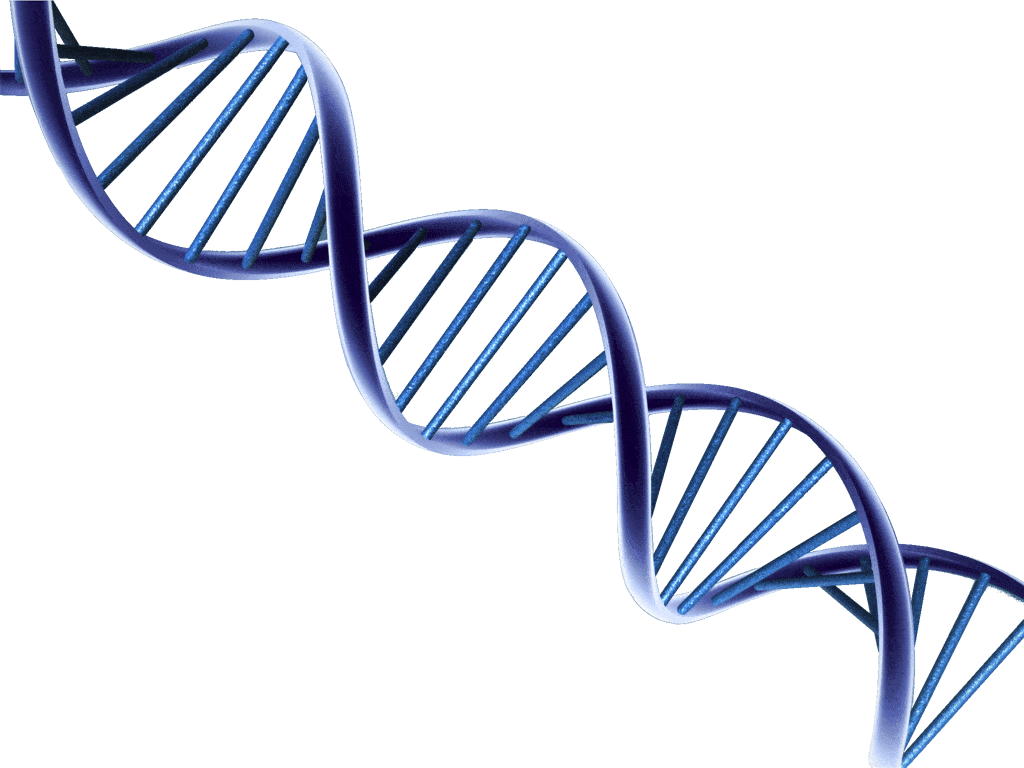
The drawing shows the structure of what molecule?
a)
A DNA molecule
b)
A lipid molecule
c)
A carbohydrate molecule
d)
A protein molecule
18.
A process in which DNA has the unique ability to make an exact copy of itself.
a)
Replication
b)
Translation
c)
Transcription
19.
In what phase of the cell cycle does DNA replication take place?
a)
G1
b)
S
c)
G2
d)
M
20.
What are the three components of a nucleotide?
a)
sugar, hydrogen, nitrogen base
b)
sugar, oxygen, nitrogen base
c)
sugar, phosphate, nitrogen base
d)
sugar, phosphate, protein
21.
What are the nucleotides made of?
a)
Sugar, Phosphate, nitrogen base
b)
Phosphate, Adenine, nitrogen base
c)
Thymine, Adenine, Cytomine
d)
Phosphate, Nitrogen, Adenine
22.

Which of the following best describes a DNA molecule?
a)
double helix
b)
contains ribose
c)
made of amino acids
d)
contains Uracil
23.
Which of the following units are repeatedly joined together to form a strand of DNA? (This is the MONOMER of DNA.)
a)
amino acids
b)
nucleotides
c)
fatty acids
d)
polysaccharides
24.
Why is DNA important?
a)
it is very small and very complicated
b)
it's in everything
c)
it serves as the blueprint for traits of all living things
d)
because we eat it every day for energy
25.
What are the 4 nitrogen bases?
a)
adenine, thymine, cytoplasm, and guanine
b)
adenine, thymine cytosine, and guanine
c)
adenine, thymine, cytosine, and gylcerol
d)
adenine, thymine, cytosine, and glucose
26.
Which 2 molecules forms the sides (backbone) of the DNA ladder?
a)
deoxyribose and adenine
b)
deoxyribose and a hydrogen bond
c)
sugar and the nucleus
d)
deoxyribose (sugar) and phosphate
27.
Which organelle is DNA usually found in?
a)
cell membrane
b)
vacuole
c)
chloroplast
d)
nucleus
28.
A process in which DNA has the unique ability to make an exact copy of itself.
a)
Replication
b)
Translation
c)
Transcription
29.
DNA stands for
a)
Do Not Know Anything
b)
Ribonucleic Acid
c)
Deoxyribonucleic Acid
d)
None of the others
30.

Nucleotides are made up of a sugar, phosphate, and..?
a)
nitrogen base
b)
nucleic acid
c)
cholesterol
d)
fatty acid
31.

How did Rosalind Franklin's photo 51 affect the work of Watson and Crick? (picture is shown)
a)
It was used to determine the physical structure of DNA
b)
It was used to identify the four bases that make up DNA
c)
It was used to determine the theory of independent assortment
d)
It was used to show DNA was the molecule of inheritance
32.
Which two scientists are accredited with correctly deducing the double helix model of DNA?
a)
Watson and Crick
b)
Wilkins and Franklin
c)
Wilkins and Crick
d)
Watson and Franklin
33.
Watson and Crick were the first to suggest that DNA is _____
a)
a short molecule
b)
the shape of a double helix
c)
a protein molecule
d)
the genetic material
34.
The process by which a DNA molecule is copied is called _____.
a)
binary fission
b)
mitosis
c)
replication
d)
translation
35.
A DNA nucleotide may be made up of a phosphate group, along with _____.
a)
deoxyribose sugar and uracil
b)
ribose sugar and adenine
c)
deoxyribose sugar and thymine
d)
ribose sugar and cytosine
36.

What determines the code, or information, of a DNA molecule?
a)
the shape (structure) of the nitrogen bases
b)
the order (sequence) of the nitrogen bases
c)
the color of the nitrogen bases
d)
the frequency (number) of nitrogen bases
37.

The two strands of nitrogenous bases in DNA are joined by which type of bond?
a)
polar bonds
b)
ionic bonds
c)
covalent bonds
d)
hydrogen bonds
38.
What are the three components of a nucleotide?
a)
sugar, hydrogen, nitrogen base
b)
sugar, oxygen, nitrogen base
c)
sugar, phosphate, nitrogen base
d)
sugar, phosphate, protein
39.

Identify #2.
a)
nitrogen base
b)
phosphate group
c)
deoxyribose sugar
d)
nucleotide
40.

What process is shown in the diagram?
a)
replication
b)
transcription
c)
mitosis
d)
translation
41.
Transcribe the following DNA strand: CTG AAT
a)
GAC TTA
b)
CTG AAT
c)
GAC UUA
d)
CUG AAU
42.
What is the order for Protein Synthesis?
a)
Transcription -> Translation -> Protein
b)
Translation - > Transcription -> Protein
c)
Protein -> Transcription -> Translation
d)
Translation -> Protein -> Transcription
43.
What will be the resulting mRNA from this DNA sequence:
GAT-TAC-AGA-TTA-CAT?
GAT-TAC-AGA-TTA-CAT?
a)
CTA-ATG-TCT-AAT-GTA
b)
GAU-UAG-UGA-UUA-GUT
c)
CUA-AUG-UCU-AAU-GUA
d)
CAT-ACA-TAC-ATA-TAG
44.
What is the RNA sequence for this amino acid chain: LYSINE - GLYCINE - STOP
a)
AAA - CCC - UAA
b)
AAA - GGG - UAA
c)
AAG - AUC - CGA
d)
AAG - GGG - UUU
45.
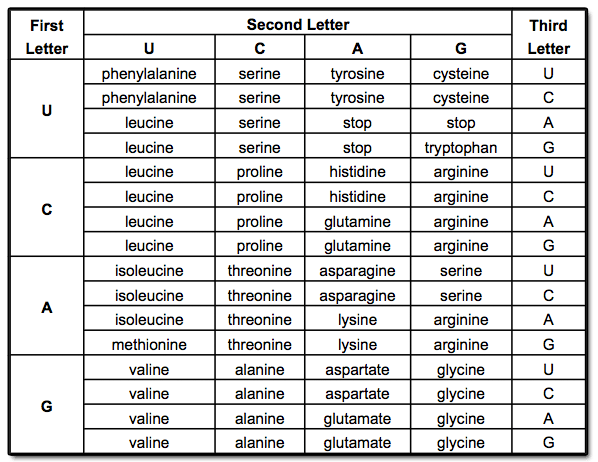
What is the correct amino acid sequence for the mRNA code AUGCCAGUAUGA
a)
Met-Pro-Ala-Val
b)
Met-Pro-Val
c)
Tyr-Gly-His
d)
Tyr-Gly-Arg-His
46.
Every three letters (example: ATC) in DNA codes for what??
a)
Amino Acid
b)
Nucleotide
c)
Lipid
d)
Carbohydrate
47.
One difference between DNA and RNA is that RNA....
a)
is double stranded
b)
contains the base Thymine
c)
contains the base Uracil
d)
contained the base Guanine
48.
tRNA is involved in
a)
carrying amino acids
b)
carrying ribosomes
c)
carrying glucose
d)
carrying lipids
49.
Amino acids are joined together in order to form
a)
DNA
b)
ribosomes
c)
proteins
d)
RNA
50.
Transcribe the following piece of DNA:
ATCGTA
ATCGTA
a)
UAGCAU
b)
TAGCAT
c)
ATCGTA
d)
AUCGUA
51.
Which Seq could be found in RNA?
a)
ACCTGT
b)
CGCATT
c)
AUGCUU
52.

Which amino acid is made from the RNA codon UUA?
a)
Phenylalanine
b)
Leucine
c)
Serine
d)
Tyrosine
53.

Which amino acid is made from the RNA codon GUA?
a)
Phenylalanine
b)
Leucine
c)
Serine
d)
Valine
54.

Which amino acid is made from the RNA codon ACC?
a)
Tyrosine
b)
Isoleucine
c)
Threonine
d)
Valine
55.

What is the relationship between a protein, the cell, and DNA?
a)
DNA is produced by protein which is produced in the cell
b)
Protein is composed of DNA which is produced in the cell
c)
DNA makes RNA which produces protein in the cell
d)
A cell is composed of DNA and protein
56.
The process of making RNA (i.e. mRNA) from DNA is called
a)
Replication
b)
Transcription
c)
Translation
d)
Protein synthesis
57.
A segment of the DNA from a chimpanzee has the sequence: TAC GAA GCA. Which mRNA would be transcribed from this segment of DNA?
a)
GCA TCC TAC
b)
AUG CUU CGU
c)
ATG CTT CGT
d)
GCA UCC UAC
58.

Nucleotides are made up of a sugar, phosphate, and..?
a)
nitrogenous base
b)
nucleic acid
c)
cholesterol
d)
fatty acid
59.
Which of the following is the sugar found in RNA?
a)
Ribose
b)
Maltose
c)
Deoxyribose
d)
Amylose
60.
Which of the following is a correct difference between RNA and DNA?
a)
RNA is single stranded and DNA is double stranded
b)
RNA is double stranded and DNA is single stranded
c)
DNA uses Uracil and RNA uses Thymine
d)
RNA has deoxyribose and DNA has ribose
61.
Which statement is TRUE regarding DNA and RNA?
a)
DNA's sugar is ribose; RNA's sugar is deoxyribose
b)
DNA is single stranded; RNA is double stranded
c)
DNA contains thymine; RNA contains uracil
d)
DNA is in cytoplasm; RNA is in nucleus
62.
Guanine bonds with ______________.
a)
Adenine
b)
Guanine
c)
Cytosine
d)
Thymine
63.
Adenine bonds with ______________.
a)
Guanine
b)
Thymine
c)
Cytosine
d)
Adenine
64.
Which process is used to make mRNA from the DNA in the nucleus?
a)
transcription
b)
translation
c)
replication
65.
Which RNA bases would pair with TACGAA in transcription?
a)
AUGCUU
b)
ATGCTT
c)
GCATCC
d)
GCAUCC
66.

DNA codes for...
a)
cholesterol
b)
proteins
c)
fatty acids
d)
a sandwich
67.

What is occurring in this picture?
a)
Translation
b)
DNA Replication
c)
Polymerase is unzipping the DNA
d)
Transcription
68.
What nucleotides is RNA made up of?
a)
Thymine, Cytosine, Adenine, Guanine
b)
Thymine, Cytosine, Hypoxanthine, Guanine
c)
Thymine, Cytosine, Xanthine, Guanine
d)
Thymine, Cytosine, Uracil, Guanine
69.
What is the term used for the first phase of transcription and translation?
a)
Termination
b)
Initation
c)
Promoter
d)
Elongation
70.
What is the term used for the second phase of transcription and translation?
a)
Elongation
b)
Promoter
c)
Termination
d)
Initiation
71.
What is the term for the third phase of transcription and translation?
a)
Promoter
b)
Elongation
c)
Initiation
d)
Termination
100 %

