

Wayground logo

Free Printable Worksheets

Font size

S
M
L
XL
Worksheets

Genetics Review

Total questions: 62

Worksheet time: 1hrs 15mins

Name
Class
Date
1.
------is the combination of two alleles that are different from one another.
a)
homozygous
b)
heterzygous
c)
phenotype
d)
trait
2.
The letters that make-up the genetic code for a trait
a)
genotype
b)
heterzygous
c)
phenotype
d)
trait
3.
---- Is the combination of two alleles that are the same
a)
genotype
b)
homozygous
c)
phenotype
d)
trait
4.
----is the type of gene that always shows itself when present
a)
genotype
b)
homozygous
c)
phenotype
d)
dominant
5.
The physical appearance of the allele combination the offspring receives
a)
genotype
b)
homozygous
c)
phenotype
d)
dominant
6.
Black fur (B) is dominant. Find the probability of a black offspring in a cross: bb x bb. 
a)
0%
b)
25%
c)
50%
d)
100%
7.
Look at the Punnett Square. What's the probability of having the recessive offspring?
a)
100%
b)
75%
c)
50%
d)
25%
8.
What are the parents' genotypes?
a)
Homozygous for brown eyes
b)
Heterozygous for brown eyes
c)
Homozygous for blue eyes
d)
Heterozygous for blue eyes
9.
What is the phenotype for the recessive trait?
a)
brown eyes
b)
green eyes
c)
blue eyes
10.
A type of gene that can be hidden is called
a)
genotype
b)
recessive
c)
dominant
d)
allele
11.
A section of the DNA strand that determines a specific trait
a)
gene
b)
trait
c)
chromosome
d)
allele
12.
Sickle cell disease (abnormally shaped red blood cells) is a recessive disease in humans. Which gene combination(s) would result in someone being affected by sickle cell disease?
a)
SS
b)
ss
c)
Ss
13.
Tallness is dominant in pea plants and is represented by "T." What would the genotype be for a homozygous tall plant?
a)
Tt
b)
tt
c)
TT
d)
Tall 
14.
If red flowers (R) are dominant over white, what is the probability that the offspring will be red? 
a)
1 out of 4
b)
2 out of 4
c)
3 out of 4
d)
4 out of 4
15.

What is the missing genotype?

a)

BB

b)

Bb

c)

bb

16.

What percentage of the offspring will have brown eyes?

a)

25%

b)

50%

c)

75%

d)

100%

17.

The device used to predict genetic outcomes.

a)

Geneticist

b)

Fate

c)

Punnett Square

d)

Pedigree

18.

How many "offspring" are predicted with each Punnett Square?

a)

1

b)

2

c)

3

d)

4

19.
The passing of traits from parent to offspring 
a)
Heredity 
b)
Genetics 
c)
Hybrid 
d)
Probability 
20.
Who was the father of genetics 
a)
Sagan 
b)
Issac Newton 
c)
Gregor Mendel 
d)
C.jenkins 
21.
Squidward has light blue skin, and his genotype for this trait is Bb. Would Squidward be considered a purebred or hybrid for light blue skin?
a)
Purebred
b)
Hybrid
22.
A dog gives birth to 5 puppies. What percentage of the chromosomes does each puppy share with the mother?
a)
25%
b)
50%
c)
75%
d)
100%
23.
What is one advantage of sexual reproduction?
a)
offspring are identical to parents
b)
offspring are resistant to viruses
c)
offspring are born live, rather thna from eggs
d)
offspring inherit a wider variety of genetic information
24.
Sex cells are produced through the process of
a)
mitosis
b)
cytokinesis
c)
binary fission
d)
meiosis
25.
A human usually has ______ chromosomes in their body cells.
a)
6
b)
22
c)
4
d)
46
26.
Asexual reproduction and mitosis occur in...
a)
Body Cells
b)
Sex Cells or Gametes
27.
How many daughter cells are produced at the end of mitosis?
a)
1
b)
2
c)
3
d)
4
28.
The purpose of sexual reproduction and meiosis is to form ________ cells.
a)
body
b)
sex
c)
somatic
d)
brain
29.
How many daughter cells are produced at the end of meiosis?
a)
1
b)
2
c)
3
d)
4
30.
How many chromosomes are in the new cells of meiosis?
a)
46
b)
23
31.
What is one reason why we need meiosis?
a)
To double the number of chromosomes going into sex cells
b)
To halve the number of chromosomes going into sex cells
c)
To triple the number of chromosomes going into sex cells
d)
To not change the number of chromosomes going into sex cells
32.
Which of the following cells is a gamete?
a)
egg
b)
bone
c)
heart
d)
muscle
33.
In mitosis cells are genetically _______, but in meiosis cells are genetically ______.
a)
diverse, identical
b)
identical, diverse/different
34.

Is the following cell diploid or haploid?

a)

Diploid

b)

Haploid

35.
What did Gregor Mendel use to discover the principles that rule heredity?
a)
Pea Plant
b)
Pigeons
c)
Pear trees
d)
Photosynthesis
36.
What did Mendel call the two kinds of traits exhibited by the pea plants (one coming from the father, one from the mother)?
a)
Genesis
b)
Elective traits
c)
Alleles
d)
Quadrants
37.
How many traits did Mendel study in his pea plants?
a)
1
b)
3
c)
5
d)
7
38.
What is true-breeding?
a)
When pollen from a flower fertilizes itself or another flower on the same plant
b)
When pollen from one flower fertilizes a flower on a different plant
c)
A plant whose offspring share the same traits as the parent
d)
A plant whose offspring is genetically different from the parent.
39.
What did Gregor Mendel do in his first experiment?
a)
Self-Pollinated two pea plants
b)
Self-Pollinated two true-breeding pea plants
c)
Cross-pollinated two pea plants
d)
Cross pollinated two true-breeding pea plants
40.

Which organelle is the location where protein is made?

a)

Ribosome

b)

Nucleus

c)

Cytoplasm

d)

Nucleotide

41.

Insertion, deletion, and substitution are all examples of a change in a genetic sequence which is also referred to as (a)

a)

Gene

b)

Amino Acid

c)

Ribose

d)

Mutation

42.

When these bond together, they form a protein

a)

Amino Acids

b)

Peptide Bonds

c)

Ribose

d)

Nucleotides

43.

There are a total of ____ different amino acids

a)

20

b)

1

c)

4

d)

unlimited

44.

Mutations can benefit humans because they can:

a)

Cause illness

b)

Make an organism more suited to live in its environment.

c)

Make organisms live shorter lives

d)

Cause organisms to grow extra limbs.

45.

A mutation is defined as:

a)

A change in the cell's structure

b)

Anything that changes in an embryo

c)

Any change in the physical features of a human

d)

A change in the DNA sequence

46.
Where do mutations occur?
a)
DNA and RNA
b)
DNA 
c)
RNA
d)
mRNA and tRNA
47.
What causes mutations?
a)
Mistakes in replication or environmental substances
b)
The amino acids
c)
Passed down by genetics
d)
It's how your born
48.

ATTTGAGCC- Original

ATTGAGCC - Mutated

The example above is an example of a

a)

Insertion

b)

Point mutation

c)

Deletion

d)

Substitution

49.

Mutations are random.

a)

True

b)

False

50.

Mutations are SOMETIMES helpful to the organism.

a)

true

b)

false

51.

True or false, mutations create genetic diversity?

a)

True

b)

False

52.
What are the three types of mutation? 
a)
Insertion, Deletion, Subsitution
b)
Deletion, Newstion, Subsitution 
c)
Newstion, Deletion, Insertion 
d)
Insertion, Newstion, Substitution 
53.
Normal-
GAG-CTC-GAC-AGA
Mutant
GAG CTC-CAC-AGA
a)
no mutation
b)
substitution
c)
insertion
d)
deletion
54.
DNA molecule segment is : TTACGCAAG
The mutated DNA segment is TTCGCAAG. This is an example of ___ mutation.
a)
Substitution
b)
Deletion
c)
Insertion
d)
Inversion
55.
Why is DNA important?
a)
it is very small and very complicated
b)
it's in everything
c)
it serves as the blueprint for traits of all living things
d)
because we eat it every day for energy
56.
What mutation has occurred here? 
T-G-A-C-C-A
T-G-A-G-C-A
a)
Substitution
b)
Deletion
c)
Insertion
d)
Frameshift 
57.
Original: ATC CAT
Mutation: ATC GCAT
What mutation occurred?
a)
deletion
b)
insertion
c)
silent
d)
transverse
58.

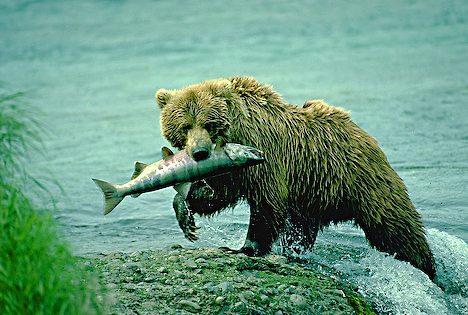
A grizzly bear survives because he is well-adapted to his environment. When he reproduces he passes on those traits to his offspring. this process is called

a)

Natural Selection

b)

Selective Breeding

c)

Random mutations

d)

Variations in a species

59.

Genetic mutations are the direct cause of which of the following?

a)

Aliens

b)

Super heroes

c)

Variations

d)

8th grade behaviors

60.

If Easter eggs were living species of organisms, their different colors would be considered:

a)

Adaptations

b)

Variations

c)

Different species

d)

Extinct species

61.

Why might it be helpful for a species to have a lot of variations?

a)

They can't be seen by predators

b)

If the environment changes, they might be better able to adapt

c)

It is helpful in asexual reproduction

d)

They don't recognize each other

62.

Another term for Natural Selection is:

a)

Breeding

b)

Commensulism

c)

Communism

d)

Survival of the fittest
